How to Automate Government Tender Bidding Processes Effectively
India’s public procurement ecosystem is becoming increasingly digital, competitive, and data-driven. Businesses participating in govt tenders india, large-scale public sector bids, and modern online tenders India are now realizing that manual procurement workflows are no longer sustainable.
Today, companies competing across the rapidly expanding public procurement platform ecosystem must manage thousands of procurement notifications, complex compliance requirements, evolving documentation standards, and fast-changing procurement timelines. Businesses relying entirely on manual operations often struggle with missed opportunities, delayed bid submission, weak compliance management, and poor procurement visibility.
The rise of digital procurement systems, AI-driven procurement analytics, and intelligent automation is transforming the future of public procurement participation. Businesses participating in e-procurement India / eProcure, managing complex bid submission process workflows, and monitoring opportunities across the government of india tender portal ecosystem must now focus heavily on procurement automation.
Platforms like Minaions are helping suppliers automate tender monitoring, optimize documents for tender preparation, strengthen participation in MSME tenders India, improve tender alerts India, and modernize procurement operations across the evolving procurement ecosystem.
Why Tender Automation Is Becoming Essential
The ecosystem of govt tenders india is expanding rapidly across sectors.
Today, businesses participating in:
Public sector bids
MSME tenders India
Online tenders India
Procurement opportunities through the government of india tender portal
Large-scale procurement ecosystems within the public procurement platform
must process enormous volumes of procurement data every day.
Manual procurement operations often create:
Missed tender opportunities
Delayed bid submission
Compliance errors
Poor procurement tracking
Weak documentation management
The increasing complexity of the bid submission process has made procurement automation highly important.
Understanding the Public Procurement Platform Ecosystem
The modern public procurement platform ecosystem includes:
GeM
CPPP
State procurement portals
PSU procurement systems
Department procurement portals
Businesses participating in govt tenders india should understand that the modern public procurement platform ecosystem generates huge amounts of procurement information daily.
The increasing scale of the public procurement platform ecosystem has made intelligent procurement tracking essential.
Organizations participating in e-procurement India / eProcure systems should therefore adopt centralized procurement automation workflows.
Minaions helps businesses optimize participation across the public procurement platform ecosystem using AI-driven procurement intelligence systems.
Bid Submission and Operational Efficiency
The quality of bid submission directly impacts procurement success rates.
Businesses participating in public sector bids should ensure bid submission workflows are:
Fast
Accurate
Compliance-driven
Digitally organized
Centrally monitored
Manual bid submission operations often result in:
Incorrect documentation
Missed deadlines
Technical mismatches
Procurement rejection
The increasing sophistication of online tenders India has made automation highly valuable for improving procurement accuracy.
Tender Monitoring and Procurement Visibility
Strong tender monitoring is one of the most important parts of procurement automation.
Effective tender monitoring helps businesses:
Identify opportunities early
Track procurement timelines
Monitor amendments
Analyze competition
Improve procurement planning
Businesses participating in govt tenders india should continuously improve tender monitoring workflows to avoid missing high-value procurement opportunities.
The increasing scale of the government of india tender portal ecosystem has made AI-driven tender monitoring highly important.
Minaions helps businesses automate tender monitoring using intelligent procurement analytics systems.
Public Sector Bids and Procurement Competition
The ecosystem of public sector bids is becoming increasingly competitive.
Today, public sector bids include procurement related to:
Infrastructure projects
Technology procurement
Healthcare systems
Industrial procurement
Educational systems
Businesses participating in public sector bids should therefore optimize procurement speed and operational efficiency.
The increasing complexity of the bid submission process has made procurement automation essential for long-term growth.
Bid Submission Process and Workflow Automation
The modern bid submission process is highly compliance-driven.
The standard bid submission process generally includes:
Tender discovery
Eligibility analysis
Document collection
Pricing preparation
Technical proposal preparation
Final bid submission
Businesses participating in e-procurement India / eProcure systems should automate as many stages of the bid submission process as possible.
The increasing sophistication of online tenders India has made workflow automation extremely valuable.
Documents for Tender Preparation and Automation
Managing documents for tender preparation manually is one of the biggest operational challenges for suppliers.
Typical documents for tender preparation include:
Company registration documents
Financial statements
Technical certifications
Compliance declarations
Experience certificates
Businesses participating in MSME tenders India should therefore digitize and centralize documents for tender preparation.
The increasing complexity of govt tenders india has made intelligent document management highly important.
Minaions helps businesses organize documents for tender preparation using AI-driven procurement automation systems.
Tender Portal India and Digital Procurement Expansion
The ecosystem of tender portal india platforms is growing rapidly.
Today, tender portal india systems support:
Tender publication
Vendor participation
Online bid submission
Procurement tracking
Procurement analytics
Businesses participating in public procurement platform ecosystems should continuously monitor opportunities across multiple tender portal india systems.
The increasing scale of online tenders India has made procurement intelligence extremely important.
Tender Updates and Real-Time Procurement Intelligence
Real-time tender updates are critical for procurement success.
Businesses participating in govt tenders india should continuously monitor:
Bid amendments
Deadline changes
Technical clarifications
Procurement cancellations
Eligibility modifications
Missing important tender updates often results in procurement rejection or operational disruption.
The increasing sophistication of the government of india tender portal ecosystem has made automated tender updates monitoring highly valuable.
Minaions helps businesses automate tender updates through AI-powered procurement tracking systems.
Government of India Tender Portal and Procurement Visibility
The ecosystem of the government of india tender portal is becoming increasingly centralized and data-driven.
Businesses participating in the government of india tender portal ecosystem can now:
Access procurement opportunities nationwide
Track procurement departments
Monitor procurement timelines
Analyze tender participation
Participate digitally
The increasing scale of the government of india tender portal has created enormous opportunities for businesses participating in public sector bids.
Organizations participating in e-procurement India / eProcure systems should therefore optimize digital procurement readiness.
MSME Tenders India and Procurement Automation
The ecosystem of MSME tenders India is expanding rapidly.
Today, MSME tenders India provide opportunities related to:
Technology procurement
Office infrastructure
Healthcare systems
Industrial procurement
Government equipment
Businesses participating in MSME tenders India should therefore automate procurement workflows to improve participation capacity.
The increasing competition within govt tenders india has made operational efficiency a major procurement advantage.
Online Tenders India and Procurement Scalability
The ecosystem of online tenders India is becoming increasingly competitive.
Businesses participating in online tenders India should automate:
Tender discovery
Bid tracking
Compliance workflows
Document management
Procurement analytics
The increasing sophistication of the bid submission process has made intelligent procurement systems essential for scalable procurement growth.
E-Procurement India / EProcure and Digital Transformation
The rise of e-procurement India / eProcure systems has transformed procurement participation across India.
Modern e-procurement India / eProcure ecosystems support:
Digital procurement workflows
Procurement transparency
Online vendor participation
Automated procurement tracking
Procurement analytics
Businesses participating in public procurement platform ecosystems should therefore optimize operational readiness for modern e-procurement India / eProcure systems.
The increasing complexity of public sector bids has made procurement automation highly valuable.
Tender Alerts India and Opportunity Tracking
Monitoring tender alerts India is one of the most important aspects of procurement automation.
Effective tender alerts India workflows help businesses:
Discover opportunities faster
Reduce missed tenders
Improve bid planning
Monitor procurement changes
Increase participation efficiency
Businesses participating in govt tenders india should therefore continuously optimize tender alerts India systems.
Minaions helps businesses automate tender alerts India using AI-powered procurement intelligence systems.
Common Problems With Manual Tender Management
Businesses relying on manual procurement operations often face:
Weak tender monitoring
Delayed bid submission
Poor document organization
Missed tender updates
Inefficient bid submission process
Businesses participating in online tenders India should therefore modernize procurement operations aggressively.
The increasing sophistication of the government of india tender portal ecosystem has made automation highly important.
How Minaions Helps Businesses Automate Procurement
Minaions is helping businesses modernize procurement participation through AI-driven procurement automation.
Minaions supports organizations through:
AI-powered tender monitoring
Smart tender alerts India
Automated procurement tracking
Organization of documents for tender preparation
Bid submission process optimization
Procurement analytics
Visibility across tender portal india ecosystems
Monitoring opportunities within e-procurement India / eProcure systems
Businesses participating in public sector bids can use Minaions to improve procurement efficiency and long-term procurement scalability.
Best Practices for Procurement Automation
Businesses participating in govt tenders india should follow several best practices.
Centralize Tender Monitoring
Strong tender monitoring improves procurement visibility.
Digitize Documents for Tender Preparation
Centralized document management improves operational efficiency.
Automate Tender Alerts India
Automated tender alerts India reduce missed opportunities significantly.
Improve Bid Submission Process
Automation improves accuracy and compliance.
Use AI-Driven Procurement Tools
Platforms like Minaions help businesses modernize participation in online tenders India.
Final Thoughts
The future of India’s procurement ecosystem is increasingly digital, automated, and analytics-driven. Businesses participating in govt tenders india, managing complex bid submission workflows, and competing in the evolving public procurement platform ecosystem must now prioritize procurement automation.
From improving tender monitoring to automating the bid submission process, every stage of procurement matters.
Organizations actively strengthening participation in public sector bids, improving workflows for documents for tender preparation, and using AI-driven procurement platforms like Minaions can significantly improve procurement success rates.
As the government of india tender portal, online tenders India, and e-procurement India / eProcure ecosystems continue to evolve, businesses investing in intelligent procurement automation and analytics will gain a major competitive advantage.
Related Blogs
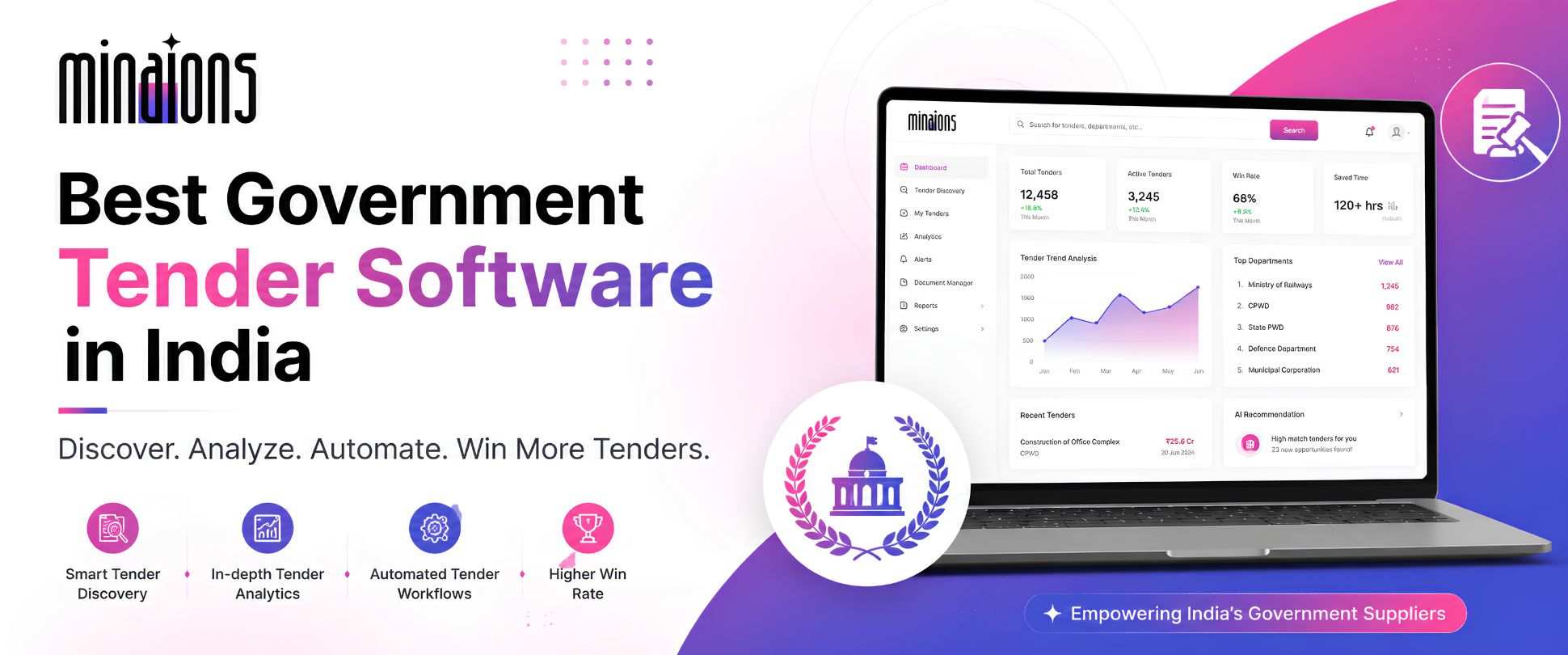
India’s public procurement landscape presents significant challenges for MSMEs and manufacturing companies in identifying, managing, and securing government tenders.
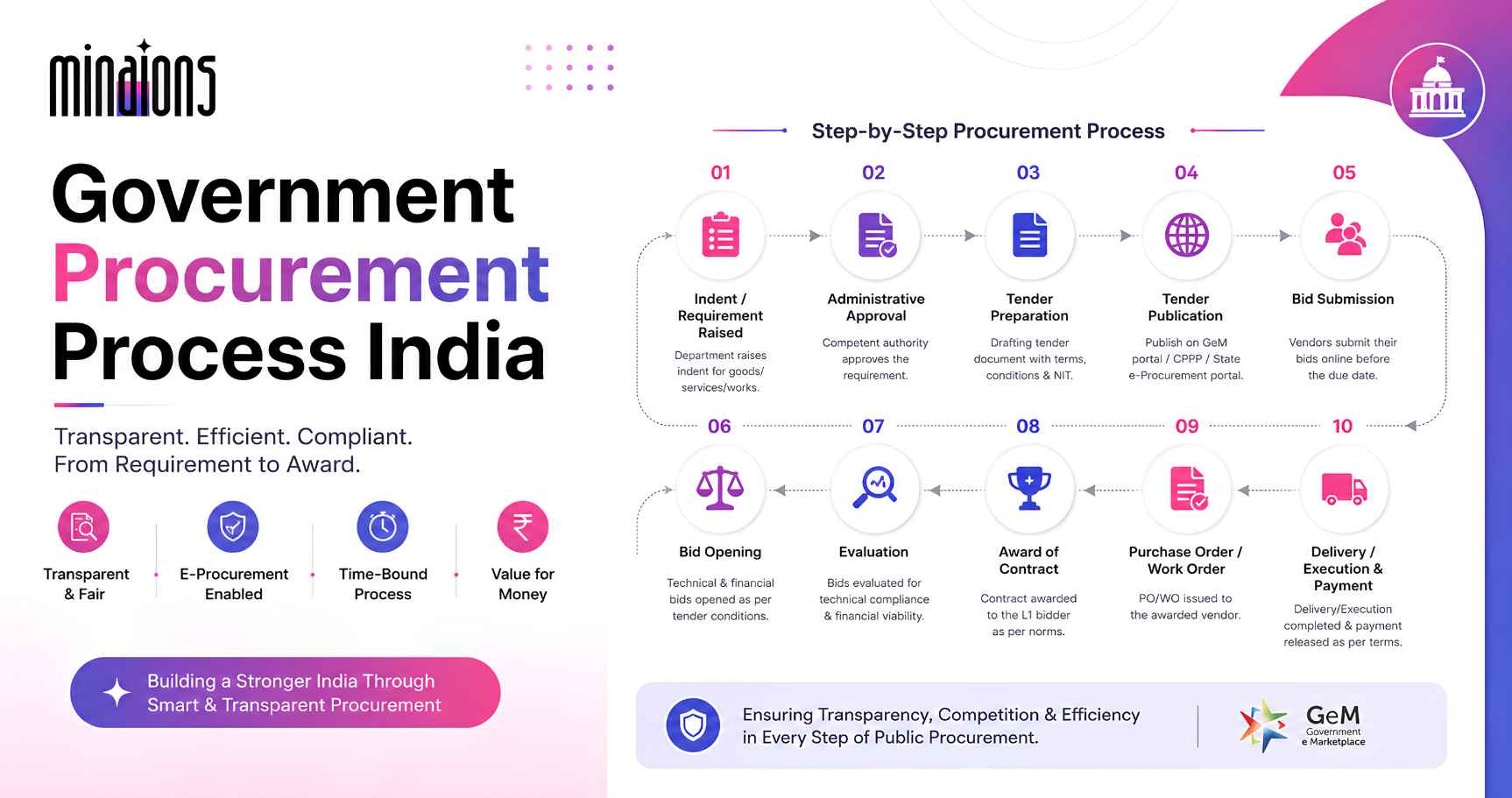
Helpful Resources: Learn more in our guide on Bid No-Bid Decision Framework Explained. Learn more in our guide on Tender Document Mistakes That Cause Rejection.
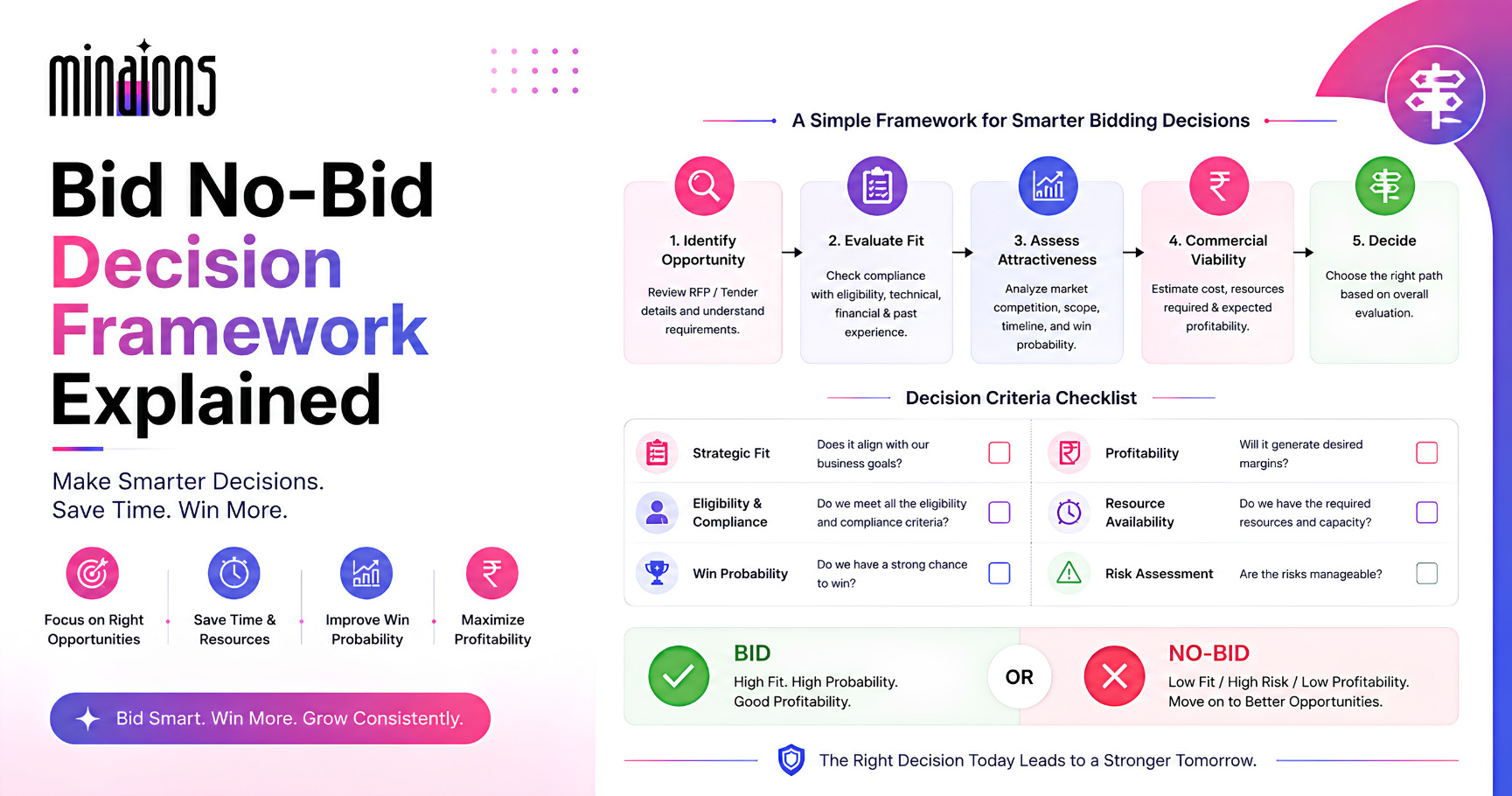
The bid no-bid decision framework is the strategic backbone of successful government bidding. Without a disciplined approach, MSMEs waste time, capital, and credibility on unwinnable government tenders.
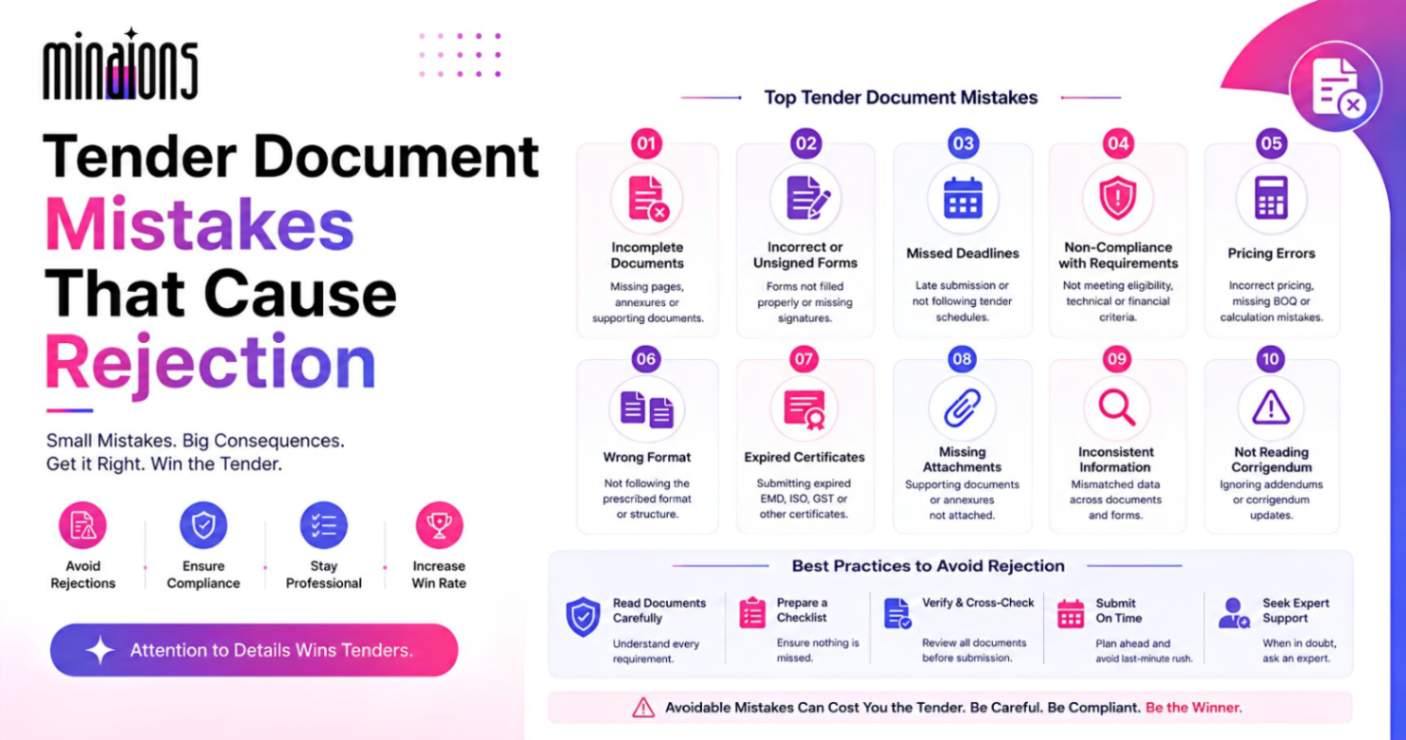
Understanding tender rejection reasons India tender disqualification reasons is critical for MSMEs aiming to secure government tenders.