Free Tender Information: How Businesses Can Find Opportunities at Zero Cost
India's procurement ecosystem has become one of the largest and fastest-growing public procurement markets in the world. Every day, thousands of procurement opportunities are published across multiple procurement platforms, creating significant growth opportunities for MSMEs, startups, manufacturers, distributors, OEMs, and service providers.
Many businesses assume they need expensive subscriptions or paid procurement databases to access opportunities. However, a large volume of all government tenders, active tenders, and new tenders in india can be identified through publicly available procurement systems and free resources.
Businesses participating in government bidding, monitoring online tenders, and competing within the modern tender system in india can build a strong procurement pipeline without spending money on tender discovery. The key is understanding where to find opportunities, how to monitor them efficiently, and how to analyze the tender document correctly.
Platforms like Minaions help businesses automate procurement discovery, monitor public procurement opportunities, track active tenders, organize tender terms and conditions, and improve procurement intelligence across the rapidly evolving Indian procurement ecosystem.
Understanding the Tender System in India
The modern tender system in india has evolved significantly over the past decade.
Today, the tender system in india includes:
Central government procurement
State government procurement
PSU procurement
Municipal procurement
Educational procurement
Healthcare procurement
Businesses participating in government bidding should understand that the tender system in india is largely digital and increasingly transparent.
The growing digitization of the tender system in india has made access to procurement opportunities easier than ever before.
Why Free Tender Information Matters
Many SMEs and startups hesitate to enter public procurement because they believe tender discovery is expensive.
In reality, businesses can access:
All government tenders
New tenders in india
Public procurement opportunities
Online tenders
Department procurement notices
without paying for premium databases.
Businesses participating in government bidding should first learn how to leverage free procurement resources before investing in advanced procurement tools.
The increasing volume of active tenders means businesses can find opportunities every day using publicly available systems.
Tender Portal India: The Starting Point
The first place every supplier should explore is a tender portal india ecosystem.
A typical tender portal india system provides:
Tender listings
Bid notices
Procurement updates
Tender documents
Procurement schedules
Businesses looking for all government tenders should regularly monitor multiple tender portal india platforms.
The growing number of procurement opportunities available through a tender portal india makes it one of the most valuable free procurement resources.
Minaions helps businesses track opportunities across every major tender portal india ecosystem from a centralized dashboard.
Finding All Government Tenders
Businesses often ask where they can find all government tenders.
While no single platform contains every procurement opportunity, businesses can monitor:
Central procurement portals
State procurement portals
GeM
PSU procurement portals
Department procurement systems
Monitoring multiple sources helps businesses identify all government tenders relevant to their category.
The increasing scale of public procurement opportunities makes comprehensive monitoring extremely important.
Public Procurement Opportunities for SMEs
The ecosystem of public procurement opportunities is expanding rapidly.
Today, public procurement opportunities include:
Technology procurement
Industrial procurement
Healthcare procurement
Educational procurement
Infrastructure procurement
Businesses participating in online tenders should continuously evaluate public procurement opportunities based on capability, eligibility, and commercial viability.
The increasing volume of new tenders in india creates significant growth opportunities for SMEs.
New Tenders in India: How to Find Them Early
One of the biggest advantages in procurement is discovering new tenders in india before competitors.
Businesses should monitor:
Procurement portals
Department websites
Procurement notifications
Procurement newsletters
Early visibility into new tenders in india helps businesses:
Improve planning
Prepare documentation
Assess eligibility
Analyze competition
The increasing competition within government bidding makes early tender discovery highly valuable.
Minaions helps businesses identify new tenders in india using AI-driven procurement monitoring systems.
Understanding Tender Terms and Conditions
Many suppliers lose procurement opportunities because they fail to review tender terms and conditions carefully.
Typical tender terms and conditions include:
Eligibility requirements
Experience criteria
Financial requirements
Technical specifications
Compliance requirements
Businesses participating in public procurement should always review tender terms and conditions before deciding to bid.
Poor understanding of tender terms and conditions is one of the biggest reasons suppliers fail during procurement evaluation.
Active Tenders and Opportunity Prioritization
The number of active tenders available at any given time can be overwhelming.
Businesses should prioritize active tenders based on:
Eligibility fit
Product category
Geographic relevance
Bid value
Competition level
The increasing volume of active tenders makes procurement prioritization extremely important.
Businesses participating in online tenders should avoid pursuing every opportunity and instead focus on high-probability opportunities.
Tender Document Analysis
The tender document is the most important procurement resource.
Every tender document generally contains:
Technical requirements
Commercial conditions
Bid instructions
Evaluation criteria
Submission timelines
Businesses participating in government bidding should carefully analyze every tender document before investing resources in bid preparation.
Minaions uses AI-powered document analysis to help businesses review the tender document faster and identify important compliance requirements automatically.
Online Tenders and Digital Procurement
The ecosystem of online tenders continues to expand rapidly.
Today, most online tenders are published through:
Government procurement portals
GeM
State procurement systems
Department procurement websites
Businesses participating in public procurement opportunities should prioritize digital procurement readiness.
The increasing number of online tenders has significantly reduced barriers to entry for SMEs.
Public Procurement and Business Growth
The modern public procurement ecosystem offers substantial growth opportunities.
Businesses participating in public procurement often benefit from:
Long-term contracts
Recurring revenue
Government credibility
Procurement scalability
The increasing volume of all government tenders has created opportunities for businesses of every size.
Organizations participating in public procurement opportunities should therefore build structured procurement strategies.
Why Every Business Needs a Bidding Portal Strategy
Every supplier should develop a strategy around the right bidding portal ecosystem.
An effective bidding portal strategy includes:
Daily tender monitoring
Category filtering
Opportunity qualification
Deadline tracking
Procurement analytics
Businesses participating in government bidding should continuously optimize their bidding portal workflows.
The growing complexity of the tender system in india makes procurement intelligence increasingly valuable.
Government Bidding and Competitive Advantage
The ecosystem of government bidding is becoming increasingly competitive.
Businesses participating in government bidding should focus on:
Opportunity discovery
Tender document analysis
Compliance management
Bid preparation
Procurement monitoring
The increasing scale of public procurement means operational efficiency has become a major competitive advantage.
Common Mistakes Businesses Make
Many businesses fail to maximize procurement opportunities because they:
Ignore active tenders
Misread tender terms and conditions
Delay tender document review
Monitor only one tender portal india source
Miss new tenders in india
Businesses participating in online tenders should therefore establish structured procurement monitoring systems.
How Minaions Helps Businesses Find Free Tender Opportunities
Minaions is helping businesses modernize procurement participation through AI-driven procurement intelligence.
Minaions supports organizations through:
Monitoring tender portal india ecosystems
Tracking all government tenders
Identifying active tenders
Monitoring public procurement opportunities
Analyzing tender documents
Tracking tender terms and conditions
Discovering new tenders in india
Managing government bidding workflows
Businesses participating in public procurement can use Minaions to improve procurement visibility and increase tender participation efficiency.
Best Practices for Finding Opportunities at Zero Cost
Businesses seeking free procurement opportunities should:
Monitor Multiple Tender Portal India Sources
Never rely on a single source.
Review Tender Documents Carefully
Every tender document contains critical information.
Track Active Tenders Daily
Consistent monitoring improves opportunity discovery.
Analyze Tender Terms and Conditions
Compliance begins with understanding procurement requirements.
Use Automated Monitoring Tools
Platforms like Minaions help businesses track public procurement opportunities efficiently.
Final Thoughts
Businesses no longer need expensive subscriptions to access procurement opportunities. Through strategic use of a tender portal india, regular monitoring of all government tenders, and effective analysis of the tender document, suppliers can build a strong procurement pipeline at zero cost.
From discovering new tenders in india to tracking active tenders, every stage of procurement monitoring matters.
Organizations actively participating in public procurement, improving government bidding capabilities, and leveraging procurement intelligence platforms like Minaions can significantly improve tender participation and win rates.
As the tender system in india, online tenders, and public procurement opportunities ecosystems continue to expand, businesses investing in smart procurement monitoring will gain a major competitive advantage.
Related Blogs
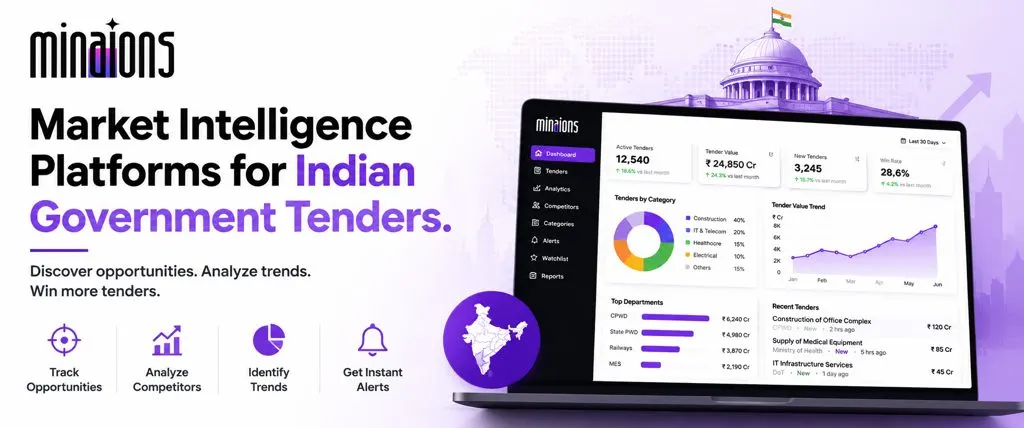
Discover how AI-powered market intelligence platforms streamline tender registration, procurement compliance, and government bidding success.
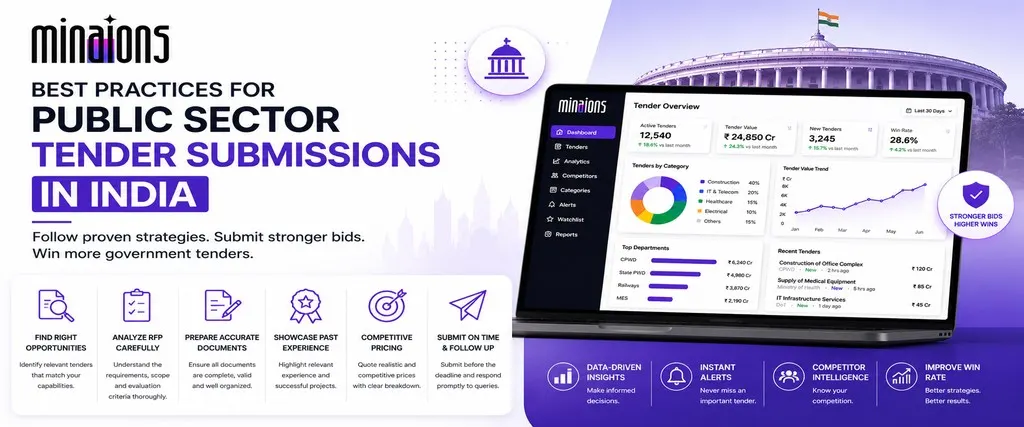
The Indian public procurement landscape is undergoing significant transformation.
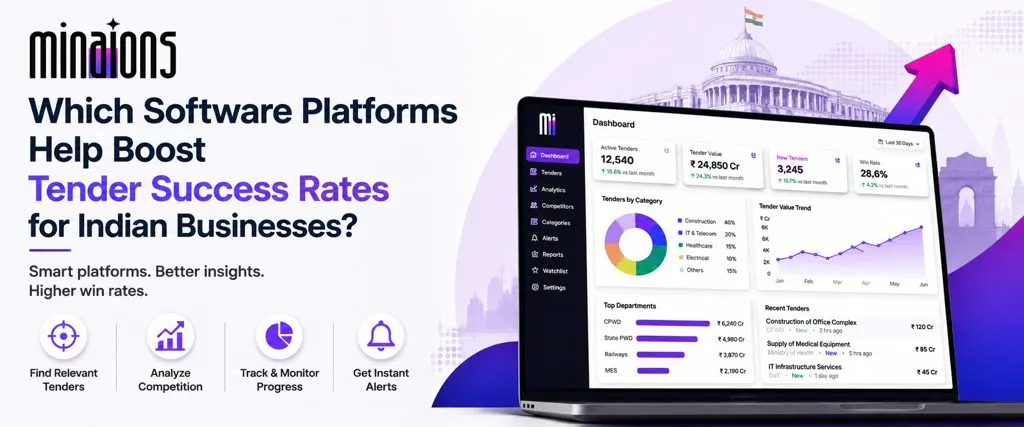
The stakes in Indian government tendering have never been higher.
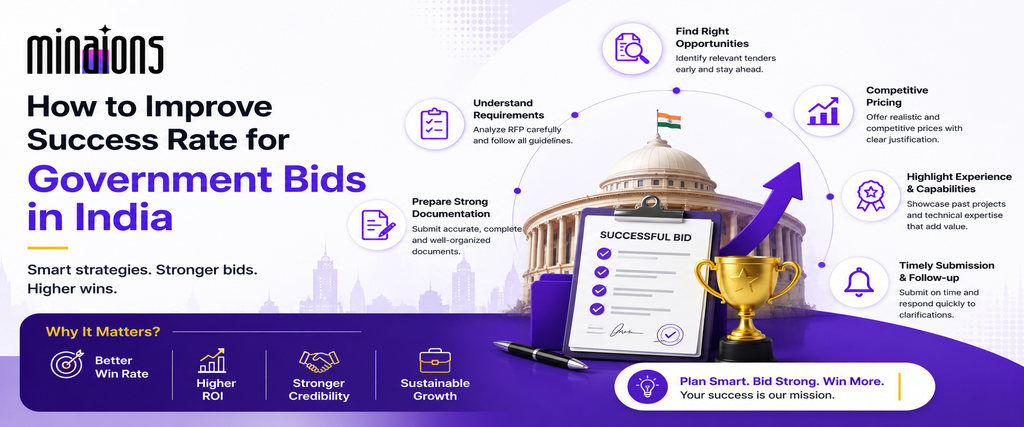
The stakes in Indian government tendering have never been higher. Public procurement spending exceeds ₹50 lakh crore annually, with digital platforms like GeM and CPPP now mandating electronic submissions.