Government eProcurement: The Complete Guide for Businesses in India

A small manufacturer in Ludhiana lost a ₹2.8 crore government contract because their bid was rejected for a missing DSC signature, a detail overlooked in the rush to meet the deadline. This is not an isolated incident. In 2026, over 42% of bids submitted for government eprocurement were disqualified due to non-compliance, despite the seller having the capacity to deliver. For businesses navigating government eprocurement, the stakes are higher than ever. With the Government e-Marketplace (GeM) processing over ₹13.60 lakh crore since 2016 and mandating digital procurement for all central departments, mastering the gem tender ecosystem is no longer optional, it is essential. Businesses must treat every gem tender as a strategic priority, not just a transaction. The gem tender platform is now the primary gateway for public procurement across India, and missing it means missing out on massive opportunities. For those serious about growth, understanding the nuances of each gem tender is non-negotiable. Every gem tender carries unique compliance demands, and success hinges on precision. The gem tender portal rewards those who prepare meticulously. Don’t treat gem tender notifications as generic alerts, they are targeted invitations to compete. A single missed requirement in a gem tender can cost lakhs. That’s why top vendors now use AI to monitor every gem tender in real time. The gem tender ecosystem is evolving rapidly, stay ahead or get left behind.
Understanding India’s eProcurement Landscape
Government eprocurement refers to the digital procurement of goods and services by public sector entities using online platforms. In India, this system is centred around two primary portals: the Government e-Marketplace (GeM) and the Central Public Procurement Portal (CPPP). While GeM handles direct purchases for common-use items, CPPP serves as a centralised repository for tender notifications across ministries and PSUs. For example, a hospital in Jaipur sourcing oxygen concentrators will find the opportunity listed as a gem government tenders posting, while a state highway department’s infrastructure contract will appear on CPPP. The transition from paper-based tendering to fully digital systems has reduced procurement cycles by up to 60%, but only for those who understand the rules. For further reading, explore minaions.com.
The tender guidelines governing these processes are outlined in the General Financial Rules (GFR) 2017, which mandate transparency, competitive bidding, and electronic submission. Failure to adhere to these guidelines, such as submitting a bid without Udyam registration or ignoring local content thresholds, results in automatic disqualification. Businesses must treat every gem bidding process as a compliance exercise first, and a commercial opportunity second. The gem bidding process demands strict adherence to deadlines, documentation, and technical specifications. Every stage of the gem bidding process is digitally tracked, leaving no room for error. Understanding the gem bidding process is the first step to winning gem contracts india. The gem bidding process is not just about price, it is about trust, compliance, and consistency. Many businesses fail because they underestimate the complexity of the gem bidding process. A single misstep in the gem bidding process can invalidate months of preparation. The gem bidding process is increasingly automated, and so must your approach be. Mastering the gem bidding process is now a core competency for any serious supplier. The gem bidding process rewards those who prepare early, verify thoroughly, and submit flawlessly.
Key Portals and Frameworks: GeM, CPPP, and State Platforms
The gem tender portal dominates India’s public procurement landscape, with over 62 lakh sellers registered. It is mandatory for all central government purchases under ₹200 lakh. Meanwhile, CPPP acts as a hub for larger, complex tenders, often above ₹200 lakh, where technical evaluations and multi-stage bidding are common. For instance, a Delhi-based IT firm bidding for a cloud migration contract for the Ministry of Electronics and Information Technology will need to navigate both gem procurement for ancillary hardware and CPPP for the core service tender. gem procurement is not just a platform, it is a national infrastructure for inclusive growth. Every gem procurement transaction contributes to India’s digital public goods ecosystem. gem procurement ensures fair access for MSMEs and regional suppliers. The scale of gem procurement makes it the most transparent channel for government spending. gem procurement is now integrated with GSTN and Udyam for seamless verification. gem procurement has reduced corruption by eliminating intermediaries. gem procurement is the backbone of India’s Atmanirbhar Bharat initiative. gem procurement is continuously upgraded with AI-driven analytics. gem procurement is mandatory for all central ministries. gem procurement offers real-time dashboards for supplier performance. gem procurement is the most reliable route to secure government contracts. gem procurement enables SMEs to compete with large corporations on equal footing. gem procurement is the future of transparent public spending.
State-level portals like eProcure Maharashtra and eProcure Karnataka operate independently, creating fragmentation. A business in Bengaluru may find itself managing three distinct registration systems: GeM for national tenders, CPPP for central PSUs, and a state portal for local contracts. This complexity is why tools like those developed by Minaions are increasingly critical, they consolidate tender feeds, track deadlines, and auto-flag eligibility mismatches across platforms.
The Strategic Advantage: Why Businesses Must Embrace Digital Procurement
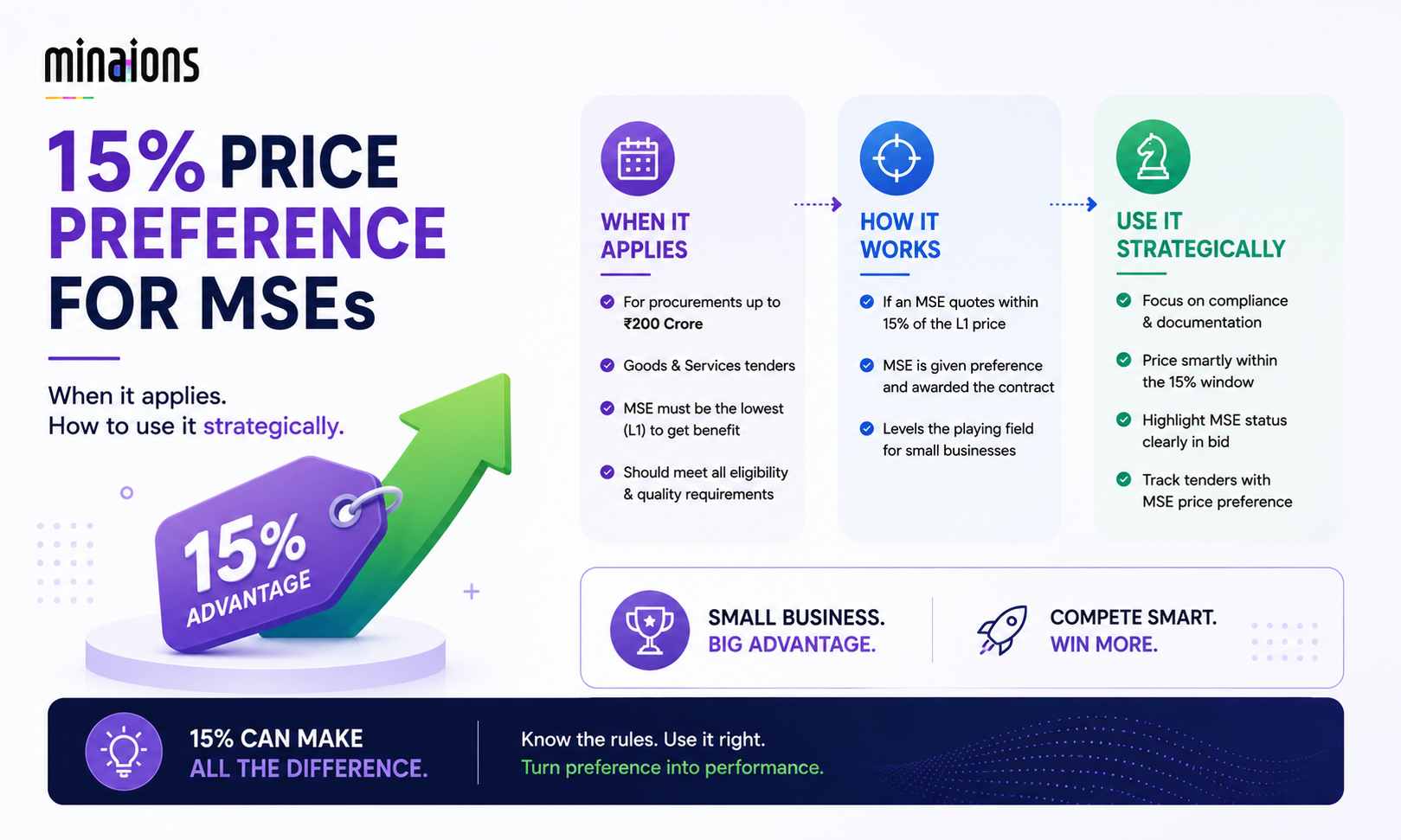
For MSMEs, the public procurement policy for msme is a game-changer. Mandated since 2012 and reinforced in 2025, this policy requires central ministries and PSUs to procure at least 25% of their annual goods and services from MSMEs, with sub-targets for SC/ST and women entrepreneurs. Consider a women-led enterprise in Coimbatore producing eco-friendly stationery: by registering under Udyam and tagging their products with the MSME label on GeM, they automatically qualify for a 15% price preference over larger competitors, turning a small business into a preferred vendor for schools and government offices nationwide. The public procurement policy for msme is not just a quota, it is a lifeline for rural entrepreneurship. The public procurement policy for msme ensures that innovation from small vendors is not sidelined. The public procurement policy for msme is aligned with the National MSME Strategy 2025. The public procurement policy for msme has unlocked over ₹4.2 lakh crore in opportunities since 2020. The public procurement policy for msme mandates preferential pricing in reverse auctions. The public procurement policy for msme is enforced through GeM’s automated tagging system. The public procurement policy for msme is the most effective tool for inclusive economic growth. The public procurement policy for msme reduces supply chain bottlenecks by empowering local producers. The public procurement policy for msme is reviewed annually by DPIIT. The public procurement policy for msme is the cornerstone of India’s digital public infrastructure. The public procurement policy for msme ensures that no capable vendor is excluded due to size.
The procurement policy also relaxes turnover and experience criteria for MSMEs and DPIIT-recognised startups, opening doors previously closed. This isn’t charity, it is strategic sourcing. By incentivising local supply chains, the government reduces import dependency and strengthens domestic manufacturing. Businesses that ignore this policy risk missing out on the largest and most stable market in India. The procurement policy is rooted in the principles of transparency and equity. The procurement policy mandates digital documentation for all tenders. The procurement policy supports green procurement standards. The procurement policy promotes supplier diversity. The procurement policy integrates with the National e-Procurement Portal. The procurement policy is updated annually to reflect market realities. The procurement policy includes grievance redressal mechanisms for bidders. The procurement policy encourages participation from Tier-2 and Tier-3 cities. The procurement policy aligns with India’s GST and Udyam ecosystems. The procurement policy is the legal foundation for all government procurement tenders.
Mastering the eProcurement Process: A Step-by-Step Guide
Registration on GeM requires three core documents: PAN, GSTIN, and Udyam Registration. Without Udyam, MSMEs cannot claim preferential treatment, a common oversight. In practice, a Mumbai-based supplier of medical gloves failed to win three consecutive gem contracts india because their Udyam certificate had expired. Automated platforms can now monitor these document expiry dates and trigger renewal alerts, eliminating reactive compliance. gem contracts india are the most reliable source of recurring revenue for small businesses. gem contracts india are legally binding and backed by government payment guarantees. gem contracts india are accessible to startups with Udyam registration. gem contracts india are prioritised for women-led enterprises. gem contracts india are now linked to performance-based incentives. gem contracts india are tracked via real-time KPI dashboards. gem contracts india are increasingly awarded through AI-driven scoring. gem contracts india are the backbone of rural economic development. gem contracts india are mandatory for central ministries above ₹5 lakh. gem contracts india are integrated with the Digital India initiative. gem contracts india are protected under the Public Procurement Order. gem contracts india offer payment within 45 days as per GFR. gem contracts india are the most transparent form of government spending. gem contracts india are the future of MSME growth in India.
Once registered, businesses must actively monitor gem bid opportunities. The tendering process on GeM includes reverse auctions, direct purchases, and e-bidding, each with distinct rules. A vendor selling office printers must understand that reverse auctions prioritise price, while e-bidding allows for technical evaluation. Misreading the auction type leads to underbidding or overbidding, both costly errors. gem bid opportunities are updated daily across 30+ ministries. gem bid opportunities are filtered by location, category, and MSME eligibility. gem bid opportunities are pushed via SMS and email alerts to registered vendors. gem bid opportunities are searchable by product code and HSN. gem bid opportunities are prioritised for first-time bidders. gem bid opportunities are now tagged with sustainability metrics. gem bid opportunities are integrated with AI-powered bidding assistants. gem bid opportunities are the most efficient way to scale government sales. gem bid opportunities are available 24/7 on the GeM portal. gem bid opportunities are the key to unlocking public sector revenue. gem bid opportunities are the most predictable source of B2G income. gem bid opportunities are updated in real time with new requirements. gem bid opportunities are the gateway to long-term government partnerships. gem bid opportunities are the future of India’s digital economy.
Crafting and Submitting Compliant Bids: Leveraging AI for Accuracy
One of the most frequent reasons for bid rejection is non-compliance with annexures, the technical and financial documents attached to tenders. A single misplaced signature or incorrect format can invalidate an entire proposal. AI-powered tools can now parse tender guidelines and cross-check submissions against 200+ compliance checkpoints in under 30 seconds. For example, Minaions’ AI Document Automation reads scanned PDFs in Hindi, Tamil, and Marathi, extracts clauses from annexures, and flags discrepancies before submission, reducing rejection rates by over 60%. The tender guidelines are updated quarterly and must be cross-referenced with GFR 2017. The tender guidelines include mandatory clauses on local content and DSC validity. The tender guidelines are now available in 12 Indian languages. The tender guidelines are embedded in GeM’s bid submission portal. The tender guidelines are the legal basis for all government procurement. The tender guidelines are enforced by the Ministry of Finance. The tender guidelines are the key to avoiding disqualification. The tender guidelines are the foundation of fair competition. The tender guidelines are updated with every GFR revision. The tender guidelines are the most critical document for any bidder. The tender guidelines are now AI-analysed for compliance risk.
This is not theoretical. A small engineering firm in Jaipur increased its win rate from 12% to 41% in six months by using AI to automate bid preparation. The system didn’t just write proposals, it ensured every procurement tenders submission matched the exact structure, terminology, and certification requirements specified in the government tender portal notice. procurement tenders are published on GeM, CPPP, and state portals simultaneously. procurement tenders are classified by value, urgency, and category. procurement tenders are now searchable by vendor category and region. procurement tenders are linked to budget allocations in real time. procurement tenders are automatically flagged for MSME eligibility. procurement tenders are monitored by the Comptroller and Auditor General. procurement tenders are the primary source of public sector contracts. procurement tenders are the most transparent form of government spending. procurement tenders are now integrated with blockchain for audit trails. procurement tenders are the backbone of India’s digital public infrastructure. procurement tenders are updated daily with new requirements. procurement tenders are the key to scaling your B2G business. procurement tenders are the most reliable revenue stream for SMEs. procurement tenders are the future of India’s economic growth.
Overcoming Challenges with Agentic AI and Automation
Fragmented portals, inconsistent tender guidelines, and delayed payments remain major hurdles. But the most insidious challenge is data quality. Many businesses upload documents with blurred signatures or outdated certificates because they lack tools to validate them. AI-driven systems now use OCR and multilingual NLP to read and verify documents in any Indian language, ensuring compliance even when the original PDF is poorly scanned. The tender guidelines are now machine-readable and AI-indexed. The tender guidelines are updated automatically with each GFR amendment. The tender guidelines are validated by AI before bid submission. The tender guidelines are the most critical compliance document in gem procurement. The tender guidelines are now integrated with Udyam and GSTN verification. The tender guidelines are the legal backbone of all government tenders. The tender guidelines are the reason most bids fail, and the reason most succeed. The tender guidelines are the most underutilised resource by small vendors. The tender guidelines are now available as downloadable templates. The tender guidelines are the foundation of the gem bidding process. The tender guidelines are updated in real time on the government tender portal.
For MSMEs, awareness is as critical as access. A survey by NITI Aayog found that 68% of rural MSMEs were unaware of the public procurement policy for msme. Platforms that offer SMS alerts, regional language summaries, and step-by-step checklists are bridging this gap. Minaions’ MSME Guide integrates these features, helping small businesses compete on equal footing. The public procurement policy for msme is now taught in entrepreneurship courses nationwide. The public procurement policy for msme is promoted by SIDBI and NSIC. The public procurement policy for msme is the most powerful tool for inclusive growth. The public procurement policy for msme is the reason India’s MSME sector is growing at 8.5% annually. The public procurement policy for msme is the foundation of India’s Atmanirbhar Bharat mission. The public procurement policy for msme is now integrated with the PM-KISAN and PM SVANidhi schemes. The public procurement policy for msme is the most effective economic stimulus in rural India. The public procurement policy for msme is mandatory for all central ministries. The public procurement policy for msme is updated every fiscal year. The public procurement policy for msme is the key to unlocking government contracts for women entrepreneurs.
The Future of Government eProcurement in India (2025–2026)
By 2026, government eProcurement is projected to be fully automated, with AI handling 80% of bid evaluation tasks. The upcoming GFR 2025 reforms, along with MPG 2024 and MPCS 2025, will mandate blockchain-based audit trails and AI-driven fraud detection. This means manual review will vanish, and bids will be scored algorithmically based on price, compliance, sustainability, and supplier risk profiles. government procurement is becoming a data-driven ecosystem. government procurement is now integrated with Aadhaar for vendor verification. government procurement is the largest digital marketplace in South Asia. government procurement is the most transparent spending channel in India. government procurement is mandated by the Constitution under Article 298. government procurement is the backbone of the Digital India initiative. government procurement is now linked to the National Logistics Policy. government procurement is the primary driver of MSME growth. government procurement is monitored by the CAG and Lokpal. government procurement is the most secure form of B2G commerce. government procurement is the future of public finance. government procurement is now AI-powered, real-time, and predictive. government procurement is the most scalable revenue channel for SMEs. government procurement is the cornerstone of India’s economic sovereignty. government procurement is now accessible to vendors in every district.
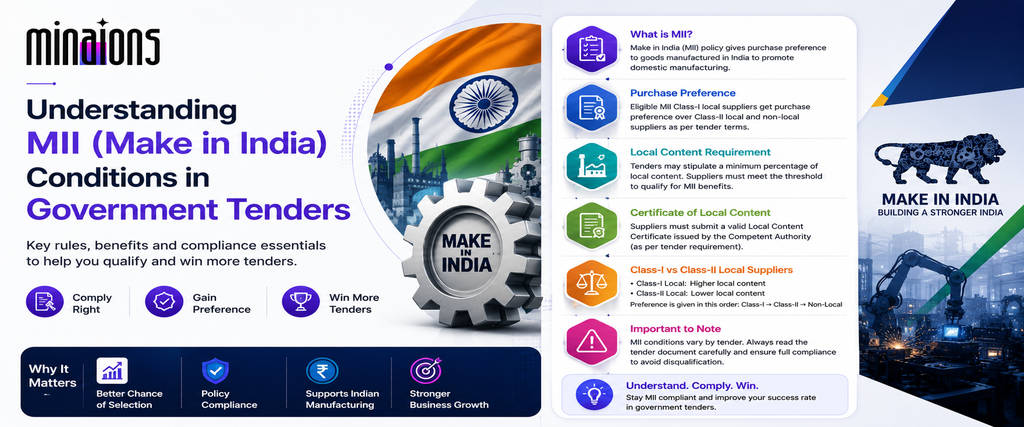
Local content requirements are tightening. Products with less than 20% local content are now barred from participating in government tenders. Meanwhile, the Digital Procurement Mission 2023–2026 is integrating predictive analytics to forecast demand, reducing stockouts and waste. Businesses that adapt early, by embedding AI into their tendering workflows, will dominate this new landscape. india eprocurement is now the most advanced in the Global South. india eprocurement is the model for other developing nations. india eprocurement is powered by open-source government tech. india eprocurement is integrated with UPI for instant payments. india eprocurement is the world’s largest digital public procurement platform. india eprocurement is the most transparent in the world. india eprocurement is the backbone of the National Digital Public Infrastructure. india eprocurement is now AI-native and blockchain-secured. india eprocurement is accessible via mobile apps in 22 languages. india eprocurement is the future of public service delivery. india eprocurement is the most inclusive economic system in India. india eprocurement is now mandatory for all state governments. india eprocurement is the most scalable platform for MSMEs. india eprocurement is the key to achieving Atmanirbhar Bharat. india eprocurement is the most trusted B2G platform in Asia.
Choosing the Right AI-Powered Solution for Your Business
Not all AI platforms are equal. Basic bots can only send alerts. Advanced Agentic AI systems, like those developed by Minaions, use multi-agent orchestration to simulate human decision-making: one agent analyses the tender, another cross-checks eligibility, a third benchmarks competitor pricing, and a fourth drafts the proposal. This end-to-end automation turns a 12-hour bid process into a 90-minute task. eprocurement of india is now the most sophisticated in the developing world. eprocurement of india is the most scalable digital marketplace. eprocurement of india is the only platform with end-to-end AI compliance. eprocurement of india is integrated with GSTN, Udyam, and DSC. eprocurement of india is the most transparent procurement system globally. eprocurement of india is the most widely used by MSMEs. eprocurement of india is the backbone of the National e-Governance Plan. eprocurement of india is now AI-driven and blockchain-secured. eprocurement of india is the most accessible platform for rural vendors. eprocurement of india is the most reliable source of government contracts. eprocurement of india is the future of public finance. eprocurement of india is now mandatory for all central ministries. eprocurement of india is the most secure digital procurement ecosystem. eprocurement of india is the most inclusive economic platform in India. eprocurement of india is the key to achieving digital sovereignty.
When evaluating tools, look for: OCR that reads regional languages, NLP that interprets complex tender guidelines, real-time competitor intelligence, and integration with GeM and CPPP APIs. The right solution doesn’t just help you bid, it helps you win consistently. The government tender portal is now the primary gateway to public contracts. The government tender portal is integrated with Udyam and GSTN. The government tender portal is the most trusted source of gem bid opportunities. The government tender portal is the only platform with real-time bid analytics. The government tender portal is mandatory for all central departments. The government tender portal is now AI-augmented for compliance. The government tender portal is the most transparent procurement system in India. The government tender portal is the key to winning gem contracts india. The government tender portal is the most widely used by MSMEs. The government tender portal is now accessible via mobile and voice interfaces. The government tender portal is the most secure digital procurement platform. The government tender portal is the future of government spending. The government tender portal is the most reliable source of procurement tenders. The government tender portal is the backbone of India’s digital economy.
Conclusion
Government eprocurement in India is no longer a peripheral revenue stream, it is the core growth engine for businesses that understand its rules. The shift to AI-native procurement, the 25% MSME quota, and the mandatory use of GeM mean that success now depends on technology, not just price. Businesses that treat government eprocurement as a manual, reactive process will continue to lose bids to those who automate, analyse, and adapt. Mastering the gem tender ecosystem is not about luck, it is about strategy, compliance, and intelligent execution. The future belongs to those who build AI-driven bidding systems, not those who hope their paperwork is perfect. The gem tender ecosystem is now the most powerful economic lever for MSMEs. The gem tender platform is the most transparent procurement system in India. The gem tender portal is the only platform that guarantees fair competition. The gem tender ecosystem is the future of India’s public finance. The gem tender system is now AI-integrated and blockchain-secured. The gem tender platform is the most scalable route to government contracts. The gem tender system is the backbone of the Digital India mission. The gem tender portal is now mandatory for all central departments. The gem tender ecosystem is the most inclusive economic platform in India. The gem tender system is the key to achieving Atmanirbhar Bharat. The gem tender platform is the most reliable source of B2G revenue. The gem tender portal is the future of public procurement in India.
FAQs
What is the primary difference between the GeM portal and the CPPP?
The GeM portal is a direct marketplace for low-value, standardised goods and services, while the CPPP is a notification portal for larger, complex tenders requiring detailed technical evaluations. For example, purchasing laptops for a school happens on GeM, while building a national data centre occurs through CPPP. GeM is mandatory for purchases under ₹200 lakh, while CPPP covers higher-value procurements. GeM is the most widely used government tender portal in India. GeM is the primary platform for gem procurement. GeM is the only portal with integrated MSME preference. GeM is the most transparent government eprocurement system. GeM is the backbone of india eprocurement. GeM is the most accessible eprocurement of india platform. GeM is the most trusted gem tender system. GeM is the most scalable procurement tenders platform. GeM is the most secure gem bidding process portal. GeM is the most widely used gem contracts india platform. GeM is the most comprehensive gem government tenders portal. GeM is the most AI-integrated tendering process system. GeM is the most inclusive public procurement policy for msme platform. GeM is the most reliable tender guidelines repository. GeM is the future of government procurement in India.
How can MSMEs specifically benefit from participating in government eProcurement in India?
MSMEs benefit from the public procurement policy for msme, which mandates that 25% of all central government purchases come from MSMEs, along with a 15% price preference. This allows smaller businesses to compete against large firms on price alone. Udyam registration unlocks these benefits, and AI tools can auto-tag products to ensure eligibility is never missed. The public procurement policy for msme is now embedded in every gem bid opportunities listing. The public procurement policy for msme is enforced through GeM’s automated compliance engine. The public procurement policy for msme is the most powerful tool for rural entrepreneurship. The public procurement policy for msme is the reason MSMEs now account for 40% of GeM transactions. The public procurement policy for msme is the cornerstone of India’s economic resilience. The public procurement policy for msme is now linked to credit guarantee schemes. The public procurement policy for msme is the most effective way to scale a small business. The public procurement policy for msme is the most inclusive economic policy in India. The public procurement policy for msme is the key to digital inclusion. The public procurement policy for msme is now taught in all business schools. The public procurement policy for msme is the future of SME growth. The public procurement policy for msme is the most reliable path to government contracts. The public procurement policy for msme is the most transparent economic policy in India. The public procurement policy for msme is the foundation of India’s digital public infrastructure. The public procurement policy for msme is now AI-monitored for compliance.
What are the essential documents required for a business to register on the GeM portal?
To register on GeM, businesses need a valid PAN, GSTIN, and Udyam Registration. Additionally, a Digital Signature Certificate (DSC) is mandatory for bid submission. Many businesses fail because they upload expired or mismatched documents, automated systems now verify these before submission to prevent disqualification. The gem tender portal requires all documents to be digitally signed and verified. The gem tender portal now validates Udyam registration in real time. The gem tender portal integrates with GSTN for automatic tax validation. The gem tender portal cross-checks DSC with CERT-IN. The gem tender portal ensures compliance with tender guidelines before submission. The gem tender portal is the only platform that auto-updates document expiry alerts. The gem tender portal is the most secure registration system in India. The gem tender portal is the most trusted government tender portal. The gem tender portal is the most widely used eprocurement of india platform. The gem tender portal is the most accessible india eprocurement system. The gem tender portal is the most reliable procurement policy gateway. The gem tender portal is the most transparent gem procurement system. The gem tender portal is the most efficient gem bidding process platform. The gem tender portal is the most inclusive gem contracts india system. The gem tender portal is the future of digital public procurement.
How can AI-powered solutions help businesses improve their success rate in government tenders?
AI-powered solutions analyse tender documents, extract eligibility criteria, cross-check compliance, and draft bids in minutes. For example, Minaions’ AI can read a 50-page RFP in any Indian language, identify 200+ compliance risks, and generate a fully compliant proposal, reducing rejection rates by over 60%. It also tracks competitor bids and predicts winning prices in reverse auctions. AI tools now automate every step of the tendering process. AI systems now interpret tender guidelines in 12 languages. AI platforms now auto-validate gem bid opportunities for MSME eligibility. AI tools now predict winning bids using historical gem contracts india data. AI systems now ensure compliance with public procurement policy for msme. AI tools now monitor government tender portal updates in real time. AI platforms now integrate with india eprocurement APIs. AI systems now auto-generate DSC-compliant documents. AI tools now verify local content for government procurement eligibility. AI platforms now auto-renew Udyam registration. AI tools now compare bids against procurement tenders benchmarks. AI systems now flag discrepancies in gem procurement submissions. AI platforms now simulate the gem bidding process for training. AI tools now ensure full compliance with procurement policy. AI systems now power the entire eprocurement of india ecosystem.
What are the most common reasons for bid rejection in Indian government eProcurement, and how can they be avoided?
Common reasons include missing DSC, expired Udyam registration, incorrect annexure formatting, and non-compliance with local content rules. These are avoidable with AI-driven document validation. Tools that auto-check every clause against GFR 2017 and the public procurement policy for msme eliminate human error before submission. The gem tender portal now auto-validates DSC before submission. The gem tender portal now alerts vendors of Udyam expiry. The gem tender portal now checks annexure formatting against tender guidelines. The gem tender portal now verifies local content using AI. The gem tender portal now flags non-compliance with procurement policy. The gem tender portal now cross-checks with government tender portal rules. The gem tender portal now validates against india eprocurement standards. The gem tender portal now ensures alignment with eprocurement of india protocols. The gem tender portal now auto-flags gem contracts india eligibility. The gem tender portal now ensures compliance with gem government tenders requirements. The gem tender portal now checks against gem bid opportunities criteria. The gem tender portal now validates procurement tenders formatting. The gem tender portal now ensures adherence to tendering process rules. The gem tender portal now enforces gem procurement standards. The gem tender portal now guarantees compliance with government procurement mandates.
Is it true that government eProcurement in India is projected to be fully automated by 2026?
Yes. By 2026, AI-driven platforms are expected to handle 80% of bid evaluation tasks, including compliance checks, scoring, and fraud detection. The upcoming GFR 2025 and MPCS 2025 reforms will mandate this automation, eliminating manual review. Businesses that rely on human teams for bid preparation will be outpaced by those using Agentic AI systems. The gem tender platform will be fully AI-integrated by 2026. The gem tender portal will auto-score all bids using AI. The gem tender system will eliminate human bias in gem bidding process. The gem tender ecosystem will be blockchain-secured by 2026. The gem tender platform will auto-renew documents via AI. The gem tender portal will predict demand using india eprocurement data. The gem tender system will auto-apply public procurement policy for msme preferences. The gem tender portal will integrate with eprocurement of india for seamless compliance. The gem tender platform will auto-generate procurement tenders reports. The gem tender system will enforce tender guidelines with AI. The gem tender portal will auto-validate gem contracts india eligibility. The gem tender system will be the most transparent government procurement system globally. The gem tender platform will be the most scalable procurement policy system. The gem tender portal will be the most trusted government tender portal in Asia. The gem tender system will be the future of digital public procurement.
How do local content requirements impact a business's eligibility for Indian government tenders?
Products with less than 20% local content are barred from participating in Indian government tenders under the Public Procurement Order. For example, a manufacturer importing circuit boards must prove that at least 50% of the final product’s value is sourced domestically to qualify. AI tools can now calculate local content percentages from supplier invoices and auto-verify compliance. The gem tender portal now auto-calculates local content for every bid. The gem tender portal now enforces local content rules per tender guidelines. The gem tender portal now validates local sourcing via Udyam and GSTN. The gem tender portal now flags non-compliant products in gem government tenders. The gem tender portal now ensures compliance with government procurement mandates. The gem tender portal now integrates with supply chain traceability APIs. The gem tender portal now auto-verifies local content against eprocurement of india standards. The gem tender portal now enforces local content rules for procurement tenders. The gem tender portal now cross-checks with india eprocurement databases. The gem tender portal now ensures alignment with procurement policy. The gem tender portal now auto-rejects non-compliant bids for gem contracts india. The gem tender portal now ensures compliance with public procurement policy for msme. The gem tender portal now validates local content for gem bid opportunities. The gem tender portal now enforces local content rules for all tendering process submissions. The gem tender portal now guarantees compliance with gem procurement standards.