Best practices for public sector tender submissions in India
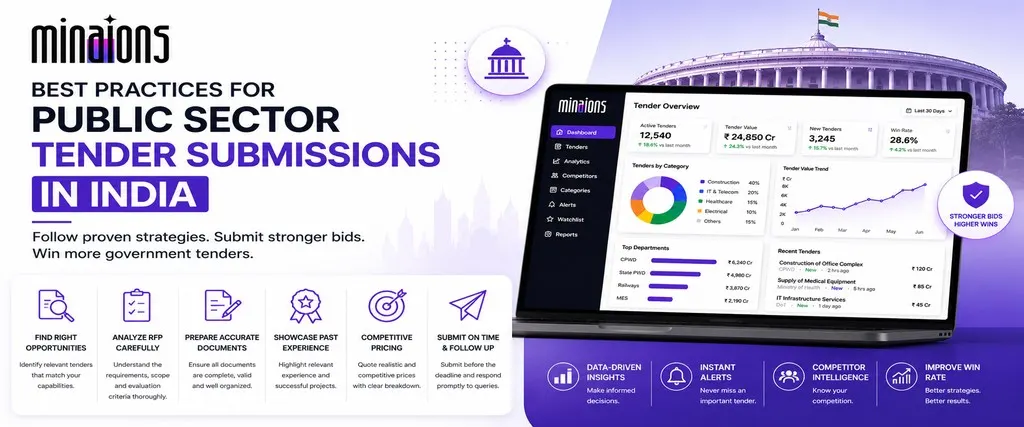
India’s public procurement ecosystem is growing rapidly, creating significant opportunities for MSMEs, startups, consultants, contractors, and enterprises. However, succeeding in the government tender process requires more than simply submitting bids. Businesses must understand compliance, documentation, timelines, evaluation criteria, and digital procurement systems.
Today, organizations participating in the government tender process are increasingly relying on digital tools, automation, and procurement intelligence to improve submission quality and win rates. Whether a business is completing tender registration, accessing opportunities through the central government tender portal, or participating in central government e procurement, following best practices is essential.
Companies aiming to become a trusted government vendor must understand the evolving public procurement procedure, comply with the applicable procurement manual, and actively participate in the expanding govt marketplace ecosystem.
Understanding the Government Tender Process
Before discussing best practices, businesses must first understand the complete government tender process.
The standard government tender process generally includes:
Completing tender registration
Searching opportunities on the central government tender portal
Reviewing eligibility criteria
Understanding the applicable procurement manual
Preparing technical documents
Preparing commercial bids
Uploading compliance certificates
Participating in evaluations under central government e procurement
The government tender process is becoming increasingly digitized, making it easier for businesses to participate in procurement opportunities across India. However, competition within the govt marketplace is also increasing rapidly.
Importance of Tender Registration
One of the first and most important steps in the government tender process is proper tender registration.
Without accurate tender registration, businesses cannot participate efficiently in opportunities listed on the central government tender portal or other procurement systems.
Effective tender registration helps businesses:
Access procurement opportunities faster
Participate in central government e procurement
Improve visibility in the govt marketplace
Build credibility as a government vendor
Streamline the public procurement procedure
Businesses should regularly update documents used during tender registration, including GST certificates, PAN details, turnover documents, experience certificates, and digital signatures.
Proper tender registration also helps reduce delays during bid submissions.
Study the Procurement Manual Carefully
A major mistake businesses make during the government tender process is ignoring the applicable procurement manual.
Every department, PSU, or ministry follows a specific procurement manual that defines compliance rules, eligibility standards, technical requirements, and financial evaluation criteria.
A standard procurement manual may include:
Vendor eligibility guidelines
Bid evaluation procedures
Financial qualification rules
Documentation requirements
Contract compliance conditions
Submission timelines
Understanding the procurement manual is essential for every government vendor participating in central government e procurement.
Businesses that carefully analyze the procurement manual improve their chances of success in the competitive govt marketplace.
Monitor the Central Government Tender Portal Regularly
The central government tender portal is one of the most important procurement platforms in India.
Companies participating in the government tender process should continuously monitor the central government tender portal for new opportunities, corrigendums, amendments, and deadline updates.
The central government tender portal allows businesses to:
Complete tender registration
Download bid documents
Access procurement notices
Submit bids digitally
Participate in central government e procurement
Regular monitoring of the central government tender portal helps businesses avoid missed opportunities and submission delays.
Many organizations also use automated systems to track updates from the central government tender portal more efficiently.
Follow the Public Procurement Procedure Properly
A structured public procurement procedure is essential for successful tender participation.
The public procurement procedure ensures transparency, fairness, and accountability in procurement activities.
Businesses should always align their submissions with the applicable public procurement procedure to avoid disqualification.
A standard public procurement procedure usually includes:
Opportunity identification
Technical qualification
Financial qualification
Bid submission
Evaluation
Vendor selection
Understanding the public procurement procedure helps every government vendor improve bid quality and compliance accuracy.
Businesses ignoring the prescribed public procurement procedure often face rejection during evaluations.
Build a Strong Government Vendor Profile
To succeed consistently in the government tender process, businesses must build a strong government vendor profile.
A reliable government vendor should maintain:
Updated compliance documents
Strong technical capabilities
Positive project experience
Financial stability
Accurate certifications
Every successful government vendor understands the importance of compliance with the procurement manual and active participation in the govt marketplace.
Businesses aiming to become a trusted government vendor should also improve documentation quality and maintain transparent communication during the government tender process.
Leverage the Govt Marketplace Ecosystem
The digital govt marketplace ecosystem has transformed procurement accessibility in India.
Today, the govt marketplace provides opportunities for MSMEs, startups, consultants, and enterprises to participate in public procurement more efficiently.
Businesses active in the govt marketplace can:
Discover procurement opportunities
Participate in central government e procurement
Improve visibility as a government vendor
Simplify the government tender process
Expand procurement reach
The growing govt marketplace ecosystem is increasing competition, making strategic bid preparation more important than ever.
Companies using automation and procurement intelligence gain a significant advantage within the govt marketplace.
Improve Compliance in Central Government E Procurement
Participation in central government e procurement requires strict compliance management.
Businesses involved in central government e procurement should ensure:
Proper tender registration
Accurate documentation
Timely submissions
Digital signature readiness
Financial bid accuracy
Technical compliance
The rise of central government e procurement has improved procurement transparency but also increased the importance of compliance accuracy.
Every government vendor participating in central government e procurement should maintain centralized document management systems to reduce submission risks.
Avoid Common Mistakes in Tender Central Government Opportunities
Many businesses fail during tender central government submissions because of avoidable mistakes.
Common issues include:
Incomplete tender registration
Ignoring the procurement manual
Missing deadlines on the central government tender portal
Incorrect pricing
Poor compliance documentation
Misunderstanding the public procurement procedure
Businesses participating in tender central government opportunities should carefully review all submission requirements before uploading documents.
A successful approach to tender central government participation requires planning, accuracy, and workflow discipline.
Use Technology to Streamline the Government Tender Process
Modern businesses are increasingly using technology to optimize the government tender process.
Automation tools help businesses:
Simplify tender registration
Monitor the central government tender portal
Manage the procurement manual
Improve compliance in central government e procurement
Organize the public procurement procedure
Strengthen government vendor management
Technology-driven procurement systems also help businesses participate more efficiently in the expanding govt marketplace.
Organizations using procurement automation gain better visibility, faster response time, and improved bid accuracy.
The Future of Public Procurement in India
The future of the government tender process will become increasingly digital and data-driven.
As procurement volumes increase, businesses participating in central government e procurement and the broader govt marketplace ecosystem will depend more heavily on automation, AI, and analytics.
Future procurement systems may include:
AI-driven tender registration
Automated compliance based on the procurement manual
Smart workflows for the public procurement procedure
Predictive analytics for government vendor performance
Real-time tracking on the central government tender portal
Advanced automation for tender central government opportunities
Businesses that adapt early will gain a major advantage.
Final Thoughts
Winning public sector contracts in India requires more than simply submitting bids. Businesses must understand the complete government tender process, comply with the applicable procurement manual, and actively participate in the evolving govt marketplace ecosystem.
From efficient tender registration to successful participation in central government e procurement, every step of the public procurement procedure plays a critical role in bid success.
Organizations that regularly monitor the central government tender portal, strengthen their profile as a reliable government vendor, and follow best practices for tender central government submissions can significantly improve their procurement success rates.
As India’s digital procurement ecosystem continues to evolve, businesses adopting structured workflows and intelligent procurement systems will be better positioned to succeed in the future of public procurement.
Related Blogs

The bid no-bid decision framework is the strategic backbone of successful government bidding. Without a disciplined approach, MSMEs waste time, capital, and credibility on unwinnable government tenders.

Understanding tender rejection reasons India tender disqualification reasons is critical for MSMEs aiming to secure government tenders.

A small manufacturing firm in Ludhiana missed a ₹2.3 crore contract after spending 14 hours manually scanning the GeM portal, only to find the tender had closed two days earlier. This is not an isolated case.

A small civil engineering firm in Lucknow spent three weeks manually parsing a 420-page NHAI tenders document, only to miss a critical clause in the contractor registration requirements and lose eligibility.