Quality and Cost Based Selection (QCBS) Tenders for Government Projects in India
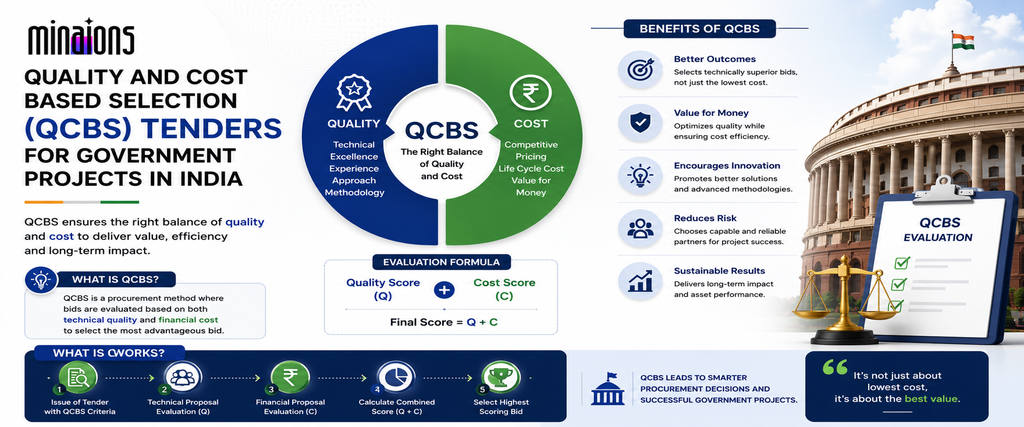
India’s public procurement ecosystem is evolving rapidly, and one of the most important procurement models used in consulting, infrastructure, IT, engineering, and advisory projects is the Quality and Cost Based Selection (QCBS) method. Today, businesses participating in rfp government contracts and large-scale public contracts must understand how QCBS works to improve their success rates.
Unlike traditional procurement methods that focus mainly on pricing, QCBS evaluates bidders based on both technical quality and commercial value. Businesses participating in public rfp opportunities, submitting a tender bid, or managing building bids must therefore focus on proposal quality, compliance, and strategic price analysis.
As procurement systems become increasingly digital, companies are using modern rfp portals, the gem tender portal, and the central procurement portal to participate in competitive procurement opportunities. Understanding the procurement process and the evolving requirements for government contracts is now essential for long-term procurement success.
What is QCBS in Public Contracts?
QCBS or Quality and Cost Based Selection is a procurement methodology commonly used in public contracts where both technical expertise and pricing are evaluated together.
In many rfp government contracts, procurement authorities assign separate weightage for technical quality and commercial pricing. The bidder with the best combined score wins the contract.
QCBS is widely used in:
Consulting projects
Engineering assignments
IT implementation contracts
Infrastructure advisory services
Architecture and design projects
Digital transformation programs
Businesses participating in public rfp opportunities must therefore focus not only on pricing but also on technical quality and compliance.
Role of RFP Government Contracts in India
The growth of rfp government contracts has increased significantly across India’s procurement ecosystem.
Departments issuing rfp government contracts are increasingly focusing on expertise, innovation, scalability, and project execution capability.
Businesses participating in rfp government contracts must prepare strong technical proposals alongside detailed commercial submissions.
A successful strategy for rfp government contracts involves:
Understanding the procurement process
Reviewing all requirements for government contracts
Preparing accurate price analysis
Strengthening technical documentation
Improving proposal presentation
Companies participating in public contracts should carefully evaluate scoring methodologies mentioned in every public rfp.
Importance of Public RFP Opportunities
A public rfp is one of the most common procurement formats used in government consulting and service projects.
Through a public rfp, procurement authorities invite suppliers to submit technical and commercial proposals for evaluation.
Businesses participating in a public rfp should focus heavily on proposal quality, project methodology, compliance, and team capability.
A standard public rfp generally includes:
Technical requirements
Scope of work
Evaluation methodology
Commercial conditions
Submission timelines
Eligibility criteria
Understanding the structure of a public rfp helps businesses improve their performance in QCBS evaluations.
Understanding The Procurement Process in QCBS
Businesses participating in QCBS-based public contracts must understand the procurement process carefully.
The standard the procurement process usually includes:
Opportunity publication on rfp portals
Accessing documents from the central procurement portal
Reviewing requirements for government contracts
Preparing technical proposals
Conducting detailed price analysis
Submitting a compliant tender bid
Participating in technical evaluations
Commercial bid opening
Understanding the procurement process helps businesses improve accuracy and reduce rejection risks.
Companies participating in building bids and infrastructure-related rfp government contracts especially need strong workflow management during the procurement process.
Importance of Tender Bid Quality
The quality of a tender bid significantly influences success rates in QCBS procurement.
A strong tender bid should include:
Technical expertise
Project methodology
Team structure
Financial capability
Compliance documentation
Commercial pricing
Businesses participating in public contracts should ensure that every tender bid aligns completely with the evaluation criteria mentioned in the public rfp.
An incomplete or poorly structured tender bid may lead to technical disqualification even before commercial evaluation.
Role of Price Analysis in QCBS Procurement
One of the most critical components of QCBS procurement is detailed price analysis.
Unlike simple L1 procurement models, QCBS procurement evaluates both quality and cost. Therefore, businesses participating in rfp government contracts must conduct careful price analysis before submitting a tender bid.
Effective price analysis helps businesses:
Improve pricing competitiveness
Maintain profitability
Align with project scope
Reduce financial risk
Improve commercial evaluation scores
Companies participating in building bids and consulting-related public contracts should use structured price analysis methodologies to improve bid accuracy.
A weak price analysis strategy often reduces overall QCBS scores.
Importance of RFP Portals in Government Procurement
Modern procurement systems rely heavily on digital rfp portals.
Today, businesses participating in public rfp opportunities use rfp portals to:
Access tender opportunities
Download procurement documents
Submit a tender bid
Track corrigendums
Monitor deadlines
The growth of digital rfp portals has increased transparency while also increasing competition across public contracts.
Businesses participating in QCBS procurement should continuously monitor multiple rfp portals to identify suitable opportunities early.
Gem Tender Portal and Digital Procurement
The gem tender portal has become one of India’s most important procurement platforms.
Businesses participating in rfp government contracts increasingly use the gem tender portal for procurement participation and supplier engagement.
The gem tender portal supports:
Digital procurement workflows
Bid submissions
Supplier onboarding
Opportunity discovery
Contract management
The expansion of the gem tender portal has improved accessibility for MSMEs participating in public contracts and QCBS-based procurement opportunities.
Companies participating in building bids and consulting projects should integrate workflows with the gem tender portal to improve operational efficiency.
Importance of Central Procurement Portal
The central procurement portal plays a major role in public procurement visibility.
Businesses participating in QCBS procurement should regularly monitor the central procurement portal for:
New public rfp opportunities
Corrigendum updates
Technical amendments
Submission deadlines
Eligibility revisions
The central procurement portal has become a critical component of modern the procurement process.
Companies participating in rfp government contracts and building bids should use automated systems to track updates from the central procurement portal more efficiently.
Building Bids for Infrastructure and Consulting Projects
The process of preparing building bids is highly detailed and competitive.
Businesses participating in building bids should focus on:
Technical quality
Project execution plans
Compliance accuracy
Commercial viability
Detailed price analysis
Infrastructure-related building bids often involve strict QCBS evaluations where technical expertise plays a major role.
Companies participating in building bids should carefully align their proposals with the requirements for government contracts mentioned in the procurement documents.
Understanding Requirements for Government Contracts
One of the biggest reasons businesses fail in QCBS procurement is misunderstanding the requirements for government contracts.
Every public rfp includes specific requirements for government contracts, including:
Eligibility criteria
Technical specifications
Experience requirements
Financial conditions
Compliance standards
Businesses participating in rfp government contracts should carefully analyze all requirements for government contracts before preparing a tender bid.
Ignoring the requirements for government contracts often leads to disqualification during technical evaluation.
Final Thoughts
QCBS procurement is transforming the way government projects are awarded in India. Businesses participating in rfp government contracts, public contracts, and building bids must focus on both technical quality and commercial competitiveness.
From detailed price analysis to accurate tender bid preparation, every stage of the procurement process plays a critical role in procurement success.
Organizations actively monitoring rfp portals, using the gem tender portal, tracking opportunities through the central procurement portal, and understanding all requirements for government contracts can significantly improve their chances of winning QCBS-based procurement opportunities.
As India’s public procurement ecosystem continues to evolve, businesses adopting structured workflows, intelligent proposal management, and strategic procurement planning will gain a major competitive advantage.
Related Blogs

OEMs lose revenue due to a lack of tender visibility data.

The scale of India’s public procurement landscape has fundamentally shifted. Transactions on the Government e-Marketplace (GeM) exceeded ₹4 lakh crore in FY’26, with over 50 lakh buying and selling orders processed.