Building a Winning OEM Reseller Network on GeM: A Step-by-Step Playbook
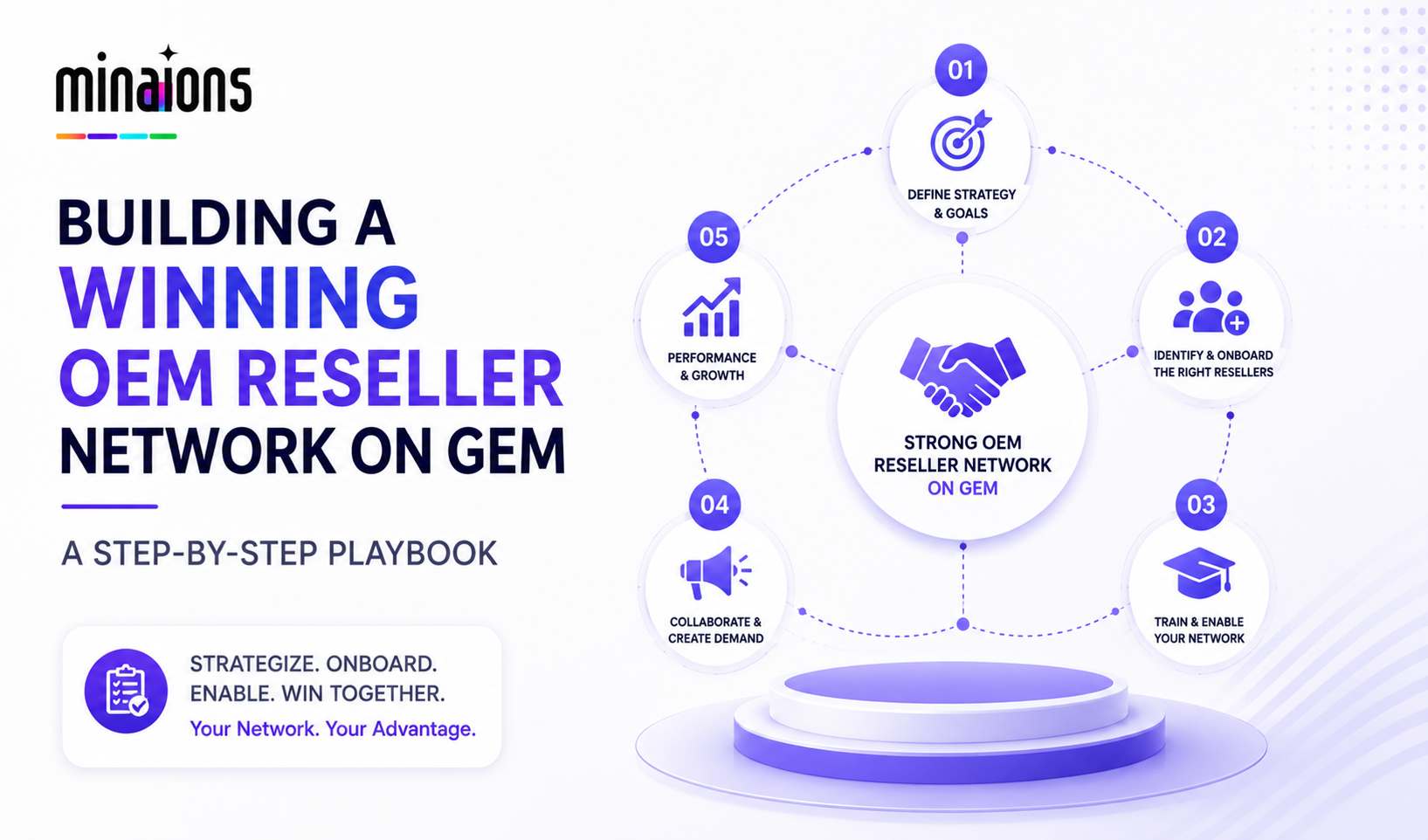
India’s procurement ecosystem is evolving rapidly, creating enormous opportunities for OEMs, manufacturers, distributors, and channel partners. Businesses participating in government tenders, large-scale government procurement, and digital gem portal tenders are increasingly realizing that a strong reseller network is now one of the biggest competitive advantages in public procurement.
Today, suppliers competing in government bids, managing multiple business tender opportunities, and participating in the modern e procurement system must build scalable reseller ecosystems to increase procurement reach, improve regional visibility, and maximize contract-winning potential.
However, many OEMs still struggle with reseller governance, poor procurement coordination, inconsistent tender submission quality, and rising tender rejection reasons India. The growing complexity of government bids and tenders means OEMs must now combine procurement intelligence, automation, and channel strategy to remain competitive.
Platforms like Minaions are helping OEMs optimize reseller management, improve compliance automatione marketplace workflows, strengthen participation in gem bidding, and modernize procurement operations across India’s rapidly growing procurement ecosystem.
Why OEM Reseller Networks Matter in Government Procurement
The ecosystem of government procurement is becoming increasingly competitive and geographically distributed.
Today, businesses participating in:
Government tenders
Government bids
Public sector tenders
Gem portal tenders
Large-scale business tender opportunities
must expand procurement participation beyond metro cities.
A strong reseller network helps OEMs:
Increase procurement coverage
Improve local market access
Participate in more tenders
Improve operational scalability
Reduce procurement workload
The increasing scale of the e procurement system has made reseller-driven procurement growth highly important.
Government Tenders and the Regional Opportunity Gap
The ecosystem of government tenders is expanding rapidly across India.
Today, government tenders exist across:
Tier-1 cities
Tier-2 cities
Rural districts
State procurement departments
Municipal corporations
Many OEMs fail to scale because they lack strong regional reseller participation in government bids and tenders.
Businesses participating in public sector tenders should therefore focus heavily on geographic reseller expansion.
The increasing complexity of government procurement has made regional procurement intelligence essential.
Government Bids and the Need for Faster Participation
The ecosystem of government bids rewards suppliers who respond quickly and consistently.
Reseller networks help OEMs:
Participate in more gem portal tenders
Submit bids faster
Handle regional procurement
Improve delivery capability
Strengthen local buyer relationships
Businesses participating in government bids should therefore continuously evaluate reseller performance and procurement responsiveness.
The increasing scale of gem bidding has intensified procurement competition significantly.
Government Procurement and Procurement Scalability
The modern government procurement ecosystem is highly data-driven and operationally intensive.
Today, government procurement involves:
Digital compliance management
Procurement tracking
Bid monitoring
Vendor coordination
Procurement analytics
OEMs participating in business tender opportunities should therefore build scalable reseller ecosystems capable of handling procurement growth efficiently.
The increasing sophistication of the e procurement system has made automation highly valuable.
Minaions helps OEMs optimize government procurement participation using AI-driven procurement analytics.
Gem Portal Tenders and Reseller Visibility
The ecosystem of gem portal tenders has become one of India’s most competitive procurement networks.
Today, gem portal tenders include procurement related to:
IT infrastructure
Healthcare equipment
Industrial procurement
Office supplies
Educational systems
Businesses participating in government bids and tenders should continuously analyze reseller participation across gem portal tenders.
The increasing competition within public sector tenders has made reseller intelligence extremely important.
Compliance Automatione Marketplace and Procurement Efficiency
The rise of compliance automatione marketplace systems has transformed procurement participation.
Modern compliance automatione marketplace workflows help businesses:
Organize documentation
Track eligibility conditions
Monitor amendments
Reduce submission errors
Improve compliance accuracy
OEMs participating in government tenders should therefore integrate compliance automatione marketplace systems into reseller operations.
The increasing complexity of the procurement processes has made automation critical for procurement scalability.
Minaions helps businesses optimize compliance automatione marketplace workflows using AI-powered procurement intelligence.
E Procurement System and Digital Procurement Growth
The modern e procurement system has transformed how procurement participation works in India.
Today, the e procurement system supports:
Online bid submission
Vendor participation tracking
Procurement transparency
Technical evaluation
Financial evaluation
Businesses participating in government procurement should optimize operational readiness for the modern e procurement system ecosystem.
The increasing adoption of the e procurement system has improved procurement transparency while increasing supplier competition.
Procurement Processes and Reseller Governance
Strong reseller governance is essential for efficient procurement processes.
OEMs participating in government bids should standardize:
Documentation workflows
Pricing governance
Bid approval systems
Compliance management
Procurement coordination
The increasing sophistication of procurement processes has made centralized procurement intelligence highly important.
Businesses participating in business tender opportunities should therefore continuously optimize reseller governance models.
Public Sector Tenders and Procurement Specialization
The ecosystem of public sector tenders is becoming increasingly specialized.
Today, public sector tenders involve:
Smart city projects
Infrastructure procurement
Healthcare modernization
Educational systems
Industrial procurement
Businesses participating in government tenders should therefore build reseller specialization according to procurement categories.
The increasing scale of government procurement has encouraged OEMs to develop sector-specific reseller ecosystems.
Tender Submission and Procurement Accuracy
The quality of tender submission directly impacts procurement success.
Businesses participating in gem bidding should ensure reseller networks maintain strong tender submission discipline.
Effective tender submission workflows generally include:
Eligibility verification
Technical compliance review
Pricing validation
Documentation management
Submission tracking
Poor tender submission quality is one of the biggest reasons suppliers lose government bids and tenders.
Minaions helps businesses optimize tender submission accuracy using AI-powered procurement tracking systems.
Government Bids and Tenders and Competitive Intelligence
The ecosystem of government bids and tenders is increasingly analytics-driven.
Businesses participating in government bids and tenders should continuously monitor:
Competitor participation
Regional procurement trends
Reseller activity
Pricing competition
Procurement frequency
The increasing competition within gem portal tenders has made procurement intelligence highly valuable.
Organizations participating in public sector tenders should therefore adopt AI-driven procurement analytics systems.
Business Tender and Channel Expansion
Every business tender represents an opportunity for reseller expansion.
Businesses participating in business tender opportunities should continuously evaluate:
Regional demand
Procurement categories
Reseller specialization
Bid success rates
Procurement scalability
The increasing sophistication of the e procurement system has made strategic reseller expansion extremely important.
Tender Rejection Reasons India
Many OEMs lose procurement opportunities because reseller networks are poorly managed.
The most common tender rejection reasons India include:
Incorrect documentation
Eligibility mismatches
Weak compliance management
Pricing inconsistencies
Poor tender submission
Businesses participating in government bids should therefore continuously reduce tender rejection reasons India through automation and governance.
Minaions helps suppliers minimize tender rejection reasons India using AI-driven procurement analytics.
Gem Bidding and Procurement Strategy
The ecosystem of gem bidding is becoming increasingly competitive.
Businesses participating in gem bidding should focus heavily on:
Procurement speed
Compliance accuracy
Reseller coordination
Pricing competitiveness
Bid intelligence
The increasing scale of government procurement has made strategic gem bidding highly important for OEM growth.
Step-by-Step Playbook for OEM Reseller Success
Step 1: Build Regional Reseller Coverage
Expand reseller participation across high-growth procurement regions.
Step 2: Standardize Procurement Processes
Centralize workflows for documentation, approvals, and compliance.
Step 3: Improve Compliance Automatione Marketplace Workflows
Automate procurement governance using intelligent systems.
Step 4: Monitor Gem Portal Tenders Continuously
Track procurement opportunities aggressively.
Step 5: Optimize Tender Submission Quality
Reduce procurement errors and improve compliance accuracy.
Step 6: Use AI-Driven Procurement Intelligence
Platforms like Minaions help OEMs modernize reseller operations and procurement participation.
Minaions and Smart OEM Procurement Management
Minaions is helping OEMs modernize procurement participation through AI-driven procurement automation.
Minaions supports organizations through:
AI-powered procurement tracking
Smart reseller analytics
Optimization for gem bidding
Monitoring government tenders
Procurement analytics
Compliance intelligence
Reduction of tender rejection reasons India
Visibility across the e procurement system
Businesses participating in government bids and tenders can use Minaions to improve procurement efficiency and build scalable reseller ecosystems.
Final Thoughts
Building a strong reseller network is becoming one of the most important competitive advantages in India’s digital procurement ecosystem. Businesses participating in government tenders, competing in government bids, and managing large-scale government procurement workflows must now focus heavily on reseller governance, procurement intelligence, and automation.
From optimizing tender submission to improving participation in gem portal tenders, every stage of the procurement processes matters.
Organizations actively strengthening public sector tenders participation, improving compliance automatione marketplace workflows, and using AI-driven procurement platforms like Minaions can significantly improve procurement success rates.
As the e procurement system, government bids and tenders, and gem bidding ecosystems continue to evolve, businesses investing in intelligent procurement management and reseller intelligence will gain a major competitive advantage
Related Blogs
The Indian public procurement landscape is undergoing a quiet but profound transformation.

OEMs lose revenue due to a lack of tender visibility data.