What is GeM Portal? A Complete Beginner's Guide for Indian Businesses

India’s procurement ecosystem is rapidly transforming through digital procurement platforms and online government buying systems. Businesses across sectors are increasingly participating in govt tenders india, digital procurement opportunities, and online tendering contracts through the GeM platform.
For startups, MSMEs, manufacturers, distributors, OEMs, and service providers, understanding the GeM ecosystem is becoming essential for long-term growth. Companies looking to enter the procurement market, improve participation in gem bidding, and access large-scale government tendering process opportunities must clearly understand how the GeM platform works.
Today, the GeM platform has become one of the most important components of the e procurement government of india ecosystem. Businesses participating in gem service tender opportunities and competing in the evolving public procurement platform ecosystem can use GeM to access thousands of procurement opportunities across industries.
Platforms like Minaions are helping businesses optimize participation in govt tenders india, improve tender bidding support, strengthen procurement intelligence, monitor tender alerts India, and modernize procurement operations across the rapidly expanding digital procurement ecosystem.
What Is GeM Portal?
GeM (Government e-Marketplace) is an online public procurement platform launched by the Government of India for procurement of goods and services by government departments and public sector organizations.
The GeM ecosystem helps businesses participate in:
Product procurement
Service procurement
Reverse auctions
Digital procurement
Online tender participation
Businesses participating in tender govt of india opportunities should understand that GeM is designed to improve procurement transparency, efficiency, and vendor participation.
The increasing scale of the procurement market has made GeM one of the most important procurement ecosystems in India.
Why GeM Matters for Indian Businesses
The GeM ecosystem has created enormous opportunities for businesses participating in govt tenders india.
Today, companies use GeM to access:
Central government procurement
PSU procurement
Department procurement
Educational procurement
Healthcare procurement
Infrastructure procurement
Businesses participating in the government procurement process India should therefore understand how GeM improves procurement accessibility.
The increasing adoption of the e procurement government of india framework has made GeM highly valuable for MSMEs and startups.
Public Procurement Platform and Digital Transformation
The GeM ecosystem is one of the largest digital public procurement platform systems in India.
The modern public procurement platform supports:
Digital bid submission
Vendor registration
Procurement analytics
Online compliance workflows
Procurement transparency
Businesses participating in tendering contracts should optimize operational readiness for participating in the GeM ecosystem.
The increasing sophistication of the government tendering process has made procurement automation highly valuable.
Minaions helps businesses optimize participation in the public procurement platform ecosystem using AI-driven procurement analytics.
Govt Tenders India and Procurement Opportunities
The number of govt tenders india opportunities is increasing rapidly.
Today, govt tenders india include procurement related to:
Technology procurement
Industrial systems
Healthcare modernization
Smart city infrastructure
Educational systems
Manufacturing procurement
Businesses participating in gem bidding should continuously monitor govt tenders india opportunities to improve procurement visibility.
The increasing scale of the procurement market has created enormous growth opportunities for suppliers.
Gem Tender Details and Procurement Visibility
Understanding gem tender details is critical for procurement success.
The standard gem tender details generally include:
Eligibility conditions
Technical specifications
Procurement timelines
Submission instructions
Pricing requirements
Businesses participating in government tendering process ecosystems should carefully review gem tender details before preparing bids.
Poor understanding of gem tender details is one of the biggest reasons suppliers lose procurement opportunities.
Minaions helps businesses analyze gem tender details using AI-powered procurement intelligence systems.
E Procurement Government of India Ecosystem
The broader e procurement government of india ecosystem includes GeM, CPPP, departmental portals, and state procurement systems.
The modern e procurement government of india framework supports:
Procurement digitization
Vendor transparency
Procurement analytics
Online procurement participation
Bid monitoring
Businesses participating in tender e procurement gov ecosystems should therefore improve operational readiness for digital procurement participation.
The increasing sophistication of the government procurement process India has made procurement intelligence extremely important.
Tender E Procurement Gov and Online Procurement
The rise of tender e procurement gov systems has transformed procurement participation across India.
Businesses participating in tender e procurement gov ecosystems can now:
Submit bids online
Monitor procurement timelines
Access procurement updates
Download procurement documents
Participate in reverse auctions
The increasing adoption of public procurement platform ecosystems has improved procurement transparency significantly.
Organizations participating in govt tenders india should therefore continuously improve digital procurement capability.
Tendering Contracts and Procurement Growth
The ecosystem of tendering contracts is becoming increasingly competitive.
Today, tendering contracts involve procurement related to:
Industrial procurement
Infrastructure projects
Technology implementation
Government equipment
Service procurement
Businesses participating in gem service tender opportunities should therefore continuously improve procurement readiness.
The increasing sophistication of the procurement market has made procurement analytics highly valuable.
Government Tendering Process Explained
The standard government tendering process generally includes:
Tender publication
Eligibility review
Bid preparation
Technical evaluation
Financial evaluation
Contract award
Businesses participating in govt tenders india should understand every stage of the government tendering process before entering procurement competition.
The increasing scale of tendering contracts has made procurement education essential.
Tender Govt of India and Digital Procurement Expansion
The ecosystem of tender govt of india opportunities is expanding rapidly.
Today, tender govt of india procurement includes:
Central procurement
State procurement
Municipal procurement
PSU procurement
Institutional procurement
Businesses participating in the government procurement process India should therefore continuously monitor procurement trends.
The increasing digitization of the e procurement government of india ecosystem has improved procurement accessibility significantly.
About Procurement Process and Procurement Readiness
Businesses entering the GeM ecosystem should clearly understand about procurement process fundamentals.
The modern understanding about procurement process includes:
Vendor registration
Eligibility analysis
Bid preparation
Procurement compliance
Pricing strategy
Businesses participating in gem bidding should therefore continuously improve procurement knowledge and operational readiness.
The increasing complexity of tender e procurement gov systems has made procurement education highly valuable.
Gem Service Tender and Service Procurement
The ecosystem of gem service tender opportunities is growing rapidly.
Today, gem service tender procurement includes:
IT services
Consulting services
Maintenance contracts
Facility management
Professional services
Businesses participating in govt tenders india should continuously monitor gem service tender opportunities because service procurement is expanding significantly.
The increasing sophistication of the procurement market has created strong opportunities for service providers.
Procurement Market and Procurement Intelligence
The digital procurement market is becoming increasingly data-driven.
Businesses participating in the procurement market should continuously analyze:
Procurement demand
Bid competition
Pricing trends
Department procurement patterns
Regional procurement activity
The increasing scale of government tendering process ecosystems has made procurement intelligence essential.
Minaions helps businesses analyze the procurement market using AI-driven procurement analytics systems.
Tender Bidding Support and Procurement Success
The demand for professional tender bidding support is increasing rapidly.
Modern tender bidding support generally includes:
Bid preparation
Compliance review
Pricing strategy
Documentation management
Procurement analytics
Businesses participating in tendering contracts often use tender bidding support to improve procurement efficiency and reduce operational risks.
The increasing sophistication of the government procurement process India has made procurement support highly valuable.
How to Get Government Contracts India
Many businesses entering GeM ask how to get government contracts India successfully.
Understanding how to get government contracts India generally involves:
Completing registration correctly
Monitoring procurement opportunities
Improving bid preparation
Maintaining compliance accuracy
Building procurement intelligence
Businesses participating in gem bidding should therefore continuously strengthen procurement readiness.
The increasing scale of govt tenders india has created enormous opportunities for disciplined suppliers.
Bid No-Bid Decision Framework
A strong bid no-bid decision framework helps businesses avoid low-probability procurement opportunities.
An effective bid no-bid decision framework generally evaluates:
Eligibility fit
Procurement competition
Pricing feasibility
Technical capability
Operational readiness
Businesses participating in tender govt of india opportunities should therefore continuously improve procurement decision-making.
The increasing competition within the procurement market has made strategic bidding highly important.
Tender Disqualification Reasons
Many suppliers lose procurement opportunities because they ignore common tender disqualification reasons.
Typical tender disqualification reasons include:
Incorrect documentation
Eligibility mismatches
Pricing errors
Technical non-compliance
Late submission
Businesses participating in government tendering process ecosystems should therefore continuously reduce operational risks.
Minaions helps businesses minimize tender disqualification reasons using AI-driven procurement intelligence systems.
Government Procurement Process India and Procurement Scalability
The modern government procurement process India ecosystem rewards suppliers with operational efficiency and procurement intelligence.
Businesses participating in the government procurement process India should continuously improve:
Compliance management
Procurement monitoring
Bid preparation
Tender analytics
Procurement automation
The increasing scale of e procurement government of india ecosystems has made intelligent procurement systems highly valuable.
Gem Bidding and Procurement Competition
The ecosystem of gem bidding is becoming increasingly competitive.
Businesses participating in gem bidding should focus heavily on:
Bid quality
Compliance accuracy
Procurement analytics
Pricing strategy
Opportunity targeting
The increasing sophistication of govt tenders india has made procurement intelligence essential for long-term growth.
Tender Alerts India and Procurement Monitoring
Monitoring tender alerts India is essential for procurement success.
Effective tender alerts India systems help businesses:
Identify opportunities early
Track procurement timelines
Monitor bid amendments
Improve procurement planning
Increase participation efficiency
Businesses participating in tendering contracts should therefore continuously optimize tender alerts India workflows.
Minaions helps businesses automate tender alerts India through AI-powered procurement monitoring systems.
How Minaions Helps Businesses Win More Tenders
Minaions is helping businesses modernize procurement participation through AI-driven procurement automation.
Minaions supports organizations through:
AI-powered procurement tracking
Monitoring govt tenders india
Procurement analytics
Tender bidding support
Gem bidding intelligence
Tender alerts India automation
Bid no-bid decision framework analytics
Reduction of tender disqualification reasons
Businesses participating in the public procurement platform ecosystem can use Minaions to improve procurement efficiency and long-term procurement scalability.
Final Thoughts
The GeM platform is transforming the future of public procurement in India. Businesses participating in govt tenders india, competing in tendering contracts, and managing complex government tendering process workflows must clearly understand how the GeM ecosystem works.
From analyzing gem tender details to improving gem bidding participation, every stage of the government procurement process India matters.
Organizations actively strengthening procurement intelligence through AI-driven platforms like Minaions, optimizing participation in the e procurement government of india ecosystem, and improving procurement readiness can significantly improve procurement success rates.
As the procurement market, tender e procurement gov, and digital procurement systems continue to evolve, businesses investing in intelligent procurement management and automation will gain a major competitive advantage.
Related Blogs
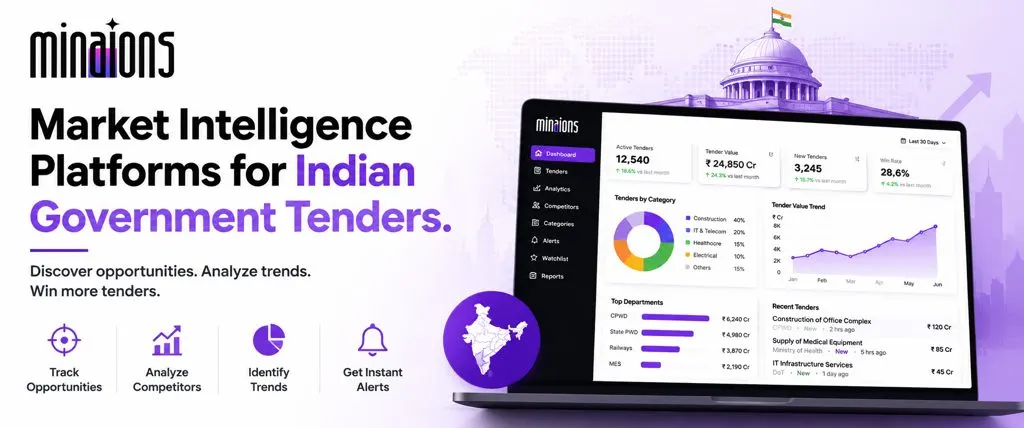
Discover how AI-powered market intelligence platforms streamline tender registration, procurement compliance, and government bidding success.
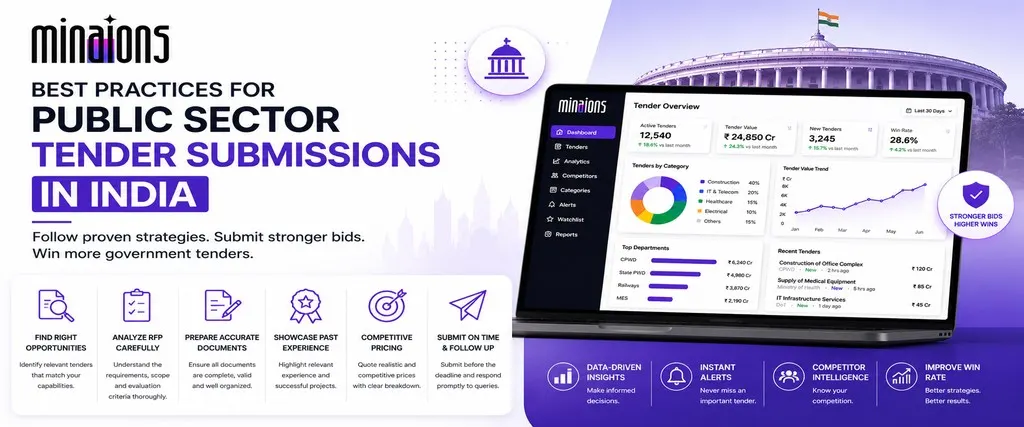
The Indian public procurement landscape is undergoing significant transformation.
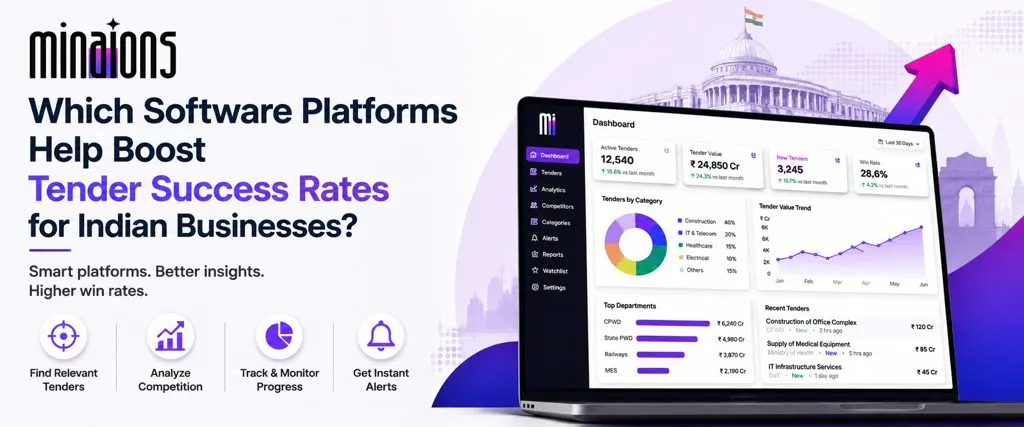
The stakes in Indian government tendering have never been higher.
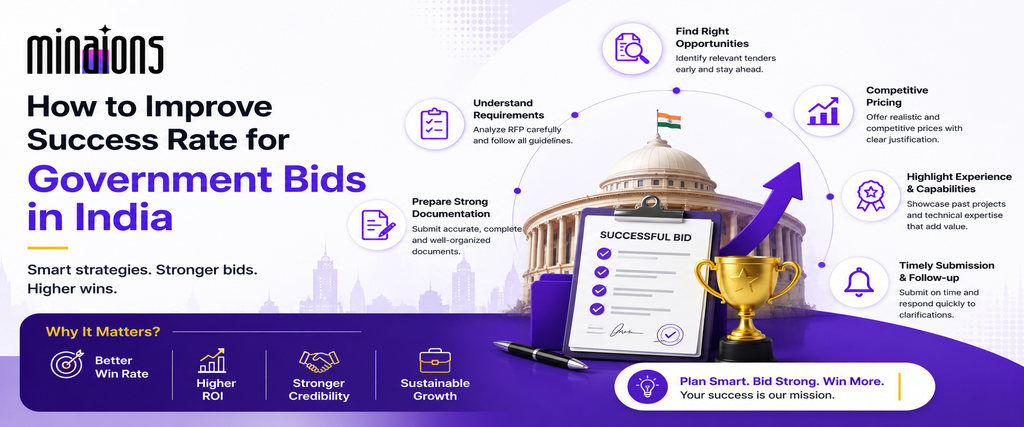
The stakes in Indian government tendering have never been higher. Public procurement spending exceeds ₹50 lakh crore annually, with digital platforms like GeM and CPPP now mandating electronic submissions.