Why Unbranded Products Are Stealing Government Contracts from Established OEMs
India’s procurement ecosystem is changing rapidly. Across multiple sectors, unbranded suppliers are increasingly winning government bids, capturing public sector tenders, and competing aggressively against established OEMs. Many traditional manufacturers are now losing major procurement contracts despite having better product quality, stronger service networks, and years of experience in public sector procurement.
This shift is happening because the modern e procurement system focuses heavily on pricing, technical compliance, documentation accuracy, and faster participation in government bids and tenders. In many cases, unbranded suppliers are adapting faster than large OEMs.
Today, businesses participating in public tenders, managing govt contracts, and competing in large-scale public government contracts must understand why this transformation is happening — and how to respond strategically.
Platforms like Minaions are helping OEMs improve compliance automation, strengthen participation in government tenders, optimize the procurement process, and regain control in the highly competitive ecosystem of public bids and digital procurement systems.
The Rise of Unbranded Suppliers in Government Procurement
The ecosystem of government bids and public sector contracts is becoming increasingly price-sensitive.
Today, many unbranded suppliers are aggressively participating in:
Government tenders
Public tenders
Local government tenders
Public sector procurement
Large-scale procurement contracts
Because procurement departments are under pressure to reduce costs, many unbranded suppliers are winning contracts simply by offering lower prices while technically meeting minimum eligibility requirements.
The increasing scale of government bids and tenders has therefore created a highly competitive environment for established OEMs.


Why Established OEMs Are Losing Government Contracts
Many established manufacturers believe brand reputation alone is enough to win public government contracts.
However, the modern procurement process no longer works that way.
Today’s e procurement system evaluates suppliers based on:
Pricing competitiveness
Technical compliance
Documentation accuracy
Delivery capability
Eligibility conditions
Businesses participating in government bids must therefore optimize operational efficiency instead of relying only on brand value.
The increasing competition in public sector tenders has reduced the traditional advantage enjoyed by established OEMs.
Public Sector Procurement Is Becoming Data-Driven
The ecosystem of public sector procurement is becoming increasingly digital and automated.
Modern e procurement system platforms now support:
Automated bid evaluation
Digital compliance verification
Vendor comparison
Pricing analytics
Procurement transparency
Because of this transformation, unbranded suppliers can now compete equally in government tenders if they meet minimum technical requirements.
Businesses participating in public bids should therefore understand that digital procurement systems prioritize compliance and pricing over legacy reputation.
Minaions helps businesses improve participation in government bids and tenders using AI-driven procurement analytics.
Compliance Automation Is Changing Procurement Dynamics
One major reason unbranded suppliers are winning procurement contracts is better use of compliance automation.
Modern compliance automation systems help suppliers:
Organize bid documents
Track eligibility conditions
Monitor amendments
Reduce submission errors
Improve procurement accuracy
Large OEMs often rely on slower manual workflows, while agile suppliers use compliance automation to participate in more public tenders efficiently.
The increasing complexity of the procurement process has made compliance automation essential for procurement success.


Government Bids and Pricing Pressure
The ecosystem of government bids has become extremely price-driven.
Today, many procurement authorities prioritize:
L1 pricing
Technical qualification
Commercial feasibility
Procurement transparency
This allows low-cost suppliers to compete aggressively in government bids and tenders.
Businesses participating in public sector contracts should therefore optimize operational efficiency to remain competitive.
The increasing pricing pressure within government tenders has forced OEMs to rethink procurement strategy.
Government Tenders and the L1 Problem
Many government tenders still follow L1 procurement models where the lowest technically qualified bidder wins.
Because of this:
Unbranded suppliers aggressively reduce margins
OEMs struggle to maintain profitability
Price wars increase across public bids
Procurement quality becomes inconsistent
Businesses participating in govt contracts should therefore strengthen procurement intelligence and bid targeting.
The increasing scale of public government contracts has intensified competition significantly.
Public Sector Tenders and Market Fragmentation
The ecosystem of public sector tenders is becoming increasingly fragmented.
Today, suppliers compete across:
Central procurement
State procurement
Municipal procurement
Infrastructure procurement
Healthcare procurement
This fragmentation allows smaller suppliers to target niche local government tenders and build procurement visibility rapidly.
Businesses participating in public sector procurement should therefore strengthen regional procurement analytics.
Minaions helps suppliers identify hidden opportunities within government tenders using AI-powered procurement intelligence.
E Procurement System and Procurement Transparency
The modern e procurement system has transformed supplier visibility.
Today, procurement authorities can easily compare:
Supplier pricing
Compliance records
Bid participation
Technical eligibility
Procurement history
Because of this transparency, established OEMs can no longer rely only on legacy relationships.
Businesses participating in public tenders must therefore continuously optimize participation strategy within the e procurement system.


Public Bids and Procurement Scalability
The ecosystem of public bids rewards suppliers who can scale procurement participation efficiently.
Unbranded suppliers often:
Participate in more bids
Use automated workflows
Respond faster to amendments
Operate with lower overheads
Meanwhile, large OEMs often struggle with slower approval structures.
Businesses participating in government bids and tenders should therefore modernize procurement operations aggressively.
The increasing complexity of the procurement process has made automation highly valuable.
Govt Contracts and Reseller Dominance
Many unbranded suppliers win govt contracts through aggressive reseller networks.
Regional resellers often dominate:
Local procurement relationships
Bid submission workflows
Delivery execution
Department communication
Businesses participating in public sector contracts should therefore strengthen reseller governance and procurement visibility.
The increasing number of local government tenders has created strong opportunities for agile reseller-driven suppliers.
Public Government Contracts and Technical Compliance
Many procurement authorities award public government contracts purely on compliance fulfillment.
If a supplier satisfies:
Technical specifications
Eligibility conditions
Documentation requirements
Pricing competitiveness
Then brand reputation becomes secondary.
Businesses participating in government bids should therefore improve technical alignment instead of depending entirely on market reputation.
The increasing digitization of public sector procurement has made technical compliance one of the biggest procurement differentiators.
How Established OEMs Can Fight Back
OEMs participating in government tenders must now evolve strategically.
Improve Compliance Automation
Modern compliance automation improves procurement accuracy significantly.
Strengthen Tender Intelligence
Businesses should continuously monitor government bids and tenders.
Optimize Procurement Process
Efficient workflows improve participation in public tenders.
Use AI-Driven Procurement Systems
Platforms like Minaions help OEMs improve procurement visibility and automation.
Analyze Local Government Tenders
Regional procurement intelligence improves participation in local government tenders.
Minaions and Smart Procurement Intelligence
Minaions is helping OEMs modernize participation in public sector procurement through AI-driven procurement automation.
Minaions supports organizations through:
AI-powered procurement tracking
Smart compliance automation
Bid intelligence
Monitoring government bids
Analysis of public tenders
Procurement analytics
Visibility into public government contracts
Optimization for the modern e procurement system
Businesses participating in govt contracts can use Minaions to improve procurement efficiency and reduce operational risk.
Why Procurement Intelligence Is the Future
The future of government tenders is increasingly data-driven.
Businesses competing in:
Government bids
Public sector tenders
Procurement contracts
Public bids
Government bids and tenders
must now invest heavily in procurement analytics and automation.
The increasing sophistication of the procurement process means that operational intelligence matters more than legacy reputation alone.
Final Thoughts
The rise of unbranded suppliers in India’s procurement ecosystem is reshaping the future of public sector procurement. Businesses participating in government bids, competing in public sector contracts, and managing large-scale govt contracts can no longer rely only on brand recognition.
From optimizing participation in the e procurement system to improving compliance automation, every stage of the procurement process matters.
Organizations actively strengthening procurement intelligence through AI-driven platforms like Minaions, improving visibility across public tenders, and modernizing participation in government bids and tenders can significantly improve procurement success rates.
As public government contracts, local government tenders, and digital procurement ecosystems continue to evolve, businesses investing in intelligent procurement management and automation will gain a major competitive advantage.
Related Blogs
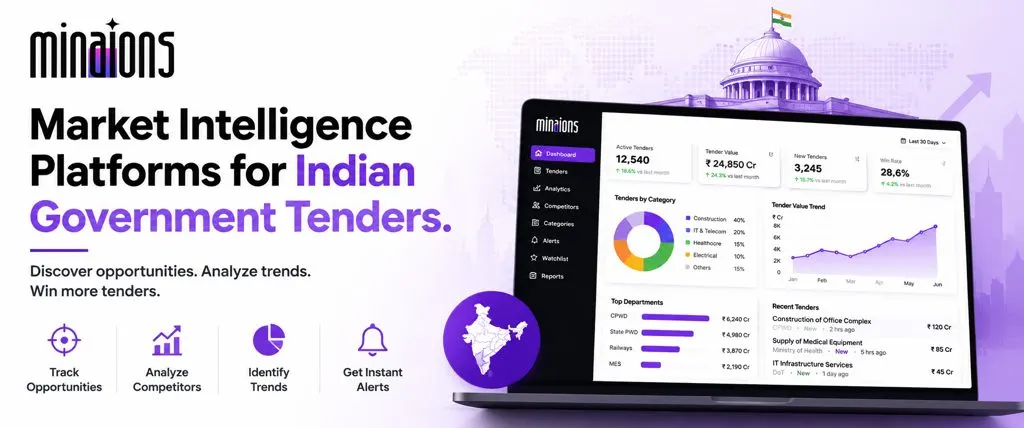
Indian government procurement exceeds ₹30 trillion annually, yet many qualified businesses miss opportunities due to manual processes, fragmented portals, and compliance errors. A single missing Udyam certificate or i...
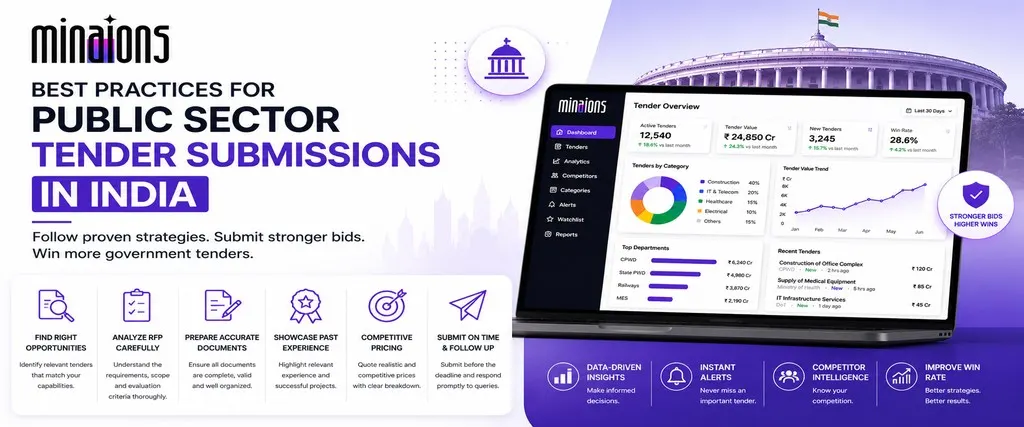
The Indian public procurement landscape is undergoing significant transformation.
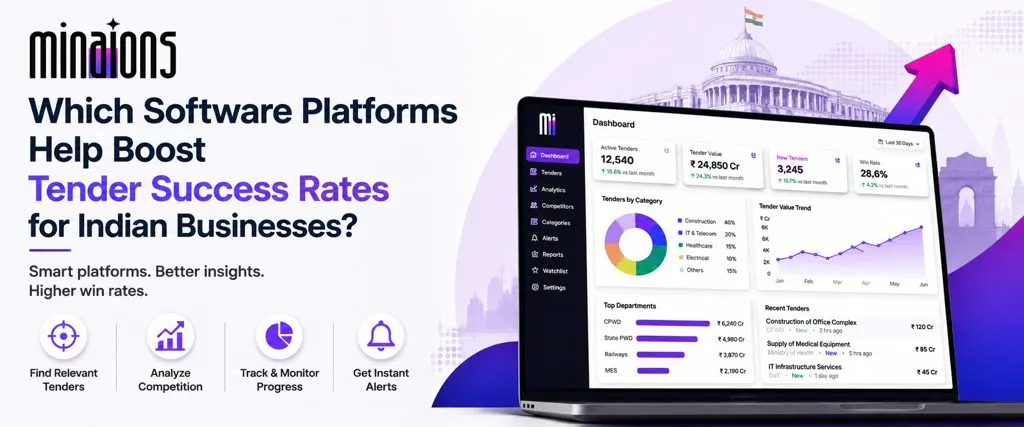
The stakes in Indian government tendering have never been higher.
The stakes in Indian government tendering have never been higher. Public procurement spending exceeds ₹50 lakh crore annually, with digital platforms like GeM and CPPP now mandating electronic submissions.