The Complete Indian Government Tender Process: From Publication to Contract Award
India’s public procurement ecosystem is rapidly evolving into one of the largest digital procurement markets in the world. Businesses participating in government bid opportunities, modern public procurement systems, and digital e tendering portal ecosystems now have access to thousands of procurement projects across industries.
Today, startups, MSMEs, OEMs, manufacturers, and service providers are actively participating in government tenders for small business, large-scale procurement tenders, and high-value contract opportunities through digital procurement platforms like GeM and other procurement systems.
However, many suppliers still do not fully understand how the complete government contract process works — from tender publication to final contract award. Businesses participating in gem tender procurement and managing complex tender bid submissions must clearly understand every stage of procurement to improve bid success rates.
Platforms like Minaions are helping businesses optimize tender management, monitor government bid opportunities, strengthen participation in public procurement, and improve procurement intelligence across India’s rapidly expanding procurement ecosystem.
Understanding Public Procurement in India
The ecosystem of public procurement in India is becoming increasingly digital, transparent, and competitive.
Today, public procurement includes procurement related to:
IT infrastructure
Healthcare systems
Smart city projects
Industrial procurement
Educational infrastructure
Defence procurement
Businesses participating in government contracts for small businesses should understand that every procurement project follows a structured evaluation and approval process.
The increasing scale of public procurement has created enormous opportunities for businesses across India.
Organizations participating in contract opportunities should therefore understand the full procurement lifecycle before entering procurement competition.
Step 1: Tender Publication
The first stage of the government contract process is tender publication.
Procurement authorities publish opportunities through:
GeM platforms
Government procurement portals
Department procurement systems
Centralized e tendering portal ecosystems
Businesses participating in government bid opportunities should continuously monitor procurement portals to identify relevant opportunities early.
The increasing volume of procurement tenders has made procurement monitoring extremely important.
Minaions helps businesses monitor gem tender opportunities using AI-driven procurement intelligence systems.
Step 2: Gem Tender and Opportunity Identification
The ecosystem of gem tender procurement has become one of the most important procurement channels in India.
Today, gem tender opportunities include procurement related to:
Office equipment
Industrial products
IT systems
Healthcare equipment
Smart city infrastructure
Businesses participating in government tenders for small business should continuously analyze gem tender opportunities to improve procurement participation.
The increasing scale of public procurement has intensified supplier competition significantly.
Step 3: Tender Document Review
After identifying relevant contract opportunities, suppliers must carefully review procurement documentation.
The standard procurement package generally includes:
Technical specifications
Eligibility conditions
Compliance requirements
Submission instructions
Commercial clauses
Businesses participating in tender bid workflows should carefully review procurement conditions before proceeding.
Poor understanding of procurement conditions is one of the biggest reasons suppliers fail in government contract process participation.
The increasing sophistication of procurement tenders has made procurement intelligence highly valuable.
Step 4: Eligibility Verification
Eligibility analysis is one of the most important stages in the government contract process.
Typical eligibility conditions include:
Financial turnover
Prior project experience
Technical capability
Vendor certifications
Compliance declarations
Businesses participating in government contracts for small businesses should carefully verify eligibility before preparing bids.
The increasing competition within public procurement has made compliance management extremely important.
Step 5: Pre-Bid Clarifications
Many government bid opportunities involve pre-bid clarification meetings.
These meetings help businesses:
Clarify technical specifications
Understand project scope
Resolve ambiguities
Improve proposal accuracy
Reduce compliance risks
Businesses participating in procurement tenders should never ignore clarification opportunities during the government contract process.
The increasing complexity of e tendering portal ecosystems has made communication management essential.
Step 6: Tender Bid Preparation
Preparing the tender bid is one of the most critical procurement stages.
A standard tender bid generally includes:
Technical proposal
Financial proposal
Compliance documentation
Experience records
Eligibility declarations
Businesses participating in government tenders for small business should carefully structure the tender bid to align fully with procurement requirements.
The increasing sophistication of contract opportunities has made proposal quality extremely important.
Minaions helps businesses optimize tender bid preparation using AI-powered procurement analytics and intelligent compliance systems.
Step 7: Submission Through E Tendering Portal
Most procurement submissions now happen digitally through an e tendering portal.
Modern e tendering portal systems support:
Online bid submission
Digital document upload
Procurement tracking
Amendment management
Vendor participation
Businesses participating in government bid opportunities should ensure operational readiness for digital procurement submission.
The increasing scale of e tendering portal ecosystems has made procurement automation highly valuable.
Step 8: Technical Evaluation
After submission, procurement authorities conduct technical evaluation.
During this stage, procurement authorities review:
Technical capability
Compliance accuracy
Eligibility criteria
Project methodology
Vendor experience
Businesses participating in public procurement should understand that technical evaluation is one of the most important stages in the government contract process.
The increasing complexity of procurement tenders has made technical proposal quality highly important.
Step 9: Financial Evaluation
Once technical evaluation is completed, financial proposals are opened.
During financial evaluation, procurement authorities analyze:
Pricing competitiveness
Commercial feasibility
Cost structure
Financial compliance
Businesses participating in government contracts for small businesses should carefully balance pricing competitiveness with operational sustainability.
The increasing competition in contract opportunities has intensified pricing pressure significantly.
Step 10: Final Contract Award
The final stage of the government contract process is contract award.
Procurement authorities finalize the winning supplier based on:
Technical qualification
Financial evaluation
Compliance verification
Procurement approval
Businesses participating in gem tender procurement should therefore optimize every procurement stage to improve contract-winning probability.
The increasing scale of public procurement has made procurement governance highly important.
Tender Management and Procurement Efficiency
Effective tender management is critical for procurement success.
Modern tender management generally includes:
Opportunity tracking
Eligibility analysis
Documentation management
Bid coordination
Procurement monitoring
Businesses participating in government bid opportunities should therefore strengthen tender management workflows before entering procurement competitions.
The increasing complexity of e tendering portal ecosystems has significantly increased demand for AI-driven tender management solutions.
Minaions helps businesses automate tender management using intelligent procurement analytics systems.
Government Contracts for Small Businesses
The ecosystem of government contracts for small businesses is expanding rapidly across India.
Today, government contracts for small businesses include procurement opportunities related to:
Technology procurement
Infrastructure services
Office supplies
Industrial products
Healthcare systems
Businesses participating in government tenders for small business should continuously improve procurement readiness to compete effectively.
The increasing participation of MSMEs in public procurement has created strong opportunities for smaller suppliers.
Contract Opportunities and Procurement Growth
The number of contract opportunities across India is increasing rapidly.
Businesses participating in contract opportunities should continuously monitor:
Procurement timelines
Department procurement patterns
Bid competition
Eligibility conditions
Procurement trends
The increasing sophistication of the government contract process has made procurement intelligence highly valuable.
Organizations participating in procurement tenders should therefore adopt AI-driven procurement systems.
Common Mistakes Businesses Make
Many suppliers lose procurement opportunities because they misunderstand procurement workflows.
Typical mistakes include:
Weak tender bid preparation
Poor eligibility analysis
Missing submission deadlines
Incorrect documentation
Weak tender management
Businesses participating in government bid opportunities should therefore establish strong procurement governance systems.
How Minaions Helps Businesses Win More Tenders
Minaions is helping businesses modernize procurement participation through AI-driven procurement automation.
Minaions supports organizations through:
AI-powered procurement tracking
Smart tender management
Bid intelligence
Procurement analytics
Monitoring contract opportunities
Analysis of government contract process workflows
Optimization for gem tender participation
Businesses participating in government contracts for small businesses can use Minaions to improve procurement efficiency and long-term procurement success rates.
Best Practices for Government Tender Participation
Businesses participating in public procurement should follow several best practices.
Monitor Government Bid Opportunities Regularly
Continuous procurement monitoring improves participation significantly.
Improve Tender Management
Strong tender management improves procurement accuracy and efficiency.
Optimize Tender Bid Quality
Well-structured tender bid submissions improve success probability.
Strengthen Compliance Readiness
Compliance accuracy is critical in the government contract process.
Use AI-Driven Procurement Tools
Platforms like Minaions help businesses improve participation across procurement tenders ecosystems.
Final Thoughts
India’s digital procurement ecosystem is creating enormous opportunities for startups, MSMEs, OEMs, and enterprises. Businesses participating in government tenders for small business, managing complex tender bid workflows, and competing in large-scale public procurement systems must clearly understand the complete government contract process.
From identifying government bid opportunities to participating through an e tendering portal, every stage of procurement matters.
Organizations actively improving tender management, strengthening participation in contract opportunities, and using AI-driven procurement platforms like Minaions can significantly improve procurement success rates.
As gem tender ecosystems and digital procurement systems continue to evolve, businesses investing in intelligent procurement management and automation will gain a major competitive advantage.
Related Blogs
Indian government procurement exceeds ₹30 trillion annually, yet many qualified businesses miss opportunities due to manual processes, fragmented portals, and compliance errors. A single missing Udyam certificate or i...
The Indian public procurement landscape is undergoing significant transformation.
The stakes in Indian government tendering have never been higher.
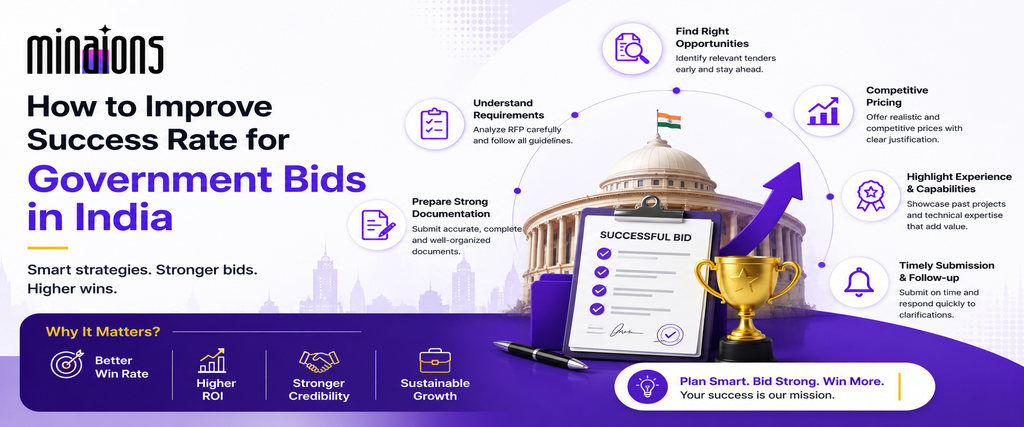
The stakes in Indian government tendering have never been higher. Public procurement spending exceeds ₹50 lakh crore annually, with digital platforms like GeM and CPPP now mandating electronic submissions.