Types of Government Tenders in India: Open, Limited, Single, EOI and RFP Explained
India’s public procurement ecosystem is rapidly evolving, creating enormous opportunities for startups, MSMEs, OEMs, service providers, and enterprises across sectors. Businesses participating in government bid opportunities, modern public procurement systems, and large-scale procurement tenders must clearly understand the different types of government tenders used in India.
Many suppliers participate in business tenders without understanding whether the tender is an Open Tender, Limited Tender, Single Tender, EOI, or RFP. This lack of procurement awareness often leads to incorrect bid preparation, poor qualification strategy, and missed opportunities.
Today, businesses participating in government tenders for small business, competing in open bids, and managing opportunities across tenders india platforms must clearly understand how each procurement model works and where they fit best.
Platforms like Minaions are helping suppliers improve understanding of public procurement, optimize participation in government bid opportunities, analyze open rfps, and strengthen procurement intelligence across India’s evolving procurement ecosystem.
Understanding Public Procurement in India
The ecosystem of public procurement in India is becoming increasingly digital, transparent, and competitive.
Today, public procurement includes procurement related to:
Infrastructure development
Technology procurement
Healthcare systems
Smart city projects
Industrial procurement
Educational systems
Businesses participating in procurement tenders should understand that different procurement situations require different tendering methods.
The increasing complexity of public procurement has made procurement education highly important.
Organizations participating in business tenders should therefore understand the structure and purpose of each tender category before participating.
What Are Procurement Tenders?
Procurement tenders are formal procurement opportunities published by government departments and public sector organizations.
Most procurement tenders generally involve:
Technical qualification
Financial evaluation
Vendor eligibility
Compliance verification
Contract awarding
Businesses participating in government tenders for small business should carefully evaluate the procurement model before preparing bids.
The increasing scale of procurement tenders has created enormous opportunities for suppliers across India.
Open Tenders Explained
Open Tender is the most common procurement method in India.
In an Open Tender process, procurement opportunities are publicly available, allowing any eligible supplier to participate.
Businesses participating in open bids generally compete in highly competitive procurement environments.
The main advantages of Open Tender include:
High transparency
Wider supplier participation
Competitive pricing
Equal opportunity
Businesses participating in government bid opportunities should understand that Open Tender procurement often involves large-scale competition.
The increasing number of open bids across tenders india platforms has made procurement analytics extremely important.
Limited Tenders Explained
Limited Tender procurement is used when procurement authorities invite only selected suppliers to participate.
Unlike open rfps and Open Tender procurement, Limited Tenders involve restricted participation.
Businesses participating in business tenders should understand that Limited Tenders are commonly used when:
Procurement timelines are short
Specialized expertise is required
Supplier pools are limited
Procurement value is smaller
The increasing complexity of public procurement has made supplier qualification and vendor relationships highly important in Limited Tender participation.
Single Tender Explained
Single Tender procurement occurs when procurement authorities invite only one supplier.
Single Tender procurement is generally used when:
Proprietary technology is involved
Emergency procurement is required
Only one qualified vendor exists
Standardization is necessary
Businesses participating in government bid opportunities should understand that Single Tender procurement is highly controlled and compliance-driven.
The increasing scale of public procurement has made procurement transparency important even in Single Tender workflows.
EOI (Expression of Interest) Explained
EOI stands for Expression of Interest.
EOI procurement is generally used when procurement authorities want to identify capable suppliers before issuing formal open rfps or detailed procurement tenders.
Businesses participating in procurement tenders should understand that EOI participation helps suppliers:
Build procurement visibility
Demonstrate technical capability
Qualify for future opportunities
Strengthen procurement positioning
The increasing sophistication of business tenders has made EOI participation strategically valuable.
Organizations participating in government tenders for small business should therefore monitor EOI opportunities carefully.
RFP (Request for Proposal) Explained
RFP procurement is one of the most common procurement models in technology and consulting projects.
Modern open rfps generally involve:
Technical evaluation
Solution methodology
Financial proposals
Vendor capability assessment
Project execution planning
Businesses participating in open rfps should carefully prepare detailed technical and commercial proposals.
The increasing complexity of public procurement has made RFP preparation highly competitive.
Minaions helps businesses analyze open rfps using AI-driven procurement intelligence systems.
Government Bid Opportunities and Procurement Strategy
The number of government bid opportunities across India is increasing rapidly.
Today, government bid opportunities include procurement related to:
Smart city systems
Industrial infrastructure
Technology modernization
Healthcare procurement
Educational infrastructure
Businesses participating in government bid opportunities should carefully evaluate which procurement model aligns best with their operational capability.
The increasing scale of procurement tenders has made procurement intelligence essential for long-term growth.
Government Tenders for Small Business
The ecosystem of government tenders for small business is expanding significantly.
Today, government tenders for small business provide opportunities for:
MSMEs
Startups
Regional suppliers
Service providers
Small manufacturers
Businesses participating in government tenders for small business should understand that different tender categories require different preparation strategies.
The increasing participation of MSMEs in public procurement has created strong growth opportunities for smaller businesses.
Tenders India and Digital Procurement Expansion
The ecosystem of tenders india is becoming increasingly digital and competitive.
Today, tenders india platforms support:
Online bid submission
Digital procurement workflows
Vendor participation
Procurement analytics
Tender monitoring
Businesses participating in open bids should continuously monitor procurement opportunities across tenders india ecosystems.
The increasing sophistication of public procurement has encouraged businesses to adopt AI-driven procurement intelligence systems.
Business Tenders and Market Competition
The ecosystem of business tenders includes opportunities across almost every industry sector.
Businesses participating in business tenders should continuously analyze:
Procurement categories
Tender competition
Eligibility requirements
Technical complexity
Procurement timelines
The increasing competition in government bid opportunities has made procurement strategy highly important.
Minaions helps suppliers optimize participation in business tenders through intelligent procurement tracking and analytics.
Open RFPs and Solution-Based Procurement
The ecosystem of open rfps is highly important for technology, consulting, and infrastructure businesses.
Businesses participating in open rfps should focus heavily on:
Technical proposal quality
Compliance readiness
Solution methodology
Project execution planning
Pricing competitiveness
The increasing complexity of open rfps has made proposal management extremely important.
Organizations participating in procurement tenders should therefore strengthen proposal-writing capability.
Open Bids and Competitive Procurement
The ecosystem of open bids is becoming increasingly competitive across India.
Businesses participating in open bids generally face:
Large supplier participation
Aggressive pricing competition
Strict compliance evaluation
Technical scrutiny
The increasing scale of open bids has encouraged suppliers to adopt procurement automation and AI-driven analytics.
Businesses participating in government tenders for small business should therefore continuously improve procurement readiness.
How Minaions Helps Businesses in Public Procurement
Minaions is helping businesses modernize procurement participation through AI-driven procurement automation.
Minaions supports organizations through:
AI-powered procurement analytics
Monitoring government bid opportunities
Tender tracking across tenders india platforms
Open rfps analysis
Procurement intelligence
Competitive analytics
Bid management for procurement tenders
Businesses participating in public procurement can use Minaions to improve procurement efficiency and long-term procurement success rates.
Best Practices for Participating in Government Tenders
Businesses participating in business tenders should follow several best practices.
Understand the Tender Category
Different procurement models require different strategies.
Monitor Government Bid Opportunities Regularly
Continuous tracking improves procurement participation.
Analyze Open RFPs Carefully
Technical proposal quality is critical in open rfps.
Improve Public Procurement Knowledge
Procurement education improves bid accuracy significantly.
Use AI-Driven Procurement Tools
Platforms like Minaions help businesses optimize participation across tenders india ecosystems.
Final Thoughts
India’s digital procurement ecosystem offers enormous opportunities for businesses across industries. However, companies participating in government tenders for small business, competing in open bids, and managing large-scale procurement tenders must clearly understand the different types of government tenders used in India.
From Open Tender and Limited Tender to EOI and open rfps, every procurement model serves a different purpose within the broader public procurement ecosystem.
Organizations actively improving procurement intelligence through AI-driven platforms like Minaions, strengthening participation in government bid opportunities, and optimizing workflows across tenders india ecosystems can significantly improve procurement success rates.
As business tenders and digital procurement systems continue to evolve, businesses investing in intelligent procurement management and automation will gain a major competitive advantage.
Related Blogs
Indian government procurement exceeds ₹30 trillion annually, yet many qualified businesses miss opportunities due to manual processes, fragmented portals, and compliance errors. A single missing Udyam certificate or i...
The Indian public procurement landscape is undergoing significant transformation.
The stakes in Indian government tendering have never been higher.
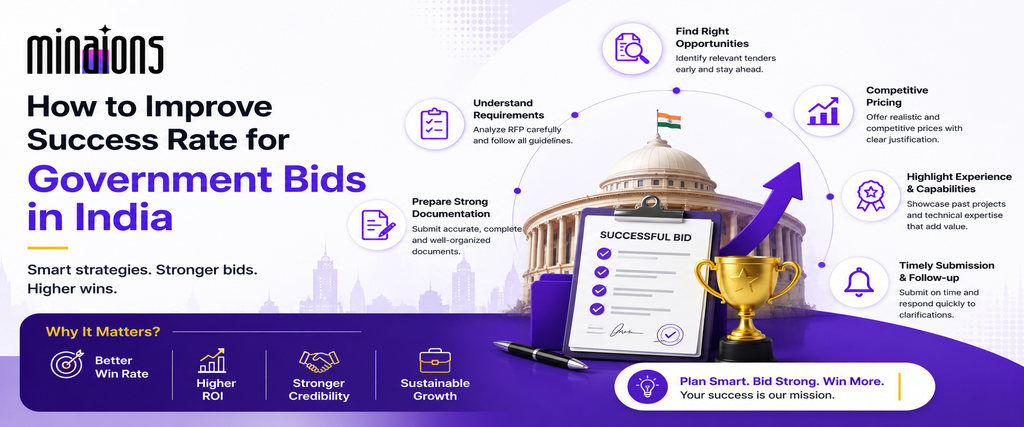
The stakes in Indian government tendering have never been higher. Public procurement spending exceeds ₹50 lakh crore annually, with digital platforms like GeM and CPPP now mandating electronic submissions.