Market intelligence platforms for Indian government tenders.
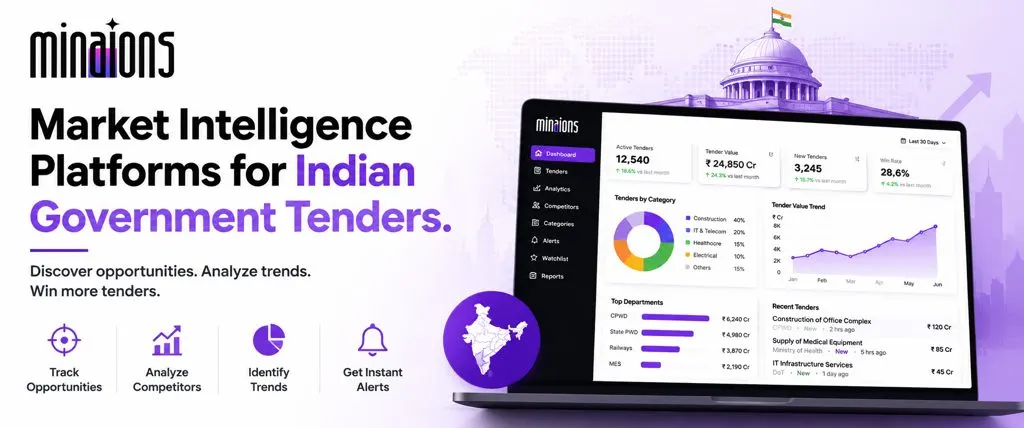
The Indian procurement ecosystem is becoming increasingly digital, competitive, and data-driven. Businesses participating in public sector opportunities are no longer depending only on manual searches and spreadsheets. Today, companies are adopting market intelligence platforms to track opportunities, improve bidding strategies, and manage the complete government tender process more effectively.
With thousands of bids published daily across ministries, PSUs, railways, defense departments, municipal corporations, and smart city projects, businesses need real-time visibility into the procurement ecosystem. This is where modern market intelligence platforms are transforming the way companies approach tender registration, public procurement procedure, and central government e procurement.
For MSMEs, consultants, startups, and enterprises, understanding the evolving government tender process is essential for scaling in India’s growing public procurement market. Businesses looking to become a successful government vendor now rely heavily on data analytics, automation, and AI-driven procurement intelligence.
The Rise of Digital Procurement in India
India’s procurement ecosystem has evolved significantly over the last decade. The shift toward digital procurement has accelerated the adoption of central government e procurement platforms and online bidding systems.
Today, businesses can access opportunities through the central government tender portal, complete tender registration, and participate in the government tender process without physical paperwork. This transformation has improved transparency, efficiency, and accessibility for suppliers across industries.
However, while opportunities have increased, competition has also intensified. Thousands of companies are now registering as a government vendor on various procurement systems and participating in the expanding govt marketplace.
This growing competition has created the need for advanced market intelligence platforms that simplify the public procurement procedure and improve decision-making.
Understanding the Government Tender Process
Many businesses entering the public sector still struggle to understand the complete government tender process.
The standard government tender process generally includes:
Completing tender registration
Identifying opportunities through the central government tender portal
Reviewing eligibility criteria
Understanding the applicable procurement manual
Preparing technical and financial bids
Uploading compliance documents
Participating in evaluations
Becoming an approved government vendor
The complexity of the government tender process increases when businesses participate in multiple sectors simultaneously. Companies bidding in infrastructure, healthcare, manpower, IT, logistics, or manufacturing must manage several procurement workflows at once.
This is where market intelligence platforms become critical.
Why Tender Registration is Important
For businesses entering public procurement, tender registration is the first and most important step.
Without proper tender registration, suppliers cannot participate in many opportunities listed on the central government tender portal or other procurement systems.
A proper tender registration process ensures that companies can:
Access procurement opportunities
Participate in the government tender process
Build credibility as a government vendor
Expand visibility in the govt marketplace
Track procurement activities efficiently
Many businesses underestimate the importance of accurate tender registration and face delays during bid submissions.
Modern market intelligence platforms simplify tender registration by centralizing documentation, tracking approvals, and automating reminders.
The Role of Procurement Manual in Public Procurement
Every public procurement system follows a specific procurement manual that defines procurement policies, compliance structures, eligibility rules, and evaluation standards.
Understanding the procurement manual is essential for every government vendor participating in the government tender process.
A typical procurement manual includes:
Vendor eligibility conditions
Technical evaluation standards
Financial qualification rules
Contract compliance requirements
Documentation guidelines
Bid submission procedures
Businesses failing to follow the applicable procurement manual often face disqualification.
Market intelligence platforms help suppliers analyze the relevant procurement manual and identify compliance gaps before submission.
Growth of Govt Marketplace Platforms
India’s digital procurement ecosystem has also accelerated the growth of the govt marketplace.
A modern govt marketplace allows buyers and suppliers to interact digitally, improving procurement transparency and reducing operational inefficiencies.
Today, businesses participating in the government tender process are increasingly integrating procurement intelligence tools with the broader govt marketplace ecosystem.
The rise of the govt marketplace has also increased opportunities for MSMEs and startups to become a recognized government vendor.
However, suppliers operating in the govt marketplace face intense competition, making market intelligence more important than ever.
Importance of Central Government Tender Portal
The central government tender portal acts as a major procurement gateway for public procurement opportunities across India.
Businesses use the central government tender portal to:
Complete tender registration
Search procurement opportunities
Participate in the government tender process
Access tender documents
Track corrigendums and updates
Submit bids digitally
As procurement volumes increase, companies need intelligent systems that continuously monitor the central government tender portal and identify relevant opportunities automatically.
Market intelligence platforms now provide AI-driven alerts for opportunities published on the central government tender portal, helping businesses react faster.
Why Public Procurement Procedure is Becoming Data-Driven
The traditional public procurement procedure was largely manual and document-heavy. Today, procurement systems are becoming highly data-driven.
A modern public procurement procedure includes digital workflows, compliance automation, AI-based analytics, and centralized bid management.
Market intelligence platforms help businesses optimize the public procurement procedure through:
Automated opportunity tracking
Competitor analysis
Bid history insights
Pricing intelligence
Compliance monitoring
Procurement forecasting
Businesses that understand the evolving public procurement procedure gain a significant competitive advantage.
How Market Intelligence Platforms Help Government Vendors
A successful government vendor must manage large amounts of procurement data efficiently.
Market intelligence platforms help every government vendor by:
Tracking opportunities from the central government tender portal
Simplifying tender registration
Analyzing the procurement manual
Improving participation in the govt marketplace
Streamlining the government tender process
Managing the complete public procurement procedure
Automating compliance for central government e procurement
As competition grows, every government vendor needs access to procurement analytics and intelligent bidding systems.
Central Government E Procurement and AI
The future of central government e procurement is increasingly AI-driven.
Modern central government e procurement systems are integrating automation, analytics, and predictive intelligence to improve procurement efficiency.
AI-powered market intelligence platforms can now support central government e procurement through:
Smart opportunity matching
Automated eligibility analysis
Compliance validation
Bid scoring
Risk identification
Predictive procurement analytics
Businesses participating in central government e procurement are using AI to improve bid accuracy and increase success rates.
The Future of Government Tender Process in India
The future of the government tender process will be defined by automation, transparency, and data intelligence.
As procurement volumes grow, businesses participating in central government e procurement and the broader govt marketplace ecosystem will increasingly depend on AI-driven market intelligence platforms.
The next generation of procurement systems may include:
AI-powered tender registration
Automated compliance based on the procurement manual
Intelligent public procurement procedure workflows
Smart opportunity tracking through the central government tender portal
Predictive analytics for government vendor performance
Advanced automation in the government tender process
Companies adopting intelligent procurement systems early will gain a major competitive advantage.
Final Thoughts
India’s procurement ecosystem is undergoing a major transformation. Businesses participating in the government tender process can no longer depend solely on manual workflows and fragmented data sources.
From simplifying tender registration to managing compliance with the procurement manual, market intelligence platforms are becoming essential for every government vendor.
As the govt marketplace, public procurement procedure, and central government e procurement ecosystem continue to evolve, businesses need advanced intelligence tools to stay competitive.
Organizations using AI-powered procurement platforms can better navigate the central government tender portal, optimize the government tender process, and scale efficiently in the expanding world of Indian public procurement.
Related Blogs
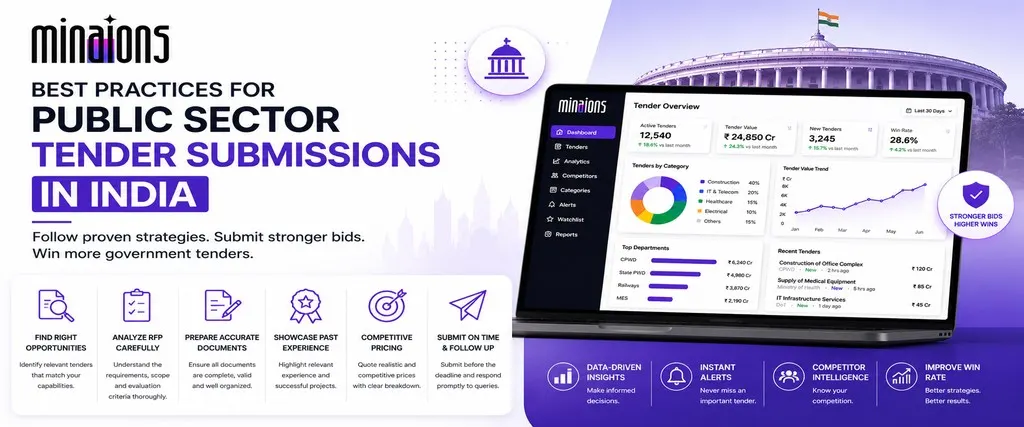
The Indian public procurement landscape is undergoing significant transformation.
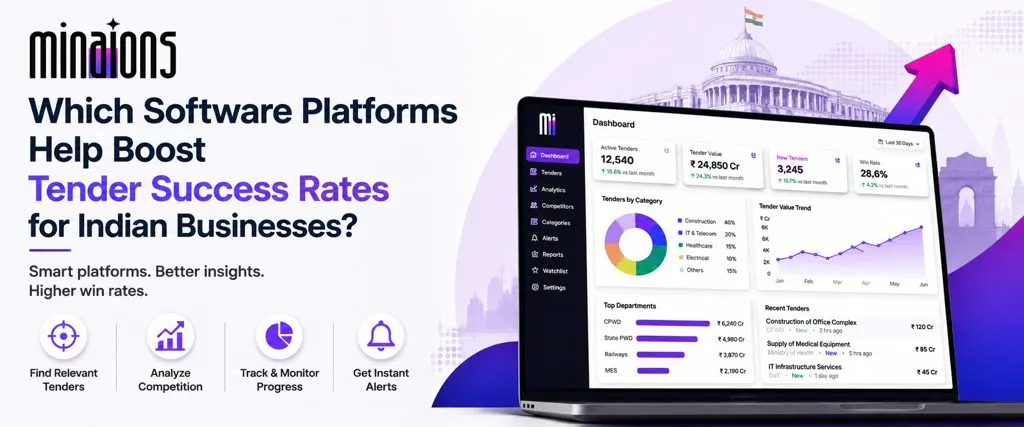
The stakes in Indian government tendering have never been higher.
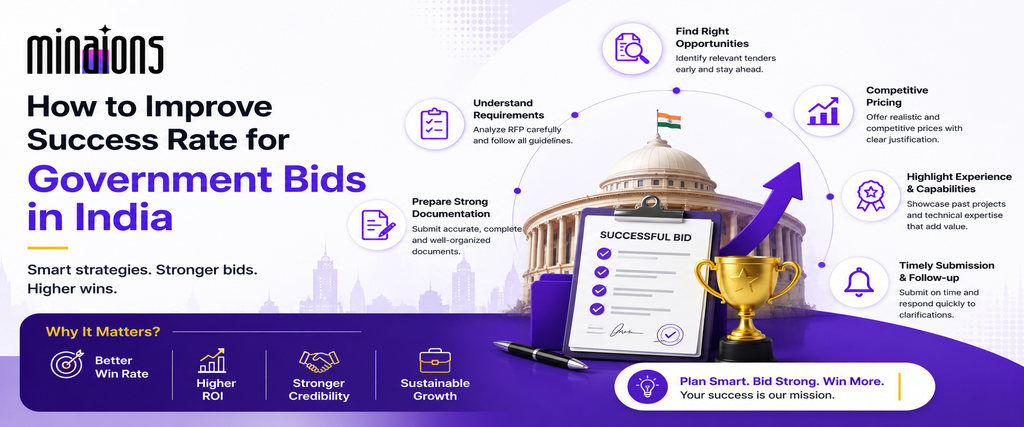
The stakes in Indian government tendering have never been higher. Public procurement spending exceeds ₹50 lakh crore annually, with digital platforms like GeM and CPPP now mandating electronic submissions.
Public procurement systems across the UK and beyond face intense pressure to balance transparency, efficiency, and value for money amid rising regulatory scrutiny, constrained resources, and complex supply chain risks.