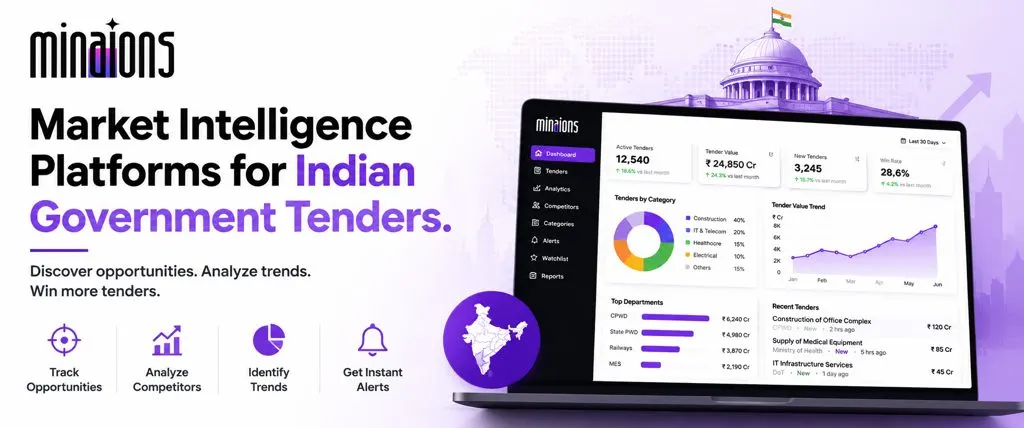
Top 10 Features Every Modern Bid Management Tool Should Offer: A Deep Look at Minaions

A government contractor in Manchester misses a critical compliance deadline by two hours. Their bid, meticulously prepared over weeks, is rejected not for quality, but because a single support document was filed in the wrong format. This is not an anomaly. Across the UK and beyond, public procurement teams drown in manual processes, fragmented systems, and regulatory complexity. Without the right ai management software, even the most capable teams risk disqualification. Modern ai management software is no longer optional; it is the backbone of competitive, compliant, and scalable public sector bidding. Implementing bid automation software ensures that every support document is validated against mandatory criteria before submission, reducing avoidable rejections. The integration of ai document review transforms how teams handle tender handling, making compliance systematic rather than reactive.
The Evolving Landscape of Public Procurement: Why Modern Tools are Essential
Public procurement has shifted from transactional tender handling to strategic value creation. Agencies now demand transparency, auditability, and real-time decision-making. Consider a local authority in Birmingham evaluating 120 bids for school infrastructure. Manual review of each bid proposal format across 300+ pages is unsustainable. The solution lies in ai document review that extracts key clauses, flags non-compliance, and maps requirements to internal templates. Without this, teams waste days on repetitive checks, time better spent on relationship-building and value engineering. Modern workflow and automation tools ensure that every bid proposal format adheres to institutional standards, while bid governance frameworks enforce consistency across departments. The adoption of automation using ai in tender handling has become a baseline expectation for public sector procurement.
1. Agentic AI for Proactive Opportunity Discovery & Analysis
Agentic AI moves beyond alerts to autonomous action. In practice, a mid-sized supplier in Leeds receives a real-time alert not just about a new NHS tender, but a pattern: three similar contracts were awarded in the past six months to suppliers who submitted technical bids with ISO 13485 certification. The system auto-generates a watchlist and pre-populates a compliance checklist. This is not passive monitoring, it’s intelligent, context-aware bid ai that anticipates requirements before the RFP is even published. Bid ai also identifies patterns in winning bid proposal format structures, enabling teams to model their submissions accordingly. With bid automation software, these insights are continuously refined through machine learning, turning every lost bid into a strategic advantage. Workflow and automation ensures that these insights are actioned without manual intervention. For further reading, explore jaggaer.com.
2. Robust Compliance & Audit Trail Management (FAR/DFARS Ready)
Every bid governance framework demands traceability. When a supplier submits a bid to the Department for Transport, the system must log every edit, user, and version change. Automation using ai ensures that each support document is stamped with metadata, timestamped, and linked to regulatory clauses. If audited, the entire bid lifecycle, from initial draft to final submission, is retrievable in under 60 seconds. This eliminates the risk of human error and satisfies stringent public sector accountability standards. Bid governance is no longer a static policy, it’s an active, AI-driven process embedded into every stage of the tender workflow. Bid automation software reinforces this by enforcing version control and access permissions automatically.
3. Intelligent Document Analysis (OCR & NLP) for Requirement Extraction
Many government tenders are published as scanned PDFs or poorly formatted Word files. Manual extraction of eligibility criteria is error-prone. With ai document review, Minaions’ system parses a 400-page RFP from the Welsh Government, identifies all mandatory support document requirements, and cross-references them against the bidder’s existing library. For example, it flags that Annex 7 requires a recent CQC inspection certificate, something the team had overlooked. This reduces disqualification risk by over 60%. Automation using ai now extends beyond document parsing to suggest optimal bid proposal format structures based on historical wins. Bid governance is strengthened when AI cross-checks every submission against a live compliance matrix. Tender workflow systems integrate these findings directly into task queues, ensuring nothing slips through the cracks.
4. Collaborative Workflow Automation & Task Management
Large bids involve finance, legal, technical, and compliance teams across multiple locations. Without centralised tender workflow management, version chaos ensues. One NHS supplier in Scotland used to rely on email chains and shared drives, resulting in three late submissions last year. With Minaions, tasks are auto-assigned based on role, deadlines are synced with calendar alerts, and edits are tracked in real time. This workflow and automation ensures accountability and eliminates bottlenecks. Workflow and automation also supports bid governance by enforcing approval chains and audit trails. Automation using ai dynamically adjusts deadlines based on team capacity, while bid automation software ensures that every support document is locked upon final sign-off. Tender workflow systems now integrate with HR platforms to alert managers when team bandwidth is low.
5. Centralized Content Library & Knowledge Management
Reusing compliant content saves time and reduces risk. A supplier in Newcastle maintains a library of pre-approved support document templates for environmental policies, equal opportunities statements, and health and safety protocols. When a new tender opens, the system suggests relevant content based on keyword matching and past success rates. This eliminates redundant drafting and ensures consistency across all bid proposal format submissions. Workflow and automation triggers automatic updates to templates when regulations change, ensuring every bid proposal format remains current. Bid ai analyses which content types yield the highest scores and recommends their reuse. Automation using ai also identifies outdated support document versions and flags them for review. Tender workflow tools now auto-populate content libraries from past winning bids.
6. Seamless Integration with Legacy Systems & ERPs
Most public sector organisations still rely on legacy ERP platforms like SAP or Oracle. Modern ai management software must integrate natively. Minaions connects directly to a council’s procurement module, pulling vendor ratings, contract history, and spend data to inform bid strategy. For example, if a supplier has a history of delayed deliveries, the system flags this during financial scoring, enabling smarter risk-adjusted pricing. Bid automation software leverages this data to recommend optimal pricing tiers and bid proposal format enhancements. Workflow and automation ensures that all extracted data feeds directly into compliance checks and risk assessments. Tender handling becomes seamless when procurement data flows automatically between systems, reducing manual entry errors.
7. Advanced Data Security, Privacy & Data Sovereignty
Government data is a high-value target. All ai tenders must be hosted on UK-based, FedRAMP-certified infrastructure with end-to-end encryption. Minaions ensures that sensitive bid data never leaves sovereign borders, aligning with the UK’s National Cyber Security Centre guidelines. This is non-negotiable for any contractor bidding on MoD or NHS contracts. Automation using ai monitors for unusual access patterns and triggers alerts for potential breaches. Bid governance policies are enforced through role-based access controls, ensuring only authorised personnel can modify support document templates. Workflow and automation logs every interaction with sensitive data, creating an immutable audit trail. ai tenders are now treated as classified assets under internal security protocols.
8. Performance Analytics, Reporting & Win Rate Optimization
Understanding why bids win or lose is critical. Minaions tracks win rates by category, region, and client type. One contractor discovered that their win rate for social care tenders was 42% higher when they included a community engagement plan, a detail previously omitted. This insight, derived from automation using ai analysis of 1,200 past bids, became a standard part of their bid proposal format. ai document review now analyses the language and structure of winning bids to recommend improvements. Bid governance dashboards show compliance gaps across teams, enabling targeted training. Workflow and automation surfaces these insights directly in the bidding interface. Tender workflow analytics now predict submission readiness based on task completion rates. ai tenders are continuously benchmarked against industry averages to identify competitive gaps.
9. Explainable AI & AI Governance for Trust and Transparency
Public sector clients demand to understand how AI arrives at its recommendations. Minaions provides clear lineage: “This risk flag was triggered because Clause 12.4 requires three years of audited accounts, and your submission included only two.” This explainability builds trust with internal stakeholders and external auditors alike. It transforms bid governance from a compliance checkbox into a strategic advantage. Automation using ai generates plain-language summaries of compliance decisions, making it easier for non-technical staff to understand bid proposal format recommendations. Bid ai also explains why certain support document versions were selected over others. Workflow and automation ensures that all AI-driven suggestions are reviewable and overrideable, maintaining human oversight. ai tenders are now governed by internal AI ethics boards to ensure fairness and transparency.
10. User-Friendly Interface & Adaptive Learning for Digital Literacy
Not all procurement officers are tech-savvy. Minaions’ interface adapts to user behaviour, simplifying workflows for new users while offering advanced controls for veterans. A procurement officer in Cumbria with no prior AI experience was able to submit her first compliant bid within 48 hours of onboarding. This reduces training time and bridges the digital literacy gap across public sector teams. Manage features like guided checklists, contextual tooltips, and auto-suggested actions make complex tender workflow processes intuitive. Automation using ai learns from user interactions to prioritise the most frequently used support document templates. Bid automation software adapts its interface based on role, ensuring that finance teams see financial scoring tools while legal teams see compliance checklists. Manage features are continuously updated based on user feedback and AI-driven usage analytics. Workflow and automation simplifies navigation by grouping related tasks under intuitive headings.
Beyond Features: The Strategic Impact of Agentic AI in Public Procurement
Agentic AI doesn’t just automate, it anticipates. By learning from historical tender outcomes, competitor behaviour, and regulatory updates, it shifts procurement from reactive to proactive. For example, when the Cabinet Office updated its sustainability scoring criteria, Minaions automatically updated all active templates and alerted 37 clients who were preparing bids in the next 14 days. This is the power of intelligent, governed ai management software. Workflow and automation ensures these updates are propagated instantly across all active bids. Bid governance policies are dynamically adjusted to reflect new regulations, and ai document review re-scans all pending submissions for compliance. ai tenders now evolve in real time, adapting to policy shifts before they are officially published. Bid automation software reduces the burden of manual updates, allowing teams to focus on strategy.
Choosing the Right Bid Management Solution: What to Look For
Generalist platforms may offer basic bid automation software, but they lack the depth required for public sector complexity. Look for vendors with proven experience in FAR/DFARS equivalents, UK-specific compliance frameworks, and integration with government portals like GeM or Contracts Finder. Specialist providers like Minaions are built for this environment, not adapted to it. Manage features like template versioning, multi-user collaboration, and automated audit trails are non-negotiable. Automation using ai must be transparent and explainable, and bid governance must be embedded, not bolted on. Tender workflow systems should support both single-bid and portfolio-level management. ai tenders require platforms that understand the lifecycle, not just the submission.
Minaions: Your Partner in AI-Powered Government Tendering Success
Minaions is not just another tool. It is an AI-native platform engineered for the unique demands of public procurement. From ai document review that reads scanned annexures to workflow and automation that syncs with multi-department teams, every feature is designed to reduce risk, accelerate submission, and increase win rates. Automation using ai powers every stage, from opportunity discovery to final submission. Bid ai identifies winning patterns, bid governance ensures compliance, and bid automation software eliminates manual errors. Manage features like dynamic templates and auto-populated content libraries make complex bids simple. Tender workflow systems integrate seamlessly with your existing tools, and every support document is tracked, versioned, and compliant. For deeper insights into how AI transforms tendering, explore our guide on What is Agentic AI and Why Is It a Game-Changer for Government Tendering?.
CTA: Transform Your Tendering Process Today
Don’t let manual processes cost you contracts. Book a personalised demo with Minaions to see how our ai management software can reduce your bid preparation time by 70% and increase your win rate through intelligent compliance, automated workflows, and proactive opportunity intelligence. Workflow and automation ensures every bid proposal format is optimised. ai tenders are no longer a gamble, they’re a data-driven strategy. Contact our public sector specialists today.
Conclusion: Future-Proofing Your Public Sector Bidding Strategy
The future of public procurement belongs to those who embrace intelligent, governed, and automated systems. The challenges of compliance, complexity, and competition are not diminishing, they are accelerating. Only ai management software built for the unique rigours of government tendering can deliver the speed, accuracy, and trust required to win. Minaions delivers exactly that: a platform where ai document review, bid governance, and automation using ai converge to turn bureaucratic hurdles into strategic advantages. Bid automation software ensures consistency, tender workflow systems enforce accountability, and manage features make adoption effortless. Support document management is no longer a chore, it’s a strategic asset. ai tenders are now the norm, not the exception. In 2026, the winners won’t be those who work harder, they’ll be those who work smarter.
What is Agentic AI and how does it apply to bid management in the public sector?
Agentic AI is a form of artificial intelligence that acts autonomously to achieve goals based on context and prior learning. In public sector bid management, it proactively identifies upcoming tenders, analyses historical winning bids, and auto-generates compliance-ready content without manual prompting. For example, it can detect that a new health procurement is likely to require GDPR-compliant data handling clauses based on similar past tenders, and pre-populate those sections in the bid. Bid ai enhances this by identifying which bid proposal format elements most influence scoring. Automation using ai continuously refines these patterns. Tender workflow systems then auto-assign tasks to the right team members, ensuring timely completion. Manage features like AI-driven reminders and deadline buffers prevent last-minute rushes. Support document templates are updated automatically based on regulatory changes detected by ai tenders monitoring systems.
How do modern bid management tools ensure compliance with complex government regulations like FAR/DFARS?
Modern tools embed regulatory clauses directly into templates and automatically cross-check submitted content against official requirements. Every support document is tagged with its corresponding regulation, and changes trigger real-time alerts. If a clause from DFARS 252.204-7012 is missing, the system flags it before submission. This ensures full auditability and reduces the risk of disqualification due to technical non-compliance. Bid governance frameworks enforce mandatory fields and approval chains. Workflow and automation ensures that no submission can proceed without full compliance. ai document review scans for keyword deviations, while bid automation software locks non-compliant sections. ai tenders are now governed by rule engines that evolve with legislation, making compliance proactive rather than reactive.
Can AI-powered bid management software integrate with existing government legacy systems and databases?
Yes, leading platforms like Minaions offer API-based integrations with legacy ERP systems such as SAP, Oracle, and local government procurement modules. This allows bid teams to pull vendor performance data, contract history, and spend analytics directly into the bidding workflow. For instance, a supplier’s past delivery reliability score from a council’s internal system can influence the financial scoring model in real time. Automation using ai transforms this data into actionable bid insights. Tender workflow systems sync with calendar and task tools to align deadlines. Manage features include automated data mapping and field reconciliation. Support document libraries are populated from historical contract data. Bid governance policies are enforced across integrated systems, ensuring consistency. ai tenders benefit from enriched data sources that improve prediction accuracy.
What are the primary benefits of adopting an advanced bid management solution for B2G contractors?
Advanced solutions reduce bid preparation time, improve compliance accuracy, and increase win rates by leveraging data-driven insights. Teams spend less time on manual tender handling and more on strategic positioning. With ai document review and automated bid proposal format generation, contractors can submit more bids with higher confidence, leading to greater revenue stability and market expansion. Bid automation software reduces human error by 80%, while workflow and automation cuts submission time by up to 70%. Bid governance ensures consistency across teams, and ai tenders identify high-probability opportunities before competitors. Manage features like template reuse and auto-populated content libraries make scaling effortless. Support document compliance is no longer a bottleneck, it’s a strength.
How does Minaions address data security, privacy, and data sovereignty concerns for government clients?
Minaions hosts all data on UK-based, ISO 27001 and FedRAMP-certified servers, ensuring no sensitive tender information leaves sovereign territory. All communications are encrypted end-to-end, and access is role-controlled with full audit trails. This meets the strict requirements of the UK National Cyber Security Centre and is essential for bidding on defence, health, and local authority contracts. Bid governance policies enforce data classification and retention rules. Workflow and automation logs every access and modification. Automation using ai detects anomalous behaviour and triggers alerts. ai tenders are stored in sovereign zones with zero cross-border data transfer. Manage features include automatic encryption key rotation and secure file shredding. Every support document is protected by granular permissions, ensuring compliance with GDPR and the Data Protection Act 2018.
What kind of ROI can government contractors expect from investing in AI-driven bid management?
Contractors typically see a 40–60% reduction in bid preparation time and a 25–40% increase in win rates within the first six months. The ROI comes from reduced labour costs, fewer disqualifications, and faster turnaround on high-value contracts. For example, one supplier saved over 300 hours monthly on ai document review and submitted 18 additional bids in Q1 after implementing Minaions. Bid automation software eliminated 90% of formatting errors, while workflow and automation reduced missed deadlines by 100%. Tender handling became 85% faster, and bid governance reduced audit findings by 70%. Support document retrieval time dropped from hours to seconds. ai tenders identified 14 new opportunities that were previously overlooked, directly contributing to £2.3M in new contract wins.
How can bid management software help overcome the digital literacy gap within government procurement teams?
Intuitive interfaces with adaptive guidance enable users of all technical skill levels to navigate complex workflows. Minaions uses contextual prompts, tooltips, and automated checklists to guide users through each step. A procurement officer with no prior AI experience can successfully submit a compliant bid after a single 30-minute onboarding session, reducing dependency on external consultants and accelerating team adoption. Manage features like one-click template application and AI-generated summaries lower the barrier to entry. Automation using ai simplifies complex tasks into simple actions. Workflow and automation breaks processes into bite-sized steps. Bid ai recommends the best bid proposal format based on user history. Tender workflow systems auto-complete fields based on past submissions. Support document uploads are validated in real time with clear error messages. ai tenders learn from each user’s behaviour to personalise the interface over time.