OEM to Government Direct: Should You Sell Directly or Through Resellers on GeM?
India’s public procurement ecosystem is rapidly expanding, creating enormous opportunities for OEMs, manufacturers, distributors, and channel partners. Businesses participating in government bids and tenders, modern online procurement systems, and GeM procurement workflows are increasingly evaluating whether they should sell directly to government departments or operate through resellers.
For OEMs participating in public procurement, the decision between direct selling and reseller-based participation significantly impacts pricing strategy, procurement scalability, operational control, and long-term revenue growth.
Today, businesses competing in procurement tenders, managing large volumes of tender documents, and participating in the growing ecosystem of tenders for small business must clearly understand the advantages and limitations of both procurement models.
Platforms like Minaions are helping OEMs optimize tender management, improve procurement analytics, strengthen workflows through intelligent tender management system solutions, and improve participation in the evolving world of government bids and tenders.
Understanding Public Procurement in India
The ecosystem of public procurement in India is becoming increasingly digital, transparent, and competitive.
Today, public procurement includes procurement opportunities related to:
IT infrastructure
Healthcare systems
Smart city projects
Office equipment
Industrial procurement
Educational infrastructure
Businesses participating in government bids and tenders should clearly understand procurement workflows before deciding whether to sell directly or through resellers.
The increasing scale of public procurement has created strong growth opportunities for OEMs across multiple sectors.
What Is an OEM in Government Procurement?
An OEM (Original Equipment Manufacturer) is a company that manufactures products directly and supplies them to buyers or authorized partners.
OEMs participating in online procurement systems often sell products through:
Direct government participation
Authorized distributors
Reseller networks
System integrators
Channel partners
Businesses participating in procurement tenders should therefore evaluate which procurement model aligns best with operational capability and business goals.
The increasing competition in public bids has made procurement strategy more important than ever.
Direct Selling in Government Bids and Tenders
Many OEMs prefer direct participation in government bids and tenders.
Direct participation allows OEMs to:
Control pricing
Build direct buyer relationships
Improve profit margins
Strengthen market visibility
Control procurement communication
Businesses participating directly in government bids and tenders generally maintain greater operational control during procurement execution.
However, direct participation also increases responsibility for:
Compliance management
Bid preparation
Tender documentation
Procurement coordination
Delivery execution
The increasing complexity of online procurement systems has made direct participation operationally intensive for many OEMs.
Selling Through Resellers in Public Procurement
Many OEMs also participate in public procurement through authorized resellers or channel partners.
The reseller model generally helps OEMs:
Expand market reach
Reduce operational workload
Improve regional presence
Increase participation in tenders for small business
Scale procurement coverage
Businesses participating in procurement tenders through resellers often benefit from local procurement expertise and regional market relationships.
However, reseller-based participation may reduce direct pricing control and profit margins.
The growing competition in public bids has encouraged OEMs to carefully evaluate channel strategy.
Tender Management and Procurement Efficiency
Effective tender management is critical for OEM procurement success.
Modern tender management involves:
Opportunity tracking
Eligibility analysis
Bid preparation
Compliance monitoring
Procurement coordination
Businesses participating in government bids and tenders should optimize tender management workflows regardless of whether they operate directly or through resellers.
The increasing complexity of online procurement systems has significantly increased demand for AI-driven tender management solutions.
Minaions helps OEMs automate tender management through intelligent procurement analytics and bid tracking systems.
Tender Management System and Digital Procurement
A modern tender management system is essential for scaling procurement participation.
An intelligent tender management system helps businesses:
Monitor procurement opportunities
Manage tender documents
Track procurement timelines
Improve compliance accuracy
Analyze procurement performance
Businesses participating in public procurement should invest in a reliable tender management system to improve operational efficiency.
The increasing number of government bids and tenders has made AI-driven tender management system solutions highly valuable.
Minaions provides advanced tender management system capabilities designed specifically for businesses participating in digital procurement ecosystems.
Public Bids and Procurement Competition
The ecosystem of public bids is becoming increasingly competitive.
Today, suppliers participating in public bids compete aggressively across sectors such as:
Technology procurement
Industrial procurement
Infrastructure projects
Healthcare procurement
Educational procurement
The increasing scale of public bids has encouraged OEMs to improve pricing strategy, compliance management, and procurement intelligence.
Businesses participating in public bids should therefore continuously evaluate whether direct selling or reseller participation provides better procurement efficiency.
Tender Documents and Compliance Management
Accurate management of tender documents is one of the most critical parts of procurement participation.
Typical tender documents include:
Technical specifications
Product certifications
Eligibility declarations
Pricing sheets
Experience certificates
Businesses participating in government bids and tenders should carefully organize all tender documents before submission.
Poor management of tender documents is one of the biggest reasons suppliers lose procurement opportunities.
Minaions helps OEMs organize tender documents through AI-powered document management systems.
Online Procurement and Digital Transformation
The rise of online procurement has transformed government purchasing workflows.
Modern online procurement systems support:
Digital bid submission
Automated evaluation
Vendor transparency
Procurement analytics
Centralized supplier participation
Businesses participating in public procurement should optimize operational readiness for modern online procurement systems.
The increasing adoption of online procurement has improved procurement transparency while increasing supplier competition.
Tenders for Small Business and Reseller Advantage
The ecosystem of tenders for small business is growing rapidly across India.
Many OEMs use reseller networks to participate in tenders for small business because regional resellers often:
Understand local procurement
Maintain local relationships
Handle documentation faster
Improve local delivery capability
Businesses participating in tenders for small business should therefore evaluate whether reseller participation improves procurement scalability.
The increasing number of tenders for small business has created strong opportunities for channel-driven procurement growth.
Procurement Tenders and Market Expansion
The number of procurement tenders across India is increasing rapidly.
Today, procurement tenders include opportunities related to:
IT systems
Infrastructure
Industrial products
Healthcare
Education
Smart cities
The increasing scale of procurement tenders has encouraged OEMs to build more structured procurement participation models.
Businesses participating in procurement tenders should continuously improve procurement intelligence and operational readiness.
Advantages of Direct OEM Participation
Direct participation in government bids and tenders offers several advantages.
Better Pricing Control
OEMs maintain direct control over pricing and margins.
Stronger Government Relationships
Direct interaction improves buyer visibility.
Better Brand Positioning
Direct participation strengthens OEM credibility within public procurement.
Improved Market Intelligence
OEMs gain better procurement insights from direct participation in public bids.
Advantages of Reseller Participation
The reseller model also offers important benefits.
Faster Market Expansion
Resellers improve regional procurement participation.
Reduced Operational Burden
OEMs reduce workload related to tender management and documentation.
Better Local Reach
Resellers often improve participation in tenders for small business.
Improved Procurement Scalability
Reseller networks help OEMs participate in more procurement tenders simultaneously.
How to Decide Between Direct and Reseller Model
Businesses participating in online procurement should evaluate several factors before choosing a procurement model.
Key considerations include:
Internal procurement capability
Bid management expertise
Regional market presence
Compliance management strength
Procurement scale objectives
Many successful OEMs use hybrid models that combine direct participation with reseller-driven procurement expansion.
Minaions and Smart Procurement Management
Minaions is helping OEMs modernize procurement participation through AI-driven automation.
Minaions supports organizations through:
AI-powered procurement tracking
Smart tender management
Automated document management
Procurement analytics
Bid intelligence
Advanced tender management system workflows
Monitoring government bids and tenders
Businesses participating in public procurement can use Minaions to improve procurement efficiency and scale procurement operations intelligently.
Final Thoughts
The decision between direct OEM participation and reseller-based participation is one of the most important strategic choices in modern public procurement. Businesses participating in government bids and tenders, managing complex tender documents, and competing in the evolving ecosystem of online procurement must carefully evaluate procurement goals before choosing a participation model.
From improving tender management to optimizing workflows through intelligent tender management system solutions, every stage of procurement matters.
Organizations actively participating in procurement tenders, strengthening operational readiness for public bids, and using AI-driven procurement platforms like Minaions can significantly improve procurement success rates.
As tenders for small business and digital procurement ecosystems continue to evolve, businesses investing in intelligent procurement management and automation will gain a major competitive advantage.
Related Blogs

A small manufacturing firm in Ludhiana missed a ₹2.3 crore contract after spending 14 hours manually scanning the GeM portal, only to find the tender had closed two days earlier. This is not an isolated case.
A small civil engineering firm in Lucknow spent three weeks manually parsing a 420-page NHAI tenders document, only to miss a critical clause in the contractor registration requirements and lose eligibility.

A small manufacturing firm in Ludhiana missed a ₹2.
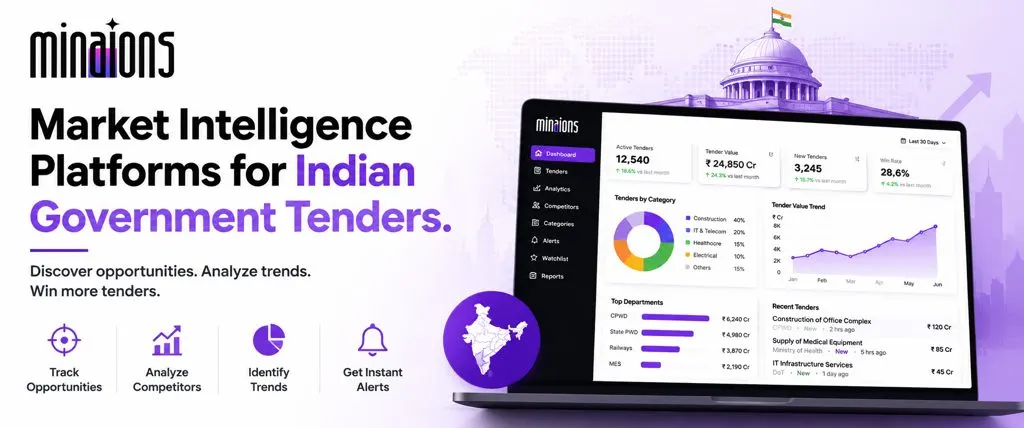
Discover how AI-powered market intelligence platforms streamline tender registration, procurement compliance, and government bidding success.