Regional Tender Analysis: How OEMs Can Identify Geographic White Spaces on GeM
India’s government procurement ecosystem is rapidly evolving, creating enormous opportunities for OEMs, manufacturers, distributors, and service providers. However, many businesses participating in the gem tender portal focus only on high-competition procurement regions and miss profitable geographic white spaces where competition is significantly lower.
Today, businesses participating in online procurement, monitoring gem tender search opportunities, and competing through modern e tendering portal systems must move beyond traditional bidding strategies. Successful OEMs are now using regional procurement intelligence to identify underserved states, districts, and departments where procurement demand exists but supplier participation remains low.
The rise of AI-driven procurement analytics and digital procurement ecosystems has transformed how businesses analyze procurement opportunities. Platforms like Minaions are helping OEMs optimize tender preparation, improve the tender bidding process, analyze regional tender details, and identify hidden opportunities within the evolving landscape of the procurement process.
Understanding the Gem Tender Portal Ecosystem
The gem tender portal has become one of India’s largest digital procurement ecosystems.
Today, the gem tender portal supports procurement related to:
IT products
Healthcare equipment
Infrastructure materials
Educational technology
Industrial products
Smart city systems
Businesses participating in the gem tender portal should understand that procurement demand varies significantly across different regions.
The increasing competition within the gem tender portal has encouraged OEMs to adopt regional procurement analysis strategies.
Organizations participating in online procurement should therefore move beyond metro-focused procurement targeting.
What Is Regional Tender Analysis?
Regional tender analysis is the process of evaluating procurement demand across states, districts, and government departments to identify under-served markets.
Businesses participating in gem tender search workflows use regional analysis to:
Identify low-competition regions
Analyze procurement demand
Monitor supplier concentration
Improve bid success probability
Expand market reach
The increasing scale of online procurement has made regional procurement intelligence extremely valuable for OEMs.
Businesses participating in the tender bidding process should therefore continuously analyze procurement trends geographically.
Gem Tender Search and Opportunity Discovery
The role of gem tender search is becoming increasingly important in modern procurement strategy.
Effective gem tender search workflows help businesses:
Identify regional procurement trends
Discover emerging procurement clusters
Monitor department-wise demand
Analyze supplier competition
Improve procurement planning
Businesses participating in the gem tender portal should continuously optimize gem tender search processes to improve procurement visibility.
The increasing competition within online procurement systems has made intelligent gem tender search capability essential.
Minaions helps businesses automate gem tender search through AI-driven procurement intelligence systems.
Online Procurement and Regional Competition
The rise of online procurement has transformed supplier participation across India.
Modern online procurement systems now allow suppliers to participate in tenders from:
Tier-1 cities
Tier-2 cities
Rural districts
Remote government departments
Specialized procurement regions
The expansion of online procurement has created significant opportunities for OEMs willing to target low-competition geographic areas.
Businesses participating in the tender bidding process should therefore evaluate regional procurement density before submitting bids.
E Tendering Portal and Geographic Visibility
The modern e tendering portal ecosystem provides enormous procurement visibility.
Businesses participating in e tendering portal systems can analyze:
Department-wise procurement
State-wise procurement demand
Regional supplier participation
Historical procurement trends
Procurement frequency
The increasing adoption of e tendering portal systems has improved procurement transparency while creating opportunities for regional procurement expansion.
Businesses participating in gem tender search workflows should continuously monitor regional demand patterns through the e tendering portal ecosystem.
Tender Details and Regional Procurement Intelligence
Careful analysis of tender details is critical for regional procurement strategy.
Important tender details often reveal:
Regional demand gaps
Local supplier shortages
Procurement urgency
Department preferences
Delivery expectations
Businesses participating in the procurement process should carefully analyze regional tender details before entering competitive procurement markets.
The increasing complexity of the tender bidding process has made intelligent analysis of tender details extremely important.
Minaions helps businesses analyze tender details using AI-powered procurement analytics.
Tender Preparation for Regional Markets
Effective tender preparation becomes even more important when entering new geographic markets.
Businesses participating in online procurement should ensure tender preparation includes:
Regional pricing analysis
Logistics evaluation
Local compliance understanding
Procurement history review
Department-specific customization
Strong tender preparation improves procurement competitiveness significantly.
The increasing scale of the gem tender portal ecosystem has made advanced tender preparation strategies essential for OEM growth.
Tender Bidding Process and Geographic White Spaces
The modern tender bidding process is highly competitive in metro regions but often less competitive in underserved locations.
Businesses participating in the tender bidding process should therefore analyze:
Supplier density
Bid frequency
Regional procurement value
Department activity
Historical participation
The increasing sophistication of the tender bidding process has encouraged OEMs to adopt geographic procurement strategies instead of competing only in saturated procurement markets.
Organizations participating in gem tender search workflows can significantly improve success rates by identifying geographic white spaces.
Procurement Manual and Regional Compliance
Every department generally follows a structured procurement manual.
The applicable procurement manual defines:
Vendor eligibility
Procurement procedures
Technical evaluation rules
Financial conditions
Compliance requirements
Businesses participating in the procurement process should carefully review the applicable procurement manual before entering new geographic procurement markets.
Different departments and states may interpret the procurement manual differently, making regional understanding highly important.
The increasing complexity of the procurement manual has also increased demand for procurement automation systems.
Procurement Process and Strategic Expansion
The modern procurement process is increasingly data-driven and digitally monitored.
The standard procurement process generally includes:
Opportunity discovery
Eligibility analysis
Bid preparation
Technical evaluation
Financial evaluation
Contract award
Businesses participating in online procurement should optimize every stage of the procurement process to improve regional procurement success.
The increasing complexity of the procurement process has made procurement intelligence essential for scalable growth.
Minaions helps businesses automate multiple stages of the procurement process using AI-driven procurement systems.
GeM Portal Guide for MSME and Regional Expansion
A proper GeM portal guide for MSME is essential for small businesses entering new geographic procurement markets.
The standard GeM portal guide for MSME generally includes:
Vendor registration
Product listing
Bid participation
Procurement compliance
Regional procurement understanding
Businesses participating in the gem tender portal should carefully follow the GeM portal guide for MSME to improve regional procurement participation.
The increasing participation of MSMEs in online procurement has created strong opportunities for regional procurement expansion.
Why Geographic White Spaces Matter
Many OEMs focus only on high-volume procurement states where competition is extremely intense.
However, geographic white spaces often provide:
Lower competition
Better pricing flexibility
Faster procurement cycles
Higher bid-winning probability
Better relationship opportunities
Businesses participating in the tender bidding process should therefore balance procurement volume with competition intensity.
The increasing sophistication of gem tender search systems has made regional procurement intelligence highly valuable.
Common Mistakes OEMs Make
Many businesses fail to optimize regional procurement strategy.
Typical mistakes include:
Focusing only on metro regions
Ignoring regional tender details
Weak tender preparation
Poor procurement analysis
Not studying local procurement patterns
Businesses participating in the procurement process should therefore strengthen procurement intelligence capabilities.
Minaions and AI-Driven Regional Tender Analysis
Minaions is helping OEMs modernize procurement participation through AI-driven procurement automation.
Minaions supports organizations through:
AI-powered gem tender search
Regional procurement analytics
Smart tender preparation
Procurement tracking
Competitive intelligence
Analysis of tender details
Optimization of the tender bidding process
Businesses participating in the gem tender portal can use Minaions to improve procurement efficiency and identify hidden geographic opportunities.
Final Thoughts
Regional procurement intelligence is becoming one of the most important competitive advantages in India’s digital procurement ecosystem. Businesses participating in the gem tender portal, managing online procurement, and competing through modern e tendering portal systems must move beyond traditional bidding strategies.
From optimizing tender preparation to analyzing regional tender details, every stage of the procurement process matters.
Organizations actively improving the tender bidding process, following the GeM portal guide for MSME, and using AI-driven procurement platforms like Minaions can significantly improve procurement success rates while identifying profitable geographic white spaces.
As online procurement and digital procurement systems continue to evolve, businesses investing in intelligent procurement management and regional analytics will gain a major competitive advantage.
Related Blogs

A small manufacturing firm in Ludhiana missed a ₹2.3 crore contract after spending 14 hours manually scanning the GeM portal, only to find the tender had closed two days earlier. This is not an isolated case.
A small civil engineering firm in Lucknow spent three weeks manually parsing a 420-page NHAI tenders document, only to miss a critical clause in the contractor registration requirements and lose eligibility.

A small manufacturing firm in Ludhiana missed a ₹2.
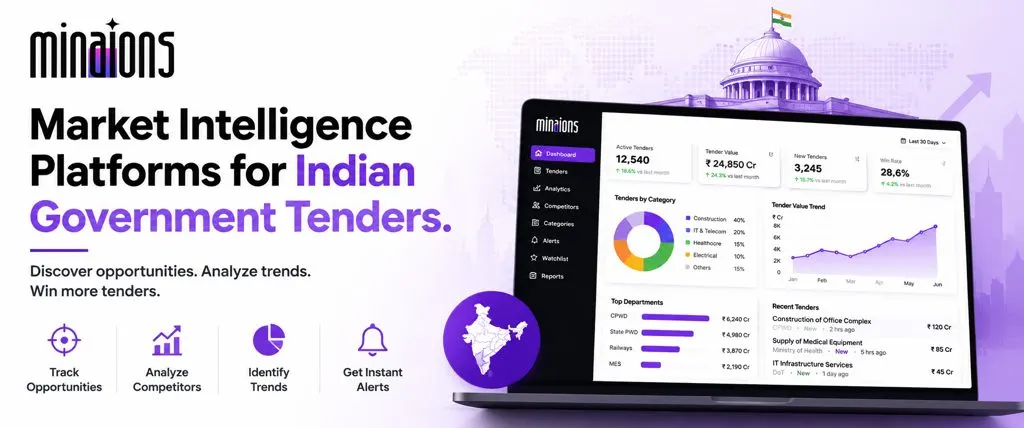
Discover how AI-powered market intelligence platforms streamline tender registration, procurement compliance, and government bidding success.