How to Read a Government RFP Without Missing Critical Eligibility Clauses
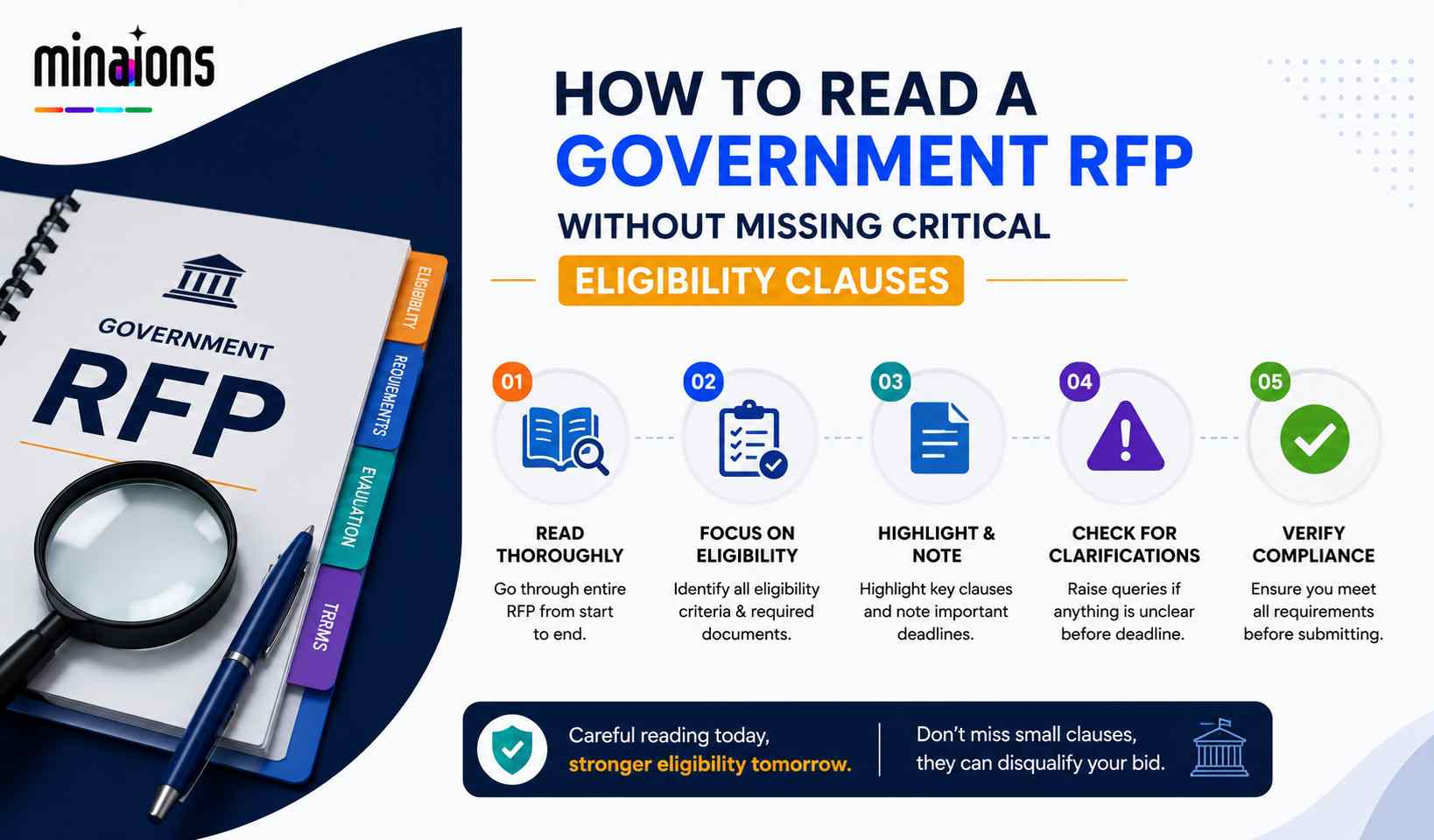
India’s procurement ecosystem is becoming increasingly structured, digital, and compliance-driven. Businesses participating in rfp bids, modern rfp government contracting, and large-scale business tenders must carefully analyze every eligibility condition before submitting proposals.
Many suppliers lose procurement opportunities not because of poor pricing or weak technical capability, but because they fail to identify hidden eligibility clauses inside the RFP document. Whether companies participate in state and local government contracts, infrastructure procurement, or specialized security bids, missing a single compliance condition can lead to immediate rejection.
Today, businesses participating in modern federal procurement systems and digital procurement ecosystems must improve document analysis, compliance management, and procurement intelligence. Platforms like Minaions are helping businesses optimize workflows through AI-driven tender management system solutions, automated eligibility analysis, and intelligent procurement tracking.
Understanding RFP Government Contracting
The ecosystem of rfp government contracting is expanding rapidly across India.
Today, rfp government contracting includes procurement opportunities related to:
IT procurement
Infrastructure development
Healthcare systems
Smart city projects
Security infrastructure
Educational technology
Businesses participating in rfp government contracting should understand that RFP documents contain detailed technical, financial, and compliance conditions.
The increasing complexity of rfp government contracting has made eligibility analysis more important than ever.
Organizations participating in business tenders should therefore establish structured procurement review workflows before submitting bids.
What Are RFP Bids?
Rfp bids are formal proposals submitted in response to a Request for Proposal issued by procurement authorities.
Most rfp bids generally include:
Technical proposal
Financial proposal
Eligibility documentation
Experience records
Compliance declarations
Businesses participating in rfp bids should carefully review procurement requirements before preparing submissions.
The increasing complexity of rfp bids has significantly increased the risk of procurement rejection caused by missed eligibility clauses.
Minaions helps suppliers optimize participation in rfp bids through AI-driven eligibility analysis and procurement intelligence.
Why Eligibility Clauses Matter
Eligibility clauses are one of the most critical parts of any procurement document.
These clauses generally define:
Financial qualification
Technical capability
Experience requirements
Vendor certifications
Turnover conditions
Project eligibility
Businesses participating in federal procurement and state and local government contracts should therefore analyze eligibility clauses carefully before entering procurement competition.
The increasing competition in business tenders has made procurement compliance highly important.
Tender Management System and Eligibility Analysis
A modern tender management system plays a major role in procurement success.
An advanced tender management system helps businesses:
Track procurement opportunities
Analyze eligibility conditions
Monitor procurement timelines
Organize procurement documentation
Reduce compliance errors
Businesses participating in rfp government contracting should use a reliable tender management system to improve procurement accuracy.
The increasing complexity of rfp bids has increased demand for AI-driven tender management system solutions.
Minaions provides intelligent tender management system capabilities that help suppliers reduce procurement risk and improve bid readiness.
Federal Procurement and Procurement Complexity
The ecosystem of federal procurement is becoming increasingly sophisticated.
Today, federal procurement systems involve:
Multi-stage evaluations
Technical qualification
Compliance scrutiny
Vendor verification
Financial evaluation
Businesses participating in federal procurement should carefully analyze every procurement condition before preparing submissions.
The increasing scale of federal procurement has also increased the importance of procurement automation and intelligent document analysis.
Organizations participating in rfp bids should therefore establish centralized compliance management workflows.
Business Tenders and Competitive Procurement
The number of business tenders across India is increasing rapidly.
Today, business tenders include procurement opportunities related to:
Infrastructure projects
IT implementation
Industrial procurement
Security systems
Healthcare modernization
Educational infrastructure
The increasing competition within business tenders has made eligibility compliance critical for procurement success.
Businesses participating in business tenders should therefore strengthen operational readiness and procurement governance.
Minaions helps businesses analyze business tenders using AI-driven procurement intelligence systems.
Security Bids and Specialized Eligibility Conditions
The ecosystem of security bids often involves highly detailed eligibility requirements.
Typical security bids may include conditions related to:
Security certifications
Prior project experience
Technical manpower
Infrastructure capability
Regulatory compliance
Businesses participating in security bids should carefully analyze every technical clause before preparing proposals.
The increasing complexity of security bids has significantly increased procurement scrutiny and compliance evaluation.
Organizations participating in rfp government contracting should therefore strengthen eligibility analysis for specialized procurement sectors.
State and Local Government Contracts
The ecosystem of state and local government contracts is becoming increasingly digital and competitive.
Today, state and local government contracts include procurement opportunities related to:
Municipal infrastructure
Smart city projects
Healthcare systems
Security infrastructure
IT modernization
Businesses participating in state and local government contracts should carefully review local procurement conditions and vendor eligibility criteria.
The increasing number of state and local government contracts has created strong opportunities for startups, MSMEs, and regional suppliers.
Common Eligibility Clauses Suppliers Miss
Many suppliers lose procurement opportunities because they overlook critical eligibility conditions.
Typical missed clauses include:
Minimum turnover conditions
Similar project experience requirements
Mandatory certifications
OEM authorization conditions
Consortium restrictions
Local office requirements
Businesses participating in rfp bids should therefore establish structured review workflows before preparing submissions.
The increasing complexity of federal procurement has made eligibility analysis highly important.
How to Read an RFP Properly
Businesses participating in business tenders should follow a structured RFP analysis process.
Review Eligibility First
Before pricing or technical planning, suppliers should carefully review eligibility conditions.
Analyze Technical Scope
Businesses participating in security bids should evaluate technical requirements carefully.
Review Submission Conditions
Procurement authorities often define strict formatting and compliance rules.
Check Hidden Clauses
Many rfp government contracting documents contain hidden conditions inside annexures or compliance sections.
Review Amendments Carefully
Corrigendums and amendments may change eligibility conditions after publication.
Tender Management System and Automation Benefits
An intelligent tender management system helps suppliers reduce procurement risks significantly.
A modern tender management system improves:
Eligibility analysis
Procurement tracking
Compliance management
Bid coordination
Document organization
Businesses participating in state and local government contracts should therefore invest in intelligent procurement management systems.
Minaions provides AI-powered tender management system solutions designed specifically for businesses participating in modern procurement ecosystems.
Federal Procurement and Documentation Accuracy
Documentation accuracy is critical in federal procurement systems.
Businesses participating in federal procurement should carefully organize:
Experience certificates
Financial statements
Technical documents
Vendor registrations
Compliance declarations
The increasing sophistication of rfp bids has made documentation governance essential for procurement success.
How Minaions Helps Businesses
Minaions is helping businesses modernize procurement participation through AI-driven procurement automation.
Minaions supports organizations through:
AI-based eligibility analysis
Smart procurement tracking
Automated document management
Compliance monitoring
Intelligent tender management system workflows
Procurement analytics
Bid intelligence for rfp government contracting
Businesses participating in business tenders and state and local government contracts can use Minaions to improve procurement accuracy and reduce eligibility risks.
Best Practices to Avoid Missing Eligibility Clauses
Businesses participating in rfp bids should follow several best practices.
Use a Tender Management System
An intelligent tender management system improves procurement accuracy significantly.
Review Every Annexure
Hidden eligibility conditions often appear in annexures or technical schedules.
Analyze Security Bids Carefully
Specialized security bids generally involve stricter compliance conditions.
Build Centralized Compliance Workflows
Businesses participating in federal procurement should maintain centralized document management systems.
Use AI-Driven Procurement Tools
Platforms like Minaions help businesses automate procurement analysis and eligibility tracking.
Final Thoughts
The modern procurement ecosystem is becoming increasingly competitive, digital, and compliance-driven. Businesses participating in rfp bids, business tenders, and modern rfp government contracting systems must clearly understand how to analyze procurement documents properly.
From reviewing hidden eligibility clauses in security bids to organizing documentation for state and local government contracts, every stage of procurement matters.
Organizations actively improving compliance workflows through AI-driven platforms like Minaions, investing in intelligent tender management system solutions, and strengthening participation in federal procurement ecosystems can significantly improve procurement success rates.
As procurement systems continue to evolve digitally, businesses investing in intelligent procurement management and automation will gain a major competitive advantage.
Related Blogs

A small manufacturing firm in Ludhiana missed a ₹2.3 crore contract after spending 14 hours manually scanning the GeM portal, only to find the tender had closed two days earlier. This is not an isolated case.

A small civil engineering firm in Lucknow spent three weeks manually parsing a 420-page NHAI tenders document, only to miss a critical clause in the contractor registration requirements and lose eligibility.

A small manufacturing firm in Ludhiana missed a ₹2.
Discover how AI-powered market intelligence platforms streamline tender registration, procurement compliance, and government bidding success.