How to Identify High-Performing Resellers in Your Category on GeM

India’s public procurement ecosystem is becoming increasingly competitive, data-driven, and digitally connected. OEMs participating in government bids, large-scale government procurement, and modern e procurement systems are no longer competing only on pricing or technical capability. Today, procurement intelligence and competitor visibility have become major strategic advantages.
Businesses participating in gem tender opportunities and complex contract bidding workflows must now understand exactly who is competing in their product category, which resellers are dominating procurement regions, and how supplier participation patterns are evolving across departments and states.
The rise of AI-driven procurement analytics and digital procurement portal ecosystems has transformed how OEMs analyze the market. Platforms like Minaions are helping manufacturers and suppliers monitor competitor participation, analyze the procurement process, improve participation in government contracting, and strengthen long-term procurement strategy.
Understanding Government Procurement Competition
The ecosystem of government procurement in India is expanding rapidly.
Today, government procurement includes opportunities related to:
IT infrastructure
Healthcare systems
Smart city projects
Industrial procurement
Educational technology
Defence procurement
The increasing scale of government procurement has intensified competition across almost every product category.
Businesses participating in government bids should therefore understand not only procurement opportunities but also supplier participation trends.
The growing complexity of government contracting has made procurement intelligence more important than ever.
Why OEM Market Intelligence Matters
Modern OEMs participating in contract bidding cannot rely only on traditional sales strategies.
Market intelligence helps businesses:
Identify active competitors
Monitor reseller participation
Analyze pricing behavior
Improve procurement positioning
Optimize bid strategy
Businesses participating in gem tender procurement should therefore continuously monitor competitor activity.
The increasing competition within the procurement portal ecosystem has made procurement intelligence essential for long-term growth.
Minaions helps businesses automate competitor analysis and procurement tracking using AI-driven procurement intelligence systems.
Government Bids and Competitive Visibility
The number of suppliers participating in government bids is increasing rapidly.
Today, government bids involve participation from:
OEMs
Authorized resellers
Distributors
System integrators
Regional suppliers
The increasing competition in government bids has made supplier visibility highly important.
Businesses participating in government procurement should therefore continuously analyze which companies are bidding in their category.
The growing sophistication of contract bidding has encouraged OEMs to adopt data-driven procurement strategies.
E Procurement and Digital Procurement Intelligence
The rise of e procurement has transformed how procurement data is generated and analyzed.
Modern e procurement systems support:
Digital bid submission
Vendor participation tracking
Procurement analytics
Online compliance workflows
Procurement transparency
Businesses participating in government contracting should optimize operational readiness for participating in modern e procurement systems.
The increasing complexity of e procurement ecosystems has also increased the importance of AI-driven procurement analytics.
Minaions helps businesses improve e procurement intelligence through automated procurement monitoring and competitor tracking.
Gem Tender and Category Competition
The ecosystem of gem tender procurement has become one of the most competitive procurement networks in India.
Today, gem tender opportunities include procurement related to:
Office supplies
Industrial equipment
IT hardware
Healthcare products
Educational infrastructure
Smart city systems
Businesses participating in gem tender procurement should continuously analyze:
Supplier concentration
Bid frequency
Pricing competition
Regional participation
The increasing scale of gem tender participation has made competitor intelligence essential for OEM growth.
Contract Bidding and Strategic Positioning
The modern contract bidding ecosystem is highly data-driven.
Businesses participating in contract bidding should evaluate:
Who participates most frequently
Which suppliers dominate specific departments
How pricing varies across regions
Which resellers are most successful
The increasing sophistication of contract bidding has encouraged OEMs to move beyond reactive bidding toward strategic procurement planning.
Organizations participating in government bids should therefore establish centralized procurement intelligence workflows.
Government Procurement and Reseller Intelligence
The modern government procurement ecosystem includes thousands of active suppliers and resellers.
Businesses participating in government procurement should continuously evaluate:
Reseller activity
Bid-winning patterns
Regional procurement concentration
Department-specific supplier dominance
The increasing competition within government procurement has made reseller intelligence highly valuable.
Minaions helps OEMs analyze reseller participation patterns using AI-powered procurement analytics.
Procurement Portal and Data Visibility
The modern procurement portal ecosystem provides enormous procurement visibility.
Today, a typical procurement portal supports:
Procurement announcements
Vendor participation
Bid submission
Tender amendments
Procurement analytics
Businesses participating in e procurement systems should continuously monitor data available through the procurement portal ecosystem.
The increasing transparency within the procurement portal environment has created significant opportunities for procurement intelligence and competitor analysis.
Procurement Process and Bid Behavior
The modern procurement process is becoming increasingly structured and analytics-driven.
The standard procurement process generally includes:
Opportunity publication
Vendor participation
Technical evaluation
Commercial evaluation
Contract award
Businesses participating in the procurement process should continuously analyze supplier behavior during each stage.
The increasing sophistication of the procurement process has made procurement analytics essential for OEMs participating in government contracting.
Government Contracting and Market Intelligence
The ecosystem of government contracting is evolving rapidly across India.
Today, government contracting includes opportunities related to:
Infrastructure procurement
Technology procurement
Healthcare modernization
Educational procurement
Industrial procurement
Businesses participating in government contracting should therefore continuously analyze:
Competitor participation
Regional procurement trends
Department procurement behavior
Procurement volume growth
The increasing scale of government contracting has encouraged OEMs to adopt AI-driven procurement intelligence systems.
How OEMs Can Track Competitors
Businesses participating in government bids should establish structured competitor monitoring systems.
Analyze Gem Tender Participation
Businesses should continuously monitor supplier participation in gem tender opportunities.
Monitor Procurement Portal Activity
A modern procurement portal provides valuable procurement intelligence.
Study Contract Bidding Patterns
Analyzing contract bidding behavior helps identify aggressive competitors.
Track Government Procurement Trends
Businesses should continuously monitor category growth within government procurement ecosystems.
Analyze Procurement Process Outcomes
Studying historical procurement process results improves procurement strategy.
Common Mistakes OEMs Make
Many OEMs fail to optimize procurement intelligence.
Typical mistakes include:
Ignoring competitor analysis
Weak procurement analytics
Lack of reseller monitoring
Poor regional procurement understanding
Reactive bidding behavior
Businesses participating in government contracting should therefore strengthen procurement intelligence capabilities.
The increasing sophistication of e procurement systems has made procurement analytics essential for long-term growth.
How Minaions Helps OEMs Build Procurement Intelligence
Minaions is helping OEMs modernize procurement participation through AI-driven procurement automation.
Minaions supports organizations through:
AI-powered procurement tracking
Competitor analysis
Reseller intelligence
Procurement analytics
Monitoring government bids
Analysis of contract bidding patterns
Procurement visibility through intelligent procurement portal monitoring
Businesses participating in government procurement can use Minaions to improve procurement efficiency and strengthen strategic positioning.
Why Procurement Intelligence Is the Future
The future of government contracting is increasingly data-driven.
Businesses participating in gem tender procurement can no longer rely only on pricing and technical proposals.
Procurement intelligence helps businesses:
Improve bid targeting
Reduce competition exposure
Increase regional penetration
Optimize pricing strategy
Strengthen reseller partnerships
The increasing complexity of the procurement process has made intelligent procurement management a major competitive advantage.
Best Practices for OEM Procurement Intelligence
Businesses participating in government bids should follow several best practices.
Build Procurement Dashboards
Centralized procurement visibility improves decision-making.
Monitor Procurement Portal Data Continuously
Regular analysis of the procurement portal ecosystem improves procurement intelligence.
Analyze Government Procurement Trends
Historical government procurement analysis improves strategic planning.
Improve E Procurement Analytics
AI-driven e procurement analytics improve procurement scalability.
Use Intelligent Procurement Platforms
Platforms like Minaions help OEMs automate procurement intelligence and competitor analysis.
Final Thoughts
Procurement intelligence is becoming one of the most important competitive advantages for OEMs participating in India’s digital procurement ecosystem. Businesses competing in government bids, managing contract bidding workflows, and participating in modern government procurement systems must clearly understand who is bidding in their category.
From analyzing supplier participation in gem tender opportunities to monitoring activity across the procurement portal ecosystem, every stage of the procurement process matters.
Organizations actively strengthening procurement intelligence through AI-driven platforms like Minaions, improving e procurement analytics, and optimizing participation in government contracting ecosystems can significantly improve procurement success rates.
As digital procurement systems continue to evolve, businesses investing in intelligent procurement management and competitor intelligence will gain a major competitive advantage.
Related Blogs

A small manufacturing firm in Ludhiana missed a ₹2.3 crore contract after spending 14 hours manually scanning the GeM portal, only to find the tender had closed two days earlier. This is not an isolated case.

A small civil engineering firm in Lucknow spent three weeks manually parsing a 420-page NHAI tenders document, only to miss a critical clause in the contractor registration requirements and lose eligibility.

A small manufacturing firm in Ludhiana missed a ₹2.
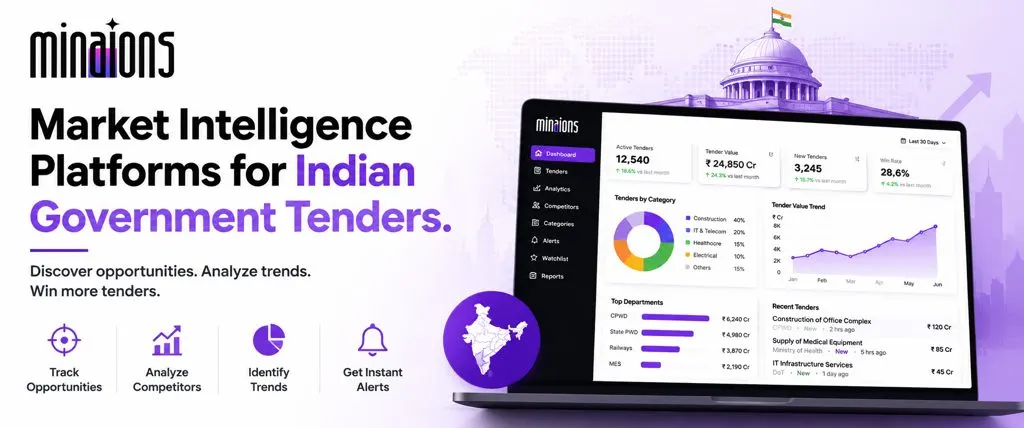
Discover how AI-powered market intelligence platforms streamline tender registration, procurement compliance, and government bidding success.