How AI Can Reduce Your Tender Rejection Rate by Over 60%
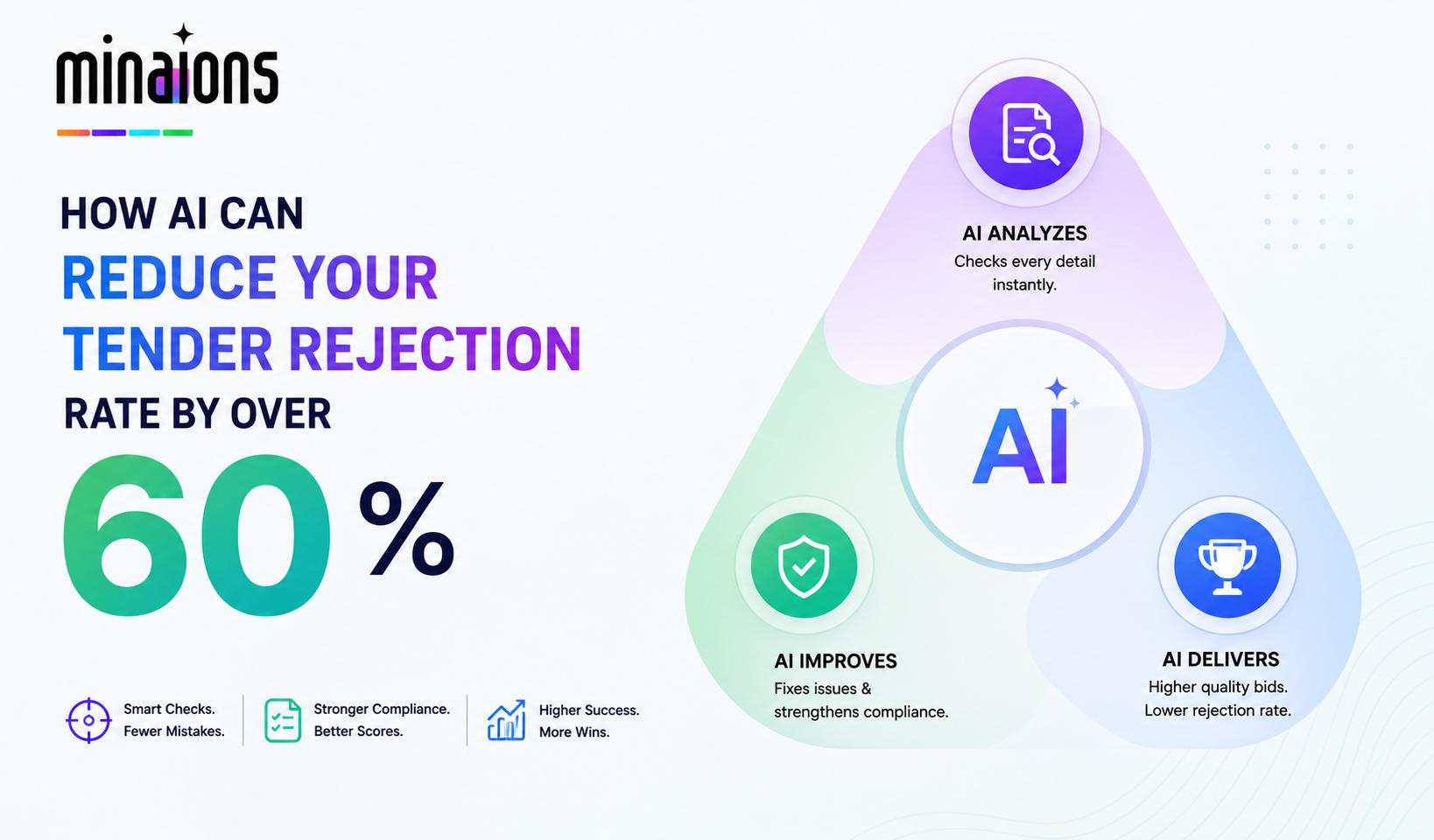
India’s public procurement ecosystem is becoming increasingly competitive, compliance-driven, and digitally managed. Businesses participating in procurement opportunities across the country are facing growing pressure to improve documentation accuracy, compliance management, proposal quality, and submission speed. Today, companies participating in tender in government sector projects must deal with highly detailed compliance requirements, strict timelines, digital workflows, and automated evaluations.
As procurement becomes more digital, organizations are increasingly using AI-powered government tender software and advanced bid management software India solutions to reduce procurement failures. One of the biggest challenges suppliers face today is the rising number of tender rejection reasons India and common tender disqualification reasons that prevent otherwise capable businesses from winning contracts.
Modern AI-driven procurement systems such as Minaions are transforming how suppliers manage e tender e procurement, automate bid evaluation, organize e tender documents, and participate in the growing ecosystem of e public procurement and e governance tender systems.
Why Tender Rejection Rates Are Increasing
The modern procurement ecosystem has become highly competitive. Businesses participating in tender in government sector opportunities often face rejection because of documentation errors, compliance gaps, technical mistakes, or poor proposal quality.
The most common tender rejection reasons India include:
Missing compliance documents
Incorrect pricing
Improper formatting
Technical non-compliance
Delayed submissions
Incomplete e tender documents
In addition to these tender rejection reasons India, suppliers also encounter multiple tender disqualification reasons during technical evaluation stages.
The growing complexity of e public procurement systems and digital procurement workflows has increased the importance of automation and AI-driven procurement management.
Role of AI in Modern Procurement
AI is rapidly transforming the way businesses participate in e tender e procurement and digital procurement systems.
Modern AI-powered government tender software solutions help suppliers:
Automate compliance verification
Improve bid evaluation
Organize e tender documents
Track procurement deadlines
Reduce manual errors
Improve proposal quality
Businesses participating in e governance tender systems are increasingly adopting AI because procurement workflows are becoming more documentation-intensive and highly regulated.
The expansion of eproc procurement and digital procurement systems is encouraging businesses to use intelligent procurement automation to improve operational efficiency.
Understanding Bid Evaluation with AI
One of the biggest advantages of AI-driven procurement systems is improved bid evaluation management.
Traditional bid evaluation processes often rely heavily on manual document review and human validation. This creates risks related to:
Human errors
Missing documentation
Compliance gaps
Delayed reviews
AI-powered bid evaluation systems can automatically analyze procurement requirements, compare proposal compliance, and identify risks before final submission.
Businesses participating in tender in government sector opportunities can significantly reduce tender rejection reasons India by improving bid evaluation workflows through AI-driven procurement systems.
Minaions helps businesses automate bid evaluation processes and reduce operational procurement risk.
Tender Processing Fee and Financial Compliance
Many businesses lose procurement opportunities because they fail to manage the tender processing fee properly.
The applicable tender processing fee may vary depending on project category, procurement authority, and procurement value.
AI-powered government tender software solutions help businesses manage:
Tender processing fee timelines
Payment verification
Digital receipt management
Procurement reminders
Improper handling of the tender processing fee is one of the overlooked tender disqualification reasons in digital procurement systems.
Businesses participating in e tender e procurement projects should automate workflows related to the tender processing fee to improve procurement accuracy.
E Tender E Procurement and Digital Procurement Growth
The rise of e tender e procurement systems has transformed procurement operations across India.
Today, almost every tender in government sector opportunity is managed through digital procurement workflows.
Modern e tender e procurement systems support:
Online bid submission
Compliance automation
Digital documentation
Procurement analytics
Real-time procurement tracking
Businesses participating in e public procurement should strengthen digital procurement readiness to remain competitive in modern procurement ecosystems.
The increasing complexity of e tender e procurement systems has made AI-driven procurement automation highly valuable.
EProc Procurement and Workflow Automation
The growth of eproc procurement systems has significantly improved procurement transparency and operational efficiency.
Modern eproc procurement systems now support:
AI-driven document validation
Automated compliance workflows
Procurement analytics
Vendor performance monitoring
Businesses participating in e governance tender projects should optimize workflows related to eproc procurement to reduce manual errors.
AI-powered bid management software India solutions can simplify eproc procurement workflows while improving proposal quality.
E Governance Tender Systems and Procurement Transparency
The adoption of e governance tender systems is increasing rapidly across India’s procurement ecosystem.
Modern e governance tender systems improve:
Procurement transparency
Digital bid submission
Vendor participation
Compliance monitoring
Procurement visibility
Businesses participating in e governance tender opportunities should focus heavily on operational efficiency and centralized procurement workflows.
The increasing complexity of e governance tender systems has also increased the importance of AI-powered government tender software.
E Tender Documents and Compliance Accuracy
One of the biggest causes of tender rejection reasons India is poorly managed e tender documents.
Typical e tender documents may include:
Financial statements
Compliance certificates
Technical specifications
EMD documents
Vendor declarations
Tax certificates
AI-powered bid management software India solutions can automatically validate e tender documents and identify missing information before final submission.
Businesses participating in tender in government sector opportunities should automate workflows related to e tender documents to reduce compliance risks.
Minaions helps businesses organize and verify e tender documents more efficiently.
Tender in Government Sector and Competitive Procurement
The ecosystem of tender in government sector procurement is becoming increasingly competitive.
Today, businesses participating in tender in government sector opportunities must compete against:
Large enterprises
Specialized vendors
Experienced procurement firms
Digitally advanced suppliers
The increasing competition in tender in government sector procurement has made AI-driven procurement management essential.
Businesses using AI-powered government tender software can significantly reduce operational errors and improve procurement success rates.
E Public Procurement and AI-Driven Decision Making
The rise of e public procurement systems is driving major transformation in procurement management.
Modern e public procurement systems now integrate:
Automated bid scoring
AI-driven compliance analysis
Real-time procurement analytics
Digital procurement tracking
Businesses participating in e public procurement projects should strengthen automation capability to improve operational efficiency.
AI-powered bid evaluation systems can dramatically reduce tender disqualification reasons during procurement evaluation.
Tender Rejection Reasons India and Common Procurement Failures
Understanding common tender rejection reasons India is critical for procurement success.
Typical tender rejection reasons India include:
Incorrect e tender documents
Improper formatting
Missing compliance certificates
Pricing inconsistencies
Late submissions
In addition to these tender rejection reasons India, businesses also face several tender disqualification reasons such as:
Technical non-compliance
Financial ineligibility
Missing EMD requirements
Failure during bid evaluation
AI-powered government tender software can significantly reduce these procurement failures through automated compliance checks.
Government Tender Software and Procurement Intelligence
Modern government tender software solutions are becoming essential for procurement participation.
Advanced government tender software helps businesses:
Track procurement opportunities
Organize e tender documents
Improve bid evaluation
Monitor procurement deadlines
Reduce tender disqualification reasons
Minaions provides AI-powered government tender software solutions that help businesses automate procurement workflows and improve bid success rates.
The increasing complexity of e public procurement systems has made intelligent government tender software highly valuable.
Bid Management Software India and Procurement Automation
The demand for bid management software India is growing rapidly because procurement workflows are becoming increasingly complex.
A modern bid management software India platform helps businesses:
Automate compliance workflows
Improve proposal quality
Organize e tender documents
Reduce manual procurement errors
Improve bid evaluation
Businesses participating in e governance tender systems should adopt AI-powered bid management software India solutions to improve procurement efficiency.
Minaions offers AI-driven bid management software India solutions that help businesses reduce procurement rejection rates significantly.
How AI Reduces Tender Rejection Rates by Over 60%
AI reduces procurement failures through:
Automated compliance checks
Real-time document validation
Smart procurement analytics
AI-driven bid evaluation
Workflow automation
Risk identification
Businesses using AI-powered government tender software and bid management software India solutions can significantly reduce both tender rejection reasons India and common tender disqualification reasons.
The combination of AI, automation, and procurement intelligence can improve operational efficiency while increasing procurement success rates dramatically.
Minaions and AI-Driven Procurement Success
Minaions is helping businesses transform procurement operations through AI-powered automation.
Minaions supports businesses through:
AI-driven bid evaluation
Automated e tender documents management
Smart procurement analytics
Compliance automation
Workflow optimization
Procurement tracking
Businesses participating in e tender e procurement, e public procurement, and e governance tender systems can use Minaions to improve procurement performance and reduce rejection risks significantly.
Final Thoughts
AI is rapidly transforming India’s procurement ecosystem. Businesses participating in tender in government sector opportunities must adopt intelligent procurement systems to remain competitive.
From improving bid evaluation to automating e tender documents management, AI-driven procurement systems can dramatically reduce tender rejection reasons India and common tender disqualification reasons.
Organizations investing in AI-powered government tender software, advanced bid management software India, and automation platforms like Minaions can significantly improve procurement success rates while reducing operational inefficiencies.
As e tender e procurement, eproc procurement, and e public procurement systems continue to evolve, businesses adopting AI-driven procurement management will gain a major competitive advantage in India’s digital procurement ecosystem.
Related Blogs

A small manufacturing firm in Ludhiana missed a ₹2.3 crore contract after spending 14 hours manually scanning the GeM portal, only to find the tender had closed two days earlier. This is not an isolated case.

A small civil engineering firm in Lucknow spent three weeks manually parsing a 420-page NHAI tenders document, only to miss a critical clause in the contractor registration requirements and lose eligibility.

A small manufacturing firm in Ludhiana missed a ₹2.
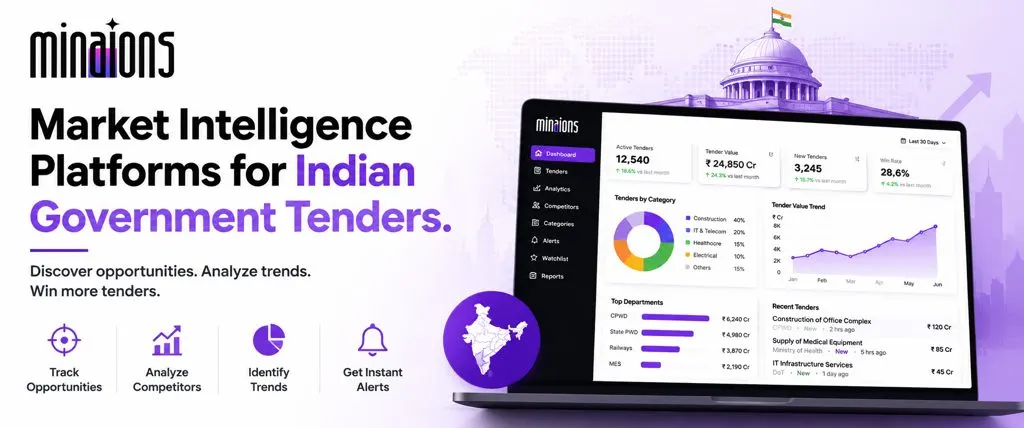
Discover how AI-powered market intelligence platforms streamline tender registration, procurement compliance, and government bidding success.