OEM vs Reseller on GeM: Understanding the Power Dynamic and How to Control It
India’s public procurement ecosystem is rapidly evolving, creating enormous opportunities for OEMs, manufacturers, distributors, and resellers. Businesses participating in government bids and tenders, modern e tendering portal systems, and the expanding GeM ecosystem must now understand one of the most important strategic questions in procurement — who really controls the procurement relationship, the OEM or the reseller?
As procurement digitization increases, many OEMs are discovering that resellers often dominate customer relationships, pricing visibility, and regional procurement access. At the same time, resellers depend heavily on OEM authorization, product availability, and pricing support to compete effectively in the government procurement process.
Today, businesses participating in business tenders, managing large-scale tender bid opportunities, and competing through the modern electronic government procurement system must clearly understand the OEM-reseller power dynamic to build sustainable procurement growth.
Platforms like Minaions are helping OEMs strengthen procurement intelligence, optimize gem tender search, improve participation in the public procurement platform ecosystem, and gain better control over procurement operations across the evolving tendering system landscape.
Understanding the Government Procurement Process
The modern government procurement process is becoming increasingly digital, transparent, and competitive.
Today, the government procurement process generally includes:
Opportunity publication
Vendor participation
Technical qualification
Commercial evaluation
Contract award
Businesses participating in government bids and tenders should clearly understand how OEMs and resellers interact within the government procurement process.
The increasing complexity of the government procurement process has also increased the importance of procurement intelligence and channel strategy.
Organizations participating in the electronic government procurement system should therefore establish structured procurement governance models.
OEM vs Reseller: The Core Difference
In the GeM ecosystem, an OEM manufactures products while a reseller distributes or supplies those products to buyers.
OEMs participating in business tenders generally control:
Product manufacturing
Technical specifications
Pricing frameworks
Product certifications
Resellers participating in tender bid opportunities generally control:
Regional relationships
Procurement execution
Bid participation
Delivery coordination
The increasing scale of the public procurement platform ecosystem has intensified the dependency between OEMs and resellers.
Businesses participating in government bids and tenders should therefore understand how this procurement relationship impacts long-term growth.
Government Bids and Tenders and Channel Conflict
The ecosystem of government bids and tenders is becoming increasingly competitive.
Today, suppliers participating in government bids and tenders compete across sectors such as:
IT procurement
Industrial procurement
Infrastructure projects
Healthcare procurement
Educational procurement
The increasing competition within government bids and tenders has created channel conflict between OEMs and resellers.
Many OEMs participating in the government procurement process struggle with:
Unauthorized pricing
Uncontrolled reseller participation
Margin pressure
Brand dilution
The increasing sophistication of the electronic government procurement system has made procurement control more important than ever.
Gem Tender Search and Competitive Visibility
The role of gem tender search is becoming increasingly important for both OEMs and resellers.
Effective gem tender search workflows help businesses:
Identify procurement opportunities
Analyze supplier participation
Monitor competitor activity
Improve bid planning
Track procurement trends
Businesses participating in the tendering system should continuously optimize gem tender search capabilities to improve procurement visibility.
Minaions helps businesses automate gem tender search through AI-driven procurement intelligence systems.
Tender Bid Ownership and Procurement Power
Control over the tender bid process often determines who dominates the procurement relationship.
Resellers participating in business tenders frequently control:
Bid submission
Buyer communication
Procurement coordination
Regional engagement
Meanwhile, OEMs participating in the government procurement process control:
Product approvals
Technical compliance
Manufacturer authorization
Pricing policies
The increasing complexity of tender bid management has encouraged OEMs to strengthen procurement governance and channel oversight.
Public Procurement Training and Procurement Maturity
The growing complexity of procurement has increased demand for public procurement training.
Modern public procurement training helps businesses understand:
GeM workflows
Bid preparation
Pricing strategy
Procurement compliance
OEM-reseller coordination
Businesses participating in the electronic government procurement system should continuously invest in public procurement training to improve procurement maturity.
The increasing scale of government bids and tenders has made procurement education highly valuable.
Business Tenders and Reseller Dependence
The ecosystem of business tenders is expanding rapidly across India.
Today, business tenders include opportunities related to:
Industrial products
Office equipment
Technology procurement
Healthcare systems
Smart city infrastructure
Many OEMs participating in business tenders depend heavily on reseller networks for regional market penetration.
However, excessive reseller dependence can weaken OEM control over the government procurement process.
Businesses participating in the public procurement platform ecosystem should therefore establish balanced channel strategies.
Electronic Government Procurement System and Digital Visibility
The rise of the electronic government procurement system has transformed procurement transparency.
Modern electronic government procurement system platforms support:
Vendor visibility
Digital procurement tracking
Bid participation analytics
Procurement transparency
Supplier comparison
Businesses participating in government bids and tenders should leverage the electronic government procurement system to analyze reseller performance and procurement behavior.
The increasing transparency of the electronic government procurement system has created strong opportunities for procurement intelligence.
Tendering System and Procurement Scalability
The modern tendering system is highly data-driven and competitive.
Businesses participating in the tendering system should continuously evaluate:
Reseller participation patterns
Bid success rates
Procurement coverage
Regional procurement strength
The increasing sophistication of the tendering system has made AI-driven procurement analytics highly valuable.
Minaions helps OEMs optimize participation in the tendering system through procurement automation and reseller intelligence.
Public Procurement Platform and Market Control
The modern public procurement platform ecosystem gives suppliers unprecedented procurement visibility.
Businesses participating in the public procurement platform should continuously monitor:
Supplier activity
Pricing competition
Procurement regions
Category demand
Reseller participation
The increasing transparency within the public procurement platform ecosystem has empowered OEMs to regain procurement control.
Organizations participating in business tenders should therefore strengthen procurement analytics and channel governance.
E Tendering Portal and Procurement Expansion
The rise of the e tendering portal ecosystem has expanded procurement participation significantly.
Modern e tendering portal systems support:
Nationwide procurement participation
Digital bid submission
Online compliance management
Vendor visibility
Procurement analytics
Businesses participating in government bids and tenders should optimize operational readiness for participating through modern e tendering portal systems.
The increasing adoption of e tendering portal systems has improved procurement accessibility while increasing competition.
GeM Seller Registration and OEM Strategy
Proper GeM seller registration is one of the most important steps for OEMs and resellers.
The standard GeM seller registration workflow generally includes:
Vendor onboarding
Product listing
Category approvals
Compliance verification
Procurement participation
Businesses participating in the government procurement process should carefully manage GeM seller registration to improve procurement visibility and operational control.
The increasing participation of suppliers through GeM seller registration has intensified procurement competition significantly.
How OEMs Can Control the Power Dynamic
OEMs participating in government bids and tenders can strengthen procurement control through several strategies.
Build Direct Procurement Visibility
OEMs should continuously monitor gem tender search activity and reseller participation.
Strengthen Public Procurement Training
Regular public procurement training improves procurement governance and operational maturity.
Analyze Tender Bid Data
OEMs should continuously evaluate tender bid participation and reseller performance.
Improve Electronic Government Procurement System Analytics
Using procurement analytics improves visibility across the electronic government procurement system.
Optimize GeM Seller Registration
Proper GeM seller registration improves procurement positioning and supplier control.
Use AI-Driven Procurement Intelligence
Platforms like Minaions help OEMs strengthen procurement visibility and reseller analytics.
Minaions and Smart Procurement Intelligence
Minaions is helping OEMs modernize procurement participation through AI-driven procurement automation.
Minaions supports organizations through:
AI-powered gem tender search
Procurement analytics
Reseller intelligence
Bid monitoring
Competitive analysis
Optimization for the government procurement process
Procurement visibility across the public procurement platform
Businesses participating in business tenders can use Minaions to improve procurement efficiency and regain procurement control.
Final Thoughts
The relationship between OEMs and resellers is becoming one of the most important strategic dynamics within India’s digital procurement ecosystem. Businesses participating in government bids and tenders, managing complex tender bid workflows, and competing through the modern electronic government procurement system must clearly understand how procurement power shifts across the supply chain.
From optimizing gem tender search to improving participation in the e tendering portal ecosystem, every stage of the government procurement process matters.
Organizations actively strengthening procurement intelligence through AI-driven platforms like Minaions, improving public procurement training, and optimizing GeM seller registration workflows can significantly improve procurement success rates and procurement control.
As the tendering system and public procurement platform ecosystems continue to evolve, businesses investing in intelligent procurement management and reseller analytics will gain a major competitive advantage.
Related Blogs
Indian government procurement exceeds ₹30 trillion annually, yet many qualified businesses miss opportunities due to manual processes, fragmented portals, and compliance errors. A single missing Udyam certificate or i...
The Indian public procurement landscape is undergoing significant transformation.
The stakes in Indian government tendering have never been higher.
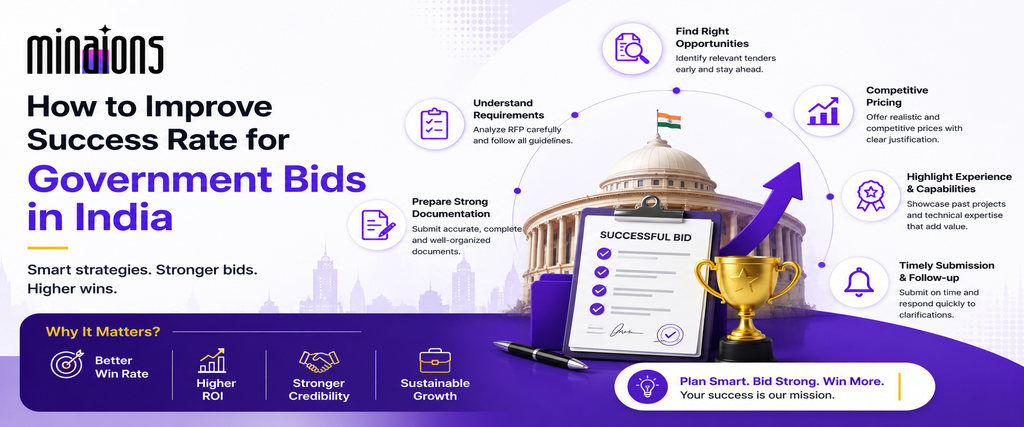
The stakes in Indian government tendering have never been higher. Public procurement spending exceeds ₹50 lakh crore annually, with digital platforms like GeM and CPPP now mandating electronic submissions.