Why OEMs Are Missing Massive Revenue Opportunities in India's Government Market
India’s government procurement ecosystem is undergoing one of the largest digital transformations in the world. With increasing adoption of the GeM portal, modern e procurement portal systems, and digital procurement workflows, thousands of procurement opportunities are now available daily for Original Equipment Manufacturers (OEMs). Yet, many OEMs are still missing significant revenue opportunities because they do not fully understand the evolving structure of public sector procurement, digital bidding systems, and government procurement workflows.
Today, ministries, PSUs, railways, defense departments, Smart City projects, educational institutions, healthcare organizations, municipalities, and state governments regularly publish gem government tenders, local government contracts, and procurement opportunities through the gem tender portal and other digital procurement systems.
Businesses that fail to optimize their GeM bidding, maintain active GeM seller registration, or understand the complete gem bidding process often lose high-value procurement opportunities. Platforms like Minaions are helping OEMs automate procurement workflows, identify gem bid opportunities, simplify the how to bid on GeM portal process, and improve participation in the growing ecosystem of gem contracts india.
Growth of Public Sector Procurement in India
The ecosystem of public sector procurement in India has expanded rapidly over the last few years.
Today, public sector procurement includes opportunities related to:
Technology procurement
Industrial equipment
Healthcare systems
Infrastructure development
Educational supplies
Smart city solutions
Renewable energy projects
The increasing scale of public sector procurement has created enormous opportunities for OEMs participating through the e procurement portal ecosystem.
However, many manufacturers still fail to participate effectively in public sector procurement because they lack procurement automation, bid intelligence, and centralized procurement workflows.
E Procurement Portal and Digital Procurement Growth
The rise of the e procurement portal has transformed public procurement operations across India.
Modern e procurement portal systems now support:
Digital bid submission
Real-time procurement visibility
Automated procurement tracking
Vendor participation
Procurement analytics
Businesses participating in gem procurement should continuously monitor every relevant e procurement portal to improve procurement visibility.
The expansion of the e procurement portal ecosystem has significantly increased supplier participation in local government contracts and gem government tenders.
Minaions helps OEMs automate workflows related to every major e procurement portal and improve bid tracking efficiency.
Why OEMs Miss Local Government Contracts
Many OEMs focus only on large national procurement projects and ignore local government contracts.
However, local government contracts often provide:
Faster procurement cycles
Lower competition
Stable recurring revenue
Long-term procurement relationships
Businesses participating in local government contracts can gradually build procurement credibility and improve visibility within the broader public sector procurement ecosystem.
The increasing number of local government contracts available through the GeM portal is creating major opportunities for OEMs willing to participate consistently.
GeM Portal and Government Procurement Transformation
The GeM portal has become one of India’s largest digital procurement ecosystems.
Today, ministries, PSUs, educational institutions, healthcare departments, and municipalities use the GeM portal for purchasing products and services digitally.
The modern GeM portal supports:
Digital procurement workflows
Vendor participation
Bid submission
Procurement analytics
Contract management
Businesses participating in gem procurement should maintain strong operational readiness for the evolving GeM portal ecosystem.
The increasing adoption of the GeM portal has improved transparency while increasing supplier competition in gem government tenders.
GeM Seller Registration and Procurement Visibility
Proper GeM seller registration is one of the most important requirements for OEMs entering public procurement.
A successful GeM seller registration process helps businesses:
Access gem bid opportunities
Participate in GeM bidding
Improve procurement visibility
Compete for gem contracts india
Participate in local government contracts
Businesses participating in public sector procurement should ensure all compliance documents are updated during GeM seller registration.
Minaions helps businesses simplify the GeM seller registration process and improve procurement readiness.
Understanding How to Bid on GeM Portal
Many OEMs still do not fully understand how to bid on GeM portal effectively.
Understanding how to bid on GeM portal involves:
Vendor registration
Product catalog creation
Bid participation
Pricing optimization
Compliance management
Digital bid submission
Businesses trying to learn how to bid on GeM portal should also maintain centralized workflows for document management and procurement tracking.
Minaions helps OEMs optimize workflows related to how to bid on GeM portal using AI-driven procurement systems.
GeM Bid Opportunities and Revenue Potential
The number of gem bid opportunities available daily is massive.
Today, gem bid opportunities include procurement related to:
Industrial equipment
IT systems
Healthcare products
Educational supplies
Security systems
Infrastructure materials
Businesses participating in gem bid opportunities can generate stable recurring revenue through long-term government procurement participation.
The increasing number of gem bid opportunities is encouraging more MSMEs and OEMs to participate actively in gem procurement systems.
GeM Procurement and Digital Transformation
The rise of gem procurement has transformed public procurement workflows across India.
Modern gem procurement systems support:
Real-time procurement visibility
Automated procurement analytics
Digital vendor participation
Centralized procurement workflows
Businesses participating in public sector procurement should continuously optimize workflows related to gem procurement.
The increasing complexity of gem procurement has encouraged suppliers to adopt AI-driven procurement management platforms like Minaions.
GeM Government Tenders and Market Expansion
The ecosystem of gem government tenders is growing rapidly across India.
Today, gem government tenders cover procurement opportunities related to:
Smart city projects
Industrial equipment
Healthcare systems
Infrastructure projects
Digital transformation programs
Businesses participating in gem government tenders should focus heavily on compliance management, pricing optimization, and operational scalability.
The increasing number of gem government tenders has created strong growth opportunities for OEMs participating in the broader e procurement portal ecosystem.
GeM Bidding and Procurement Competition
The ecosystem of GeM bidding is becoming increasingly competitive.
Today, businesses participating in GeM bidding compete for opportunities across multiple sectors and procurement categories.
Successful GeM bidding generally requires:
Strong pricing strategy
Accurate compliance documentation
Competitive product positioning
Procurement analytics
Fast response capability
Businesses participating in gem bid opportunities should continuously improve workflows related to GeM bidding to improve procurement success rates.
GeM Bidding Process and Procurement Accuracy
The gem bidding process is one of the most important aspects of procurement participation.
The standard gem bidding process generally includes:
Completing GeM seller registration
Product listing
Opportunity identification
Bid preparation
Compliance review
Final bid submission
Businesses participating in gem procurement should optimize every stage of the gem bidding process to reduce operational errors.
Weak execution during the gem bidding process is one of the biggest reasons OEMs lose procurement opportunities.
Bid List and Procurement Planning
A centralized bid list is essential for OEMs managing multiple procurement opportunities.
Businesses participating in public sector procurement should maintain a structured bid list to:
Track procurement opportunities
Monitor bid deadlines
Improve proposal coordination
Manage procurement priorities
The increasing volume of gem bid opportunities makes maintaining an organized bid list extremely important.
Minaions helps businesses automate procurement tracking and optimize bid list management using AI-driven systems.
GeM Contracts India and Long-Term Growth
The ecosystem of gem contracts india provides enormous long-term revenue opportunities for OEMs.
Businesses participating in gem contracts india can achieve:
Stable recurring revenue
Long-term procurement visibility
Government procurement credibility
Scalable procurement growth
The increasing number of gem contracts india opportunities is encouraging OEMs to invest heavily in procurement automation and bid intelligence.
GeM Portal Guide for MSME
The growth of GeM portal guide for MSME resources is helping smaller suppliers participate more actively in public procurement.
A strong GeM portal guide for MSME generally helps businesses understand:
GeM seller registration
How to bid on GeM portal
Compliance workflows
Pricing optimization
Procurement tracking
Businesses participating in gem government tenders should actively use every available GeM portal guide for MSME resource to improve procurement readiness.
Minaions provides AI-driven workflows aligned with the modern GeM portal guide for MSME approach to simplify procurement operations for MSMEs and OEMs.
Why OEMs Need Procurement Automation
Many OEMs still rely on manual procurement workflows and fragmented procurement tracking systems.
This results in:
Missed gem bid opportunities
Weak GeM bidding
Poor bid visibility
Delayed submissions
Lost local government contracts
Platforms like Minaions help OEMs automate workflows related to:
GeM seller registration
gem bidding process
Procurement analytics
Compliance management
Bid tracking
Opportunity identification
Final Thoughts
India’s public procurement ecosystem is creating enormous revenue opportunities for OEMs across manufacturing, technology, healthcare, infrastructure, and industrial supply sectors. Businesses participating in public sector procurement, gem government tenders, and local government contracts must clearly understand procurement workflows, compliance standards, and digital procurement systems.
From completing GeM seller registration to optimizing the gem bidding process, every stage of procurement matters.
Organizations actively participating in gem procurement, maintaining a structured bid list, and using AI-driven procurement platforms like Minaions can significantly improve their ability to win long-term gem contracts india opportunities.
As the GeM portal, e procurement portal, and broader tender india ecosystem continue to evolve, OEMs investing in procurement automation and digital readiness will gain a major competitive advantage.
Related Blogs
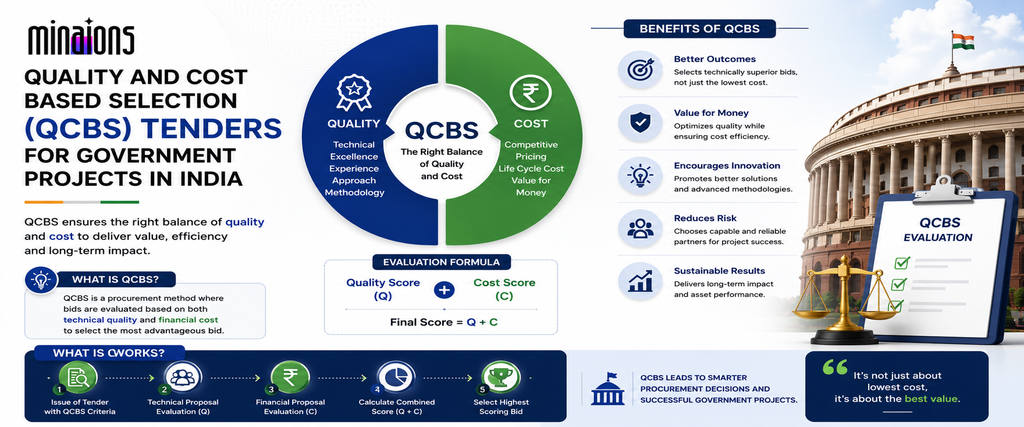
The Indian public procurement landscape is undergoing a quiet but profound transformation.
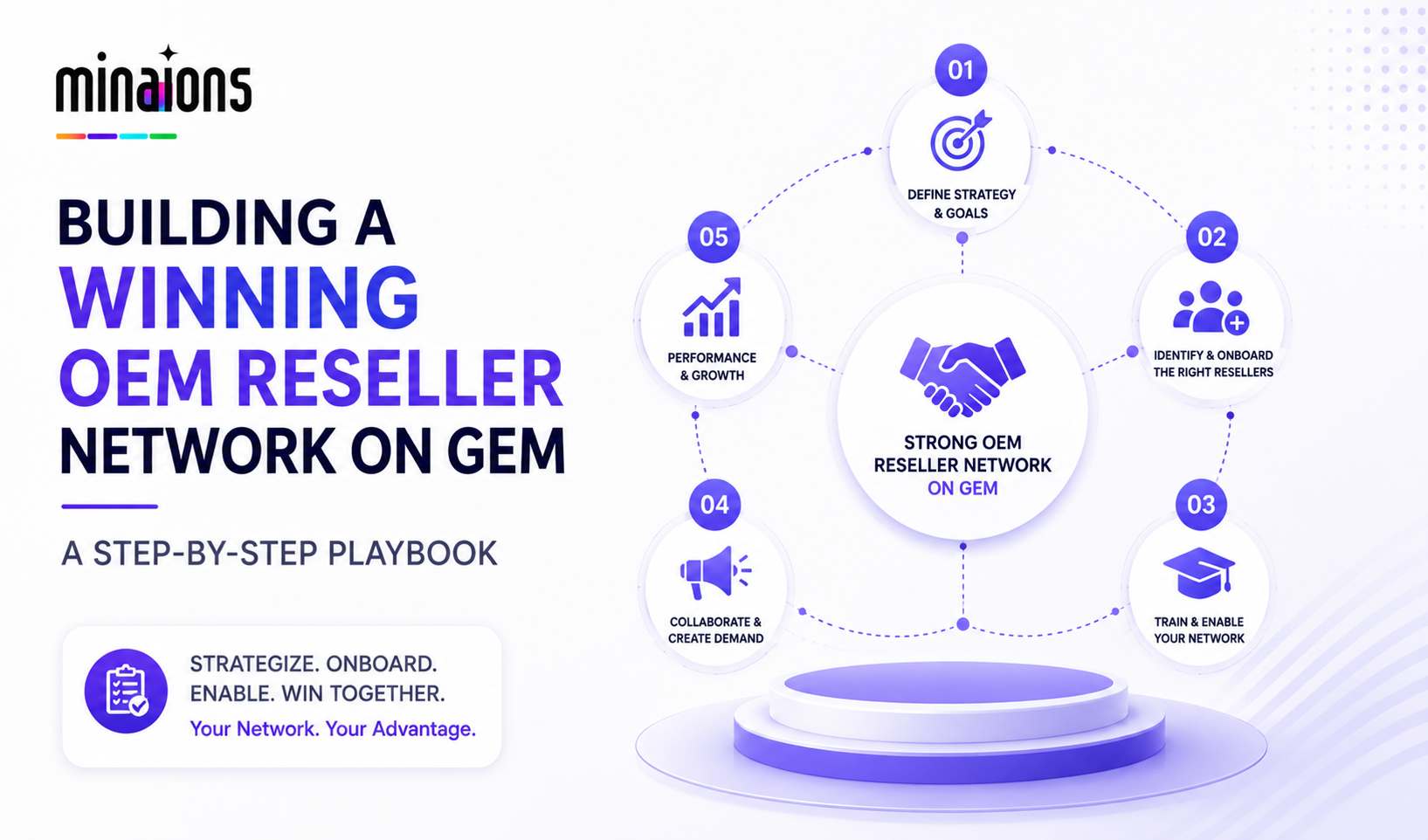
The scale of India’s public procurement landscape has fundamentally shifted. Transactions on the Government e-Marketplace (GeM) exceeded ₹4 lakh crore in FY’26, with over 50 lakh buying and selling orders processed.