Understanding the Eligibility Criteria Trap: Common Disqualification Reasons
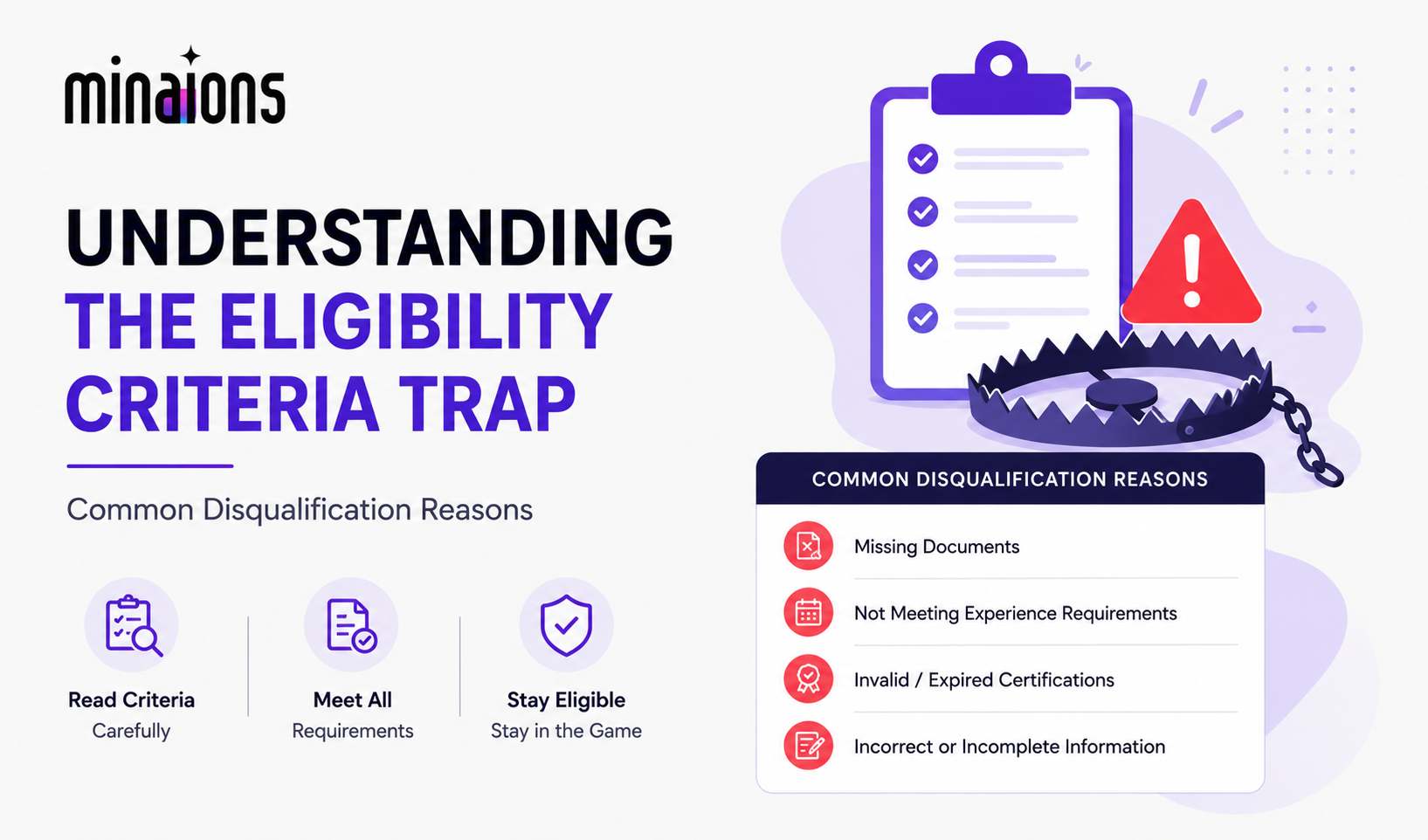
India’s public procurement ecosystem is becoming increasingly competitive, compliance-driven, and digitally managed. Businesses participating in competitive tenders and modern electronic public procurement systems often focus heavily on pricing and proposal quality but overlook one of the biggest risk factors in procurement — eligibility compliance.
Today, thousands of companies lose procurement opportunities because of simple compliance mistakes, incomplete documentation, incorrect qualification interpretation, and weak preparation during the general procurement process. Whether suppliers are participating in infrastructure procurement, IT procurement, healthcare contracts, or institutional projects, understanding common tender rejection reasons India and major tender disqualification reasons has become essential.
The rise of electronic public procurement, centralized procurement systems, and AI-driven evaluations has significantly increased procurement scrutiny. Platforms like Minaions are helping businesses reduce tender rejection reasons India, manage public procurement documents, optimize workflows for tender technical evaluation, and improve procurement readiness across the modern procurement ecosystem.
The Growing Complexity of Electronic Public Procurement
The ecosystem of electronic public procurement has expanded rapidly across India.
Today, almost all government departments use electronic public procurement systems to improve transparency, compliance visibility, procurement efficiency, and supplier participation.
Modern electronic public procurement systems support:
Digital bid submission
Online compliance verification
Automated eligibility validation
Procurement analytics
Real-time evaluation workflows
While electronic public procurement improves procurement transparency, it also increases the chances of supplier rejection because compliance validation is now highly automated.
Businesses participating in competitive tenders must therefore maintain strong operational discipline while participating in electronic public procurement systems.
Public Procurement Challenges in Competitive Markets
The increasing competition in procurement has created multiple public procurement challenges for suppliers.
Common public procurement challenges include:
Complex eligibility conditions
Strict documentation requirements
Digital compliance workflows
High supplier competition
Technical evaluation complexity
Frequent corrigendums
Businesses participating in competitive tenders often underestimate these public procurement challenges, resulting in avoidable procurement failures.
The growing complexity of public procurement challenges has encouraged organizations to adopt AI-driven procurement management platforms like Minaions.
Minaions helps suppliers manage public procurement documents, monitor procurement changes, and reduce operational errors during the general procurement process.
Competitive Tenders and Eligibility Risks
The ecosystem of competitive tenders has become significantly more aggressive in recent years.
Today, businesses participating in competitive tenders face:
Higher qualification standards
Increased documentation scrutiny
Detailed compliance checks
AI-driven procurement evaluation
Strict technical qualification requirements
Many suppliers lose opportunities in competitive tenders not because of pricing issues, but because of avoidable compliance mistakes.
The increasing number of competitive tenders has also increased the importance of centralized procurement management and automated compliance workflows.
Businesses participating in electronic public procurement should maintain structured operational workflows to improve procurement success rates.
Public Procurement Documents and Compliance Accuracy
One of the biggest causes of tender disqualification reasons is poor management of public procurement documents.
Every procurement project involves detailed public procurement documents, including:
Eligibility declarations
Technical certificates
Financial records
Work completion certificates
Turnover statements
Vendor registrations
Businesses participating in competitive tenders should carefully review all public procurement documents before final submission.
Incorrect formatting, missing signatures, outdated certifications, or incomplete public procurement documents are among the most common tender rejection reasons India.
Minaions helps businesses organize public procurement documents through AI-powered document management and compliance tracking systems.
Tender Suppliers and Procurement Competition
The number of tender suppliers participating in public procurement is increasing rapidly.
Today, tender suppliers across industries compete for opportunities related to:
Infrastructure
IT services
Healthcare
Education
Smart cities
Defence procurement
The increasing number of tender suppliers has significantly increased competition in electronic public procurement systems.
Businesses participating as tender suppliers should focus heavily on compliance accuracy and eligibility management.
Many tender suppliers lose procurement opportunities because they fail to interpret qualification criteria correctly during the general procurement process.
Tender Technical Evaluation and Eligibility Traps
The tender technical evaluation stage is one of the most critical phases in procurement.
During tender technical evaluation, procurement authorities carefully evaluate:
Eligibility criteria
Technical capability
Work experience
Financial qualification
Compliance documents
Product specifications
Weak preparation during tender technical evaluation is one of the biggest tender disqualification reasons across procurement sectors.
Businesses participating in competitive tenders should carefully align all submissions with the requirements of the tender technical evaluation process.
Minaions helps organizations optimize workflows related to tender technical evaluation and reduce compliance-related rejection risks.
General Procurement Process and Eligibility Management
The modern general procurement process has become highly structured and digitally monitored.
The standard general procurement process generally includes:
Procurement opportunity identification
Eligibility analysis
Technical document preparation
Financial bid preparation
Submission validation
Technical evaluation
Commercial evaluation
Businesses participating in electronic public procurement should optimize every stage of the general procurement process to avoid compliance failures.
Many tender rejection reasons India occur because suppliers fail to manage eligibility requirements correctly during the general procurement process.
Organizations using Minaions can automate several workflows within the general procurement process to improve operational efficiency and reduce procurement risks.
Tender Rejection Reasons India: Most Common Causes
Understanding major tender rejection reasons India is critical for procurement success.
The most common tender rejection reasons India include:
Missing compliance documents
Incorrect bid formatting
Expired certificates
Incomplete eligibility declarations
Wrong financial calculations
Failure during tender technical evaluation
Incomplete public procurement documents
Missing digital signatures
Businesses participating in competitive tenders should continuously monitor and reduce these tender rejection reasons India through structured procurement workflows.
The increasing complexity of electronic public procurement systems has made compliance management more important than ever.
Tender Disqualification Reasons in Public Procurement
The most serious procurement failures usually occur because of major tender disqualification reasons.
Typical tender disqualification reasons include:
Failure to meet turnover criteria
Lack of relevant project experience
Missing mandatory certifications
Non-compliance with eligibility conditions
Incorrect bid submission format
Failure during tender technical evaluation
Businesses participating in competitive tenders should establish detailed compliance verification workflows to reduce tender disqualification reasons.
Many suppliers underestimate the importance of eligibility analysis during the general procurement process, leading to avoidable tender disqualification reasons.
Minaions helps businesses reduce tender disqualification reasons through AI-driven compliance validation systems.
How Minaions Helps Reduce Procurement Rejections
Minaions is helping businesses improve procurement success rates across the growing ecosystem of electronic public procurement.
Minaions supports organizations through:
AI-driven eligibility analysis
Automated compliance workflows
Smart public procurement documents management
Procurement analytics
Bid tracking
Technical evaluation optimization
Procurement risk analysis
Businesses participating in competitive tenders can use Minaions to significantly reduce tender rejection reasons India and improve operational efficiency during the general procurement process.
Best Practices to Avoid Tender Disqualification
Businesses participating in electronic public procurement should follow several best practices to reduce procurement risk.
Review Eligibility Carefully
Suppliers should analyze all qualification requirements before entering competitive tenders.
Organize Public Procurement Documents
Accurate management of public procurement documents significantly reduces operational risk.
Monitor Technical Compliance
Preparation for tender technical evaluation should begin early in the procurement lifecycle.
Automate Procurement Workflows
AI-driven systems like Minaions help suppliers reduce tender disqualification reasons and improve compliance management.
Maintain Centralized Documentation
Centralized compliance systems improve efficiency during the general procurement process.
Final Thoughts
The modern procurement ecosystem is becoming increasingly competitive, compliance-driven, and digitally managed. Businesses participating in electronic public procurement, competitive tenders, and large-scale procurement projects must clearly understand the major eligibility risks that lead to procurement failures.
From managing accurate public procurement documents to preparing for tender technical evaluation, every stage of the general procurement process matters.
Organizations actively reducing tender rejection reasons India, improving compliance workflows, and using AI-driven procurement platforms like Minaions can significantly improve procurement success rates while minimizing major tender disqualification reasons.
As procurement systems continue to evolve digitally, businesses investing in structured procurement management, compliance automation, and intelligent bid analysis will gain a major competitive advantage.
Related Blogs

A small manufacturing firm in Ludhiana missed a ₹2.3 crore contract after spending 14 hours manually scanning the GeM portal, only to find the tender had closed two days earlier. This is not an isolated case.

A small civil engineering firm in Lucknow spent three weeks manually parsing a 420-page NHAI tenders document, only to miss a critical clause in the contractor registration requirements and lose eligibility.

A small manufacturing firm in Ludhiana missed a ₹2.
Discover how AI-powered market intelligence platforms streamline tender registration, procurement compliance, and government bidding success.