Reverse Auction in Government e-Marketplace (GeM): A Complete Guide
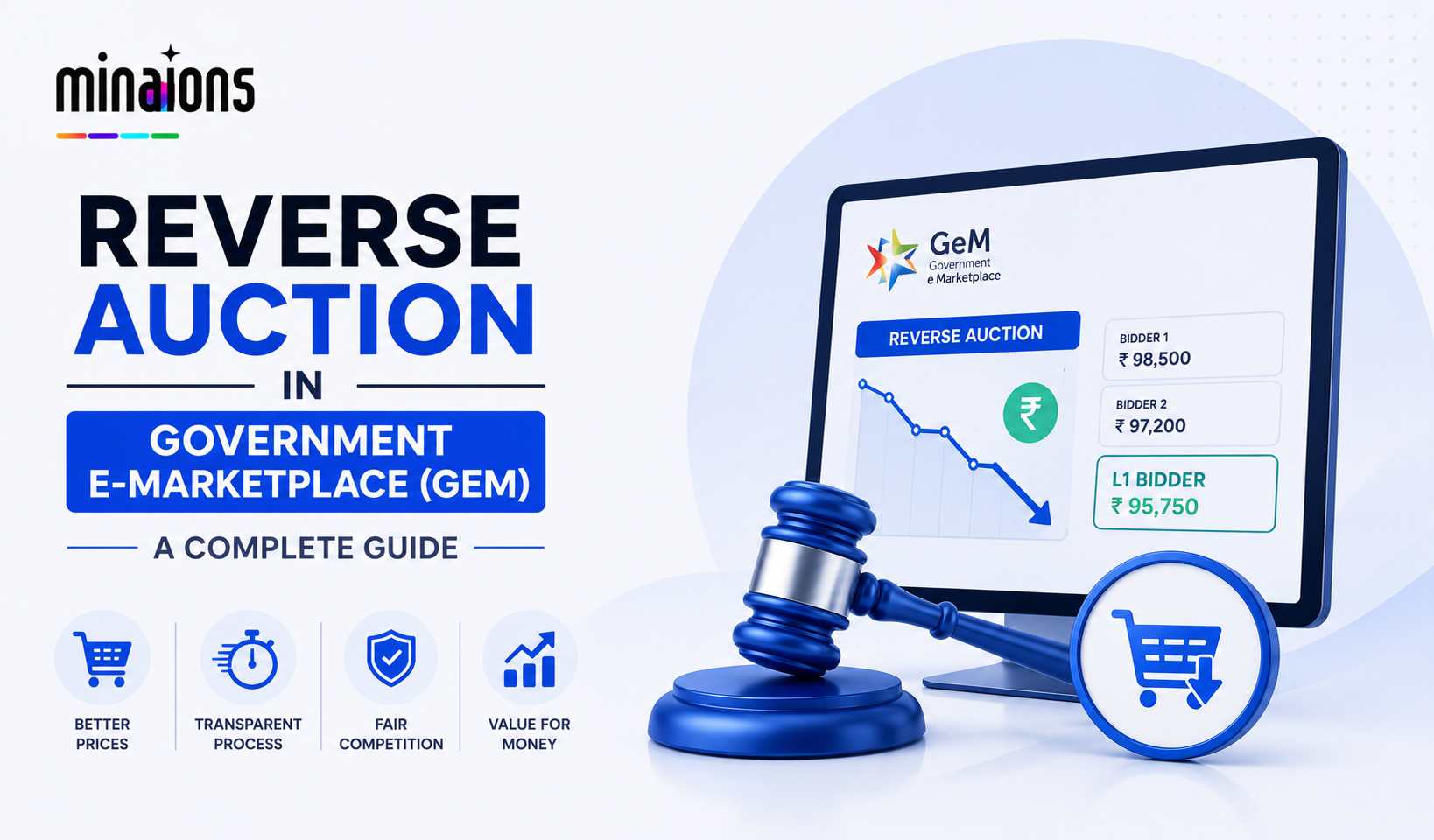
India’s public procurement ecosystem is rapidly becoming digital, transparent, and highly competitive. One of the most important procurement innovations introduced through GeM is the reverse auction GeM mechanism. Today, businesses participating in public procurement must clearly understand how gem e auction systems work to remain competitive in government procurement markets.
The rise of electronic reverse auction systems has transformed the way suppliers compete for government contracts. Businesses participating in procurement through GeM, modern auction online platform systems, and digital procurement ecosystems are increasingly adopting advanced pricing strategies and automation tools to improve procurement success rates.
Platforms like Minaions are helping suppliers optimize participation in reverse auction GeM, analyze auction experiences, improve pricing strategy for reverse price auction workflows, and strengthen operational efficiency across modern procurement ecosystems.
Understanding Reverse Auction GeM
The reverse auction GeM model is a procurement method where suppliers compete by continuously lowering prices during a live bidding session.
Unlike traditional procurement, where buyers select from static quotations, the reverse auction GeM mechanism allows suppliers to revise pricing dynamically in real time.
The objective of reverse auction GeM is to:
Improve procurement transparency
Increase supplier competition
Reduce procurement cost
Improve procurement efficiency
Businesses participating in gem e auction workflows should therefore understand how pricing competition operates during the electronic reverse auction process.
The increasing use of reverse auction GeM systems has significantly transformed India’s public procurement landscape.
What Is a Reverse Price Auction?
A reverse price auction is a procurement model where suppliers compete by reducing prices instead of increasing them.
In a traditional auction, buyers increase prices to win products. In a reverse price auction, sellers reduce pricing to win procurement opportunities.
The reverse price auction model is commonly used in:
Government procurement
Infrastructure procurement
IT procurement
Healthcare procurement
Industrial procurement
Businesses participating in reverse auction GeM systems should carefully understand how the reverse price auction model impacts pricing strategy and profit margins.
The increasing adoption of reverse price auction systems has made procurement analytics more important than ever.
Electronic Reverse Auction and Digital Procurement
The rise of electronic reverse auction systems has transformed public procurement operations across India.
Modern electronic reverse auction systems support:
Real-time bidding
Automated bid ranking
Procurement transparency
Digital vendor participation
Online price competition
Businesses participating in gem e auction systems should strengthen digital procurement readiness for participating in electronic reverse auction workflows.
The increasing complexity of electronic reverse auction systems has encouraged businesses to adopt AI-driven procurement platforms like Minaions.
Gem E Auction and Government Procurement
The gem e auction ecosystem is becoming increasingly important within India’s digital procurement infrastructure.
Today, the gem e auction framework supports procurement related to:
IT products
Infrastructure materials
Office supplies
Healthcare equipment
Smart city systems
Industrial procurement
Businesses participating in reverse auction GeM procurement should optimize operational readiness for participating in gem e auction workflows.
The growing scale of gem e auction participation has increased competition across the procurement ecosystem.
Types of Reverse Auction in Procurement
There are several types of reverse auction used in procurement systems.
The most common types of reverse auction include:
Open reverse auction
Ranked reverse auction
Multi-vendor reverse auction
Technical qualification-based reverse auction
Price-only reverse auction
Businesses participating in electronic reverse auction workflows should understand the various types of reverse auction before entering procurement competitions.
The increasing complexity of types of reverse auction has also increased the importance of procurement strategy and pricing intelligence.
Auction Types Used in Government Procurement
Modern procurement systems involve multiple auction types depending on project complexity and procurement objectives.
Typical auction types include:
Forward auction
Reverse auction
Multi-round auction
Dutch auction
Sealed bid auction
Among these auction types, the reverse auction GeM model has become one of the most widely used procurement mechanisms in India.
Businesses participating in auction online platform ecosystems should understand how different auction types impact pricing behavior and supplier competition.
Auction Online Platform and Digital Competition
The rise of the auction online platform ecosystem has significantly improved procurement transparency.
Modern auction online platform systems allow suppliers to:
Participate remotely
Monitor pricing in real time
Submit live bids
Track auction rankings
Improve procurement visibility
Businesses participating in reverse auction GeM should strengthen operational readiness for competing through a modern auction online platform.
The increasing adoption of auction online platform systems has increased procurement accessibility while intensifying supplier competition.
Online Auction Sites India and Procurement Evolution
The growth of online auction sites india has transformed procurement participation across sectors.
Today, online auction sites india support procurement related to:
Government contracts
Industrial procurement
Infrastructure projects
Healthcare systems
IT procurement
The increasing number of online auction sites india has improved procurement accessibility for MSMEs and startups.
Businesses participating in electronic reverse auction systems should continuously monitor developments across online auction sites india to remain competitive.
Tender Participation in Reverse Auction GeM
The reverse auction GeM process generally follows multiple procurement stages.
Typical workflows include:
Vendor registration
Technical qualification
Bid eligibility approval
Participation in live auction
Final commercial evaluation
Businesses participating in gem e auction systems should carefully prepare before entering live procurement competition.
The increasing scale of reverse auction GeM participation has made strategic pricing more important than ever.
Auction Experiences and Procurement Learning
Supplier auction experiences play a major role in procurement success.
Businesses participating in multiple auction experiences generally improve:
Pricing strategy
Bid timing
Competitive analysis
Procurement confidence
Operational readiness
Poor auction experiences often result from weak pricing preparation or lack of procurement understanding.
Businesses participating in electronic reverse auction systems should therefore continuously analyze previous auction experiences to improve procurement performance.
Minaions helps businesses optimize procurement workflows by analyzing historical auction experiences and procurement behavior patterns.
Reverse Auction GeM and Pricing Strategy
An effective pricing strategy is critical for success in reverse auction GeM workflows.
Businesses participating in reverse auction GeM should focus on:
Cost analysis
Margin planning
Competitive benchmarking
Procurement analytics
Bid timing
The increasing competition in gem e auction systems has made pricing intelligence essential for long-term procurement success.
Organizations participating in electronic reverse auction procurement should therefore invest in procurement analytics and AI-driven bid management systems.
Challenges in Reverse Auction GeM
Despite its advantages, the reverse auction GeM system also creates operational challenges.
Common issues include:
Aggressive underpricing
Margin pressure
High supplier competition
Pricing volatility
Procurement complexity
Businesses participating in auction online platform ecosystems should therefore establish strong procurement planning workflows.
The increasing complexity of electronic reverse auction systems has also increased demand for AI-driven procurement support.
How Minaions Helps Businesses in Reverse Auction GeM
Minaions is helping businesses modernize procurement participation through AI-driven procurement automation.
Minaions supports suppliers through:
AI-powered pricing analytics
Procurement tracking
Bid intelligence
Auction monitoring
Reverse auction analysis
Procurement risk management
Smart participation in reverse auction GeM
Businesses participating in gem e auction workflows can use Minaions to improve procurement efficiency and reduce pricing risks.
Best Practices for Winning Reverse Auction GeM
Businesses aiming to succeed in reverse auction GeM should follow several best practices.
Analyze Previous Auction Experiences
Studying historical auction experiences improves pricing confidence and bidding behavior.
Understand Types of Reverse Auction
Businesses should clearly understand various types of reverse auction before participating.
Build Smart Pricing Strategy
The reverse price auction model requires strong pricing discipline and margin analysis.
Monitor Online Auction Sites India
Tracking procurement trends across online auction sites india improves market awareness.
Use AI-Driven Procurement Tools
Platforms like Minaions help businesses optimize participation in electronic reverse auction systems.
Final Thoughts
The rise of reverse auction GeM has significantly transformed India’s digital procurement ecosystem. Businesses participating in gem e auction, electronic reverse auction, and modern public procurement systems must clearly understand how digital auction-based procurement works.
From understanding different auction types to optimizing pricing strategy for a reverse price auction, every stage of procurement matters.
Organizations actively learning from historical auction experiences, improving procurement readiness for auction online platform systems, and using AI-driven procurement platforms like Minaions can significantly improve procurement success rates.
As online auction sites india and digital procurement systems continue to evolve, businesses investing in intelligent procurement management and pricing automation will gain a major competitive advantage.
Related Blogs
A small civil engineering firm in Lucknow spent three weeks manually parsing a 420-page NHAI tenders document, only to miss a critical clause in the contractor registration requirements and lose eligibility.

A small manufacturing firm in Ludhiana missed a ₹2.
Discover how AI-powered market intelligence platforms streamline tender registration, procurement compliance, and government bidding success.
The Indian public procurement landscape is undergoing significant transformation.