Technical Bid vs Financial Bid: What Goes Where and Why It Matters
India’s procurement ecosystem is becoming increasingly digital, structured, and compliance-driven. Businesses participating in public procurement, government contracts, and modern online procurement systems must clearly understand the difference between a technical bid and a financial bid.
Many businesses lose procurement opportunities because they submit incorrect documents in the wrong section, misunderstand the purpose of the financial bid, or fail to align technical documents with procurement requirements. Whether companies participate through the gem tender portal, digital e marketplace systems, or other online procurement platforms, understanding the bid structure is essential for building a successful tender strategy.
Today, businesses operating as a government supplier and participating in modern tender contract opportunities must optimize bid preparation, compliance management, and procurement workflows. Platforms like Minaions are helping businesses improve tender bidding services, strengthen workflows related to how to write a bid proposal India, and optimize participation in the growing ecosystem of public procurement.
Understanding Public Procurement and Bid Structure
The modern public procurement ecosystem is highly structured and evaluation-driven.
Today, the public procurement process generally includes:
Technical bid submission
Financial bid submission
Eligibility verification
Technical evaluation
Commercial evaluation
Businesses participating in online procurement systems should clearly understand how procurement authorities separate technical and financial evaluation.
The increasing complexity of public procurement has made bid structuring more important than ever.
Organizations participating through the gem tender portal should therefore establish centralized procurement workflows to improve bid quality and procurement accuracy.
What Is a Technical Bid?
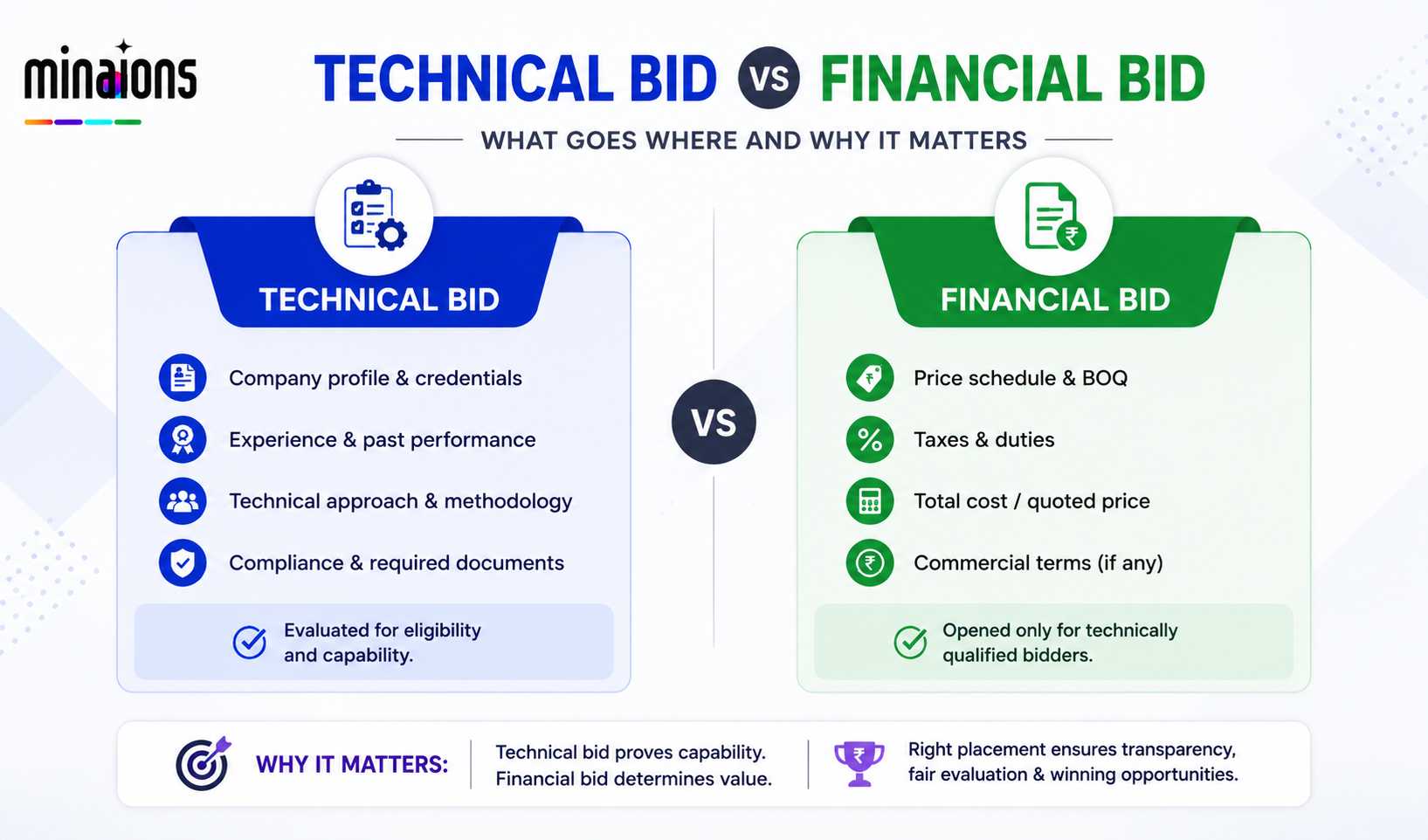
A technical bid is the section of the procurement submission that demonstrates a supplier’s technical capability, eligibility, and compliance readiness.
A technical bid generally includes:
Company profile
Technical specifications
Experience certificates
Compliance documents
Project methodology
Certifications
Work completion records
Businesses participating as a government supplier should ensure the technical bid focuses entirely on capability and compliance.
The technical bid is one of the most critical stages in public procurement because procurement authorities evaluate whether suppliers can actually execute the tender contract successfully.
What Is a Financial Bid?
A financial bid contains pricing and commercial information related to the procurement project.
The financial bid generally includes:
Quoted pricing
Tax structure
Commercial terms
Pricing breakup
Cost calculations
Businesses participating in online procurement should never include pricing information inside the technical bid unless specifically instructed.
Incorrect placement of financial information is one of the biggest reasons suppliers lose tender contract opportunities.
The increasing digitization of the gem tender portal has made procurement evaluation highly structured and automated.
E Marketplace and Digital Procurement Transformation
The rise of the e marketplace ecosystem has transformed procurement participation across India.
Modern e marketplace systems support:
Digital bid submission
Automated evaluation
Vendor transparency
Procurement analytics
Online compliance management
Businesses participating in public procurement should strengthen operational readiness for participating through modern e marketplace platforms.
The increasing use of e marketplace systems has improved procurement transparency while increasing supplier competition.
Minaions helps suppliers optimize participation in e marketplace procurement systems through AI-driven procurement analytics.
Tender Contract and Bid Evaluation
Every tender contract generally follows a structured evaluation process.
The standard tender contract evaluation workflow includes:
Technical bid opening
Technical qualification review
Eligibility verification
Financial bid opening
Commercial comparison
Final contract award
Businesses participating in public procurement should therefore understand that the technical bid and financial bid are evaluated separately during the tender contract lifecycle.
The increasing complexity of online procurement systems has made structured bid preparation essential.
Government Supplier Responsibilities
Every government supplier participating in procurement must maintain strong bid management discipline.
A professional government supplier should:
Organize technical documentation carefully
Maintain accurate pricing workflows
Follow procurement instructions
Review bid submission requirements
Verify compliance before submission
Businesses operating as a government supplier should continuously improve procurement readiness to reduce bid rejection risks.
The growing complexity of the gem tender portal ecosystem has increased the importance of centralized procurement management.
Gem Tender Portal and Bid Submission
The gem tender portal has become one of the most important procurement platforms in India.
Today, businesses use the gem tender portal to:
Participate in procurement opportunities
Submit technical bids
Upload financial bids
Monitor procurement updates
Manage vendor participation
Businesses participating in online procurement through the gem tender portal should carefully follow bid submission instructions.
The increasing competition within the gem tender portal ecosystem has made accurate documentation and pricing strategy extremely important.
Online Procurement and Digital Evaluation
The rise of online procurement systems has transformed procurement operations.
Modern online procurement systems now support:
Automated technical evaluation
Digital compliance verification
Financial comparison
Procurement analytics
Real-time procurement visibility
Businesses participating in public procurement should therefore optimize operational readiness for modern online procurement workflows.
The increasing use of online procurement systems has reduced manual procurement errors while increasing compliance scrutiny.
Tender Bidding Services and Procurement Support
The demand for professional tender bidding services is increasing rapidly.
Modern tender bidding services generally help businesses with:
Technical bid preparation
Financial bid structuring
Compliance verification
Procurement analytics
Documentation management
Businesses participating in tender contract opportunities often use tender bidding services to improve procurement accuracy and operational efficiency.
The increasing complexity of public procurement has significantly increased demand for AI-driven tender bidding services.
Minaions helps businesses strengthen procurement participation through intelligent tender bidding services and automated procurement workflows.
Procurement Manual and Bid Compliance
Every procurement authority generally follows a structured procurement manual.
The applicable procurement manual defines:
Bid submission rules
Technical qualification requirements
Financial evaluation methodology
Procurement timelines
Compliance conditions
Businesses participating in online procurement should carefully review the applicable procurement manual before preparing technical and financial bids.
Ignoring instructions within the procurement manual is one of the biggest reasons suppliers lose procurement opportunities.
The increasing complexity of the procurement manual has made procurement automation and compliance tracking highly important.
GeM Portal Guide for MSME
A proper GeM portal guide for MSME is essential for startups and small suppliers entering procurement markets.
The standard GeM portal guide for MSME generally includes:
Vendor registration
Product listing
Bid submission workflows
Procurement compliance
Reverse auction participation
Businesses participating in the gem tender portal ecosystem should carefully follow the GeM portal guide for MSME to improve procurement readiness.
The increasing participation of MSMEs in public procurement has created strong opportunities for startups and local suppliers.
How to Write a Bid Proposal India
Many businesses entering procurement ask how to write a bid proposal India effectively.
Understanding how to write a bid proposal India involves:
Organizing technical documentation
Structuring pricing correctly
Following procurement instructions
Demonstrating technical capability
Maintaining compliance accuracy
Businesses participating in tender contract opportunities should carefully understand how to write a bid proposal India before preparing submissions.
The increasing complexity of online procurement systems has made professional proposal writing extremely important.
Minaions helps businesses optimize workflows related to how to write a bid proposal India using AI-driven procurement intelligence systems.
Common Mistakes Suppliers Make
Many suppliers lose procurement opportunities because they misunderstand bid structure.
Typical mistakes include:
Including pricing in technical bids
Missing compliance documents
Incorrect financial formatting
Ignoring procurement manual instructions
Weak technical proposal preparation
Businesses participating as a government supplier should continuously strengthen bid governance and compliance management.
Why the Difference Between Technical and Financial Bid Matters
The separation between technical and financial evaluation exists to ensure procurement fairness.
The technical bid evaluates:
Capability
Compliance
Experience
Technical quality
The financial bid evaluates:
Pricing competitiveness
Commercial feasibility
Procurement value
Businesses participating in public procurement should therefore maintain complete separation between technical and financial submissions.
The increasing sophistication of online procurement systems has made evaluation workflows highly structured.
Minaions and Smart Procurement Management
Minaions is helping businesses modernize procurement participation through AI-driven procurement automation.
Minaions supports organizations through:
AI-powered procurement tracking
Smart documentation management
Compliance analytics
Bid intelligence
Procurement workflow automation
Optimization for how to write a bid proposal India
Advanced tender bidding services
Businesses participating in gem tender portal procurement can use Minaions to improve procurement efficiency and reduce operational risk.
Final Thoughts
Understanding the difference between technical bids and financial bids is essential for success in modern public procurement systems. Businesses participating in online procurement, managing tender contract opportunities, and competing through the gem tender portal must clearly understand what belongs in each submission stage.
From following the applicable procurement manual to learning how to write a bid proposal India, every stage of procurement matters.
Organizations actively improving procurement readiness through AI-driven platforms like Minaions, strengthening participation in the e marketplace, and optimizing workflows related to tender bidding services can significantly improve procurement success rates.
As public procurement and digital procurement systems continue to evolve, businesses investing in intelligent procurement management and automation will gain a major competitive advantage.
Related Blogs

A small manufacturing firm in Ludhiana missed a ₹2.
Discover how AI-powered market intelligence platforms streamline tender registration, procurement compliance, and government bidding success.
The Indian public procurement landscape is undergoing significant transformation.
The stakes in Indian government tendering have never been higher.