What is Open Tendering? Process, Advantages & Limitations Explained
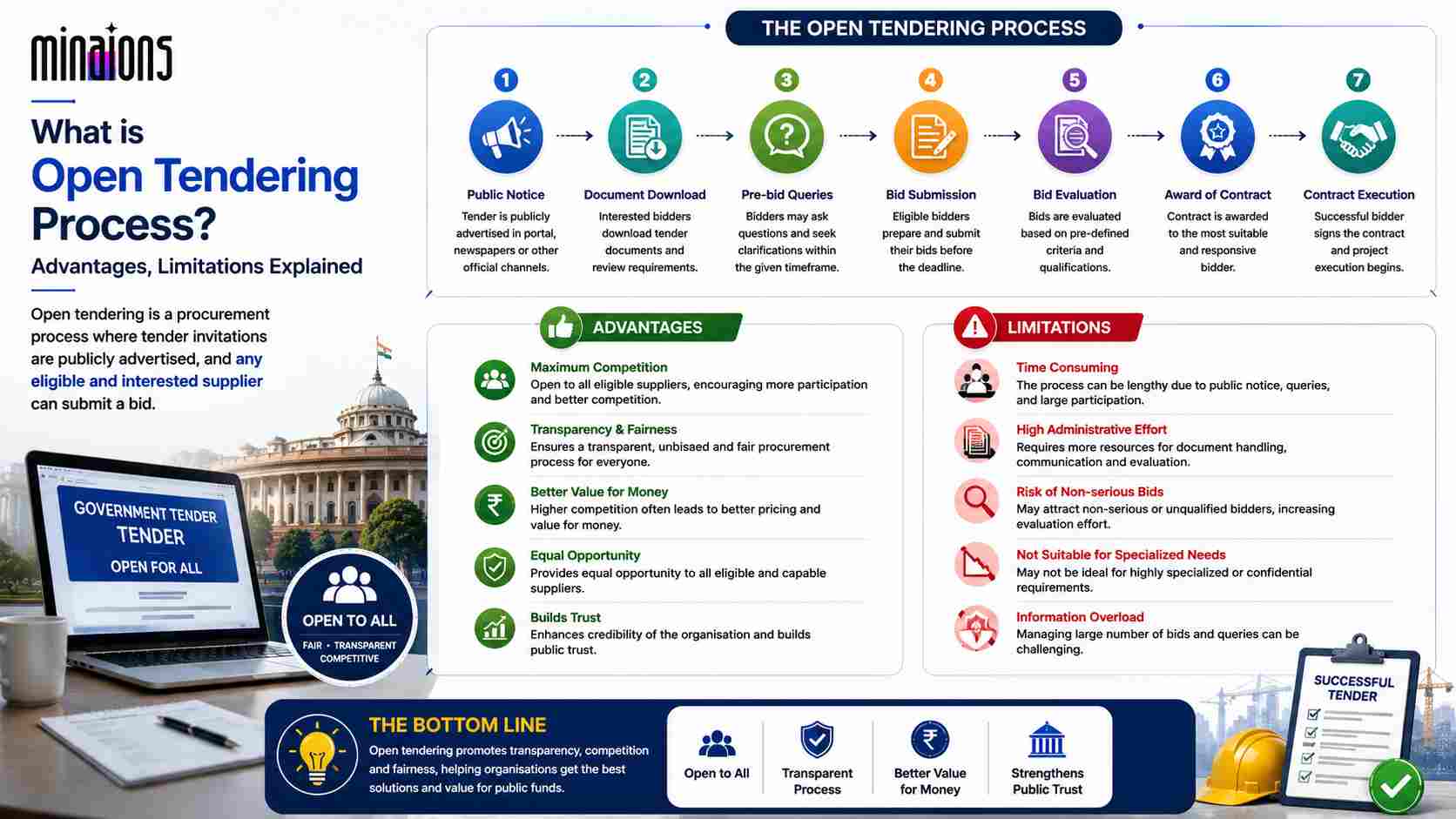
Open tendering is one of the most widely used procurement methods in public and private sector purchasing. In India and across global procurement systems, open tendering allows organizations to invite bids publicly, ensuring transparency, competition, and fair participation. Businesses participating in government bids and contracts, public contracts, and large-scale procurement opportunities must clearly understand how open tendering works.
Today, organizations use digital procurement systems, online procurement platforms, and modern e tendering portal solutions to simplify procurement operations. Companies involved in procurement tenders, security contract bids, and infrastructure projects increasingly rely on technology to manage the public procurement process more efficiently.
Whether businesses are searching for available government contracts, preparing a tender bid, or reviewing tender details, understanding open tendering is essential for long-term procurement success.
What is Open Tendering?
Open tendering is a procurement method where procurement opportunities are publicly advertised, allowing any eligible supplier to participate.
In open tendering, procurement authorities publish tender details through an e tendering portal or other online procurement platforms. Interested suppliers can then review requirements, prepare a tender bid, and participate in the public procurement process.
Open tendering is commonly used for:
Infrastructure projects
Consulting services
Technology procurement
Logistics contracts
Staffing projects
Security contract bids
The primary objective of open tendering is to increase transparency and competition in government bids and contracts.
Importance of Government Bids and Contracts
The ecosystem of government bids and contracts is growing rapidly in India.
Today, thousands of government bids and contracts are published through digital online procurement systems and centralized e tendering portal platforms.
Businesses participating in government bids and contracts can access opportunities across sectors such as:
Construction
IT services
Healthcare
Renewable energy
Manufacturing
Security services
The growth of government bids and contracts has created significant opportunities for MSMEs, startups, consultants, and enterprises.
However, companies participating in government bids and contracts must carefully manage compliance, documentation, and bid preparation to remain competitive.
How the Public Procurement Process Works
The public procurement process in open tendering generally follows a structured workflow.
The standard public procurement process includes:
Publication of tender details
Opportunity announcement through an e tendering portal
Vendor participation in online procurement
Submission of a tender bid
Technical evaluation
Financial evaluation
Contract award
The public procurement process is designed to ensure fairness, transparency, and equal opportunity in public contracts.
Businesses participating in procurement tenders should carefully understand every stage of the public procurement process before submitting bids.
Role of Online Procurement in Open Tendering
The rise of online procurement has transformed procurement operations globally.
Today, online procurement systems allow businesses to:
Access available government contracts
Download procurement documents
Submit a tender bid
Monitor corrigendums
Track procurement status
The growth of online procurement has significantly increased efficiency in the public procurement process.
Businesses participating in government bids and contracts should become familiar with modern online procurement systems to improve bid accuracy and submission efficiency.
Importance of E Tendering Portal Platforms
The e tendering portal is one of the most important components of modern procurement systems.
An e tendering portal helps procurement authorities manage:
Bid publication
Vendor participation
Digital submissions
Compliance tracking
Evaluation workflows
Businesses participating in public contracts and procurement tenders use an e tendering portal to access procurement opportunities and complete the public procurement process digitally.
The increasing adoption of the e tendering portal has improved procurement transparency while increasing competition across open bid contracts.
Understanding Open Bid Contracts
Open bid contracts are procurement opportunities where all eligible suppliers can participate publicly.
Unlike limited tendering, open bid contracts encourage broader competition and supplier participation.
Organizations use open bid contracts when they want:
Transparent procurement
Wider supplier participation
Competitive pricing
Fair evaluation processes
Businesses participating in open bid contracts should focus heavily on compliance, proposal quality, and pricing strategy.
The rise of digital online procurement systems has significantly expanded supplier access to open bid contracts.
Tender Details and Bid Accuracy
Carefully reviewing tender details is one of the most important steps in procurement participation.
Many businesses lose government bids and contracts because they fail to review all tender details properly.
Typical tender details may include:
Eligibility criteria
Technical specifications
Commercial conditions
Submission deadlines
Compliance requirements
Businesses participating in procurement tenders should carefully analyze every section of the tender details before preparing a tender bid.
Incorrect interpretation of tender details often leads to rejection during technical evaluation.
Importance of Tender Bid Preparation
A strong tender bid is essential for procurement success.
Businesses participating in public contracts should prepare a tender bid that clearly demonstrates:
Technical capability
Financial stability
Project experience
Compliance readiness
Resource planning
An incomplete or poorly structured tender bid can lead to disqualification even in highly competitive open bid contracts.
Organizations involved in security contract bids especially need accurate documentation and compliance management during tender bid preparation.
Procurement Tenders and Market Competition
The number of procurement tenders across India is increasing rapidly.
Today, businesses can access thousands of procurement tenders through centralized online procurement systems and digital e tendering portal platforms.
The rise of procurement tenders has increased opportunities for businesses across sectors including:
Infrastructure
Security services
Consulting
Logistics
Technology
Businesses participating in procurement tenders should invest in proposal management, compliance workflows, and procurement automation to remain competitive.
Security Contract Bids in Open Tendering
The growth of security contract bids has created major procurement opportunities in India.
Organizations regularly publish security contract bids for:
Facility security
Event management
Industrial security
Surveillance services
Security staffing
Businesses participating in security contract bids should focus heavily on compliance, manpower capability, certifications, and operational readiness.
The competition within security contract bids is increasing rapidly because of the expansion of government bids and contracts across public infrastructure projects.
Available Government Contracts and Business Growth
Access to available government contracts can significantly improve business growth opportunities.
Today, businesses actively search for available government contracts through digital online procurement systems.
The increasing number of available government contracts has encouraged many MSMEs and startups to participate in the growing ecosystem of public contracts.
Businesses targeting available government contracts should maintain:
Updated documentation
Strong compliance standards
Competitive pricing
Professional proposal quality
Organizations participating in available government contracts should also continuously monitor procurement updates through an e tendering portal.
Tender Services and Procurement Support
Professional tender services are becoming increasingly important in competitive procurement markets.
Businesses participating in government bids and contracts often use tender services for:
Proposal preparation
Compliance management
Documentation support
Procurement analytics
Bid tracking
The growth of digital tender services has improved efficiency in managing procurement tenders and public contracts.
Companies involved in security contract bids and large-scale open bid contracts especially benefit from professional tender services.
Advantages of Open Tendering
Open tendering offers several advantages.
Transparency
Open tendering improves transparency in government bids and contracts and the overall public procurement process.
Increased Competition
Broader supplier participation improves competition in open bid contracts and procurement tenders.
Better Pricing
Competitive bidding often results in better pricing for procurement authorities.
Equal Opportunity
Open tendering allows more businesses to access available government contracts.
Digital Efficiency
Modern online procurement and e tendering portal systems improve operational efficiency.
Limitations of Open Tendering
Despite its advantages, open tendering also has some limitations.
High Competition
The number of suppliers participating in procurement tenders can be very large.
Longer Evaluation Time
The public procurement process may take longer because of high participation volumes.
Documentation Complexity
Businesses participating in public contracts must manage detailed compliance documentation.
Pricing Pressure
Intense competition in open bid contracts may reduce profitability margins.
Final Thoughts
Open tendering remains one of the most important procurement methods in modern public procurement systems. Businesses participating in government bids and contracts, public contracts, and procurement tenders must understand the complete public procurement process to improve success rates.
From reviewing accurate tender details to preparing a compliant tender bid, every stage of procurement matters.
Organizations actively using online procurement systems, monitoring opportunities through an e tendering portal, and strengthening procurement workflows can improve their participation in available government contracts, security contract bids, and future open bid contracts.
As procurement systems continue to evolve digitally, businesses investing in efficient proposal management, compliance, and professional tender services will gain a strong competitive advantage.