What is Limited Tendering? When and Why Organisations Use It
Public procurement in India and across the world is evolving rapidly. While open bidding remains one of the most common procurement methods, many organisations also use limited tendering for faster and more specialized procurement requirements. Businesses participating in government bids and tenders, defence tenders, and large-scale procurement opportunities must understand how limited tendering works and why organizations choose this procurement model.
Today, companies participating in bidding for tenders and preparing contract proposals are increasingly using digital procurement systems to improve efficiency and compliance. Whether businesses are trying to bid on government projects, manage sub contract tenders, or participate in a general services contract, understanding limited tendering is essential for long-term procurement success.
The rise of digital procurement systems, procurement innovation, and specialized procurement workflows has increased the use of limited tendering across sectors such as defense, infrastructure, consulting, manufacturing, and technology services.
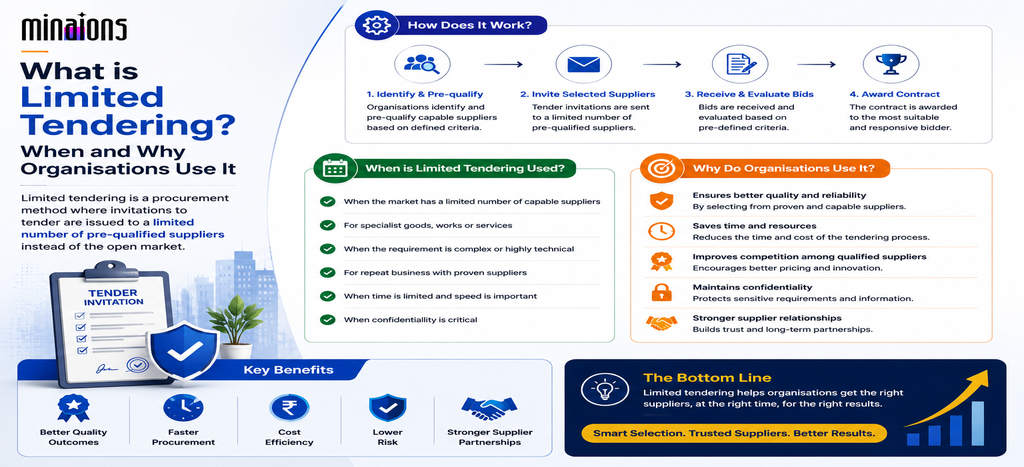
What is Limited Tendering?
Limited tendering is a procurement method where procurement authorities invite only selected suppliers to participate instead of publicly advertising procurement opportunities through open contracts.
Unlike standard government bids and tenders, where opportunities are open to all eligible suppliers, limited tendering restricts participation to shortlisted vendors.
Limited tendering is commonly used when:
Specialized expertise is required
Procurement timelines are urgent
Security concerns exist
Previous vendor performance matters
Procurement value is limited
Businesses participating in defence tenders, sub contract tenders, and highly specialized procurement opportunities often encounter limited tendering processes.
Difference Between Limited Tendering and Open Contracts
The biggest difference between limited tendering and open contracts is supplier accessibility.
In open contracts, procurement opportunities are publicly available and any eligible supplier can participate in bidding for tenders.
However, in limited tendering, only selected vendors receive invitations to submit contract proposals.
While open contracts increase competition and transparency, limited tendering focuses on procurement speed, specialization, and operational efficiency.
Organizations handling sensitive defence tenders or urgent general services contract procurement often prefer limited tendering instead of fully public procurement models.
Why Organisations Use Limited Tendering
Organizations use limited tendering for several operational and strategic reasons.
Faster Procurement
One of the biggest advantages of limited tendering is speed. Public procurement processes involving government bids and tenders and open contracts can take significant time because of large participation volumes.
Limited tendering allows organizations to quickly evaluate selected suppliers and finalize procurement decisions faster.
Specialized Vendor Selection
Certain projects require highly specialized expertise. In such cases, procurement authorities invite only experienced suppliers to submit contract proposals.
This is especially common in defence tenders, infrastructure projects, consulting assignments, and technology procurement.
Security and Confidentiality
Sensitive procurement projects often involve security concerns. Organizations handling classified defence tenders may limit participation to approved suppliers only.
Improved Vendor Quality
Organizations using limited tendering can select vendors with proven experience in general services contract management, infrastructure execution, or technical delivery.
This reduces procurement risk and improves project execution quality.
Role of Government Bids and Tenders in Limited Procurement
The ecosystem of government bids and tenders is massive and highly competitive.
While many government bids and tenders are publicly advertised through open contracts, procurement authorities sometimes shift to limited tendering for specialized procurement needs.
Businesses participating in government bids and tenders should therefore maintain strong vendor profiles and procurement credibility to receive invitations for limited tender opportunities.
Companies active in bidding for tenders should also focus on long-term relationships and consistent project performance to improve eligibility for selective procurement invitations.
Defence Tenders and Limited Tendering
Limited tendering is especially common in defence tenders.
Many defence tenders involve strategic, confidential, or security-sensitive procurement requirements.
Organizations managing defence tenders often invite only approved suppliers with proven technical capabilities and security clearances.
Businesses participating in defence tenders should focus on:
Compliance management
Technical expertise
Security certifications
Past project experience
Procurement reliability
The growing complexity of defence tenders is also driving significant procurement innovation across procurement systems.
Steps to Government Contracting
Businesses interested in limited tendering opportunities should clearly understand the steps to government contracting.
The standard steps to government contracting generally include:
Vendor registration
Eligibility verification
Technical qualification
Participation in government bids and tenders
Submission of contract proposals
Project execution history development
Vendor relationship building
Understanding the steps to government contracting helps businesses improve procurement readiness and long-term eligibility for selective procurement opportunities.
Companies involved in bidding for tenders should continuously improve compliance and project delivery standards during every stage of the steps to government contracting.
Importance of Contract Proposals in Limited Tendering
A strong contract proposal is one of the most important factors influencing procurement success.
Businesses participating in limited tendering opportunities should prepare detailed contract proposals that clearly demonstrate:
Technical expertise
Financial capability
Project methodology
Resource planning
Risk management
A professional contract proposal significantly improves evaluation scores in specialized procurement projects.
Organizations handling general services contract procurement and sub contract tenders often prioritize proposal quality over simple pricing competition.
Businesses participating in government bids and tenders should maintain reusable templates for every contract proposal to improve consistency and efficiency.
Role of Sub Contract Tenders
The rise of sub contract tenders is also increasing procurement participation opportunities.
Large contractors participating in open contracts often outsource portions of projects through sub contract tenders.
Businesses participating in sub contract tenders can gain procurement experience, improve credibility, and strengthen future eligibility for direct procurement opportunities.
The growth of sub contract tenders is especially visible in infrastructure, construction, IT, logistics, and engineering sectors.
Companies active in sub contract tenders should also focus on strong compliance and operational performance to improve procurement reputation.
General Services Contract and Procurement Efficiency
A general services contract typically covers operational, maintenance, consulting, staffing, or support services.
Organizations managing a general services contract often use limited tendering when procurement speed and vendor quality are important.
Businesses participating in general services contract opportunities should maintain strong documentation, service delivery standards, and procurement credibility.
The growing complexity of general services contract management is also driving increased adoption of digital procurement systems and procurement innovation.
Procurement Innovation in Modern Tendering
Modern procurement systems are increasingly driven by procurement innovation.
Organizations managing government bids and tenders, defence tenders, and open contracts are adopting automation, analytics, and AI-driven procurement systems to improve efficiency.
The rise of procurement innovation is helping organizations:
Improve vendor evaluation
Reduce procurement delays
Strengthen compliance
Improve contract visibility
Streamline bidding for tenders
Businesses participating in bidding for tenders should also adopt procurement technology to improve competitiveness.
How Businesses Can Bid on Government Projects Successfully
Companies aiming to bid on government projects successfully should focus on:
Understanding the steps to government contracting
Preparing strong contract proposals
Improving vendor compliance
Participating actively in government bids and tenders
Monitoring open contracts
Building procurement credibility
Businesses trying to bid on government projects should also strengthen operational capability and procurement documentation.
Organizations participating in defence tenders and general services contract procurement especially need strong compliance workflows.
Bidding for Tenders in Competitive Procurement Markets
The process of bidding for tenders is becoming increasingly competitive.
Businesses involved in bidding for tenders should focus on:
Proposal quality
Compliance management
Pricing strategy
Technical documentation
Procurement analytics
The growing complexity of government bids and tenders is encouraging organizations to invest more heavily in automation and procurement innovation.
Companies participating in bidding for tenders should continuously improve operational efficiency to remain competitive.
Final Thoughts
Limited tendering plays a critical role in modern procurement systems. Organizations use limited tendering to improve procurement speed, maintain confidentiality, and select specialized suppliers for strategic projects.
Businesses participating in government bids and tenders, defence tenders, sub contract tenders, and general services contract opportunities must understand how limited tendering works to improve procurement success rates.
From understanding the steps to government contracting to preparing strong contract proposals, every stage of procurement matters.
Organizations actively involved in bidding for tenders, investing in procurement innovation, and building strong procurement credibility will be better positioned to successfully bid on government projects and participate in future procurement opportunities.
Related Blogs
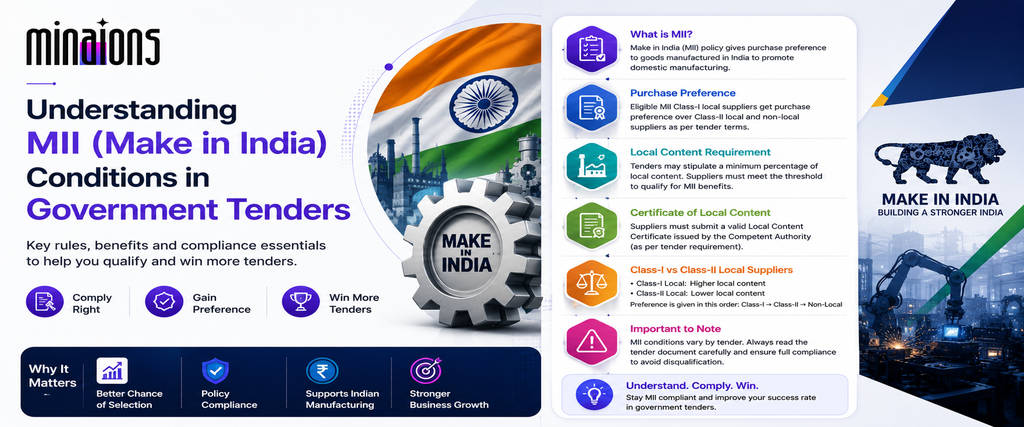
In the high-stakes arena of government tendering, a single misstep in declaring local content can mean the difference between winning a multi-million-pound contract and facing a two-year debarment.
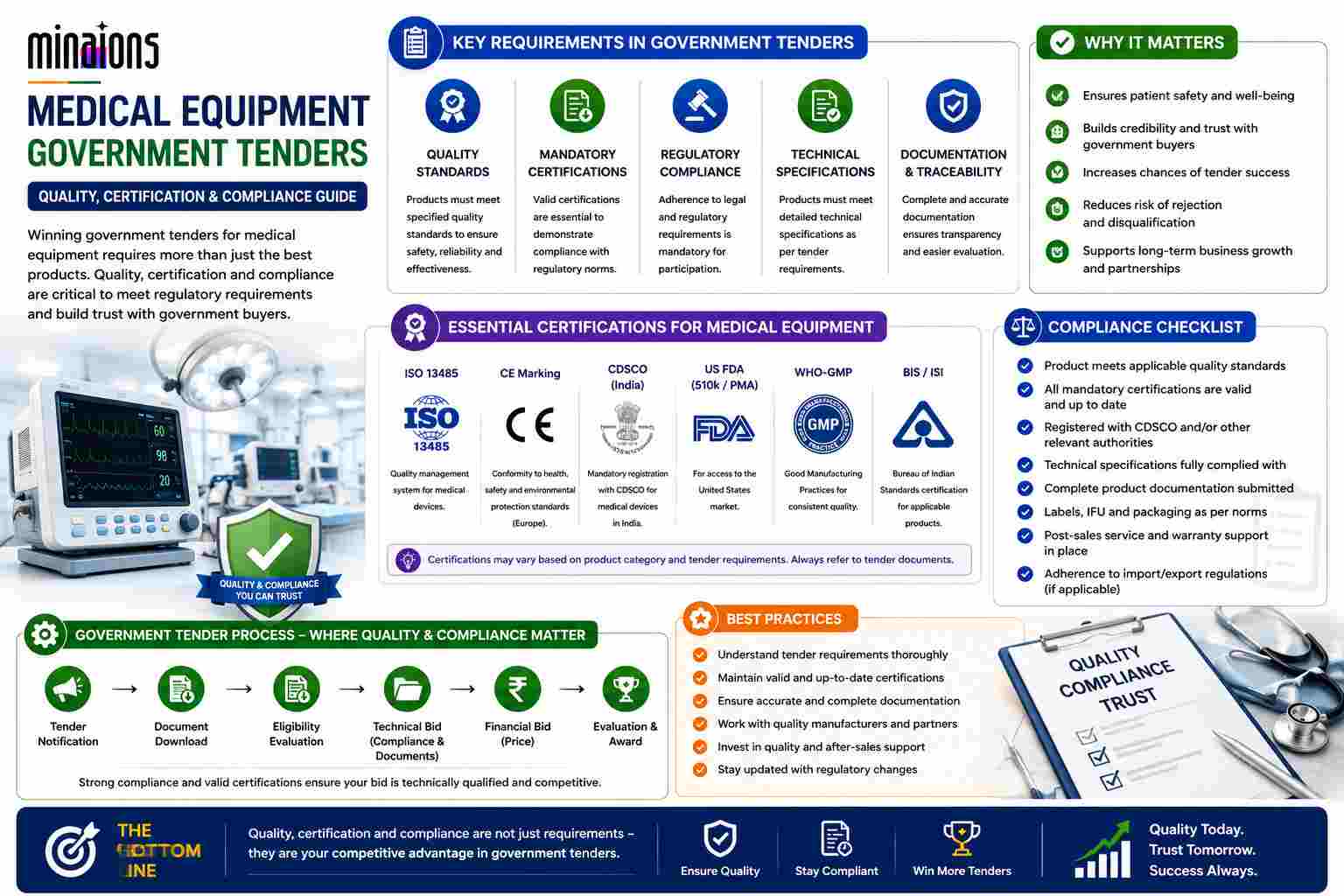
As healthcare systems worldwide confront supply chain fragility and rising patient safety expectations, public procurement teams now assess medical equipment beyond price and delivery timelines.
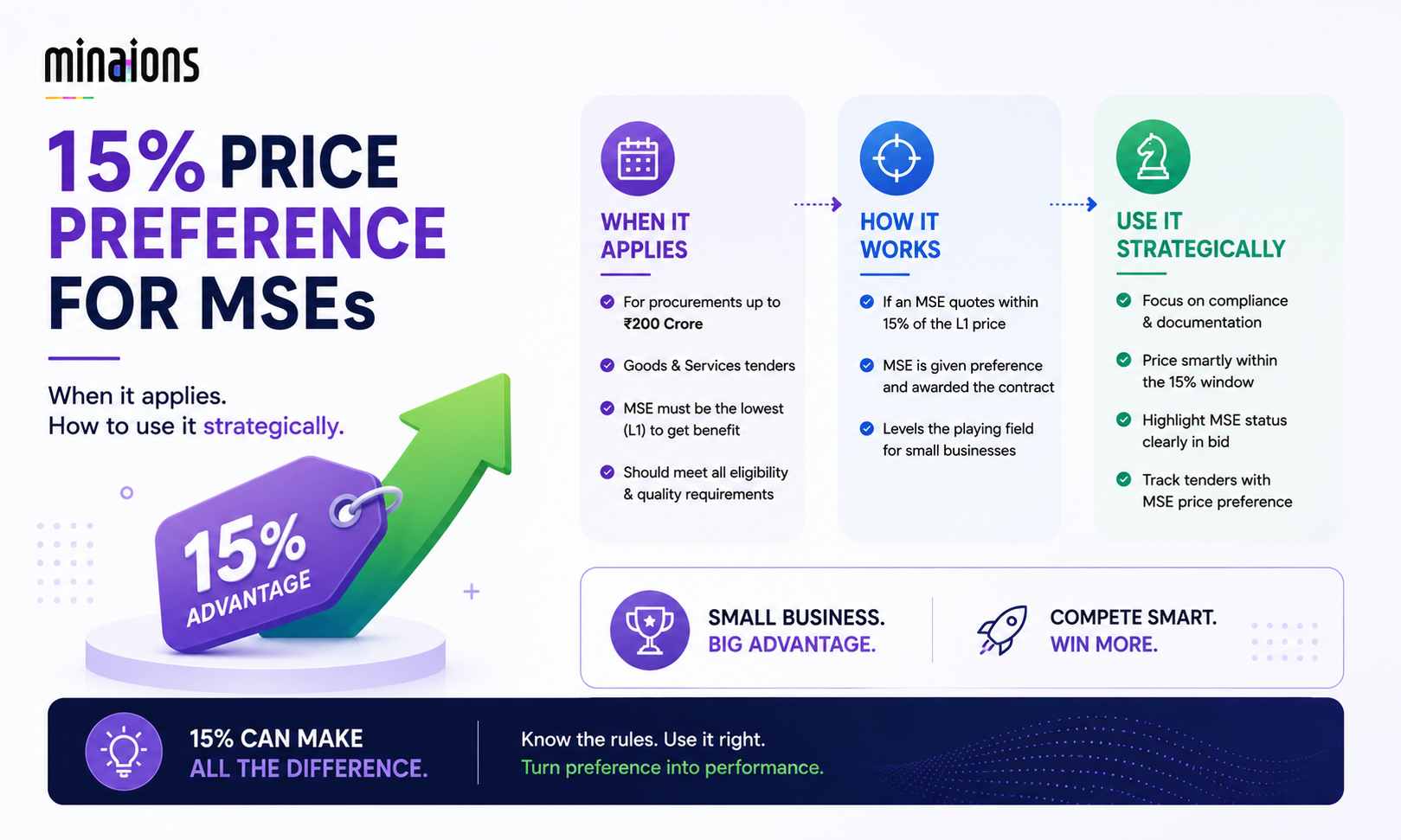
In an era where public procurement budgets are under intensified scrutiny, the 15% Price Preference for Micro and Small Enterprises (MSEs) has emerged as one of the most consequential levers for equitable market access.
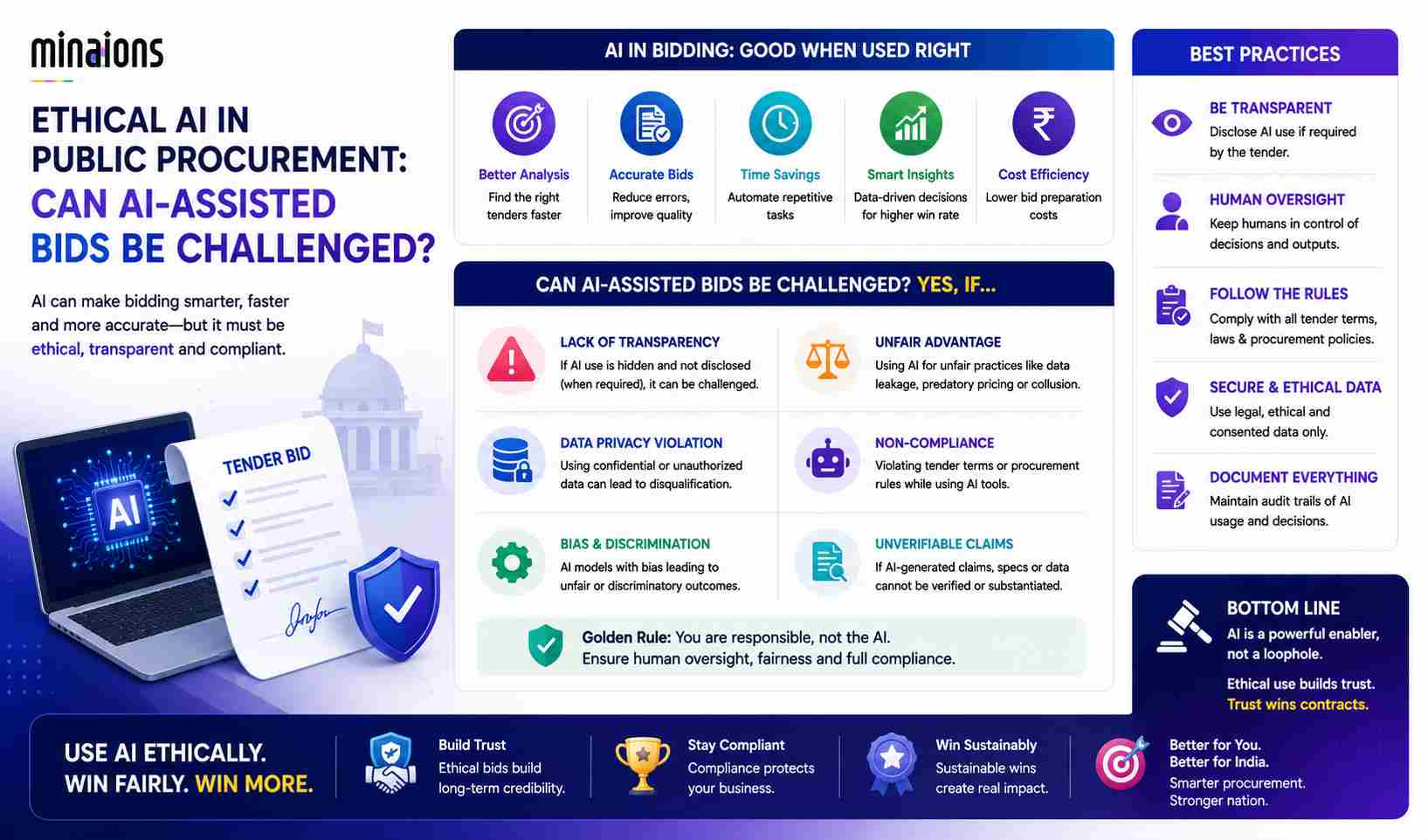
As public procurement systems increasingly rely on AI to evaluate bids, manage contracts, and detect anomalies, a quiet but profound crisis of trust is emerging.