Why Government Tenders Are Cancelled — and What Bidders Can Do About It
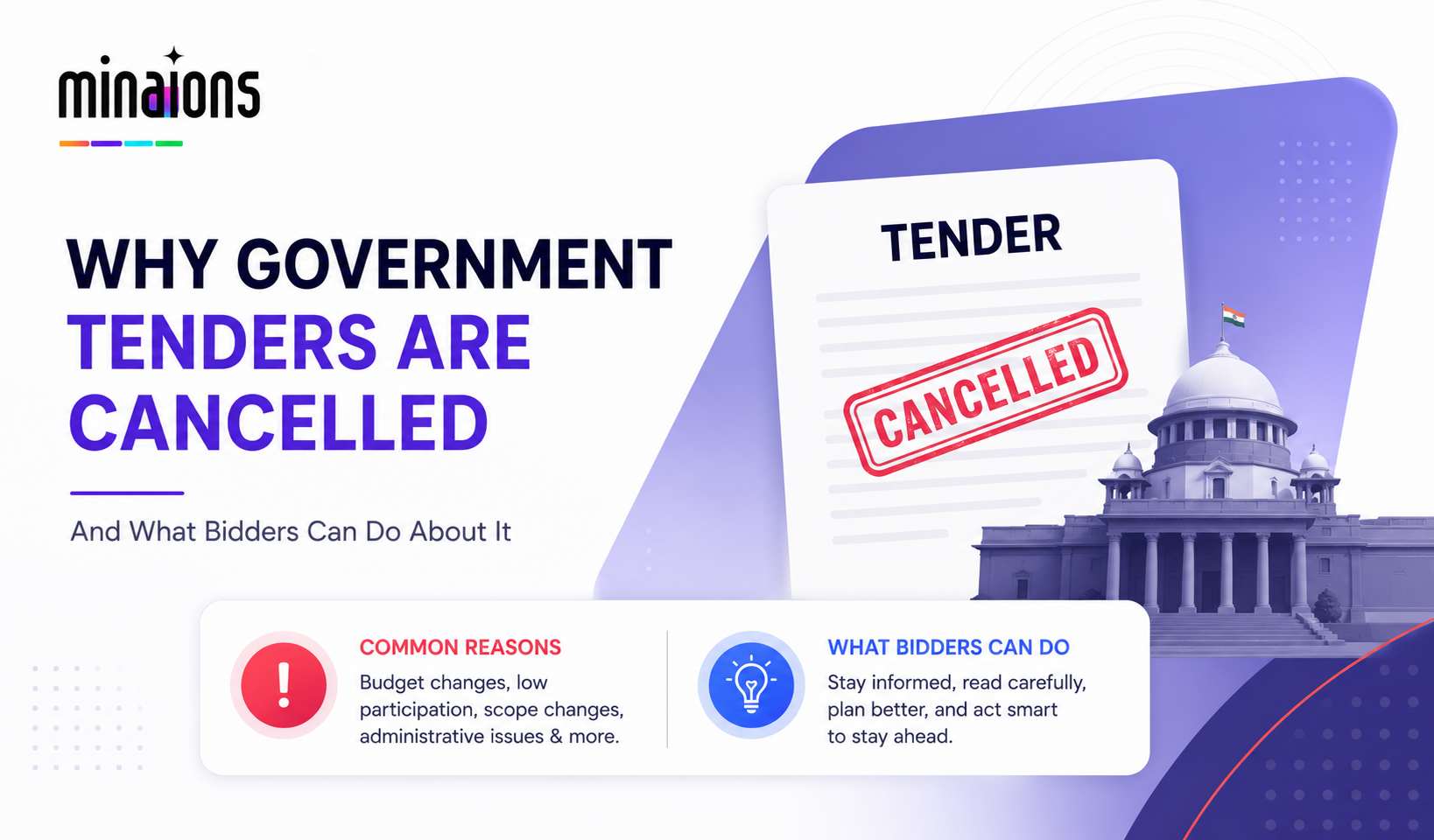
India’s public procurement ecosystem is becoming increasingly digital, competitive, and compliance-driven. Every year, thousands of businesses participate in tenders and rfps issued by ministries, PSUs, municipalities, Smart City projects, healthcare institutions, educational departments, railways, and infrastructure agencies. However, despite significant effort spent on bid preparation, many procurement opportunities are eventually cancelled.
For businesses participating in the public bidding process, tender cancellation can result in wasted resources, delayed revenue opportunities, pricing losses, and operational disruption. Whether suppliers are participating as large contractors or small tender suppliers, understanding why tenders are cancelled has become essential for procurement planning.
The growing complexity of the process of procurement in government sector has increased the importance of strategic planning, compliance management, and intelligent procurement analysis. Platforms like Minaions are helping organizations improve bid document preparation, monitor procurement conditions, optimize the pre bidding process, and reduce risks associated with cancelled procurement opportunities.
Understanding the Process of Procurement in Government Sector
The modern process of procurement in government sector is highly structured and regulated.
The standard process of procurement in government sector generally includes:
Procurement planning
Release of tenders and rfps
Vendor participation
Technical evaluation
Commercial evaluation
Contract approval
Final award
Businesses participating in the public bidding process should understand every stage of the process of procurement in government sector to improve procurement planning.
The increasing complexity of the process of procurement in government sector has also increased the likelihood of procurement cancellations due to operational, administrative, and financial reasons.
Why Government Tenders Get Cancelled
Many businesses participating in tenders and rfps assume that procurement projects will always move forward after bid submission. However, procurement authorities may cancel tenders for several reasons.
The most common causes include:
Budget changes
Policy revisions
Technical specification updates
Lack of qualified tender suppliers
Errors in procurement documentation
Changes in procurement conditions
Administrative approvals pending
Businesses participating in the public bidding process should therefore prepare procurement strategies that account for possible cancellations.
Tender Suppliers and Procurement Competition
The number of tender suppliers participating in government procurement has increased significantly.
Today, tender suppliers compete aggressively across sectors such as:
Infrastructure
IT procurement
Healthcare
Defence
Education
Smart city projects
The increasing number of tender suppliers has made the public bidding process more competitive and pricing-sensitive.
In some cases, procurement authorities cancel tenders and rfps because competition is too low or pricing from tender suppliers exceeds budget expectations.
Businesses participating as tender suppliers should therefore maintain strong pricing strategies and realistic commercial planning.
Public Bidding Process and Procurement Delays
The modern public bidding process involves multiple layers of review and approvals.
The standard public bidding process generally includes:
Eligibility analysis
Technical evaluation
Financial comparison
Procurement approval
Administrative sanction
Delays at any stage of the public bidding process may lead to procurement cancellation.
Businesses participating in the public bidding process should therefore monitor procurement updates continuously and remain prepared for schedule changes.
Minaions helps businesses track procurement timelines and changes within the public bidding process through AI-driven procurement monitoring systems.
Pre Bidding Process and Clarification Risks
The pre bidding process plays a critical role in procurement success.
During the pre bidding process, suppliers usually:
Review procurement scope
Analyze eligibility conditions
Seek clarification from procurement authorities
Identify compliance gaps
Evaluate project feasibility
Many procurement cancellations occur because procurement authorities identify issues during the pre bidding process itself.
Incorrect technical specifications, unrealistic eligibility conditions, or contradictory clauses discovered during the pre bidding process often force departments to cancel and reissue tenders.
Businesses participating in tenders and rfps should actively participate in the pre bidding process to reduce procurement risks.
Procurement Conditions and Compliance Complexity
The complexity of procurement conditions has increased significantly in modern procurement systems.
Typical procurement conditions may include:
Financial turnover requirements
Technical eligibility
Security compliance
Vendor certifications
Project experience
Delivery timelines
Changes in procurement conditions are one of the biggest reasons government tenders get cancelled and reissued.
Businesses participating in the public bidding process should continuously monitor updates related to procurement conditions to avoid operational disruption.
Minaions helps businesses manage changing procurement conditions through automated compliance monitoring and procurement analytics.
Bid Preparation and Procurement Readiness
Strong bid preparation is critical for procurement participation.
Businesses participating in tenders and rfps should ensure that bid preparation includes:
Eligibility verification
Technical documentation
Pricing analysis
Risk assessment
Resource planning
Weak bid preparation increases the probability of procurement rejection and operational inefficiency.
The growing complexity of the process of procurement in government sector has made structured bid preparation more important than ever.
Organizations using Minaions can automate workflows related to bid preparation and improve procurement readiness.
Bid Document Preparation and Compliance Accuracy
The quality of bid document preparation significantly influences procurement outcomes.
Typical bid document preparation includes:
Technical proposals
Compliance declarations
Financial submissions
Vendor certifications
Project experience records
Errors during bid document preparation often create confusion during the public bidding process and may even contribute to procurement cancellation.
Businesses participating as tender suppliers should maintain centralized systems for managing bid document preparation more efficiently.
Minaions helps businesses automate bid document preparation through AI-driven document analysis and procurement workflow management.
Government Procurement Manual and Regulatory Compliance
Every department generally follows a structured government procurement manual.
The applicable government procurement manual defines:
Procurement workflows
Vendor eligibility
Evaluation methodology
Financial guidelines
Compliance standards
Changes in the government procurement manual or procurement policy often lead to tender cancellation and reissuance.
Businesses participating in tenders and rfps should continuously monitor updates related to the government procurement manual to remain compliant.
The increasing complexity of the government procurement manual has also increased demand for procurement automation systems.
Tenders and RFPs in Dynamic Procurement Markets
The number of tenders and rfps across India is increasing rapidly.
Today, businesses participate in tenders and rfps related to:
Infrastructure development
Technology procurement
Smart cities
Healthcare systems
Defence modernization
Educational infrastructure
The growing scale of tenders and rfps has increased procurement competition while also increasing cancellation risks.
Businesses participating in the public bidding process should therefore adopt flexible procurement strategies to manage uncertainty.
Common Reasons Tenders Are Cancelled
Several operational factors commonly lead to procurement cancellation.
Budget Constraints
Departments may cancel tenders and rfps if approved budgets change.
Administrative Delays
Delays in approvals during the process of procurement in government sector often result in cancellation.
Poor Vendor Participation
Low participation from qualified tender suppliers may force departments to reissue procurement opportunities.
Incorrect Procurement Conditions
Conflicting or unrealistic procurement conditions discovered during the pre bidding process may require tender cancellation.
Policy Changes
Updates in the government procurement manual may impact procurement structure and force re-tendering.
How Bidders Can Reduce Tender Cancellation Risk
Businesses participating in the public bidding process can reduce procurement risk through several best practices.
Participate Actively in the Pre Bidding Process
The pre bidding process helps identify procurement issues early.
Strengthen Bid Preparation
Accurate bid preparation improves procurement readiness and reduces operational risk.
Improve Bid Document Preparation
Strong bid document preparation improves compliance quality and procurement visibility.
Monitor Procurement Conditions Continuously
Changes in procurement conditions should be tracked actively throughout the procurement lifecycle.
Use Procurement Automation
Platforms like Minaions help businesses automate workflows related to the process of procurement in government sector and reduce procurement uncertainty.
Minaions and Intelligent Procurement Management
Minaions is helping businesses modernize procurement participation through AI-driven automation.
Minaions supports organizations through:
AI-based procurement monitoring
Smart bid preparation
Automated bid document preparation
Procurement analytics
Compliance management
Tender tracking
Risk analysis for tenders and rfps
Businesses participating as tender suppliers can use Minaions to improve operational efficiency and reduce procurement uncertainty during the public bidding process.
Final Thoughts
Government procurement is becoming increasingly dynamic, compliance-driven, and competitive. Businesses participating in tenders and rfps, the public bidding process, and modern procurement ecosystems must clearly understand why procurement opportunities are sometimes cancelled.
From managing accurate bid preparation to monitoring changing procurement conditions, every stage of the process of procurement in government sector matters.
Organizations actively optimizing the pre bidding process, improving bid document preparation, and using AI-driven procurement platforms like Minaions can significantly reduce procurement risk and improve long-term procurement success rates.
As procurement systems continue to evolve digitally, businesses investing in structured procurement management and intelligent automation will gain a strong competitive advantage.
Related Blogs

A small manufacturing firm in Ludhiana missed a ₹2.3 crore contract after spending 14 hours manually scanning the GeM portal, only to find the tender had closed two days earlier. This is not an isolated case.

A small civil engineering firm in Lucknow spent three weeks manually parsing a 420-page NHAI tenders document, only to miss a critical clause in the contractor registration requirements and lose eligibility.

A small manufacturing firm in Ludhiana missed a ₹2.
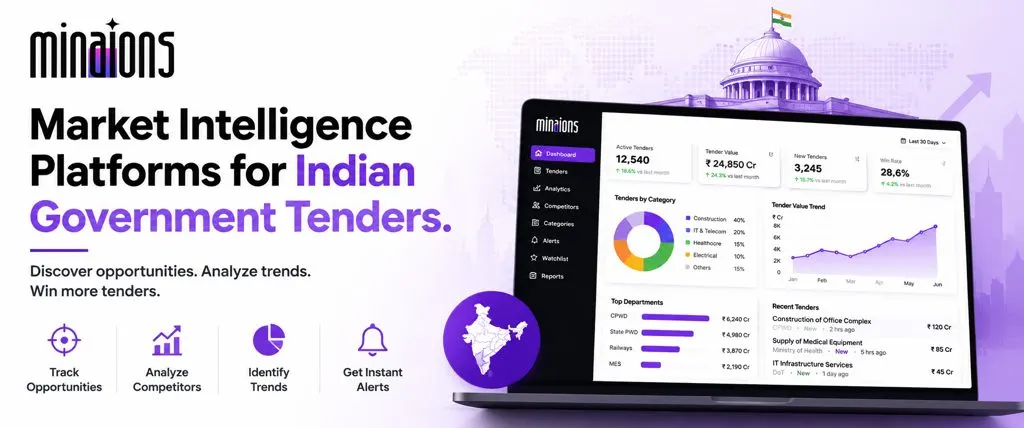
Discover how AI-powered market intelligence platforms streamline tender registration, procurement compliance, and government bidding success.