How to Build a Track Record When You Have None: Winning Your First Tender
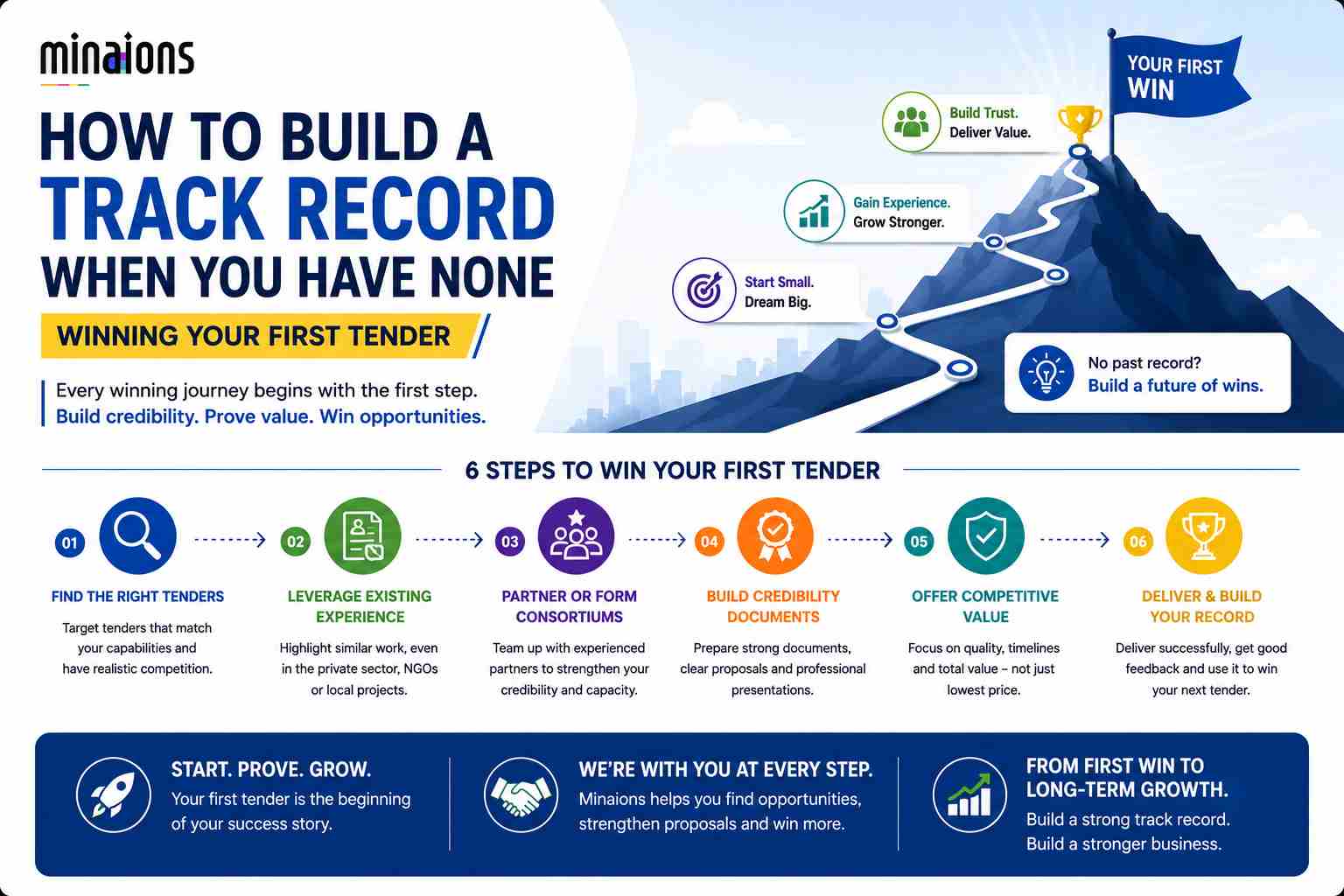
For many startups, MSMEs, freelancers, consultants, and growing companies, entering the public procurement market can feel extremely difficult. One of the biggest challenges businesses face while participating in the government procurement process India follows is the lack of previous project experience. Many suppliers assume they cannot compete for contracts for businesses without an established portfolio, but that is no longer true.
Today, the rise of digital procurement systems, startup-friendly procurement policies, sme tenders, and technology-driven procurement workflows has created major opportunities for first-time bidders. Businesses participating in public contract bidding, the government contracts bidding process, and the broader commercial procurement ecosystem can now compete effectively even without a long track record.
The increasing number of new tenders, startup-focused procurement categories, and AI-driven procurement tools is helping new suppliers participate in the tender bidding process more efficiently. Platforms like Minaions are helping companies manage the complete contracting process, track procurement opportunities, reduce tender disqualification reasons, and improve participation in the evolving ecosystem of procurement gov opportunities.
Understanding Contracts for Businesses
The ecosystem of contracts for businesses is much larger than many first-time bidders realize.
Today, contracts for businesses include opportunities related to:
IT services
Infrastructure projects
Consulting assignments
Marketing services
Security systems
Healthcare procurement
Education technology
Supply contracts
The increasing number of contracts for businesses in India has created opportunities for startups, MSMEs, and first-time suppliers participating in the government procurement process India follows for public procurement.
Businesses entering public contract bidding should understand that procurement authorities increasingly support new vendors through startup and MSME procurement initiatives.
Government Procurement Process India and First-Time Bidders
The modern government procurement process India follows has become more transparent and accessible.
Today, the government procurement process India uses includes:
Digital bid submission
Startup participation programs
MSME procurement policies
Centralized procurement visibility
AI-driven evaluation systems
Businesses participating in the government contracts bidding process should understand that the evolving government procurement process India now provides better access to first-time suppliers.
The increasing digitization of the government procurement process India has reduced entry barriers for companies participating in commercial procurement.
Contracting Process for New Companies
The contracting process for first-time bidders may appear complex, but it becomes manageable with proper preparation.
The standard contracting process generally includes:
Opportunity identification
Vendor registration
Eligibility verification
Proposal preparation
Financial bid submission
Evaluation participation
Contract award
Businesses entering the contracting process for the first time should focus heavily on documentation quality and compliance management.
Minaions helps businesses simplify the contracting process through AI-driven procurement workflows and automated bid tracking.
Commercial Procurement and Market Opportunities
The growth of commercial procurement has significantly expanded opportunities for new suppliers.
Today, commercial procurement projects include:
Technology procurement
Infrastructure services
Facility management
Consulting assignments
Educational projects
Smart city procurement
Businesses participating in commercial procurement should understand that procurement authorities increasingly evaluate innovation, scalability, and operational readiness instead of only previous experience.
The expansion of commercial procurement opportunities is creating strong growth potential for startups and MSMEs participating in sme tenders.
Tender Bidding Process for First-Time Suppliers
The tender bidding process is one of the most important aspects of procurement participation.
The standard tender bidding process generally includes:
Reviewing procurement requirements
Preparing technical proposals
Preparing financial bids
Compliance verification
Digital submission
Evaluation participation
Businesses participating in the government contracts bidding process should optimize every stage of the tender bidding process to improve procurement success rates.
The increasing complexity of the tender bidding process has encouraged suppliers to adopt procurement automation platforms like Minaions.
New Tenders and Opportunities for Startups
The ecosystem of new tenders is growing rapidly across India.
Today, new tenders are regularly issued for:
SaaS solutions
AI systems
Digital marketing
Smart infrastructure
IT consulting
Data analytics
Cloud services
Businesses participating in new tenders should focus heavily on innovation capability and proposal quality.
The increasing number of new tenders has improved opportunities for startups participating in public contract bidding.
Minaions helps businesses track new tenders through AI-driven procurement intelligence systems.
SME Tenders and MSME Participation
The ecosystem of sme tenders has expanded significantly because of MSME procurement initiatives.
Today, sme tenders often include:
Reserved procurement categories
Startup participation opportunities
Lower qualification requirements
Faster procurement cycles
Businesses participating in sme tenders can build credibility and gradually strengthen procurement experience.
The increasing number of sme tenders has made the government procurement process India more accessible to first-time suppliers.
Companies participating in commercial procurement should actively target sme tenders to build procurement history.
Different Types of Government Contracts
Understanding the different types of government contracts is essential for procurement success.
The major different types of government contracts include:
Fixed-price contracts
Service contracts
EPC contracts
Rate contracts
Consultancy agreements
Framework agreements
Businesses entering the government contracts bidding process should understand the operational differences between the different types of government contracts before preparing proposals.
The increasing variety of different types of government contracts creates opportunities for businesses across multiple industries.
Government Contracts Bidding Process Explained
The government contracts bidding process is becoming increasingly digital and analytics-driven.
The standard government contracts bidding process often includes:
Vendor qualification
Technical proposal evaluation
Financial evaluation
Compliance assessment
Final contract award
Businesses participating in the government contracts bidding process should maintain strong operational readiness and proposal quality.
The increasing complexity of the government contracts bidding process has encouraged businesses to adopt AI-driven procurement management systems like Minaions.
Procurement Gov and Digital Procurement Systems
The rise of procurement gov systems has transformed public procurement workflows.
Modern procurement gov platforms now support:
Centralized procurement visibility
Digital bid submission
Procurement analytics
Compliance tracking
Real-time procurement updates
Businesses participating in the contracting process should strengthen digital procurement capability within the evolving procurement gov ecosystem.
The increasing adoption of procurement gov systems has improved supplier participation across commercial procurement markets.
Public Contract Bidding and Competitive Procurement
The ecosystem of public contract bidding is becoming increasingly competitive.
Businesses participating in public contract bidding should focus on:
Technical proposal quality
Pricing strategy
Compliance management
Procurement readiness
Digital procurement workflows
The increasing number of new tenders is creating strong opportunities for startups and MSMEs entering public contract bidding for the first time.
Minaions helps businesses optimize workflows related to public contract bidding and procurement management.
Tender Disqualification Reasons
Understanding common tender disqualification reasons is critical for first-time suppliers.
Typical tender disqualification reasons include:
Incomplete documentation
Incorrect pricing
Missing certifications
Failure to follow procurement instructions
Weak technical proposals
Businesses participating in the tender bidding process should continuously reduce tender disqualification reasons through structured compliance workflows.
The most common tender disqualification reasons for first-time bidders are poor documentation and failure to understand procurement requirements properly.
How to Build a Strong Procurement Profile
New businesses can still win contracts for businesses even without a large portfolio by focusing on:
Strong technical proposals
Pilot projects
Strategic partnerships
Consortium participation
MSME certifications
Innovation-driven solutions
Businesses participating in sme tenders should also build procurement credibility gradually by targeting smaller opportunities first.
The growing number of new tenders and startup-friendly procurement policies is making the government procurement process India more accessible than ever before.
Minaions and First-Time Tender Participation
Minaions is helping startups and MSMEs participate more effectively in the government contracts bidding process.
Minaions supports businesses through:
AI-driven procurement tracking
Monitoring new tenders
Automated compliance workflows
Bid analytics
Proposal management
Reducing tender disqualification reasons
Businesses participating in public contract bidding can use Minaions to improve procurement visibility and operational efficiency.
Final Thoughts
Winning your first tender may seem difficult, but today’s digital procurement ecosystem provides more opportunities for startups and MSMEs than ever before. Businesses participating in the government procurement process India follows can build credibility gradually through sme tenders, innovation-driven procurement opportunities, and strategic participation in commercial procurement.
From understanding the complete contracting process to reducing common tender disqualification reasons, every stage of procurement matters.
Organizations actively participating in public contract bidding, optimizing the tender bidding process, and using AI-driven platforms like Minaions can significantly improve their chances of winning their first contracts for businesses.
As procurement gov, government contracts bidding process systems, and digital procurement workflows continue to evolve, businesses investing in structured procurement management and compliance readiness will gain a strong competitive advantage.
Related Blogs

A small manufacturing firm in Ludhiana missed a ₹2.3 crore contract after spending 14 hours manually scanning the GeM portal, only to find the tender had closed two days earlier. This is not an isolated case.

A small civil engineering firm in Lucknow spent three weeks manually parsing a 420-page NHAI tenders document, only to miss a critical clause in the contractor registration requirements and lose eligibility.

A small manufacturing firm in Ludhiana missed a ₹2.
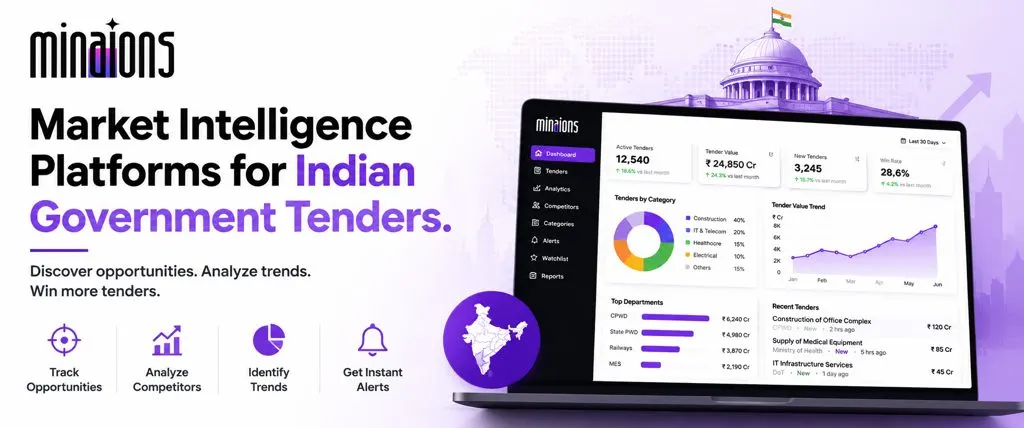
Discover how AI-powered market intelligence platforms streamline tender registration, procurement compliance, and government bidding success.