What Is a Two-Stage Tendering Process and When Is It Used?
India’s public procurement ecosystem is becoming increasingly sophisticated, especially for large infrastructure, technology, healthcare, defence, and consulting projects. Many departments now use the process of procurement in government sector through advanced procurement structures to improve transparency, technical accuracy, and vendor selection quality.
One such advanced procurement approach is the two-stage tendering model. Businesses participating in tender government projects, public service tenders, and large-scale government public procurement opportunities must clearly understand how the two-stage procurement system works.
The rise of digital procurement systems, AI-driven compliance tools, and modern government procurement platform ecosystems has made procurement workflows more data-driven and evaluation-focused. Platforms like Minaions are helping suppliers manage procurement complexity, optimize tender evaluation methodology, analyze the evolving tender market, and improve participation in modern procurement systems.
Understanding the Process of Procurement in Government Sector
The modern process of procurement in government sector is highly structured, technology-driven, and compliance-focused.
The standard process of procurement in government sector generally includes:
Procurement planning
Vendor participation
Technical evaluation
Commercial evaluation
Contract approval
Procurement execution
Businesses participating in government public procurement should understand every stage of the process of procurement in government sector before participating in complex procurement projects.
The increasing scale of tender government projects has also increased the importance of advanced procurement methods like two-stage tendering within the broader process of procurement in government sector.
What Is a Two-Stage Tendering Process?
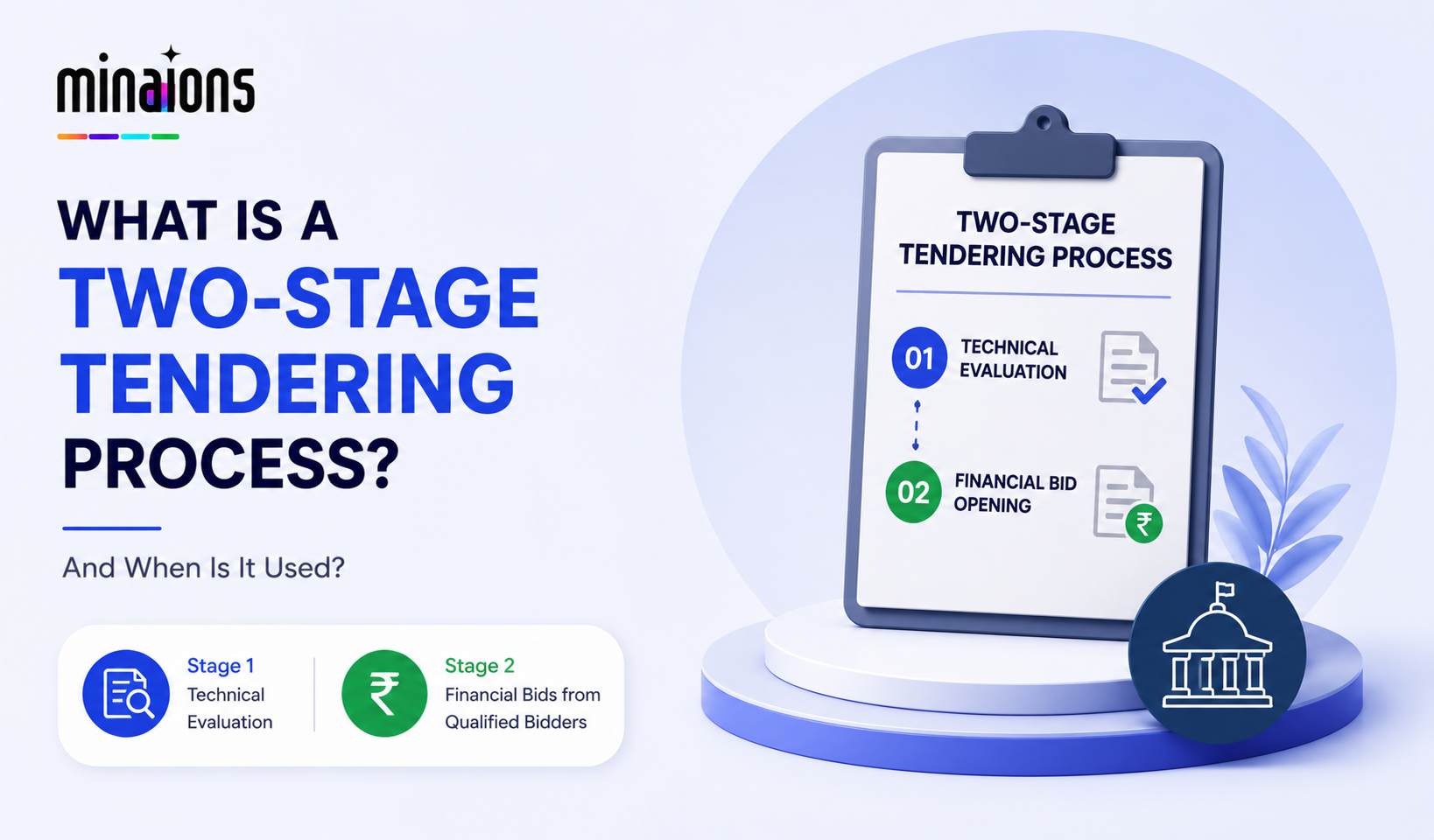
A two-stage tendering process is a procurement method where vendors first submit technical proposals and qualification details, followed later by commercial or final proposals.
The two-stage procurement model is commonly used in:
Complex infrastructure projects
Technology implementation
Defence procurement
Smart city systems
Healthcare modernization
Consulting assignments
The purpose of two-stage procurement is to improve procurement quality before final commercial negotiations.
Businesses participating in public service tenders and government public procurement should clearly understand how two-stage procurement differs from standard procurement models.
Why Government Departments Use Two-Stage Tendering
Many departments involved in government public procurement use two-stage procurement because large projects often involve complex technical requirements.
The two-stage procurement model helps procurement authorities:
Improve technical clarity
Reduce procurement risk
Enhance vendor qualification
Optimize project feasibility
Improve tender evaluation methodology
Businesses participating in tender government projects should therefore understand why procurement authorities increasingly prefer two-stage procurement systems.
The growing complexity of the tender market has also increased the adoption of two-stage procurement models.
Tender Evaluation Methodology in Two-Stage Procurement
The tender evaluation methodology used in two-stage procurement is generally more detailed than traditional procurement models.
The standard tender evaluation methodology may include:
Technical capability scoring
Vendor qualification analysis
Compliance evaluation
Experience assessment
Financial strength analysis
During the first stage, the tender evaluation methodology focuses primarily on technical competence and project capability.
In the second stage, the tender evaluation methodology may include financial negotiations and commercial evaluation.
Businesses participating in government public procurement should carefully align technical proposals with the applicable tender evaluation methodology.
Minaions helps organizations optimize workflows related to tender evaluation methodology through AI-driven procurement analysis systems.
Public Service Tenders and Complex Procurement
The ecosystem of public service tenders is becoming increasingly sophisticated.
Today, public service tenders often involve:
Smart governance systems
Digital transformation projects
Healthcare modernization
Public infrastructure
Utility management systems
The increasing complexity of public service tenders has made two-stage procurement highly relevant across multiple sectors.
Businesses participating in public service tenders should maintain strong technical proposal preparation workflows.
The growing scale of public service tenders has also increased demand for AI-driven procurement management systems like Minaions.
Government Procurement Platform and Digital Procurement
Modern government procurement platform systems are transforming how two-stage procurement is managed.
A modern government procurement platform supports:
Digital bid submission
Technical evaluation
Vendor communication
Procurement transparency
Compliance validation
Businesses participating in government public procurement should optimize operational readiness for participating through a government procurement platform.
The increasing use of government procurement platform ecosystems has improved procurement transparency while increasing supplier competition.
Government Tender Courses and Procurement Education
The growing complexity of procurement has increased interest in government tender courses.
Many businesses participating in tender government projects now invest in government tender courses to improve procurement knowledge and compliance capability.
Typical government tender courses cover:
Bid preparation
Eligibility analysis
Technical proposal writing
Procurement workflows
Procurement compliance
Businesses participating in the process of procurement in government sector should continuously strengthen procurement expertise through professional learning.
The increasing complexity of the tender market has made government tender courses more valuable than ever.
Tender Government Projects and Procurement Scale
The number of tender government projects across India is increasing rapidly.
Today, tender government projects include procurement related to:
Infrastructure development
Smart cities
AI systems
Defence modernization
Public healthcare
Digital governance
The increasing scale of tender government projects has encouraged procurement authorities to adopt two-stage procurement systems more frequently.
Businesses participating in tender government projects should therefore prepare for more detailed technical evaluation and procurement scrutiny.
Government Public Procurement and Vendor Selection
The ecosystem of government public procurement is evolving rapidly.
Modern government public procurement systems increasingly focus on:
Technical capability
Innovation
Vendor reliability
Long-term scalability
Procurement transparency
The increasing complexity of government public procurement has made advanced procurement methods like two-stage tendering more common.
Businesses participating in public service tenders should strengthen operational readiness for participating in complex procurement models.
Tender Market and Procurement Competition
The Indian tender market is becoming increasingly competitive.
Today, the tender market includes suppliers across:
Infrastructure
IT procurement
Defence
Healthcare
Renewable energy
Education
The increasing competition within the tender market has encouraged procurement authorities to adopt more structured tender evaluation methodology systems.
Businesses participating in the tender market should therefore focus heavily on technical capability and compliance quality.
Minaions helps suppliers analyze trends within the tender market through AI-driven procurement analytics.
Reverse Auction GeM and Two-Stage Procurement
The rise of reverse auction GeM workflows has also influenced modern procurement systems.
Many procurement authorities now combine technical qualification stages with reverse auction GeM commercial workflows.
The reverse auction GeM model generally involves:
Technical vendor qualification
Commercial bidding competition
Real-time pricing optimization
Transparent procurement evaluation
Businesses participating in government public procurement should understand how reverse auction GeM systems integrate with two-stage procurement models.
The increasing use of reverse auction GeM systems has improved procurement transparency while increasing pricing competition.
Advantages of Two-Stage Tendering
The two-stage procurement model provides several advantages.
Better Technical Clarity
Procurement authorities can refine technical requirements before final commercial evaluation.
Improved Tender Evaluation Methodology
The tender evaluation methodology becomes more structured and transparent.
Reduced Procurement Risk
The two-stage process reduces errors during government public procurement.
Better Vendor Qualification
Procurement authorities can identify technically capable suppliers more effectively.
Improved Procurement Transparency
Two-stage procurement improves visibility across the process of procurement in government sector.
Challenges of Two-Stage Tendering
Despite its advantages, two-stage procurement also creates challenges.
Longer Procurement Timelines
The two-stage process increases procurement duration.
Higher Compliance Requirements
Businesses participating in public service tenders must prepare more detailed technical submissions.
Increased Competition
The expanding tender market has made technical qualification increasingly competitive.
Greater Documentation Complexity
Businesses participating in tender government projects must maintain strong documentation management systems.
Minaions and Smart Procurement Management
Minaions is helping businesses modernize procurement participation through AI-driven procurement automation.
Minaions supports organizations through:
AI-powered procurement tracking
Smart compliance management
Technical evaluation analysis
Procurement analytics
Monitoring the evolving tender market
Improving workflows for tender evaluation methodology
Businesses participating in government public procurement can use Minaions to improve operational efficiency and procurement success rates.
Final Thoughts
The modern process of procurement in government sector is becoming increasingly structured, digital, and evaluation-driven. Businesses participating in public service tenders, tender government projects, and complex procurement ecosystems must clearly understand how two-stage procurement works.
From understanding advanced tender evaluation methodology systems to preparing for reverse auction GeM workflows, every stage of procurement matters.
Organizations actively participating in the evolving tender market, improving procurement readiness through AI-driven platforms like Minaions, and strengthening operational capability for modern government procurement platform systems can significantly improve procurement success rates.
As government public procurement continues to evolve digitally, businesses investing in intelligent procurement management and automation will gain a major competitive advantage.
Related Blogs
A small manufacturing firm in Ludhiana missed a ₹2.3 crore contract after spending 14 hours manually scanning the GeM portal, only to find the tender had closed two days earlier. This is not an isolated case.

A small civil engineering firm in Lucknow spent three weeks manually parsing a 420-page NHAI tenders document, only to miss a critical clause in the contractor registration requirements and lose eligibility.

A small manufacturing firm in Ludhiana missed a ₹2.
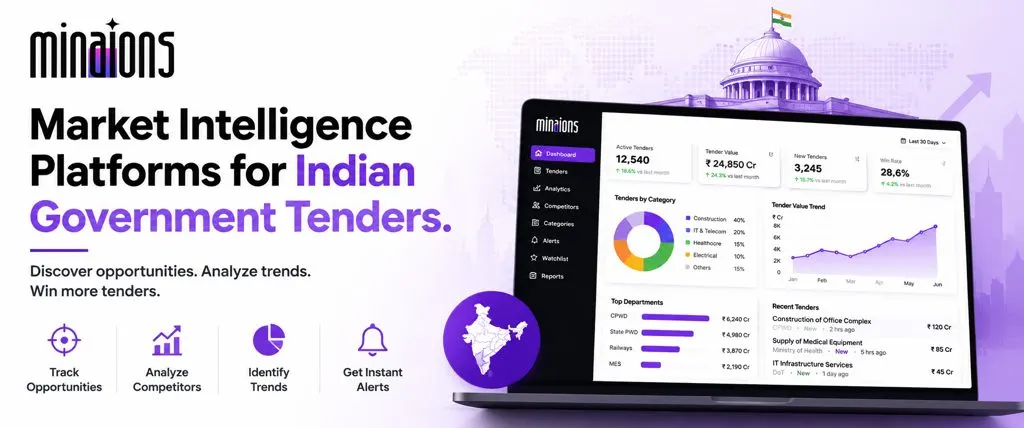
Discover how AI-powered market intelligence platforms streamline tender registration, procurement compliance, and government bidding success.