15% Price Preference for MSEs: When It Applies and How to Use It Strategically
India’s MSME ecosystem plays a major role in public procurement, manufacturing, supply chains, and infrastructure development. To encourage MSME participation in public procurement, the Government of India introduced the 15% price preference policy under the MSME procurement policy framework. This initiative helps Micro and Small Enterprises compete more effectively in tenders and contracts, especially where large enterprises dominate the bidding landscape.
Businesses participating in e procurement tender opportunities, supply tenders, and government procurement projects must clearly understand how the 15% price preference works and how to use it strategically during price evaluation and bid participation.
Today, suppliers participating through a government tender portal, the gem registration portal, and digital procurement systems are increasingly leveraging MSME advantages to improve procurement success rates. Platforms like Minaions are helping businesses optimize price analysis, manage bid documents, automate the tender checklist India workflow, and improve participation in supply contract opportunities.
Understanding the Procurement Policy for MSEs
The MSME procurement policy was introduced to increase participation of Micro and Small Enterprises in government procurement.
Under the MSME procurement policy, eligible MSEs can receive purchase preference benefits in selected tenders and contracts issued by government departments and public sector organizations.
The MSME procurement policy generally allows eligible MSEs to match the lowest bidder price if their quoted price falls within the approved preference margin.
Businesses participating in e procurement tender opportunities should carefully review whether the applicable procurement policy allows MSME price preference benefits.
The increasing importance of the MSME procurement policy has encouraged many businesses to complete registration through the gem registration portal and participate more actively in public procurement.
What is the 15% Price Preference?
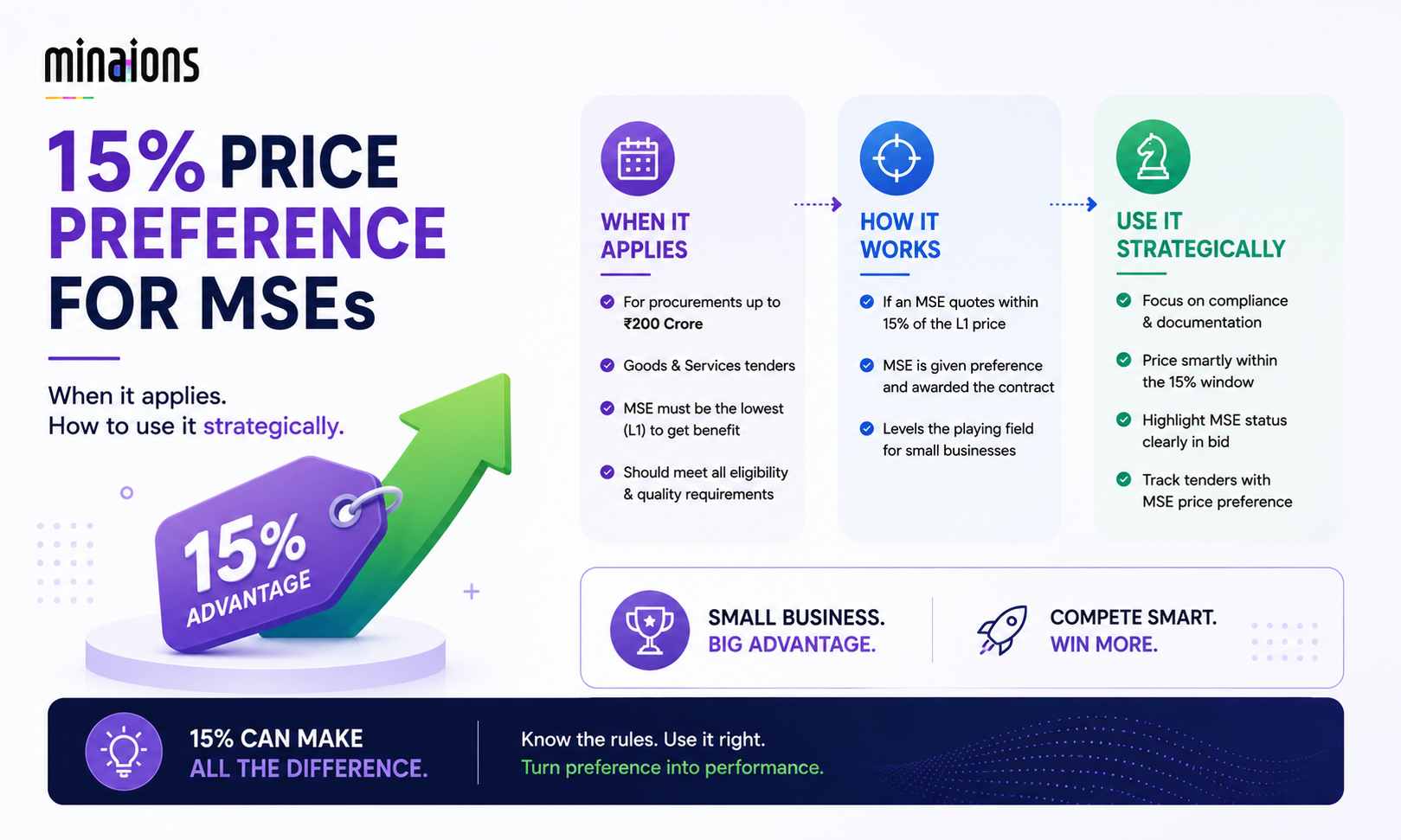
The 15% price preference allows eligible MSEs to compete more effectively in government procurement.
If an eligible MSE’s quoted price is within 15% of the L1 bidder during price evaluation, the MSE may receive an opportunity to match the L1 price and secure a portion of the supply contract.
This 15% price preference is especially useful in:
Supply tenders
Manufacturing procurement
Infrastructure procurement
Product-based tenders and contracts
Public procurement supply projects
Businesses participating in e procurement tender projects should carefully analyze procurement eligibility before relying on MSME benefits.
Government Tender Portal and MSME Participation
Modern procurement participation heavily depends on the government tender portal ecosystem.
Businesses participating in supply tenders use the government tender portal to:
Access procurement opportunities
Download bid documents
Review MSME eligibility
Monitor procurement updates
Submit digital bids
The increasing use of the government tender portal has improved procurement transparency while increasing competition in tenders and contracts.
Businesses participating in e procurement tender opportunities should regularly monitor every relevant government tender portal to identify MSME-preference opportunities early.
Minaions helps suppliers automate tracking across multiple government tender portal systems and improve procurement visibility.
Importance of Gem Registration Portal
The gem registration portal plays a critical role in MSME procurement participation.
Businesses completing registration through the gem registration portal can participate in:
Government procurement projects
Digital supply tenders
Product procurement contracts
Public procurement supply programs
The gem registration portal helps businesses improve procurement visibility and simplify participation in e procurement tender workflows.
Suppliers participating in tenders and contracts should ensure all compliance records are updated properly on the gem registration portal.
The increasing adoption of the gem registration portal has expanded opportunities for MSMEs participating in public procurement.
Tenders and Contracts in MSME Procurement
The ecosystem of tenders and contracts is rapidly expanding for MSMEs across India.
Today, MSMEs can participate in tenders and contracts related to:
Office supplies
Infrastructure materials
Industrial products
Technology procurement
Healthcare equipment
Manufacturing supply
Businesses participating in tenders and contracts should focus heavily on compliance readiness, accurate price analysis, and procurement planning.
The growth of MSME-focused tenders and contracts has significantly improved opportunities for small businesses in public procurement.
Price Analysis and Strategic Bidding
Proper price analysis is essential when using the 15% MSME preference strategically.
Businesses participating in e procurement tender projects should conduct detailed price analysis before finalizing commercial bids.
Effective price analysis helps businesses:
Improve pricing competitiveness
Maintain profitability
Align with procurement budgets
Improve procurement strategy
The increasing competition in supply tenders makes accurate price analysis extremely important.
Minaions helps businesses automate price analysis workflows and improve procurement decision-making during price evaluation stages.
Supply Contract Opportunities for MSMEs
The 15% price preference is highly relevant for supply contract procurement projects.
Government departments regularly issue supply contract opportunities for:
Industrial materials
Stationery
Healthcare products
IT equipment
Furniture
Construction supplies
Businesses participating in supply contract opportunities should clearly evaluate whether MSME preference benefits apply during the price evaluation stage.
The increasing number of public procurement supply contract opportunities has encouraged more businesses to participate through the government tender portal ecosystem.
Bid Documents and Compliance Accuracy
Carefully reviewing bid documents is critical for procurement success.
Every procurement project includes bid documents containing:
Eligibility criteria
MSME conditions
Pricing guidelines
Procurement timelines
Technical specifications
Businesses participating in tenders and contracts should carefully review all bid documents before preparing bids.
Incorrect interpretation of bid documents is one of the most common reasons suppliers lose procurement opportunities.
Minaions helps suppliers organize and review bid documents more efficiently through AI-driven procurement workflows.
Supply Tenders and MSME Growth
The number of supply tenders available for MSMEs is growing rapidly.
Today, supply tenders cover:
Industrial products
Office supplies
Healthcare consumables
Electrical equipment
Packaging materials
Construction materials
Businesses participating in supply tenders should understand how the MSME procurement policy influences procurement outcomes.
The increasing volume of supply tenders has created long-term business opportunities for MSMEs participating through the gem registration portal and digital procurement systems.
Price Evaluation and Competitive Procurement
The role of price evaluation is extremely important in public procurement.
During price evaluation, procurement authorities compare commercial bids, procurement compliance, and MSME eligibility conditions.
Businesses participating in e procurement tender projects should clearly understand how price evaluation works under the MSME procurement policy.
A strong understanding of price evaluation helps suppliers use the 15% preference strategically without reducing profitability.
Minaions provides AI-driven procurement analytics that help businesses optimize pricing during the price evaluation stage.
E Procurement Tender and Digital Procurement
The rise of e procurement tender systems has transformed procurement participation across India.
Modern e procurement tender systems support:
Digital bid submission
Procurement analytics
Vendor participation
Automated compliance workflows
Centralized procurement visibility
Businesses participating in e procurement tender opportunities should strengthen operational readiness for digital procurement participation.
The increasing adoption of e procurement tender systems has improved transparency while increasing supplier competition.
Tender Checklist India for MSME Procurement
A detailed tender checklist India workflow is essential for procurement success.
The standard tender checklist India generally includes:
MSME registration verification
Eligibility analysis
Financial documentation
Technical compliance
Commercial pricing
Digital bid readiness
Businesses participating in supply tenders should maintain strong tender checklist India workflows to reduce procurement risk.
Ignoring critical steps within the tender checklist India process is one of the biggest reasons suppliers lose MSME procurement opportunities.
Minaions helps businesses automate the tender checklist India process and improve operational efficiency.
How to Use the 15% Price Preference Strategically
Businesses can use the 15% preference strategically by:
Participating in MSME-eligible tenders and contracts
Conducting detailed price analysis
Monitoring the government tender portal
Maintaining updated profiles on the gem registration portal
Strengthening compliance management
Optimizing commercial bids during price evaluation
Companies participating in e procurement tender systems should also focus on improving technical proposal quality because pricing alone does not guarantee procurement success.
Minaions and MSME Tender Management
Minaions helps MSMEs improve participation in supply tenders, e procurement tender systems, and government procurement projects.
Minaions supports businesses through:
AI-driven procurement tracking
Automated tender checklist India workflows
Smart price analysis
Compliance management
Monitoring multiple government tender portal systems
Managing bid documents
Businesses participating in public procurement can use Minaions to improve procurement visibility and reduce operational errors.
Final Thoughts
The 15% price preference policy provides major advantages for MSMEs participating in public procurement. Businesses participating in tenders and contracts, supply tenders, and digital e procurement tender systems must clearly understand how the MSME procurement policy works to improve procurement success rates.
From conducting accurate price analysis to organizing compliant bid documents, every stage of procurement matters.
Organizations actively using the government tender portal, maintaining updated records on the gem registration portal, and optimizing workflows through AI-driven platforms like Minaions can significantly improve their ability to secure profitable supply contract opportunities.
As digital procurement systems continue to evolve, businesses investing in procurement automation and structured compliance management will gain a strong competitive advantage.
Related Blogs
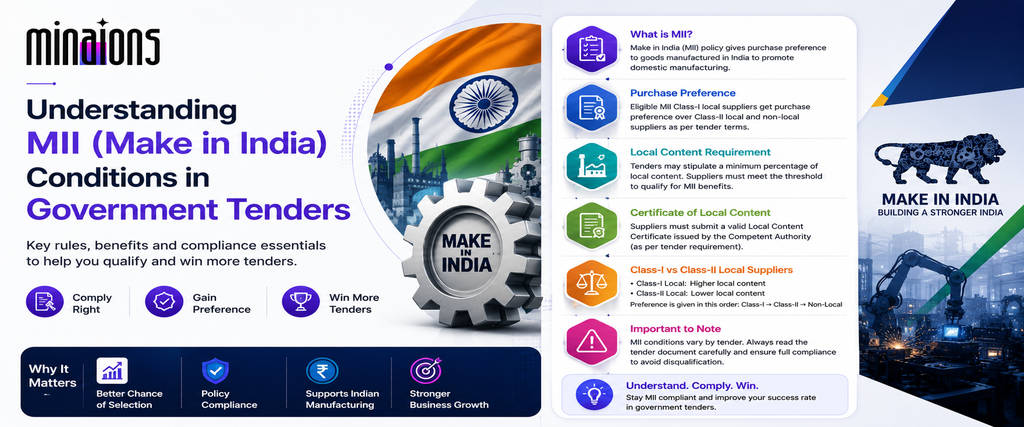
In the high-stakes arena of government tendering, a single misstep in declaring local content can mean the difference between winning a multi-million-pound contract and facing a two-year debarment.
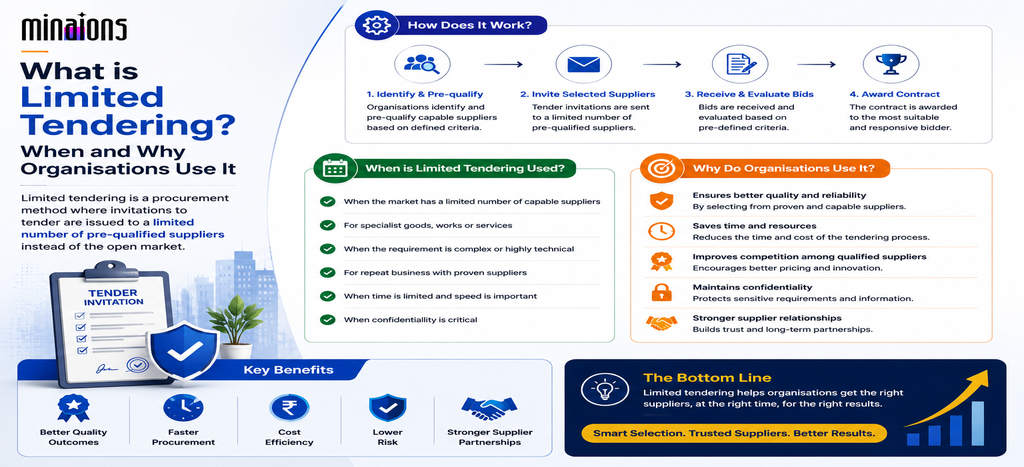
In an era where public sector budgets are stretched thin and procurement workloads are projected to rise by 10% in 2025, organisations must balance speed, compliance, and value.
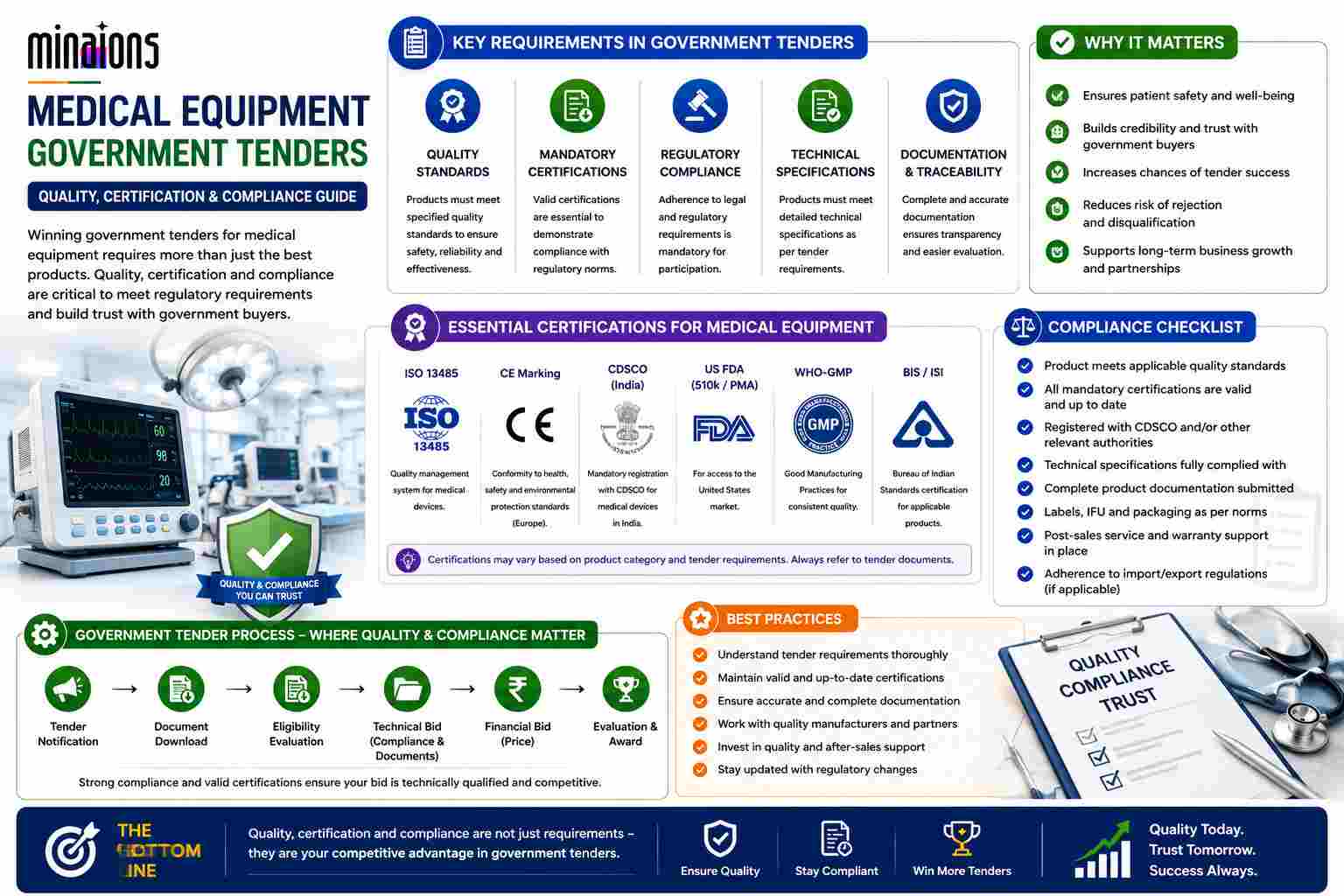
As healthcare systems worldwide confront supply chain fragility and rising patient safety expectations, public procurement teams now assess medical equipment beyond price and delivery timelines.
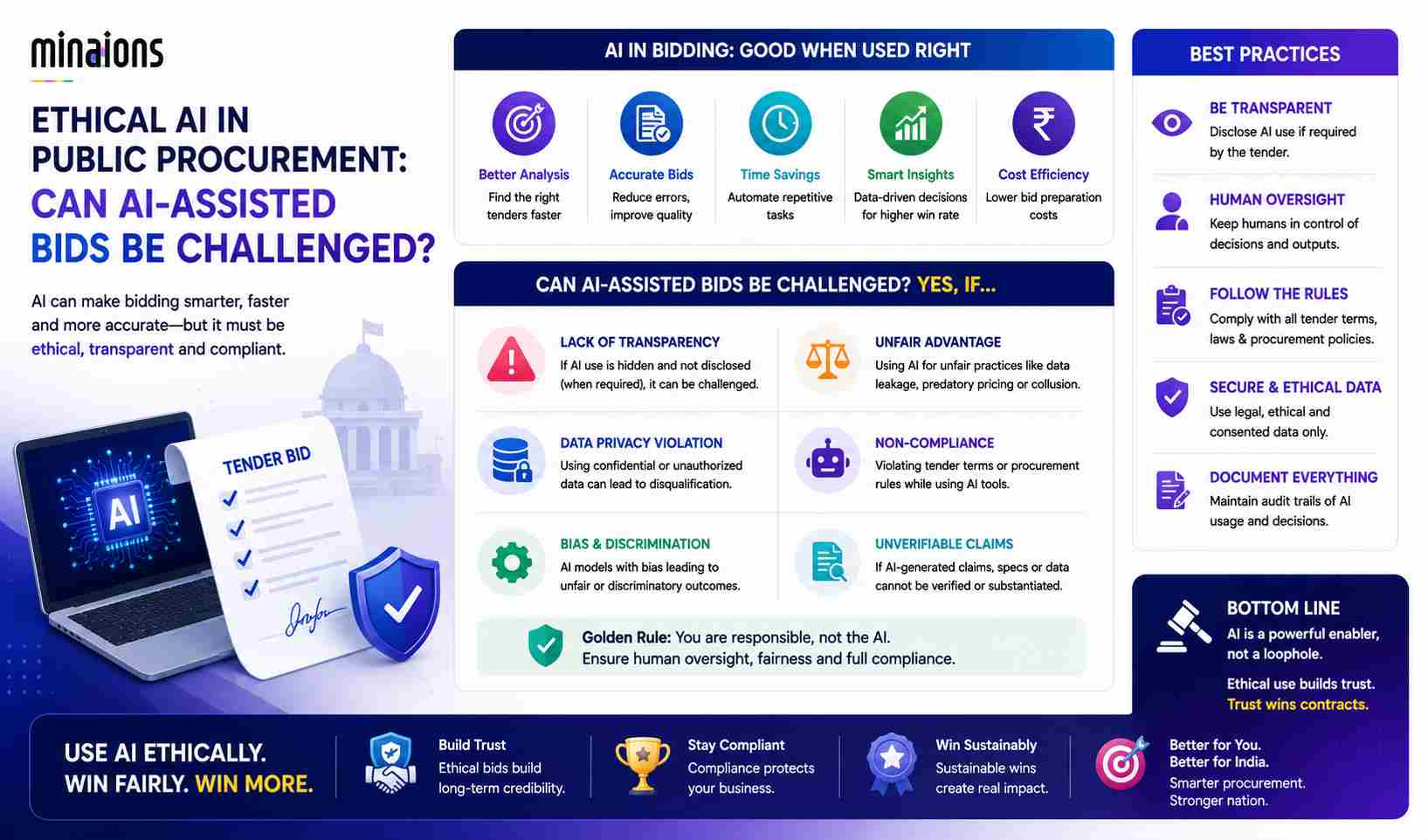
As public procurement systems increasingly rely on AI to evaluate bids, manage contracts, and detect anomalies, a quiet but profound crisis of trust is emerging.