Ethical AI in Public Procurement: Can AI-Assisted Bids Be Challenged?
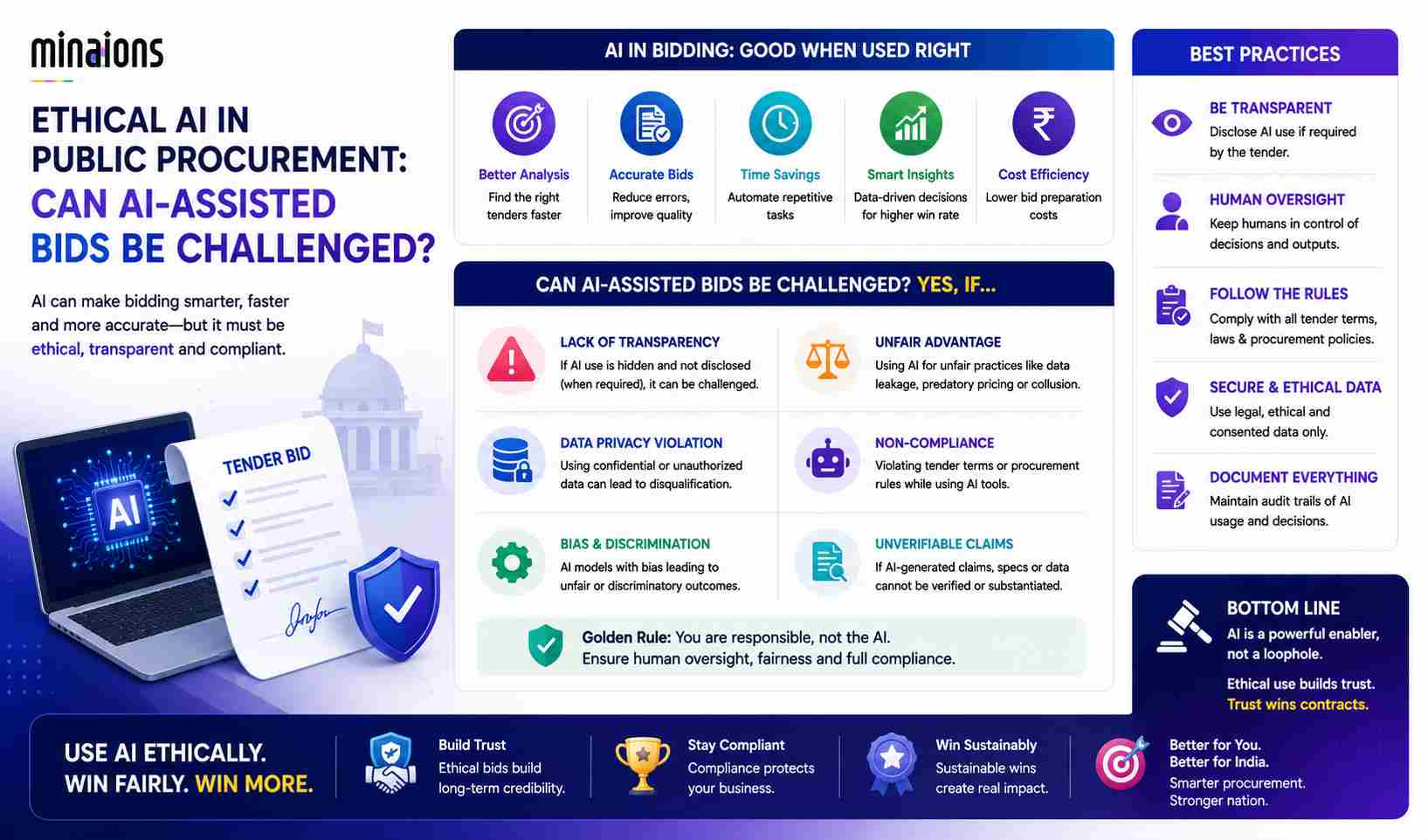
Artificial Intelligence is rapidly transforming the global procurement ecosystem. In India, AI-driven automation is increasingly being used for government bids, government tenders, proposal drafting, compliance management, analytics, and bid optimization. As the use of AI grows across the procurement process, an important question is emerging: can AI-assisted submissions for government contracts or government contracts for bid be legally or ethically challenged?
Today, organizations participating in public procurement use AI-powered systems to manage the complete procurement system, automate documentation, optimize pricing, and improve bid quality. Platforms like Minaions are helping companies automate workflows related to government bidding, proposal generation, compliance checks, and procurement analytics through advanced government tender software and bid management software India solutions.
However, the rise of AI in the procurement process is also raising concerns around fairness, transparency, bias, confidentiality, and ethical procurement participation. Businesses participating in government bids, government tenders, and bids for contractors must therefore understand both the opportunities and risks associated with AI-assisted procurement.
Growth of AI in Public Procurement
The use of AI in public procurement is growing rapidly across India and global procurement markets.
Today, AI tools are being used in:
Drafting proposals for government bids
Managing government contracts
Analyzing procurement eligibility
Automating compliance workflows
Monitoring procurement opportunities through a bidding portal
Improving bid evaluation readiness
The increasing complexity of the modern procurement system has encouraged suppliers to adopt AI-powered government tender software and procurement automation systems.
Businesses participating in government tenders and government contracts for bid are increasingly using AI to improve efficiency and reduce operational errors.
AI and the Procurement Process
The modern procurement process is becoming increasingly data-driven and technology-enabled.
AI is now being integrated into every stage of the procurement process, including:
Opportunity discovery
Eligibility analysis
Proposal drafting
Risk assessment
Compliance verification
Pricing analysis
Bid evaluation support
Businesses participating in government bidding are using AI to simplify the complete procurement process and improve procurement speed.
The use of AI within the procurement system is especially visible in large-scale public procurement projects where proposal complexity is high.
Government Bids and AI-Assisted Proposal Writing
The rise of AI-generated submissions has transformed how businesses prepare government bids.
Today, AI tools can help businesses:
Draft technical responses
Analyze eligibility conditions
Generate compliance checklists
Optimize proposal formatting
Improve documentation quality
Businesses participating in government bids and government contracts are increasingly adopting AI-driven bid management software India platforms to improve operational efficiency.
Platforms like Minaions help companies automate workflows related to government bids, compliance analysis, and proposal generation while maintaining procurement transparency.
However, procurement authorities are beginning to examine whether AI-assisted government bids create unfair competitive advantages.
Can AI-Assisted Government Contracts Be Challenged?
The question of whether AI-assisted submissions for government contracts can be challenged is becoming increasingly relevant.
Currently, most procurement authorities focus on:
Proposal accuracy
Compliance standards
Technical capability
Pricing competitiveness
Authenticity of information
If AI-generated content results in misleading information, inaccurate claims, plagiarism, or non-compliance, then procurement authorities may challenge the submission during the procurement process.
Businesses participating in government contracts for bid should therefore ensure that AI-generated content is carefully reviewed before submission.
The use of AI itself is not necessarily prohibited in public procurement, but unethical use of AI within the procurement system may create legal and compliance risks.
Government Tenders and Ethical Concerns
The increasing use of AI in government tenders is creating several ethical concerns.
Common ethical concerns include:
Proposal plagiarism
Bias in AI-generated content
Automated misinformation
Data privacy risks
Competitive imbalance
Lack of transparency
Businesses participating in government tenders should therefore implement strong governance controls while using AI-powered government tender software.
The future of ethical AI in government tenders will likely involve stricter procurement guidelines and disclosure standards.
Public Procurement and Transparency
Transparency remains one of the most important principles in public procurement.
Procurement authorities managing public procurement projects expect suppliers to maintain:
Accurate documentation
Transparent disclosures
Ethical bidding practices
Fair competition
Regulatory compliance
The increasing use of AI in public procurement is raising questions about how procurement authorities can ensure transparency in AI-assisted submissions.
Businesses participating in government bidding should maintain human oversight over AI-generated proposals to ensure ethical participation in the procurement process.
Government Bidding and AI Automation
The modern ecosystem of government bidding is becoming increasingly automated.
Today, AI systems are being used in government bidding for:
Opportunity tracking
Proposal generation
Pricing analysis
Bid scoring
Procurement analytics
The adoption of AI within government bidding workflows has improved efficiency while increasing proposal quality.
Minaions provides AI-driven solutions for government bidding that help businesses improve procurement visibility while maintaining compliance and ethical standards.
Bids for Contractors and AI Optimization
The use of AI is also transforming how businesses prepare bids for contractors.
Companies participating in bids for contractors can use AI to:
Analyze procurement opportunities
Improve proposal quality
Optimize resource planning
Automate documentation
Reduce manual workload
The growing competition in government tenders has increased the demand for AI-powered tools that improve the quality of bids for contractors.
However, businesses participating in bids for contractors should ensure that AI-generated content is accurate, verifiable, and compliant with procurement standards.
Bidding Portal and AI-Driven Procurement
Modern procurement workflows heavily rely on a digital bidding portal ecosystem.
Businesses participating in government contracts use a bidding portal to:
Discover procurement opportunities
Download tender documents
Submit digital bids
Track procurement updates
Monitor evaluation status
The increasing integration of AI within the bidding portal ecosystem is improving procurement efficiency and supplier participation.
AI-powered government tender software platforms can now integrate directly with a bidding portal to automate procurement workflows.
Government Tender Software and Ethical AI
The growth of AI-powered government tender software is changing the procurement industry rapidly.
Modern government tender software can automate:
Proposal drafting
Compliance analysis
Bid tracking
Procurement analytics
Opportunity discovery
Businesses participating in government bids should carefully evaluate the ethical implications of using AI-driven government tender software.
Minaions provides AI-enabled government tender software solutions designed to improve procurement efficiency while maintaining ethical procurement standards.
Bid Management Software India and Compliance
The demand for bid management software India is increasing because of the growing complexity of public procurement.
A modern bid management software India platform helps businesses:
Centralize procurement workflows
Improve proposal collaboration
Reduce compliance errors
Optimize bid planning
Automate procurement tracking
The use of AI within bid management software India is improving operational efficiency, especially for companies managing multiple government contracts for bid opportunities simultaneously.
How to Write a Bid Proposal India Using AI Responsibly
Many businesses ask how to write a bid proposal India using AI effectively while remaining compliant.
Understanding how to write a bid proposal India responsibly involves:
Using AI for assistance, not misinformation
Maintaining human review
Verifying all technical claims
Avoiding plagiarism
Ensuring procurement compliance
Businesses trying to learn how to write a bid proposal India should treat AI as a support tool rather than a replacement for procurement expertise.
Minaions helps businesses understand how to write a bid proposal India more efficiently through AI-driven procurement support systems.
Future of Ethical AI in Procurement System
The future of the global procurement system will likely involve greater regulation of AI-assisted procurement participation.
Future procurement policies may require:
AI disclosure standards
Proposal authenticity verification
Human accountability controls
AI governance compliance
Ethical procurement certifications
Businesses participating in government tenders and government contracts should proactively adopt ethical AI practices to remain compliant in the evolving procurement system.
Final Thoughts
AI is transforming the world of government bids, government tenders, and public procurement. While AI-driven automation can significantly improve efficiency, proposal quality, and compliance management, ethical concerns around fairness, transparency, and authenticity are becoming increasingly important.
Businesses participating in government contracts, government contracts for bid, and bids for contractors must ensure that AI-assisted submissions remain accurate, compliant, and ethically managed.
From understanding the complete procurement process to using AI-powered government tender software and bid management software India, every stage of procurement now requires a balance between automation and accountability.
Organizations using AI-driven platforms like Minaions can improve procurement efficiency while maintaining ethical procurement participation in the evolving world of government bidding and digital public procurement.
Related Blogs
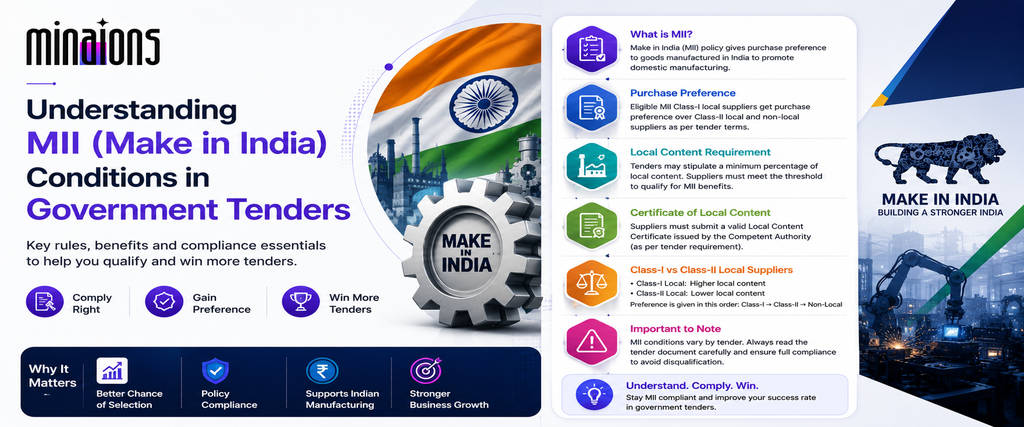
In the high-stakes arena of government tendering, a single misstep in declaring local content can mean the difference between winning a multi-million-pound contract and facing a two-year debarment.
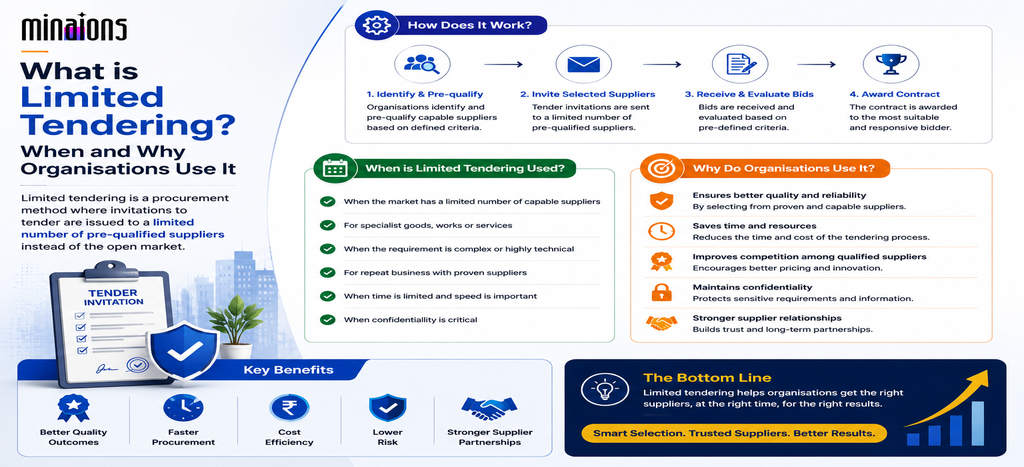
In an era where public sector budgets are stretched thin and procurement workloads are projected to rise by 10% in 2025, organisations must balance speed, compliance, and value.
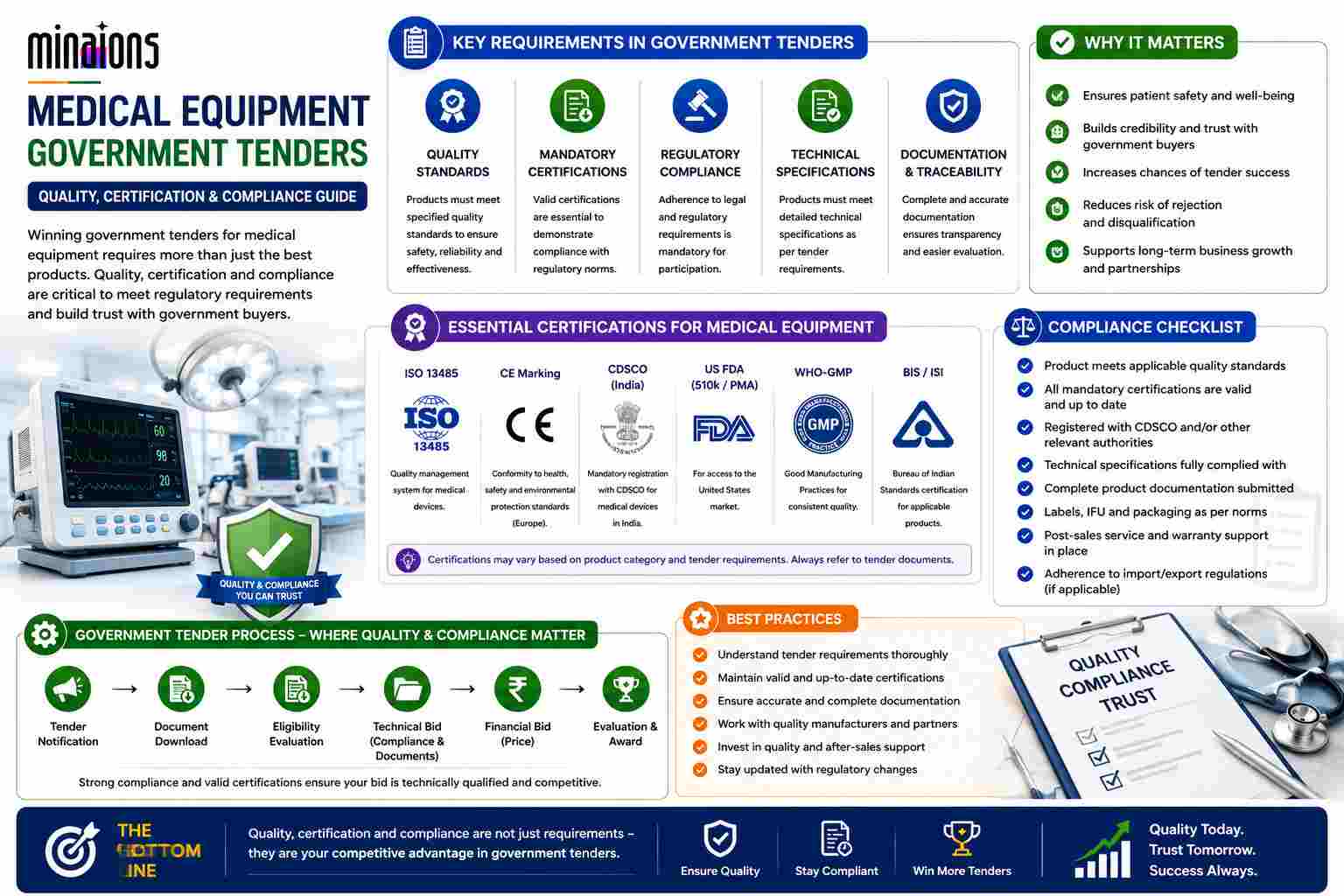
As healthcare systems worldwide confront supply chain fragility and rising patient safety expectations, public procurement teams now assess medical equipment beyond price and delivery timelines.
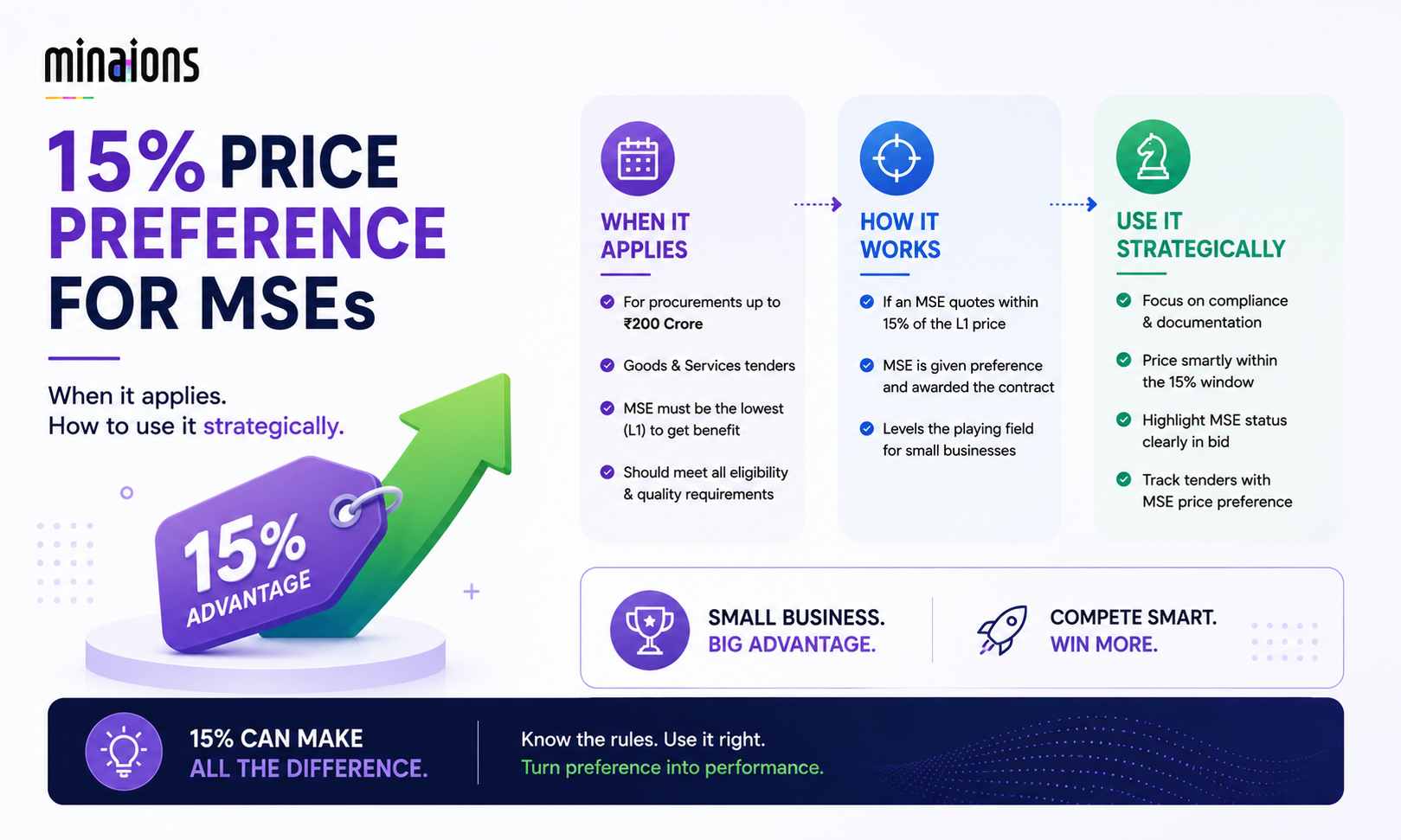
In an era where public procurement budgets are under intensified scrutiny, the 15% Price Preference for Micro and Small Enterprises (MSEs) has emerged as one of the most consequential levers for equitable market access.