Medical Equipment Government Tenders: Quality Certification and Compliance Guide
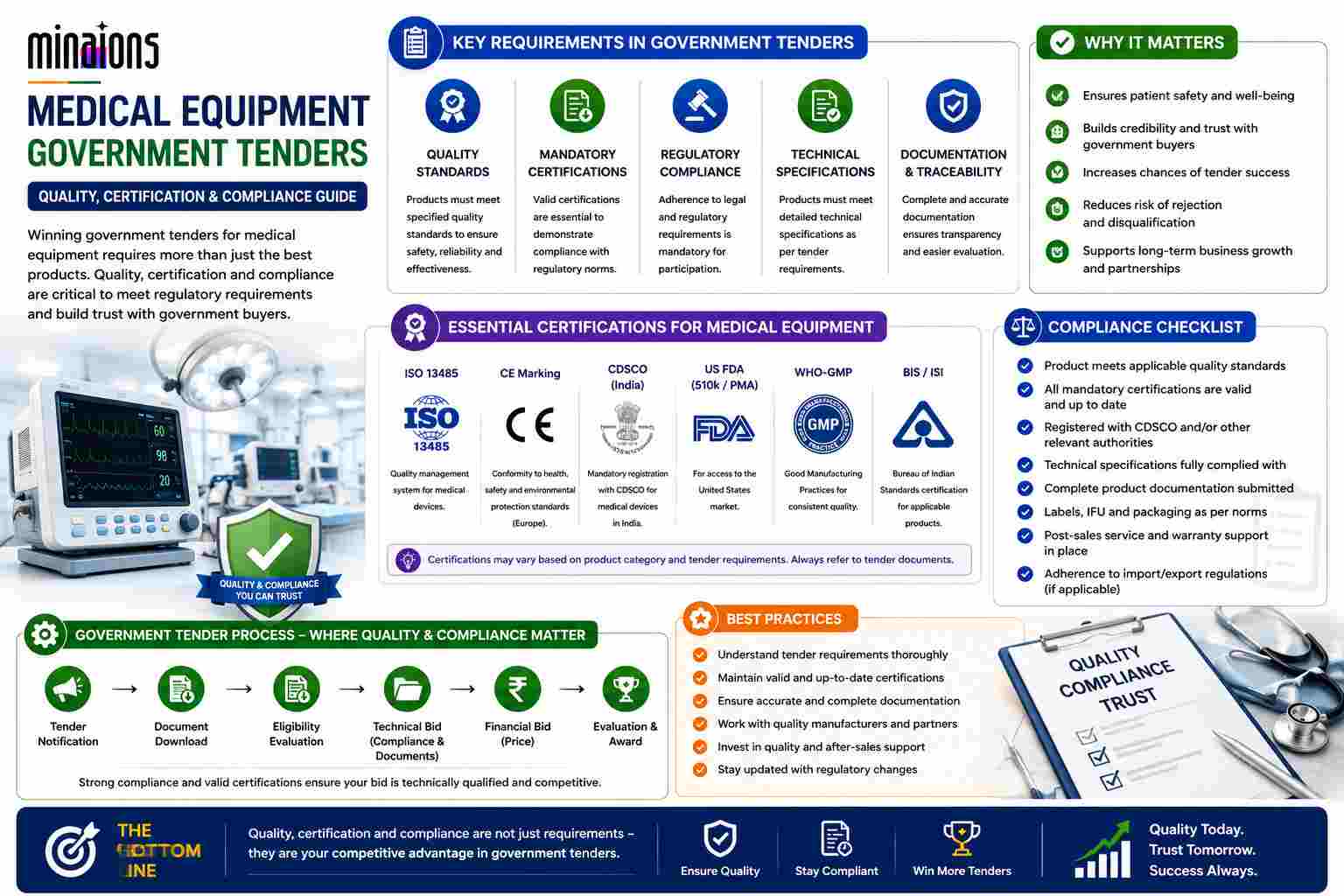
India’s healthcare procurement ecosystem is growing rapidly, creating significant opportunities for manufacturers, distributors, suppliers, and healthcare technology companies participating in tender in government sector procurement opportunities. With increasing investment in hospitals, diagnostic infrastructure, healthcare digitization, and medical technology, the demand for compliant and high-quality suppliers has increased substantially.
Today, businesses participating in e tender, e tendering, and electronic tenders for medical equipment must carefully understand quality certifications, compliance standards, govt procurement rules, and the complete tender submit process. Whether businesses are participating in new bidding opportunities, managing tender files, or preparing a tender document, procurement accuracy has become essential.
The growth of e procurement and digital healthcare procurement systems has transformed how organizations manage tender in government sector procurement. Businesses competing in medical procurement must now focus on compliance, certification standards, pricing strategy, and procurement workflows to improve success rates.
Growth of Medical Equipment Procurement in India
The healthcare sector has become one of the fastest-growing segments in public procurement. Government hospitals, medical colleges, healthcare missions, defense hospitals, and public healthcare institutions regularly publish procurement opportunities through e tender and electronic tenders platforms.
The rise of e procurement systems has increased accessibility to healthcare procurement opportunities across India. Businesses participating in tender in government sector opportunities can now access procurement notices digitally and participate through structured e tendering systems.
The increasing number of healthcare procurement opportunities has also intensified competition in new bidding processes for medical devices, surgical equipment, laboratory systems, ICU infrastructure, and diagnostic solutions.
Understanding the Tender Submit Process
The tender submit process is one of the most important aspects of healthcare procurement.
Businesses participating in electronic tenders and e tender opportunities must carefully manage the complete tender submit process to avoid disqualification.
The standard tender submit process generally includes:
Downloading a tender document
Reviewing technical specifications
Understanding govt procurement rules
Preparing compliance documentation
Organizing tender files
Completing technical submissions
Uploading financial details
Participating in e procurement workflows
A poorly managed tender submit process often results in rejection during technical evaluation.
Companies participating in new bidding opportunities should establish centralized workflows for the tender submit process to improve submission accuracy.
Importance of A Tender Document
Carefully reviewing a tender document is critical for procurement success.
Every a tender document contains detailed information regarding:
Technical specifications
Product standards
Certification requirements
Delivery conditions
Warranty obligations
Eligibility criteria
Tender qualification standards
Businesses participating in tender in government sector opportunities should carefully analyze every section of a tender document before preparing submissions.
Misinterpreting a tender document is one of the biggest reasons for rejection in electronic tenders and healthcare procurement projects.
Companies participating in e tendering systems should maintain expert teams to review every a tender document thoroughly.
Govt Procurement Rules in Medical Equipment Tenders
Compliance with govt procurement rules is mandatory for businesses participating in healthcare procurement.
Medical equipment procurement generally involves strict govt procurement rules related to:
Product quality
Safety standards
Regulatory approvals
Warranty conditions
After-sales service
Certification compliance
Businesses participating in e procurement and e tender opportunities should continuously monitor updates related to govt procurement rules.
The increasing complexity of healthcare procurement has made compliance with govt procurement rules more important than ever.
Organizations participating in new bidding opportunities should maintain updated compliance records to align with evolving govt procurement rules.
Public Procurement Rules and Compliance
The role of public procurement rules is extremely important in medical procurement.
Healthcare procurement authorities follow detailed public procurement rules to ensure transparency, patient safety, and procurement efficiency.
The applicable public procurement rules often define:
Eligibility standards
Product approval requirements
Financial qualification conditions
Bid evaluation criteria
Technical scoring methods
Businesses participating in tender in government sector opportunities should align all tender files and technical submissions with the relevant public procurement rules.
Ignoring public procurement rules can immediately disqualify suppliers from the e tendering process.
Importance of Tender Qualification
Meeting tender qualification criteria is one of the most important aspects of medical procurement.
Typical tender qualification requirements include:
ISO certifications
CDSCO approvals
CE/FDA certifications
Manufacturing capability
Previous project experience
Financial turnover
Businesses participating in electronic tenders should carefully evaluate every tender qualification requirement before submitting bids.
Companies participating in e procurement projects should also maintain centralized records for all certifications used during tender qualification evaluation.
Strong compliance with tender qualification requirements improves supplier credibility in healthcare procurement.
Role of Tender Files in Procurement Success
The organization and accuracy of tender files significantly influence procurement outcomes.
Businesses participating in e tender and electronic tenders should carefully organize all tender files before final submission.
Typical tender files may include:
Product catalogs
Compliance certificates
Warranty declarations
Technical specifications
Financial statements
Regulatory approvals
Poorly managed tender files often lead to rejection during technical evaluation.
Companies participating in new bidding opportunities should implement document management systems for organizing tender files more efficiently.
Tender Price and Competitive Procurement
The evaluation of tender price plays a major role in procurement decisions.
However, healthcare procurement authorities do not evaluate tender price alone. Product quality, certification standards, warranty support, and compliance also influence procurement outcomes.
Businesses participating in e procurement and e tendering systems should conduct detailed pricing analysis before finalizing the tender price.
A highly aggressive tender price without operational sustainability can negatively impact long-term procurement performance.
Companies participating in tender in government sector procurement should balance quality and profitability while determining the final tender price.
Tender State Opportunities in Healthcare Procurement
The expansion of healthcare infrastructure has increased procurement activity across every tender state ecosystem in India.
Today, almost every tender state publishes procurement opportunities related to:
Hospital equipment
Diagnostic systems
ICU infrastructure
Medical consumables
Healthcare IT solutions
Businesses participating in healthcare procurement should track opportunities across multiple tender state procurement platforms to improve market reach.
The increasing number of procurement projects in every tender state has also intensified competition in electronic tenders.
E Tender and E Tendering in Healthcare Procurement
The rise of e tender systems has transformed medical procurement operations.
Today, most healthcare procurement projects are managed through e tendering platforms and centralized e procurement systems.
Businesses participating in e tender opportunities should ensure:
Digital signature readiness
Compliance documentation
Organized tender files
Accurate pricing submissions
Timely uploads
The adoption of e tendering has improved transparency while increasing supplier participation in healthcare procurement.
Companies involved in electronic tenders should also strengthen internal workflows to improve operational efficiency.
Electronic Tenders and Procurement Automation
The growing adoption of electronic tenders is driving procurement automation across healthcare procurement systems.
Modern electronic tenders platforms help procurement authorities:
Improve evaluation transparency
Reduce paperwork
Streamline bid management
Improve procurement visibility
Businesses participating in electronic tenders should adopt procurement automation tools to improve compliance and proposal quality.
The increasing complexity of electronic tenders has made digital procurement expertise essential.
E Procurement and Future Procurement Trends
The future of healthcare procurement is increasingly driven by e procurement systems.
Modern e procurement platforms are integrating:
AI-driven compliance validation
Automated document verification
Smart procurement analytics
Centralized procurement visibility
Digital workflow automation
Businesses participating in new bidding opportunities should adopt digital procurement systems early to remain competitive in future healthcare procurement markets.
The expansion of e procurement will continue to improve transparency and supplier participation across India’s healthcare procurement ecosystem.
Final Thoughts
Medical equipment procurement in India is becoming increasingly regulated, digital, and compliance-focused. Businesses participating in tender in government sector opportunities must understand quality certifications, govt procurement rules, and the complete tender submit process to improve procurement success rates.
From reviewing a tender document to organizing accurate tender files, every stage of procurement matters.
Organizations actively participating in e tender, e tendering, electronic tenders, and modern e procurement systems should focus heavily on tender qualification, compliance management, and strategic tender price planning.
As healthcare procurement continues to evolve across every tender state, businesses investing in procurement automation, compliance systems, and structured workflows will gain a strong competitive advantage in future medical procurement opportunities.
Related Blogs
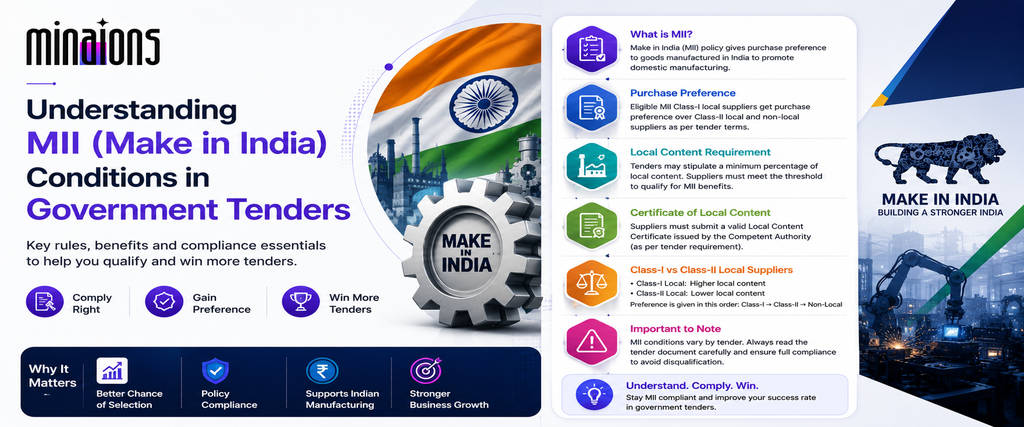
In the high-stakes arena of government tendering, a single misstep in declaring local content can mean the difference between winning a multi-million-pound contract and facing a two-year debarment.
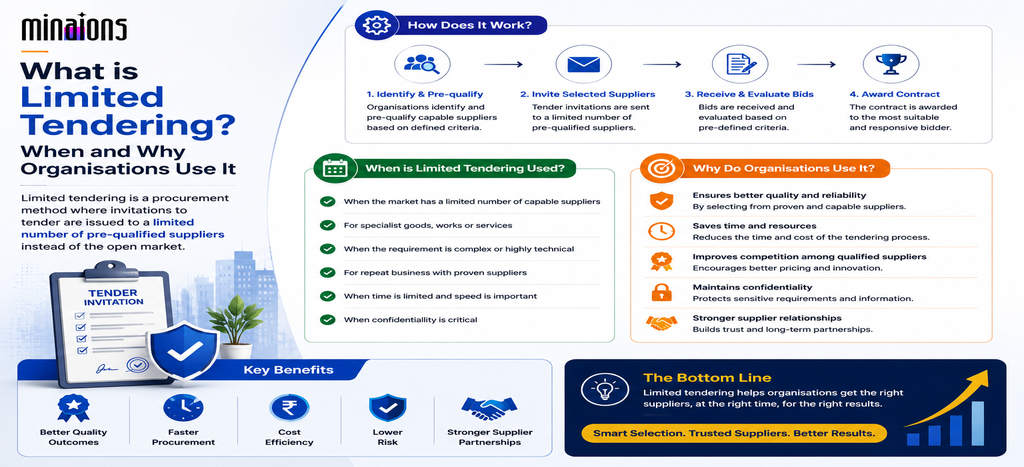
In an era where public sector budgets are stretched thin and procurement workloads are projected to rise by 10% in 2025, organisations must balance speed, compliance, and value.
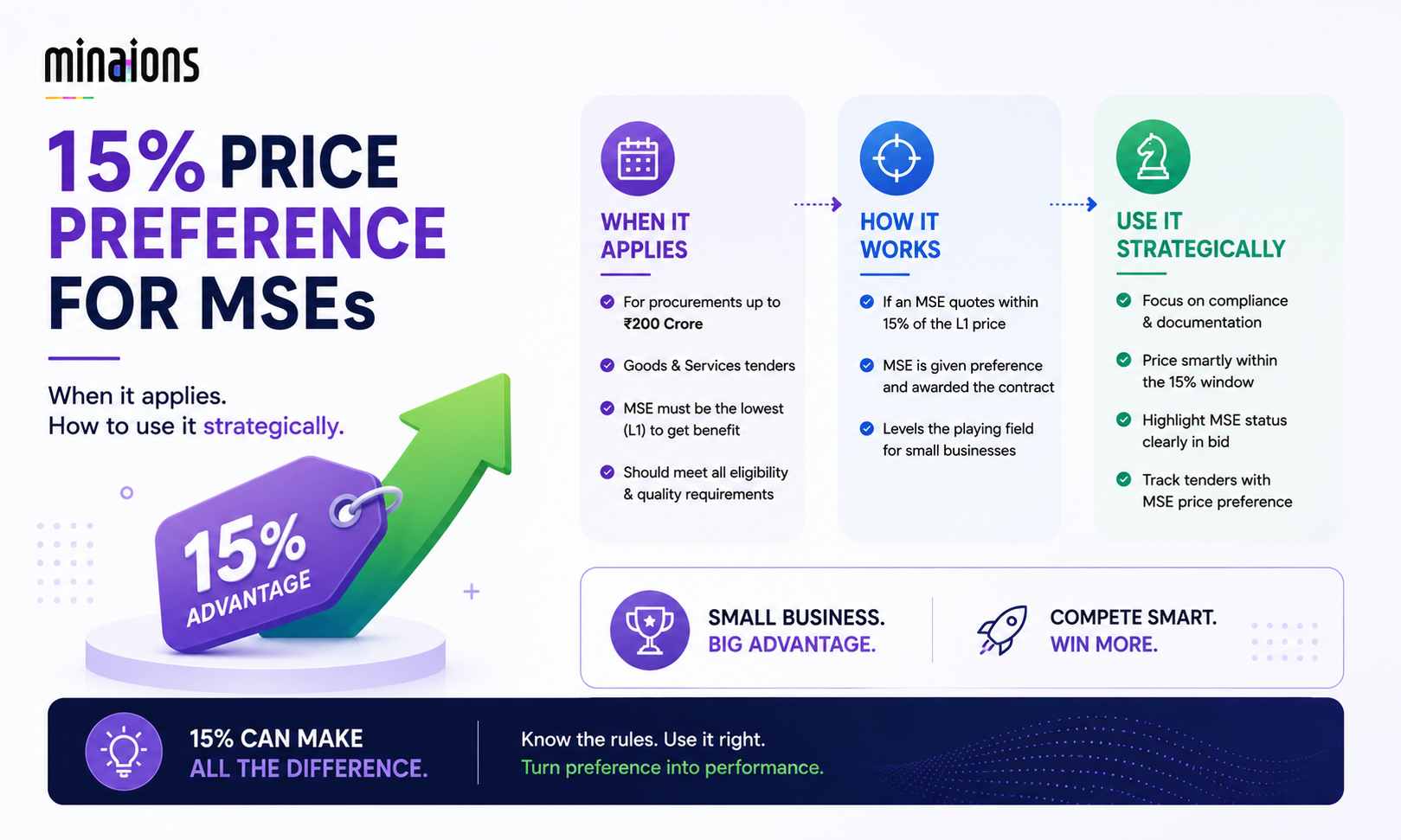
In an era where public procurement budgets are under intensified scrutiny, the 15% Price Preference for Micro and Small Enterprises (MSEs) has emerged as one of the most consequential levers for equitable market access.
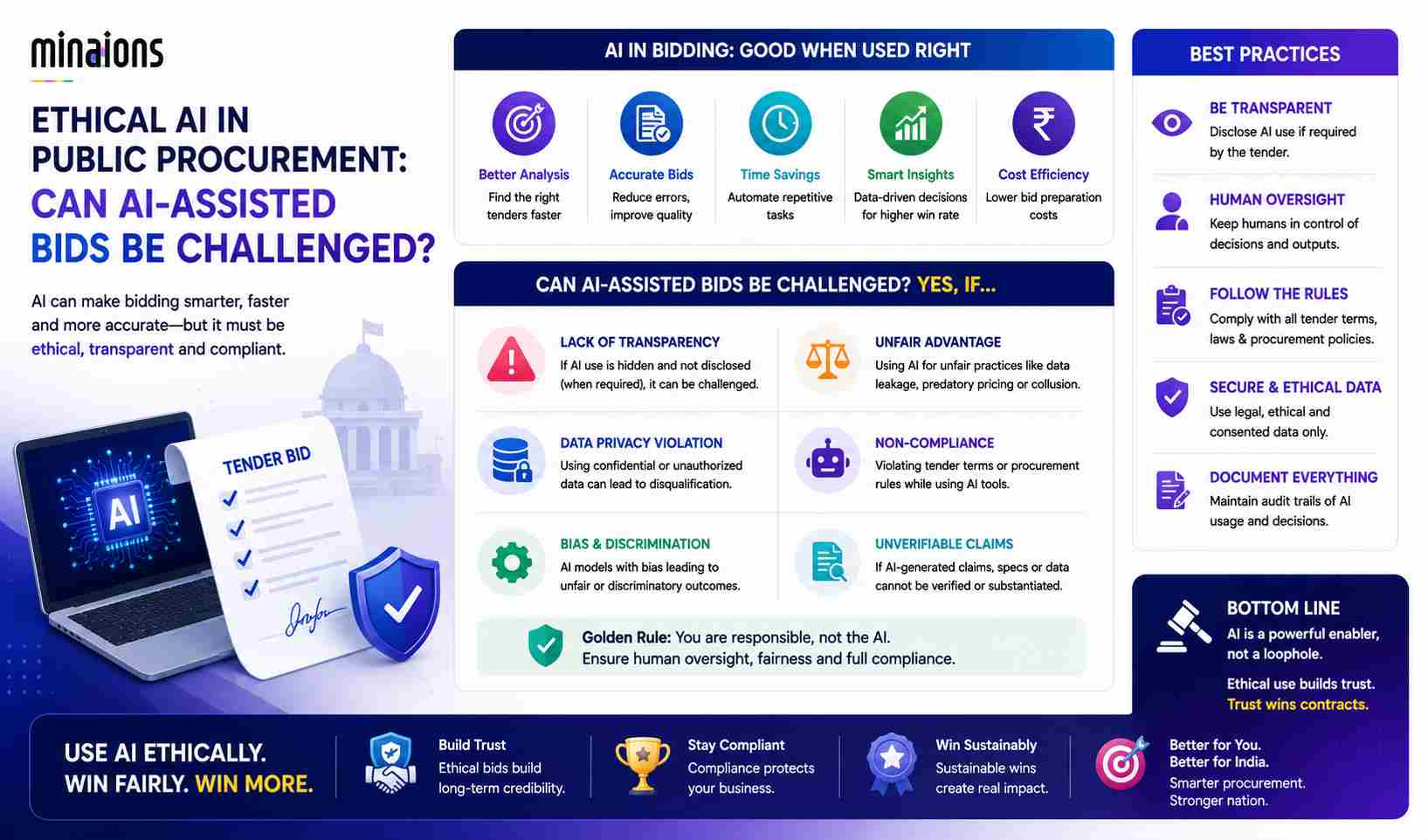
As public procurement systems increasingly rely on AI to evaluate bids, manage contracts, and detect anomalies, a quiet but profound crisis of trust is emerging.