AI Risk Analysis in Tenders: How to Spot Dangerous Clauses Before You Bid
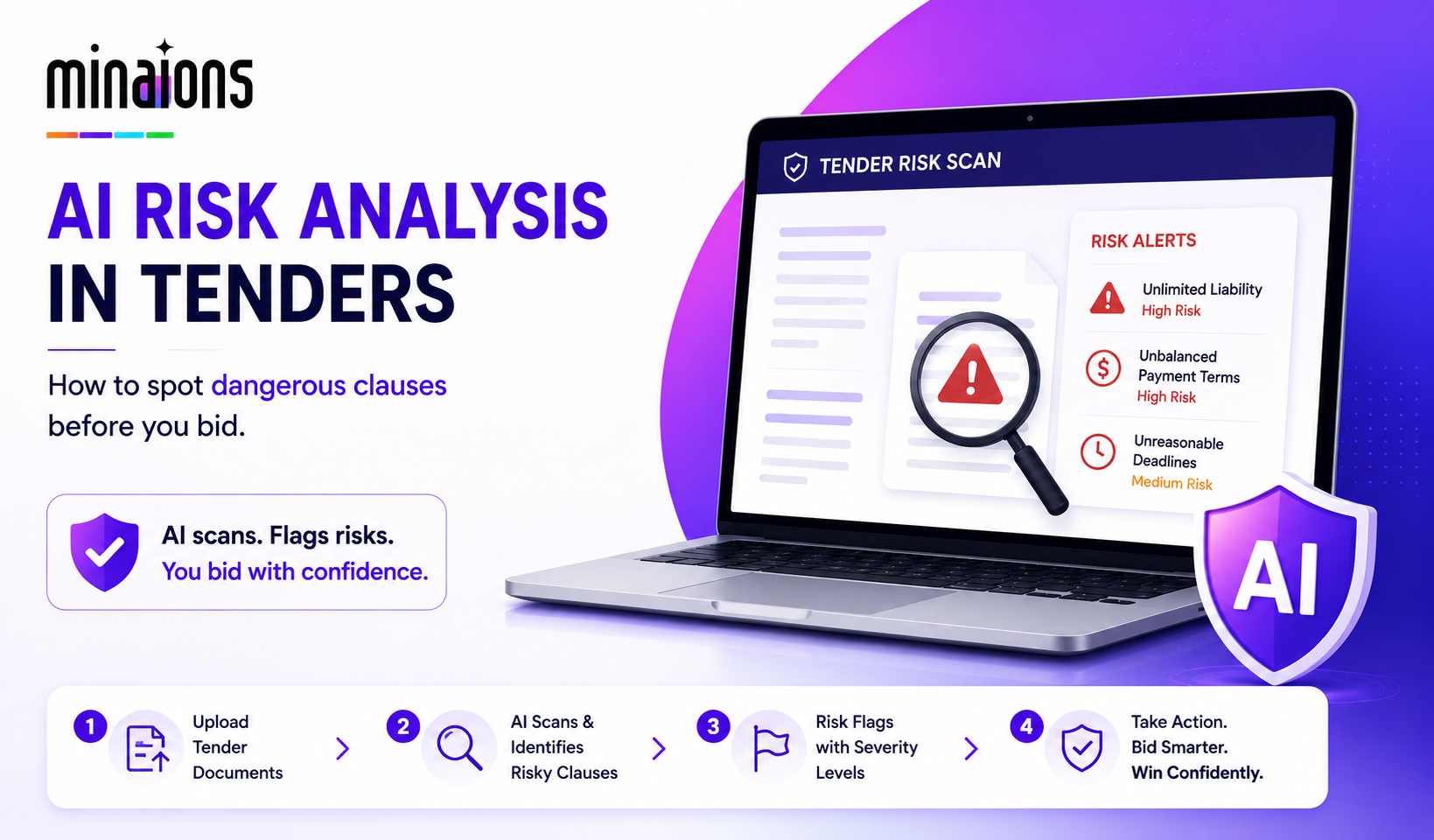
India’s public procurement ecosystem is becoming increasingly competitive, documentation-heavy, and compliance-driven. Businesses participating in government tenders, govt tenders, and large-scale procurement projects often focus heavily on pricing and technical eligibility while ignoring one of the biggest causes of financial loss — hidden contractual risk.
Today, organizations participating in e tendering, electronic tenders, and modern e procurement systems face procurement clauses that can create major operational, legal, and financial liabilities. Whether companies are participating in tender india opportunities, using gem tender search, or managing bids through government tender software, understanding tender risk has become essential.
The rise of AI-driven procurement intelligence and automated risk management analysis is transforming how businesses evaluate procurement opportunities before submitting bids. Platforms like Minaions are helping suppliers automate risk detection, monitor compliance exposure, optimize procurement workflows, and identify dangerous clauses hidden inside procurement documents.
Why Risk Management Analysis Matters in Government Procurement
Most suppliers participating in government tenders focus on eligibility, pricing, and submission timelines. However, many procurement losses actually occur after contract award because businesses fail to perform proper risk management analysis.
A structured risk management analysis helps businesses identify:
Financial liabilities
Unreasonable penalty clauses
Delayed payment risks
Strict SLA commitments
Hidden compliance obligations
One-sided contractual conditions
Companies participating in govt tenders should conduct detailed risk management analysis before entering the final stage of the e tendering process.
The increasing complexity of electronic tenders has made AI-driven risk management analysis more important than ever.
AI Risk Management Framework NIST and Procurement Intelligence
The growing use of AI in procurement has increased interest in the ai risk management framework nist.
The ai risk management framework nist helps organizations establish structured approaches for identifying, evaluating, and mitigating procurement-related risks.
Businesses participating in e procurement and government tenders can use principles from the ai risk management framework nist to:
Detect contractual risk
Improve compliance management
Analyze procurement exposure
Automate risk scoring
Improve bid decision-making
The adoption of the ai risk management framework nist is becoming increasingly important for organizations participating in high-value govt tenders and infrastructure procurement projects.
Minaions uses AI-driven procurement intelligence inspired by structured risk evaluation principles similar to the ai risk management framework nist to help businesses improve procurement decision-making.
E Tendering and Hidden Procurement Risk
The rapid growth of e tendering has increased procurement accessibility while also increasing procurement complexity.
Today, businesses participating in e tendering systems often face procurement documents containing:
Strict penalty clauses
Unclear payment conditions
Complex technical obligations
High-performance guarantees
Legal liabilities
Businesses participating in government tenders should never enter the final e tendering stage without conducting proper risk management analysis.
The increasing volume of procurement documentation in electronic tenders has made manual risk review difficult, which is why AI-driven procurement systems are becoming highly valuable.
Electronic Tenders and AI-Based Clause Detection
Modern electronic tenders involve massive documentation volumes that are difficult to review manually.
AI-powered systems can now analyze electronic tenders to identify:
High-risk clauses
Financial exposure
Compliance conflicts
Operational liabilities
Vendor-unfriendly terms
Businesses participating in govt tenders should adopt AI-driven systems for reviewing electronic tenders more efficiently.
The increasing complexity of electronic tenders has significantly increased the importance of automated procurement intelligence.
Minaions helps businesses analyze electronic tenders and automatically identify procurement risks before bid submission.
E Procurement and AI-Driven Risk Detection
The evolution of e procurement systems has transformed procurement workflows across India.
Modern e procurement systems now support:
Digital procurement workflows
Automated document analysis
Procurement analytics
AI-driven compliance management
Smart bid evaluation
Businesses participating in tender india opportunities should integrate AI-powered risk evaluation systems within their e procurement workflows.
The future of e procurement is becoming increasingly dependent on automation and intelligent risk detection.
Government Tenders and Financial Exposure
Many businesses participating in government tenders fail to evaluate long-term financial exposure.
Typical hidden risks inside government tenders may include:
Delayed payment cycles
High liquidated damages
Escalation restrictions
Unlimited warranty obligations
Strict manpower commitments
A proper risk management analysis helps businesses participating in government tenders identify these issues before entering contractual commitments.
The growing scale of infrastructure and technology procurement projects has significantly increased the complexity of government tenders.
Govt Tenders and Operational Risk
The ecosystem of govt tenders often involves operational risks that suppliers underestimate.
Businesses participating in govt tenders should carefully analyze:
Resource obligations
Delivery expectations
SLA commitments
Compliance penalties
Escalation liabilities
AI-driven risk management analysis tools help businesses participating in govt tenders improve operational visibility and reduce procurement risk.
Minaions helps suppliers participating in govt tenders automate procurement analysis and improve bid decision-making.
Tender India and Procurement Intelligence
The ecosystem of tender india is becoming increasingly digital, analytics-driven, and AI-powered.
Today, suppliers participating in tender india opportunities can use AI systems to:
Analyze procurement clauses
Detect contractual anomalies
Improve compliance visibility
Monitor procurement trends
Optimize bid participation
The increasing competition in tender india has made intelligent procurement analysis essential for long-term procurement success.
Businesses participating in e tendering should adopt structured AI-driven workflows to improve procurement performance.
Gem Tender Search and Risk Visibility
The rise of gem tender search has improved procurement visibility for suppliers across India.
Businesses participating in government tenders use gem tender search to:
Discover procurement opportunities
Track procurement updates
Analyze procurement trends
Identify recurring projects
However, businesses should not rely only on gem tender search for opportunity discovery. They should also use AI-powered risk management analysis to evaluate procurement viability.
Minaions integrates procurement intelligence with gem tender search workflows to help suppliers improve opportunity evaluation and bid planning.
GeM Portal Guide for MSME and Procurement Strategy
Many startups and small businesses entering public procurement require a proper GeM portal guide for MSME participation.
A strong GeM portal guide for MSME should help businesses understand:
Vendor registration
Product listing
Bid participation
Procurement compliance
Risk evaluation
Businesses participating in govt tenders should combine a structured GeM portal guide for MSME approach with AI-driven procurement intelligence to improve bid success rates.
The growing complexity of electronic tenders makes a detailed GeM portal guide for MSME increasingly important.
Government Tender Software and AI Procurement Automation
Modern government tender software is transforming procurement participation across India.
Advanced government tender software now supports:
AI-driven document analysis
Automated compliance checks
Procurement analytics
Smart clause detection
Bid risk scoring
Businesses participating in e procurement should invest in intelligent government tender software to improve procurement efficiency and reduce contractual risk.
Minaions provides AI-powered government tender software that helps suppliers identify dangerous procurement clauses before bid submission.
Common Dangerous Clauses in Government Procurement
Businesses participating in government tenders should carefully monitor for dangerous clauses such as:
Unlimited liability clauses
One-sided termination rights
Aggressive SLA penalties
Delayed payment structures
Unrealistic delivery obligations
Excessive bank guarantee requirements
AI-driven risk management analysis tools can automatically identify these issues within large procurement documents.
The growing complexity of govt tenders makes automated procurement intelligence essential for long-term procurement success.
Why AI Will Change Tender Risk Analysis
The future of procurement is becoming increasingly AI-driven.
AI systems integrated within e procurement workflows can now:
Analyze thousands of procurement clauses
Identify hidden procurement risk
Compare procurement terms
Generate automated risk scores
Improve bid decision-making
Businesses participating in electronic tenders should adopt AI-driven procurement intelligence early to remain competitive.
The integration of principles similar to the ai risk management framework nist within procurement systems will continue to improve procurement transparency and supplier protection.
Minaions and AI Tender Risk Management
Minaions is helping businesses transform how they participate in government tenders, govt tenders, and modern e tendering systems.
Minaions supports suppliers through:
AI-driven risk management analysis
Automated clause detection
Procurement analytics
Smart bid evaluation
Integrated gem tender search
AI-powered government tender software
Businesses participating in tender india opportunities can use Minaions to reduce procurement risk, improve compliance visibility, and optimize procurement strategy.
Final Thoughts
Public procurement is becoming increasingly complex, documentation-heavy, and risk-sensitive. Businesses participating in government tenders, govt tenders, and modern electronic tenders must move beyond basic compliance and pricing strategies.
From AI-driven risk management analysis to procurement intelligence inspired by the ai risk management framework nist, every stage of procurement evaluation matters.
Organizations actively participating in e procurement, improving workflows through AI-powered government tender software, and using platforms like Minaions can significantly reduce procurement risk and improve bid decision-making.
As e tendering, gem tender search, and the broader tender india ecosystem continue to evolve, businesses investing in AI-driven procurement intelligence will gain a major competitive advantage.
Related Blogs
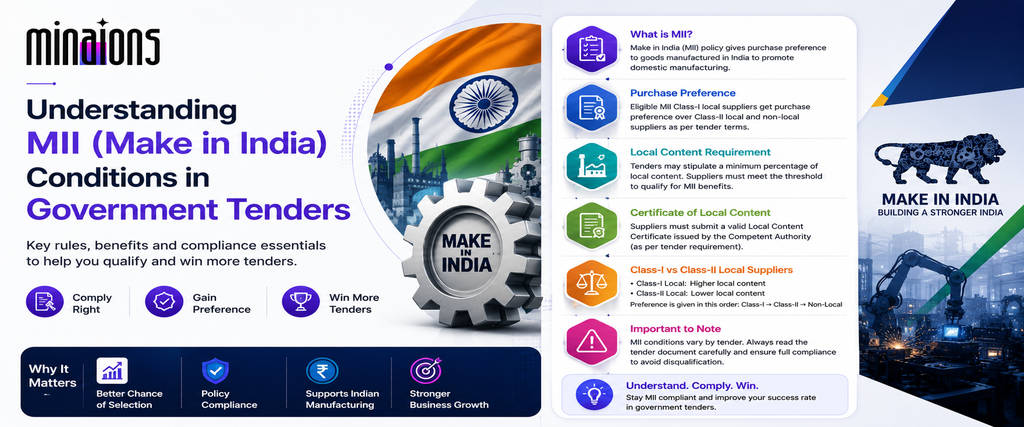
In the high-stakes arena of government tendering, a single misstep in declaring local content can mean the difference between winning a multi-million-pound contract and facing a two-year debarment.
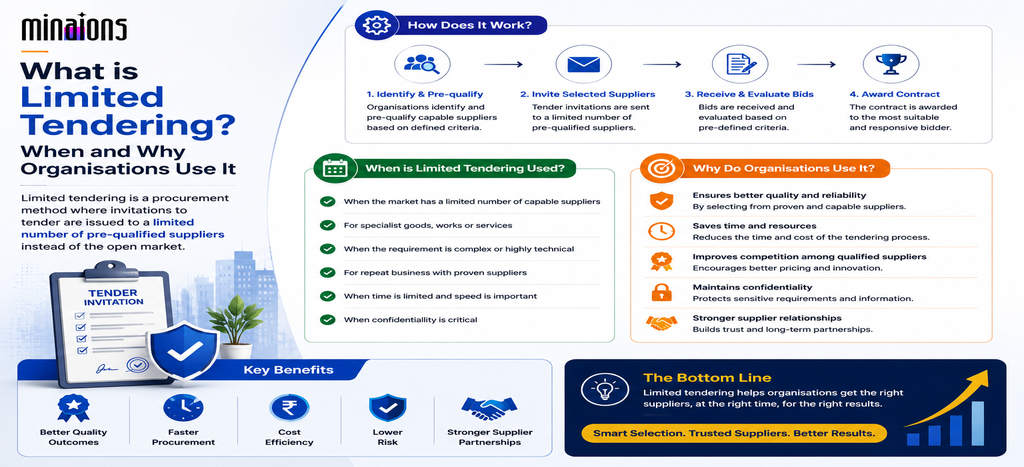
In an era where public sector budgets are stretched thin and procurement workloads are projected to rise by 10% in 2025, organisations must balance speed, compliance, and value.
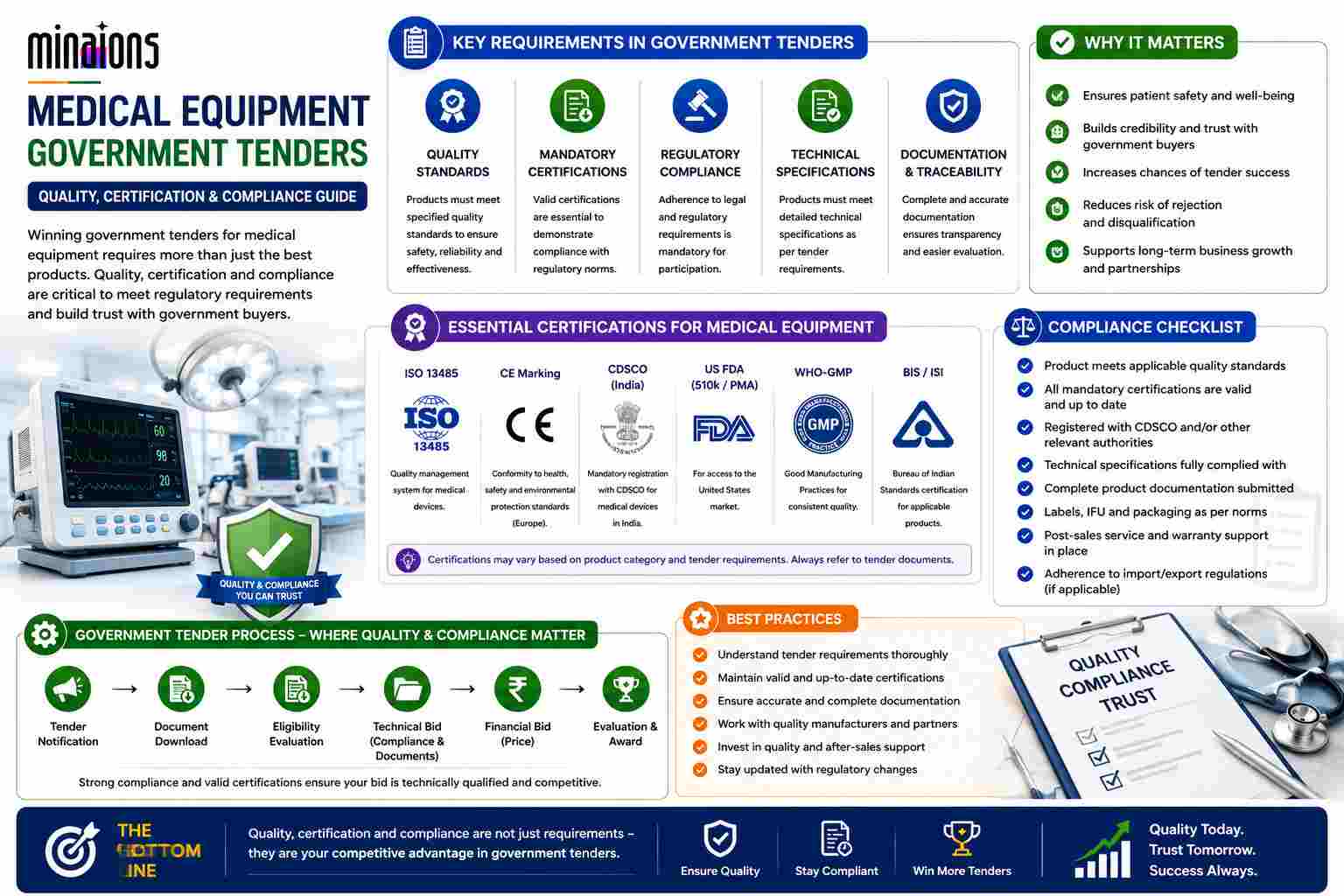
As healthcare systems worldwide confront supply chain fragility and rising patient safety expectations, public procurement teams now assess medical equipment beyond price and delivery timelines.
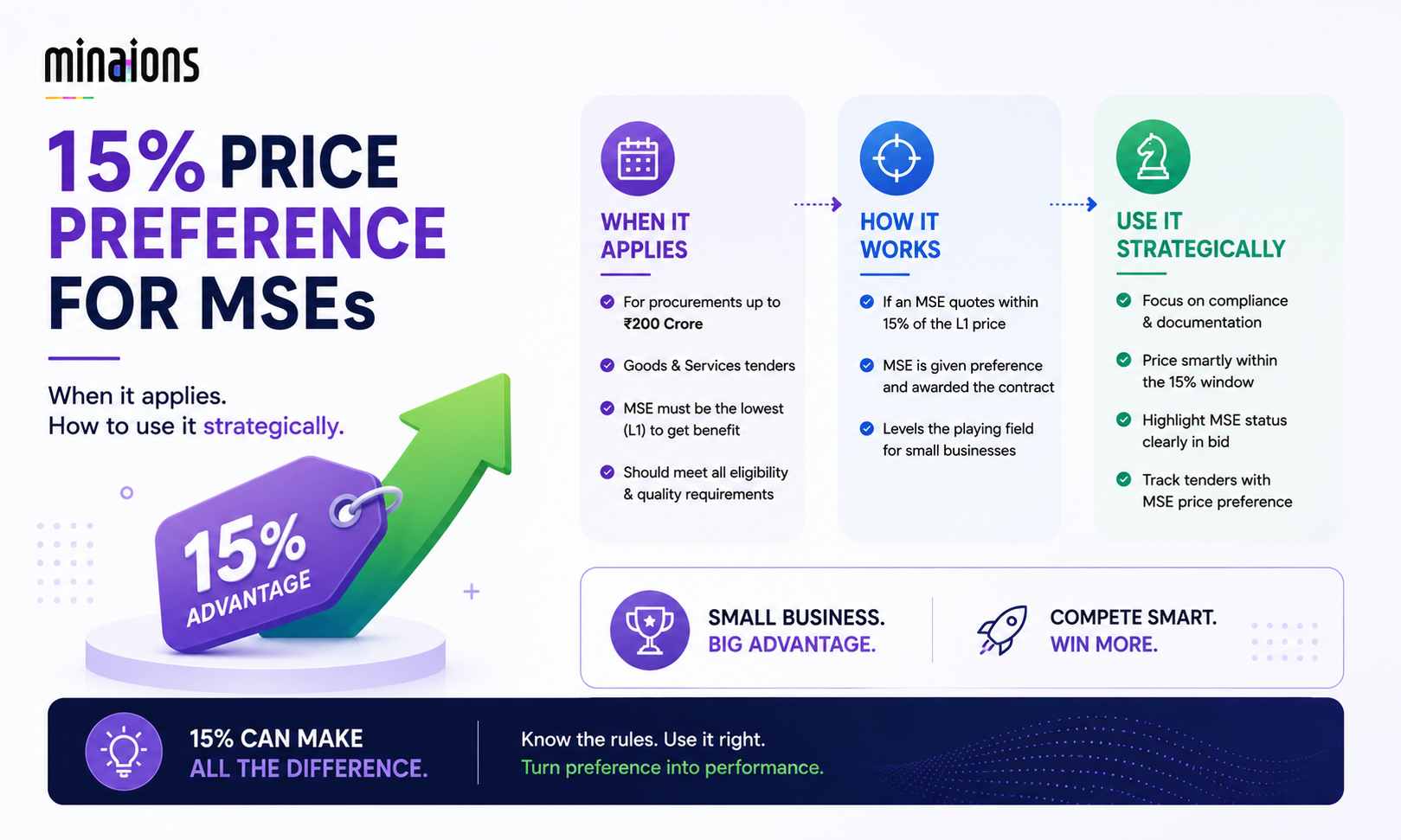
In an era where public procurement budgets are under intensified scrutiny, the 15% Price Preference for Micro and Small Enterprises (MSEs) has emerged as one of the most consequential levers for equitable market access.