How AI Tracks Competitor Bid Prices and Helps You Win at L1
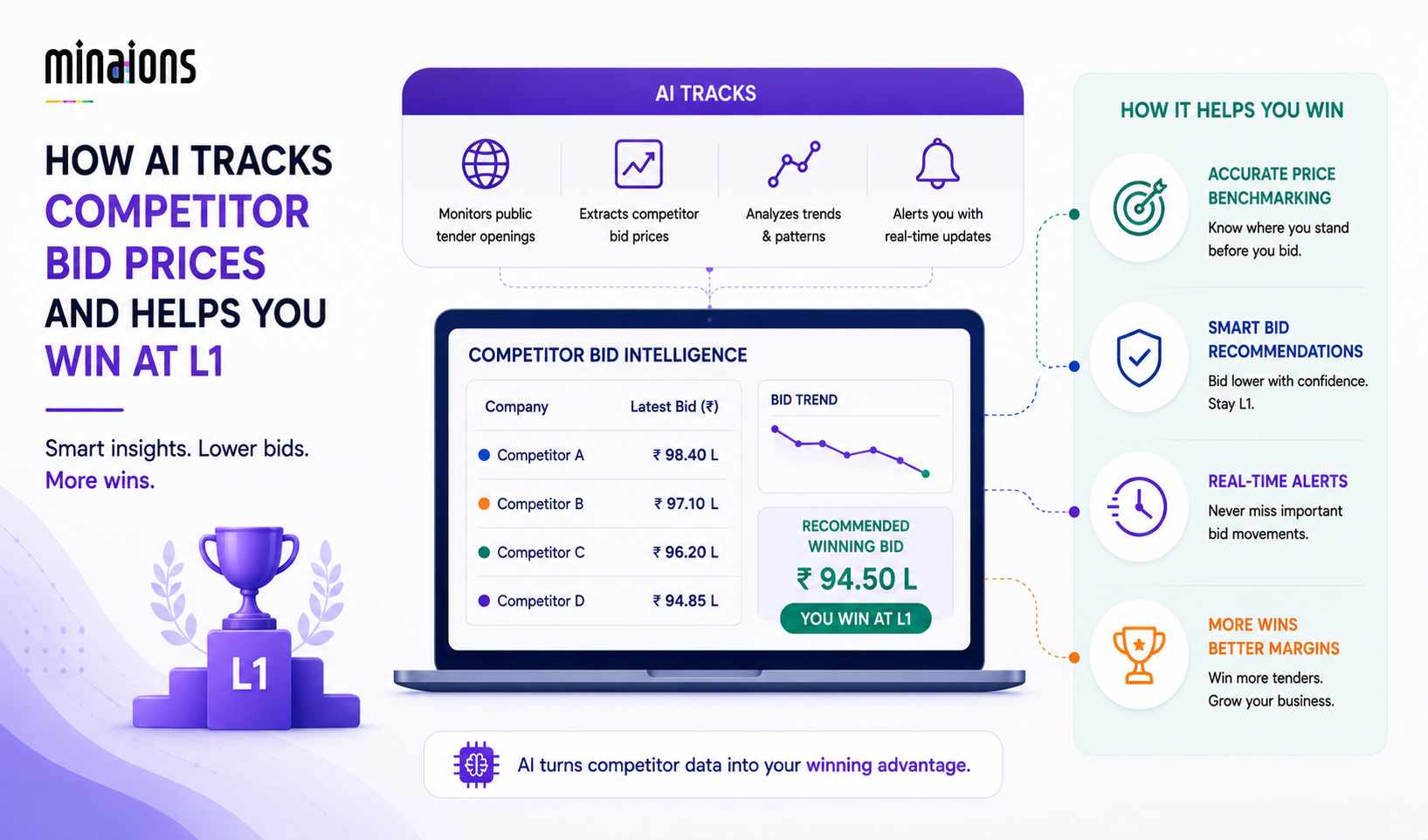
The world of government tenders, government contracts, and government bids in India is becoming increasingly competitive. Every company participating in gov bids, public bids, and large-scale public procurement projects wants one thing — to become the L1 bidder and secure more govt contracts consistently.
Today, businesses participating in online tenders, using a tender portal, and managing the complete tendering process are facing intense competition from companies using AI-driven procurement intelligence. Traditional bid preparation methods are no longer enough in modern government bidding environments.
This is where AI-powered procurement platforms like Minaions are transforming the market. Modern government tender software and advanced bid management software India solutions can now analyze historical pricing patterns, competitor behavior, tender document structures, bid trends, procurement risks, and procurement analytics to help businesses optimize pricing and improve their L1 success rates.
Businesses participating in government tenders, government contracts, and public procurement projects must now adopt AI-driven procurement intelligence to remain competitive in the evolving digital procurement ecosystem.
Why Winning L1 Matters in Government Tenders
In most government tenders, becoming the L1 bidder plays a major role in contract awards.
The L1 bidder is generally the lowest qualified bidder in the government bidding process. Businesses participating in government bids, gov bids, and public bids constantly compete to optimize pricing while maintaining profitability.
The challenge is that companies participating in online tenders often have very limited visibility into competitor pricing behavior. Without procurement intelligence, businesses entering the tendering process frequently:
Overprice and lose the bid
Underprice and reduce profitability
Miscalculate market competition
Ignore procurement patterns
Face unnecessary procurement risk
This is why AI-driven government tender software and bid management software India platforms are becoming essential for modern public procurement participation.
How AI Analyzes Government Tender Data
Modern AI systems can process massive volumes of government tenders, government contracts, and government bids published across every major tender portal and bidding portal.
AI-powered procurement systems analyze:
Historical bid prices
L1 pricing trends
Competitor participation
Procurement categories
Department procurement behavior
Project size
Geographic procurement patterns
Vendor participation frequency
Businesses participating in gov bids and public bids can use these AI insights to improve pricing decisions during the tendering process.
Minaions helps companies automate this analysis using AI-driven procurement intelligence and advanced government tender software workflows.
Role of Tender Portal and Bidding Portal Data
Every tender portal and bidding portal generates enormous procurement data.
Modern AI systems connected with a tender portal can continuously track:
Bid participation
Procurement timelines
Competitor frequency
Tender categories
Historical contract awards
Procurement department behavior
Businesses participating in government tenders and government contracts can use AI to identify hidden pricing patterns from every tender portal and bidding portal interaction.
The growing volume of online tenders makes AI-based procurement analytics more valuable than manual procurement analysis.
AI and the Tendering Process
The modern tendering process is becoming increasingly data-driven.
Today, AI systems help businesses participating in government bids, gov bids, and public procurement projects optimize every stage of the tendering process.
AI-driven procurement workflows can assist with:
Bid/no-bid decisions
Pricing optimization
Competitor tracking
Compliance management
Proposal quality scoring
Risk analysis
Procurement forecasting
Businesses participating in government bidding should integrate AI into the complete tendering process to improve procurement efficiency and bid accuracy.
Understanding L1 Bidder Strategy India
A strong L1 bidder strategy India framework is essential for companies competing in government tenders.
The modern L1 bidder strategy India approach is no longer based only on aggressive pricing. AI systems now help companies participating in government contracts optimize:
Historical pricing benchmarks
Department-wise pricing trends
Competitor behavior
Geographic pricing patterns
Procurement seasonality
Businesses using AI-driven L1 bidder strategy India workflows can significantly improve win probability without unnecessary margin reductions.
Minaions helps businesses automate the complete L1 bidder strategy India workflow using predictive procurement analytics.
Tender Document Intelligence Using AI
Every tender document contains hidden procurement intelligence.
AI-powered systems can analyze a tender document to identify:
High-risk compliance clauses
Pricing structures
Evaluation methodology
Technical qualification complexity
Procurement patterns
Vendor eligibility conditions
Businesses participating in government tenders, public procurement, and government bidding should use AI-driven government tender software to analyze every tender document before final bid preparation.
A poorly analyzed tender document is one of the biggest causes of procurement failure.
Reducing Tender Rejection Reasons India
One of the biggest challenges in government contracts and government bids is avoiding procurement rejection.
Common tender rejection reasons India include:
Incomplete documentation
Incorrect pricing
Missing compliance certificates
Technical errors
Financial discrepancies
Improper formatting
Businesses participating in govt contracts and public bids can use AI-driven bid management software India to reduce common tender rejection reasons India.
Minaions automatically validates compliance workflows and identifies risk areas before final submission.
Reducing tender rejection reasons India significantly improves procurement success rates in competitive online tenders.
Avoiding Tender Disqualification Reasons
Another major challenge in public procurement is avoiding tender disqualification reasons.
Typical tender disqualification reasons include:
Non-compliance with bid conditions
Incorrect EMD submissions
Technical eligibility failure
Pricing inconsistencies
Missing certifications
Businesses participating in government tenders and government bidding should continuously monitor and reduce tender disqualification reasons through AI-driven compliance systems.
Modern government tender software can automatically detect procurement risks associated with tender disqualification reasons before final submission.
Online Tenders and AI-Based Procurement Forecasting
The rapid growth of online tenders has created massive procurement datasets.
AI systems analyzing online tenders can forecast:
Expected L1 pricing
Competitor participation levels
High-value procurement opportunities
Sector-wise demand
Procurement seasonality
Businesses participating in government contracts, gov bids, and public procurement projects can use forecasting intelligence to optimize participation strategies.
Minaions provides AI-driven procurement forecasting solutions integrated across major tender portal and bidding portal ecosystems.
Government Tender Software and Automation
Modern government tender software is becoming essential for procurement participation.
Advanced government tender software helps businesses:
Track procurement opportunities
Analyze pricing behavior
Monitor competitors
Organize tender workflows
Manage compliance
Improve bid collaboration
Businesses participating in government tenders, government bids, and govt contracts should adopt AI-powered government tender software to improve operational efficiency.
Bid Management Software India and Competitive Advantage
The demand for bid management software India is increasing rapidly because procurement workflows are becoming more complex.
A reliable bid management software India platform helps businesses:
Centralize procurement operations
Improve proposal quality
Reduce procurement errors
Automate workflows
Optimize pricing
Minaions provides AI-powered bid management software India solutions that help companies improve bid success rates in government contracts and public bids.
Minaions and AI-Driven Procurement Intelligence
Minaions is helping businesses transform the way they participate in government tenders, government contracts, and government bidding.
Minaions provides:
AI-based competitor analysis
L1 pricing intelligence
Procurement forecasting
Compliance automation
Risk management
Tender analytics
Smart procurement workflows
Businesses participating in gov bids, online tenders, and public procurement projects can use Minaions to improve procurement efficiency and reduce bid risks.
Final Thoughts
The future of government tenders, government contracts, and public procurement is becoming increasingly AI-driven. Businesses relying only on manual procurement analysis will struggle to compete in the evolving digital procurement ecosystem.
From optimizing the complete tendering process to reducing tender rejection reasons India and avoiding tender disqualification reasons, AI is transforming procurement success strategies.
Organizations investing in AI-powered government tender software, intelligent bid management software India, and platforms like Minaions can significantly improve pricing decisions, strengthen the L1 bidder strategy India, and increase their chances of winning more government bids, gov bids, and long-term govt contracts.
As the number of online tenders, public bids, and procurement opportunities continues to grow, businesses adopting AI-driven procurement intelligence early will gain a major competitive advantage in India’s rapidly evolving procurement market.
Related Blogs
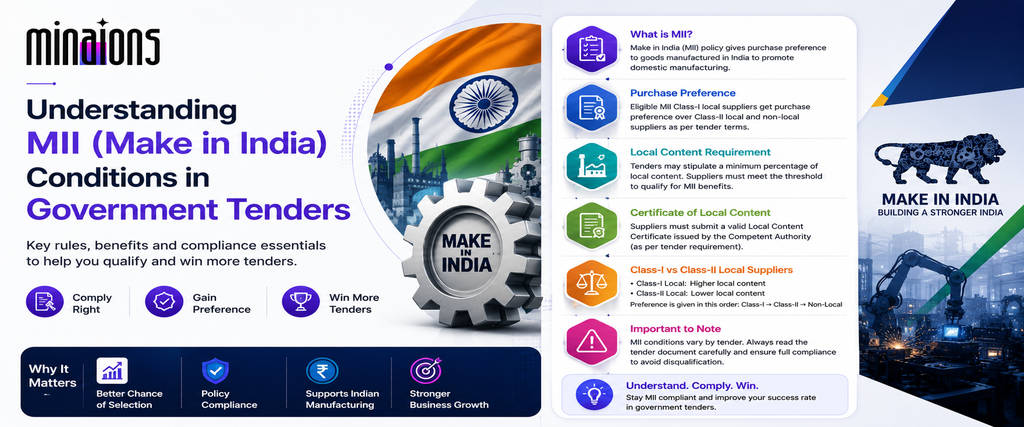
In the high-stakes arena of government tendering, a single misstep in declaring local content can mean the difference between winning a multi-million-pound contract and facing a two-year debarment.
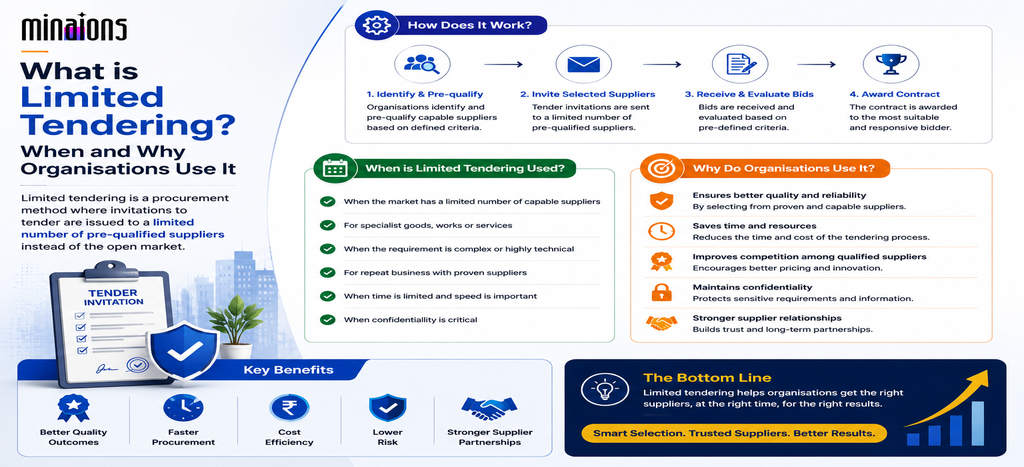
In an era where public sector budgets are stretched thin and procurement workloads are projected to rise by 10% in 2025, organisations must balance speed, compliance, and value.
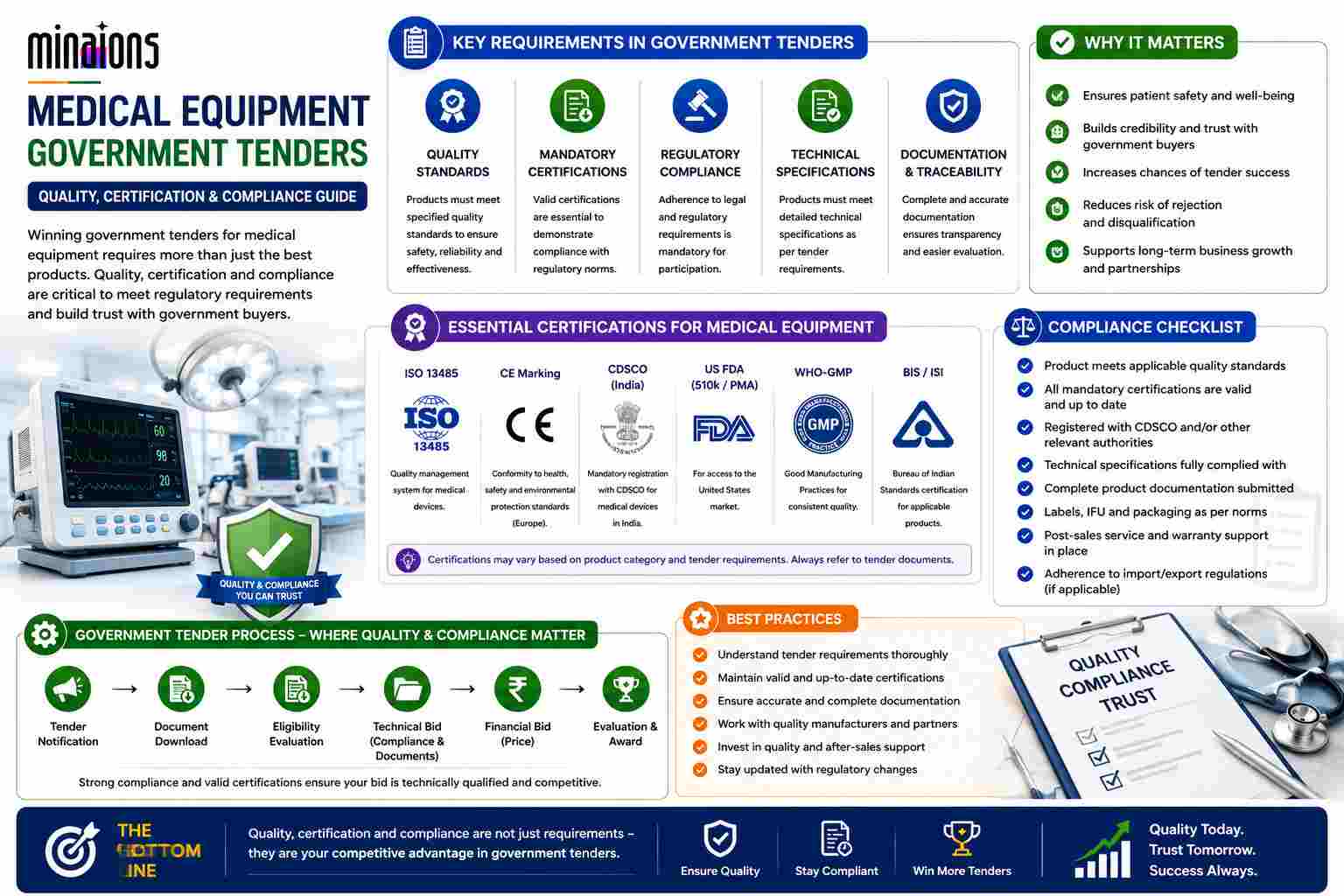
As healthcare systems worldwide confront supply chain fragility and rising patient safety expectations, public procurement teams now assess medical equipment beyond price and delivery timelines.
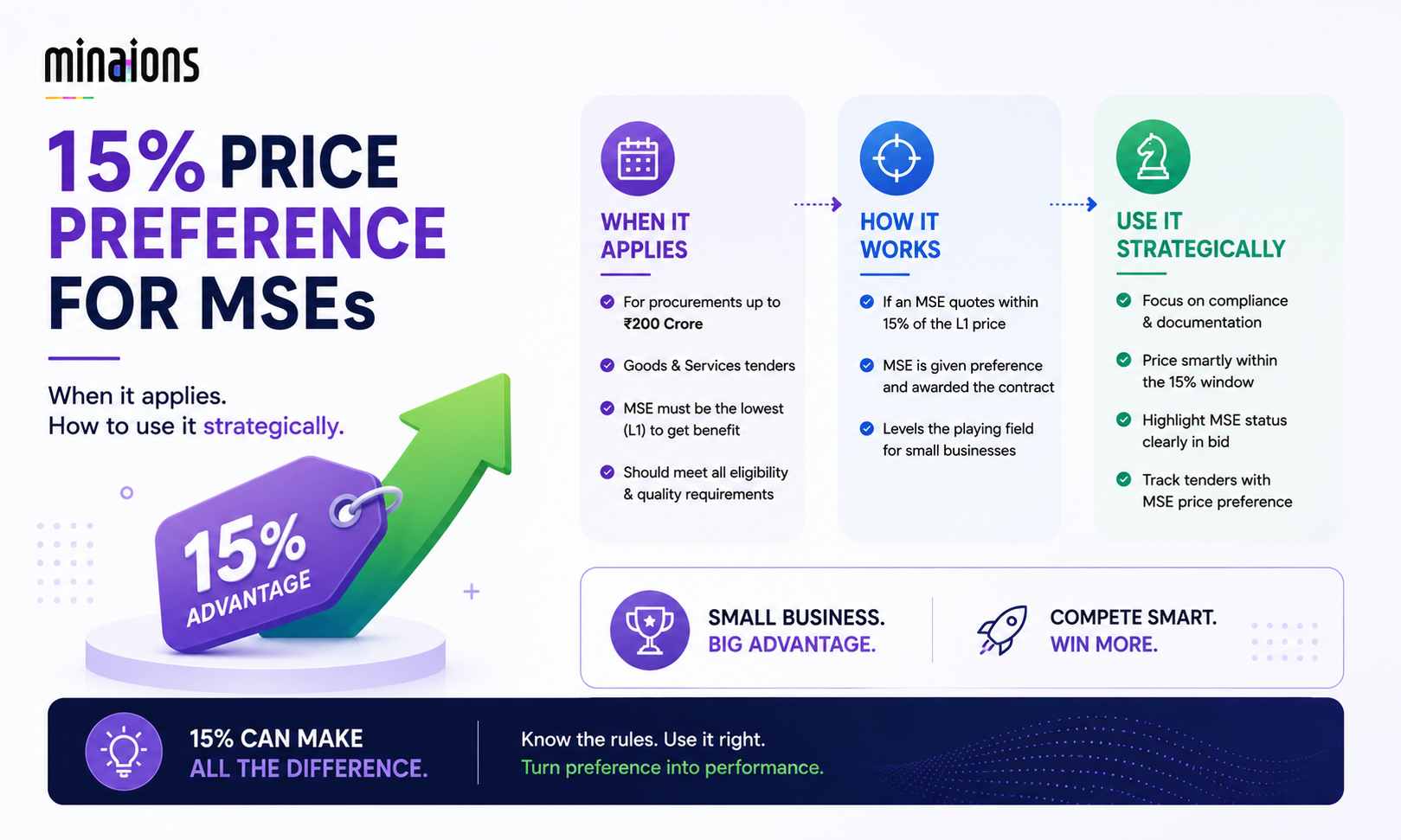
In an era where public procurement budgets are under intensified scrutiny, the 15% Price Preference for Micro and Small Enterprises (MSEs) has emerged as one of the most consequential levers for equitable market access.