Why AI-Powered Bid Writing Produces Better Proposals Than Manual Drafting
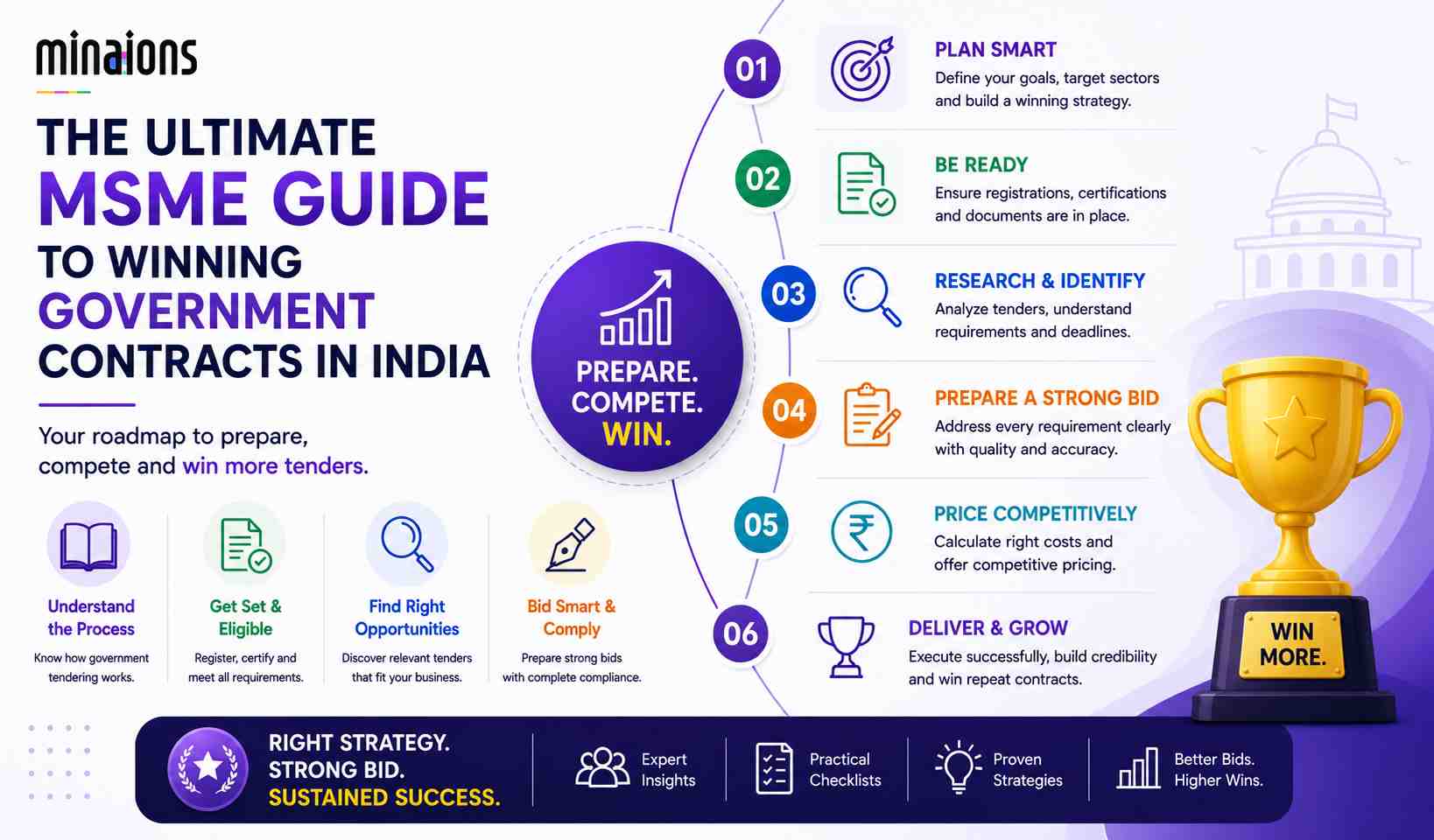
The public procurement industry is rapidly evolving, and businesses participating in government contracts, government bids, and government tenders are increasingly shifting from manual proposal creation to AI-powered bid writing solutions. Today, organizations competing for govt tenders, gov bids, and procurement opportunities in tender india need faster, more accurate, and more strategic proposal management systems to remain competitive.
Traditional manual drafting methods are no longer sufficient for handling the growing complexity of electronic tenders, digital e procurement, and large-scale government contracts. Businesses participating in bids for contractors, searching for bid opportunities, and learning how to write a bid proposal India are now adopting AI-driven platforms such as Minaions to automate proposal workflows, improve compliance, and increase bid win rates.
The rapid growth of government tenders, govt tenders, and digital procurement systems has made AI-powered bid writing one of the biggest competitive advantages in modern procurement management.
The Growing Complexity of Government Contracts
The ecosystem of government contracts is becoming increasingly documentation-heavy and compliance-driven.
Today, businesses participating in government contracts must manage:
Technical proposal writing
Compliance validation
Pricing analysis
Vendor qualification
Digital procurement workflows
Multiple submission formats
The increasing complexity of government contracts has made manual drafting slow, inconsistent, and operationally risky.
Organizations competing for government bids and gov bids now require AI-powered systems to manage proposal workflows more efficiently.
Government Bids Require Faster Proposal Preparation
The number of government bids across India has increased significantly.
Businesses participating in government bids often face:
Tight submission timelines
Complex documentation requirements
Multiple evaluation stages
Extensive compliance obligations
Traditional proposal writing methods are no longer sufficient for handling high volumes of government bids and bid opportunities.
AI-powered proposal systems help businesses participating in government tenders generate faster and more accurate proposals while reducing manual effort.
Platforms like Minaions are helping organizations automate workflows for government bids, improving operational efficiency and proposal quality.
Why Manual Drafting Fails in Modern Government Tenders
Traditional manual proposal drafting creates several operational problems for businesses participating in government tenders and govt tenders.
Common manual drafting issues include:
Repetitive proposal writing
Human errors
Inconsistent formatting
Missed compliance clauses
Delayed submissions
Weak technical responses
Businesses participating in electronic tenders and digital e procurement workflows often lose procurement opportunities because of poor proposal quality.
The increasing complexity of government tenders has made AI-powered bid writing significantly more effective than manual drafting.
AI Improves Proposal Accuracy
One of the biggest advantages of AI-powered proposal systems is accuracy.
Businesses participating in gov bids, government contracts, and government tenders must ensure every submission aligns with procurement requirements.
AI-powered systems can automatically:
Validate compliance
Identify missing information
Suggest stronger responses
Improve formatting consistency
Organize procurement documents
Organizations participating in bids for contractors and electronic tenders can significantly reduce proposal errors using AI-driven automation.
Minaions helps businesses improve proposal accuracy while reducing common procurement mistakes in tender india.
Faster Bid Creation for Govt Tenders
Speed is one of the biggest advantages of AI-powered proposal writing.
Businesses participating in govt tenders often need to respond quickly to procurement opportunities.
Traditional drafting may require several days for preparing large procurement responses. AI systems can dramatically reduce the time needed for preparing proposals for government contracts and government bids.
AI-driven systems help suppliers:
Reuse previous content
Auto-generate proposal sections
Recommend compliance clauses
Optimize technical responses
Businesses participating in bid opportunities can therefore respond to more procurement opportunities simultaneously.
Better Compliance Management in Electronic Tenders
The rise of electronic tenders has increased procurement complexity.
Today, businesses participating in electronic tenders must comply with:
Digital submission rules
Technical specifications
Financial formatting requirements
Eligibility conditions
Procurement certifications
AI-powered systems can automatically analyze procurement documents and identify missing compliance requirements.
Businesses participating in e procurement and government tenders can therefore reduce disqualification risks significantly.
Minaions provides AI-driven compliance validation tools for businesses participating in electronic tenders and govt tenders.
AI Enhances E Procurement Efficiency
The growth of e procurement systems has transformed procurement operations across India.
Modern e procurement systems now involve:
Digital workflows
Online bid submission
Automated evaluation
Vendor scoring
Procurement analytics
Businesses participating in government contracts and gov bids require faster proposal workflows to remain competitive within the evolving e procurement ecosystem.
AI-powered systems improve operational efficiency by automating repetitive procurement tasks.
Companies participating in tender india procurement projects can significantly improve productivity using AI-powered procurement management systems.
Better Win Rates for Bids for Contractors
The ecosystem of bids for contractors is becoming increasingly competitive.
Contractors participating in bids for contractors often compete against large organizations with specialized proposal teams.
AI-powered bid writing systems help contractors:
Improve proposal quality
Strengthen technical responses
Improve compliance accuracy
Reduce operational delays
Respond to more procurement opportunities
Businesses participating in government bids and government tenders can therefore improve procurement win rates through AI-driven proposal optimization.
Bid Opportunities Require Strategic Proposal Writing
The number of available bid opportunities in India is increasing rapidly.
Businesses participating in bid opportunities should focus heavily on proposal quality, compliance, and submission efficiency.
AI-powered systems help suppliers participating in govt tenders identify:
High-probability opportunities
Relevant proposal templates
Stronger technical responses
Better pricing strategies
Minaions helps businesses track and analyze bid opportunities while improving procurement workflows using AI-driven automation.
Gov Bids and Competitive Procurement
The ecosystem of gov bids has become increasingly competitive because of digital procurement expansion.
Today, businesses participating in gov bids must manage:
Multi-stage evaluations
Technical scoring systems
Compliance validation
Digital procurement workflows
Manual proposal writing often creates inconsistencies in procurement submissions.
AI-powered systems help businesses participating in gov bids improve proposal consistency and operational efficiency.
Tender India and Digital Procurement Transformation
The future of tender india is becoming increasingly AI-driven and automated.
The modern tender india ecosystem now depends heavily on:
Digital procurement
AI-driven compliance
Automated proposal workflows
Procurement analytics
Centralized document management
Businesses participating in government contracts, government tenders, and electronic tenders should adopt AI-powered systems early to remain competitive within the evolving tender india ecosystem.
How to Write a Bid Proposal India Using AI
Many businesses entering public procurement ask how to write a bid proposal India effectively.
Understanding how to write a bid proposal India involves:
Understanding procurement requirements
Structuring technical proposals
Managing compliance documents
Preparing commercial responses
Improving proposal presentation
AI-powered systems simplify how to write a bid proposal India by automating repetitive proposal tasks and improving content quality.
Minaions helps businesses understand how to write a bid proposal India through AI-driven proposal assistance and procurement intelligence.
Minaions and AI-Powered Bid Writing
Minaions is transforming how businesses participate in government contracts, government bids, and govt tenders.
Minaions helps organizations:
Automate proposal creation
Improve compliance validation
Manage procurement workflows
Track bid opportunities
Optimize submissions for electronic tenders
Improve proposal quality for government tenders
Businesses participating in e procurement and gov bids can use Minaions to reduce manual effort and improve procurement success rates.
Final Thoughts
AI-powered bid writing is rapidly replacing traditional manual proposal drafting because of speed, accuracy, compliance management, and operational efficiency. Businesses participating in government contracts, government bids, and government tenders must adopt AI-driven procurement workflows to remain competitive in the evolving digital procurement ecosystem.
From improving compliance in electronic tenders to simplifying how to write a bid proposal India, AI-powered systems are transforming procurement operations across tender india.
Organizations participating in govt tenders, gov bids, and bids for contractors can significantly improve procurement success rates using AI-driven platforms like Minaions.
As e procurement systems continue to evolve, businesses investing in AI-powered proposal management will gain a major competitive advantage in future procurement opportunities.
Related Blogs
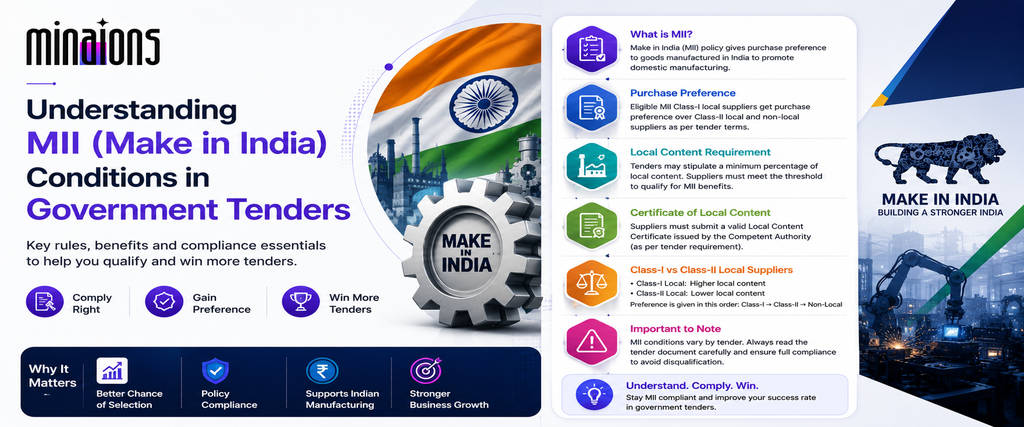
In the high-stakes arena of government tendering, a single misstep in declaring local content can mean the difference between winning a multi-million-pound contract and facing a two-year debarment.
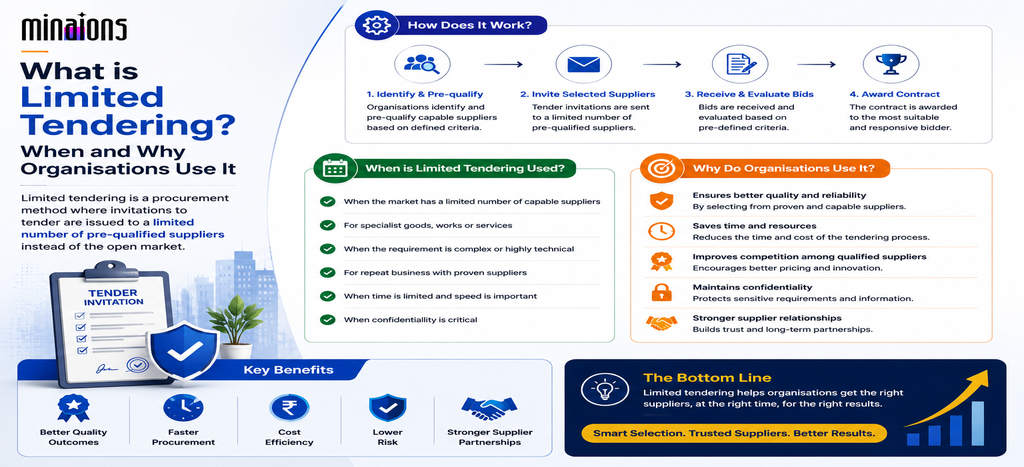
In an era where public sector budgets are stretched thin and procurement workloads are projected to rise by 10% in 2025, organisations must balance speed, compliance, and value.
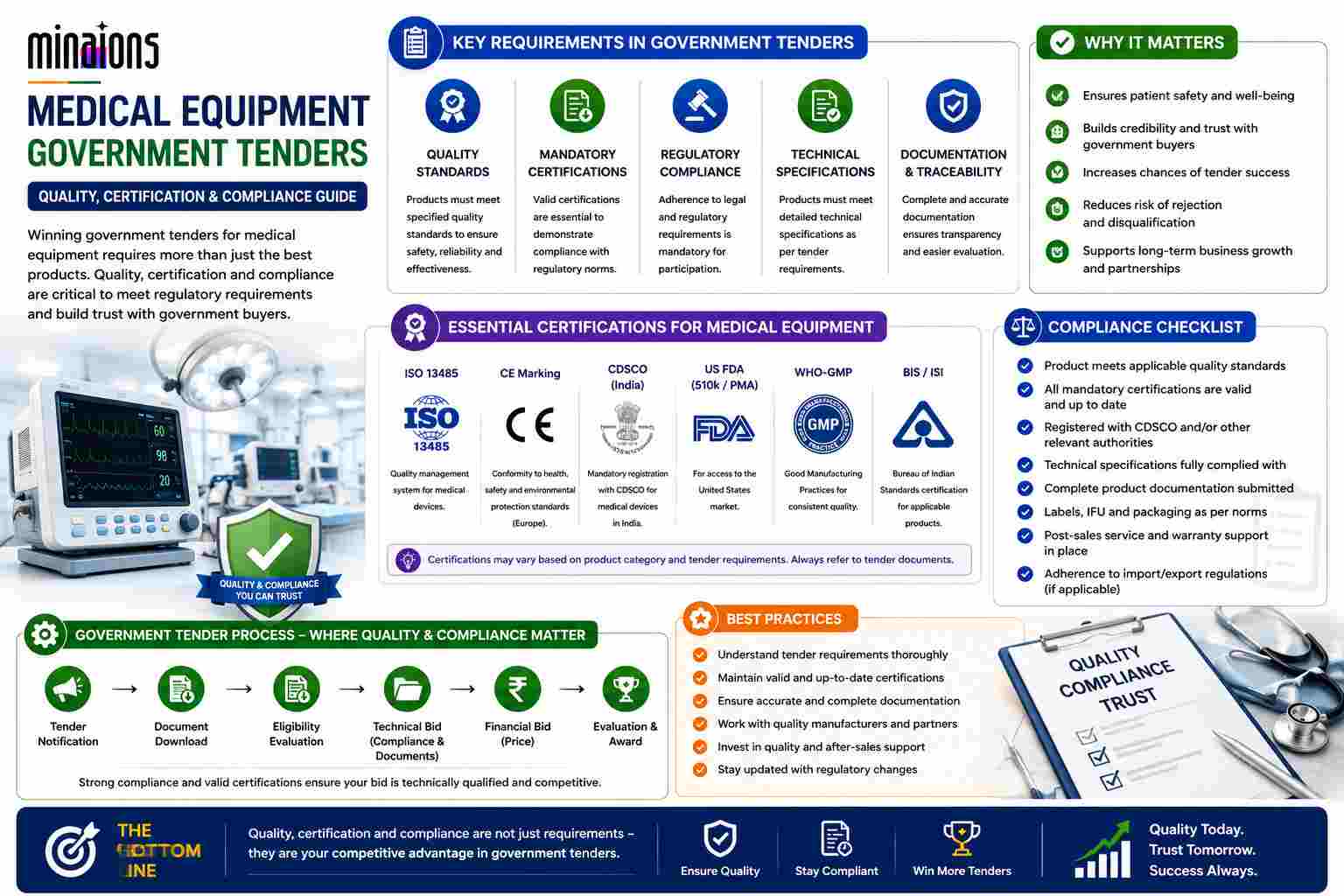
As healthcare systems worldwide confront supply chain fragility and rising patient safety expectations, public procurement teams now assess medical equipment beyond price and delivery timelines.
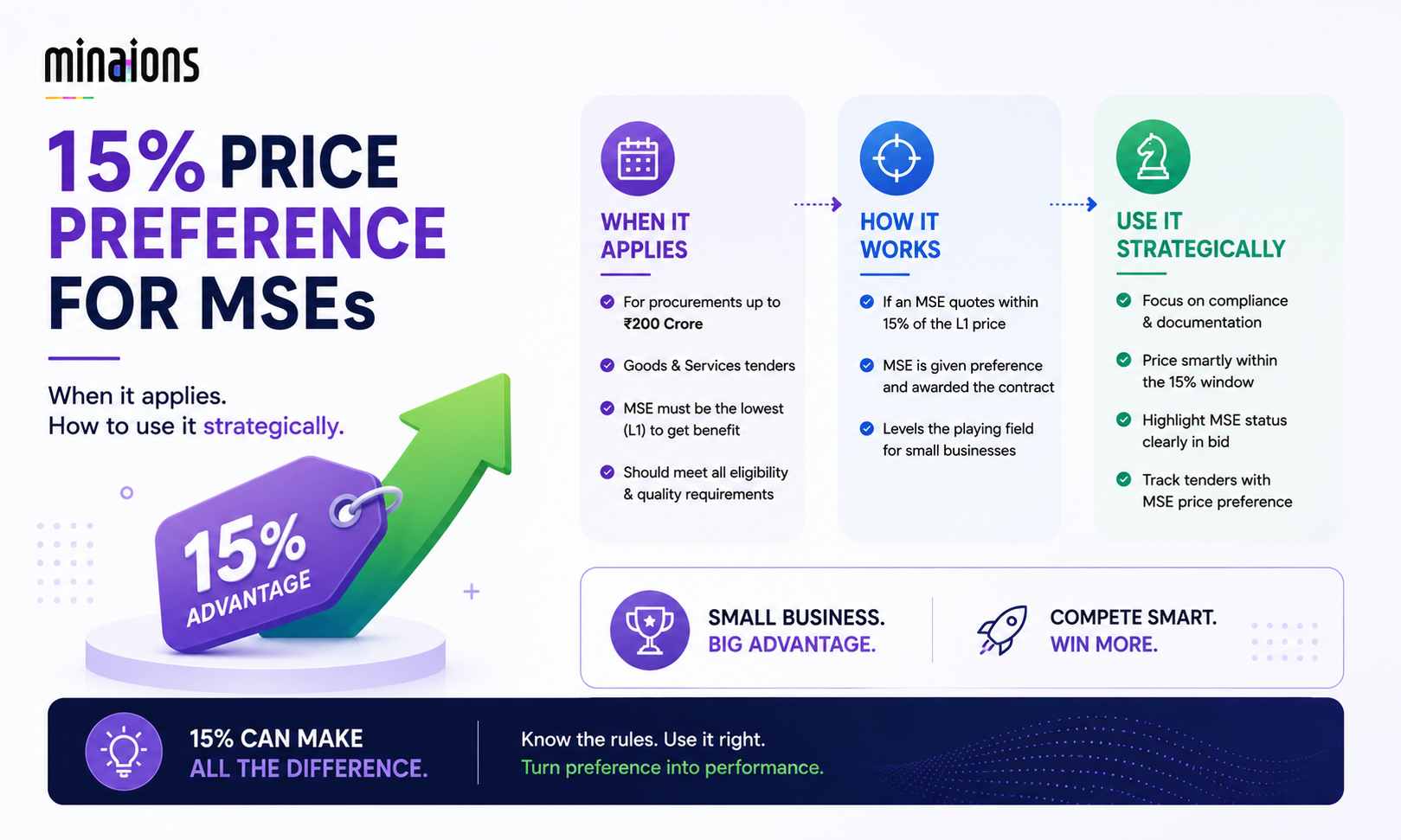
In an era where public procurement budgets are under intensified scrutiny, the 15% Price Preference for Micro and Small Enterprises (MSEs) has emerged as one of the most consequential levers for equitable market access.