How Multi-Agent AI Systems Work in Tendering (Plain English Guide)
The world of tendering is changing rapidly. Traditional tender management used to depend heavily on manual work, spreadsheets, emails, and large proposal teams. Today, AI is transforming the way companies participate in procurement opportunities, especially through Multi-Agent AI Systems.
Businesses participating in large procurement projects, handling power tenders, and managing complex proposal workflows are increasingly adopting AI-driven systems to improve bid evaluation, automate compliance checks, optimize the tender awarding process, and reduce operational delays.
Modern platforms like Minaions are helping businesses simplify tender operations using AI-powered workflows, intelligent automation, and advanced bid management software India solutions. These systems are transforming how organizations manage procurement opportunities, follow tender guidelines, analyze tender criteria, and improve decision-making during the complete procurement lifecycle.
This guide explains Multi-Agent AI Systems in simple language and how they are revolutionizing tendering.
What is a Multi-Agent AI System?
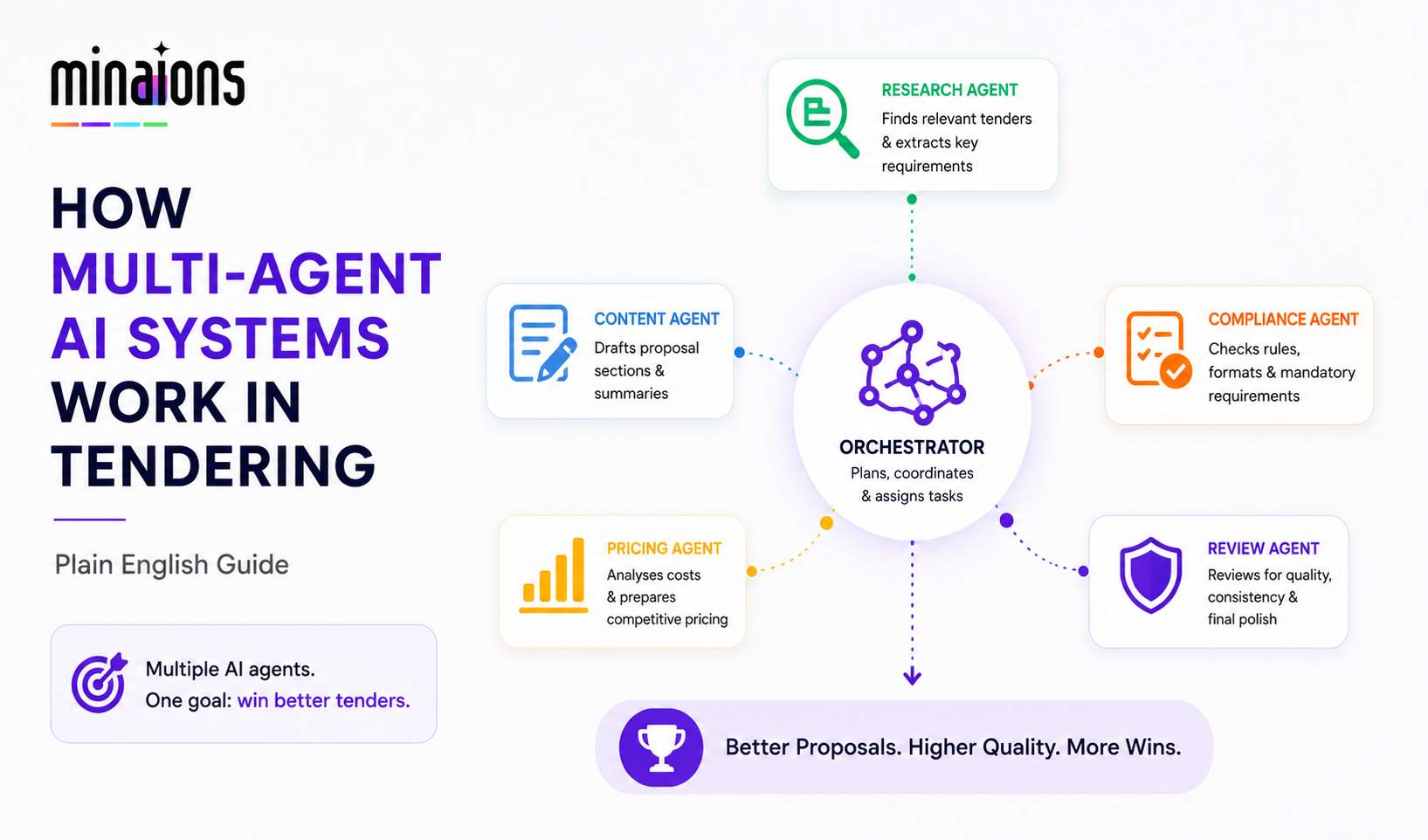
A Multi-Agent AI System is a group of AI agents working together to complete different tasks automatically.
Instead of one AI doing everything, multiple AI agents specialize in different activities such as:
Reading tender documents
Managing bid evaluation
Tracking deadlines
Reviewing tender guidelines
Analyzing tender criteria
Managing the tender awarding process
Comparing the difference between tender and contract
In simple words, Multi-Agent AI Systems behave like a digital tender team where each AI agent has a specific responsibility.
Businesses participating in power tenders and large procurement projects are increasingly using Multi-Agent AI Systems to improve efficiency and reduce manual effort.
Why Tendering Needs AI Systems
Modern procurement has become extremely complex.
Today, businesses dealing with power tenders, infrastructure procurement, IT contracts, and public procurement must manage:
Large documentation
Strict tender guidelines
Complex tender criteria
Time-sensitive submissions
Detailed compliance workflows
Continuous bid evaluation
Manual procurement operations often lead to delays, missed requirements, and operational inefficiencies.
This is why companies are adopting government tender software and AI-driven bid management software India systems.
Platforms like Minaions are using Multi-Agent AI Systems to automate procurement workflows and simplify tender operations.
How Multi-Agent AI Systems Work in Tendering
A Multi-Agent AI System divides tender operations into multiple intelligent tasks.
Each AI agent performs a specialized role during the procurement lifecycle.
1. Tender Discovery Agent
The first AI agent tracks procurement opportunities across portals and identifies relevant tenders.
This agent monitors:
Power tenders
Infrastructure projects
IT procurement opportunities
Public procurement notices
The system automatically filters opportunities based on industry relevance, eligibility, and procurement size.
This improves the overall bid guide process by helping businesses focus only on relevant opportunities.
2. Document Reading Agent
The second AI agent reads tender documents automatically.
This agent analyzes:
Tender guidelines
Technical requirements
Commercial conditions
Compliance obligations
Submission timelines
Large procurement documents that usually take hours to review can now be analyzed within minutes.
The AI system also identifies critical tender criteria automatically.
Businesses using government tender software can significantly reduce manual review efforts using this approach.
3. Bid Evaluation Agent
The bid evaluation agent analyzes whether the company is eligible and competitive for the tender.
This AI agent checks:
Technical capability
Financial requirements
Past project eligibility
Pricing competitiveness
Resource availability
The bid evaluation process becomes faster, more accurate, and more data-driven.
Modern bid management software India systems use AI-powered bid evaluation workflows to improve decision-making before submission.
4. Bid Guide Agent
The bid guide agent acts like a digital tender consultant.
This AI system helps teams understand:
Submission requirements
Documentation structure
Missing compliance items
Evaluation priorities
Critical deadlines
The AI-generated bid guide improves proposal quality and reduces procurement risk.
Businesses participating in power tenders especially benefit from AI-driven bid guide workflows because of the complexity of these projects.
5. Tender Criteria Analysis Agent
This AI agent studies all tender criteria carefully.
The system identifies:
Mandatory requirements
Technical scoring points
Experience conditions
Financial eligibility
Compliance gaps
Understanding tender criteria is critical because many businesses lose tenders due to incomplete compliance.
Multi-Agent AI Systems help organizations align proposals more accurately with procurement expectations.
6. Tender Guidelines Compliance Agent
The tender guidelines agent ensures that every procurement requirement is followed properly.
This AI system checks:
File formats
Documentation structure
Mandatory certificates
Bid security requirements
Technical submission conditions
Many companies lose procurement opportunities because they fail to follow tender guidelines accurately.
AI-driven compliance automation significantly reduces this risk.
Platforms like Minaions automate compliance management using intelligent AI-based workflows.
7. Tender Awarding Process Analysis Agent
The tender awarding process agent studies procurement trends and historical award patterns.
This AI system analyzes:
Winning bid trends
Pricing patterns
Vendor performance history
Procurement behavior
The AI helps businesses understand how the tender awarding process works across different departments and sectors.
This improves pricing strategy and overall procurement competitiveness.
8. Difference Between Tender and Contract Agent
Many businesses entering public procurement do not fully understand the difference between tender and contract.
A tender is an invitation to participate in procurement.
A contract is the final legal agreement after winning the tender.
The AI system explains the difference between tender and contract automatically during procurement workflows.
Understanding the difference between tender and contract is important because procurement obligations change significantly after contract award.
How AI Improves Power Tenders
The complexity of power tenders makes them ideal for AI-driven procurement management.
Modern power tenders involve:
EPC contracts
Renewable energy projects
Smart grid systems
Transmission infrastructure
Electrical modernization projects
Managing power tenders manually can be extremely time-consuming.
AI-driven government tender software helps businesses automate workflows, analyze risks, and improve submission quality in power tenders.
Role of Government Tender Software
Modern government tender software is becoming essential for businesses participating in public procurement.
Advanced government tender software helps organizations:
Track procurement opportunities
Automate compliance workflows
Improve bid evaluation
Analyze tender criteria
Monitor procurement timelines
Platforms like Minaions provide AI-powered government tender software that simplifies procurement operations significantly.
Importance of Bid Management Software India
The demand for bid management software India is growing rapidly because procurement workflows are becoming more complex.
A strong bid management software India platform helps businesses:
Organize documents
Track procurement activities
Improve collaboration
Automate proposal management
Reduce compliance risks
AI-powered bid management software India solutions are transforming how businesses participate in public procurement.
Benefits of Multi-Agent AI Systems in Tendering
Multi-Agent AI Systems provide several advantages.
Faster Bid Evaluation
AI automates the complete bid evaluation process.
Better Compliance
AI systems follow tender guidelines more accurately.
Improved Proposal Quality
AI-generated bid guide workflows improve submission quality.
Better Decision Making
AI analyzes tender criteria and procurement trends intelligently.
Reduced Errors
AI systems reduce operational mistakes during procurement.
Better Procurement Strategy
AI improves understanding of the tender awarding process.
Minaions and AI-Based Tendering
Minaions is helping businesses modernize procurement operations using AI-driven procurement systems.
Minaions supports businesses through:
AI-powered government tender software
Intelligent bid management software India
Automated bid evaluation
Smart tender guidelines tracking
AI-driven compliance management
Procurement analytics
Businesses participating in power tenders and public procurement projects can use Minaions to improve operational efficiency and reduce procurement risk.
Final Thoughts
Multi-Agent AI Systems are transforming the future of procurement and tendering. Businesses participating in power tenders, public procurement projects, and complex bidding environments must adopt smarter procurement workflows to remain competitive.
From improving bid evaluation to automating compliance with tender guidelines, AI is helping businesses simplify every stage of procurement.
Organizations investing in AI-driven government tender software, intelligent bid management software India, and advanced procurement automation platforms like Minaions will gain a major competitive advantage in the evolving procurement ecosystem.
Understanding the difference between tender and contract, optimizing the tender awarding process, and improving alignment with tender criteria are no longer manual tasks alone — AI is becoming the new procurement partner for modern businesses.
Related Blogs
In the high-stakes arena of government tendering, a single misstep in declaring local content can mean the difference between winning a multi-million-pound contract and facing a two-year debarment.
In an era where public sector budgets are stretched thin and procurement workloads are projected to rise by 10% in 2025, organisations must balance speed, compliance, and value.
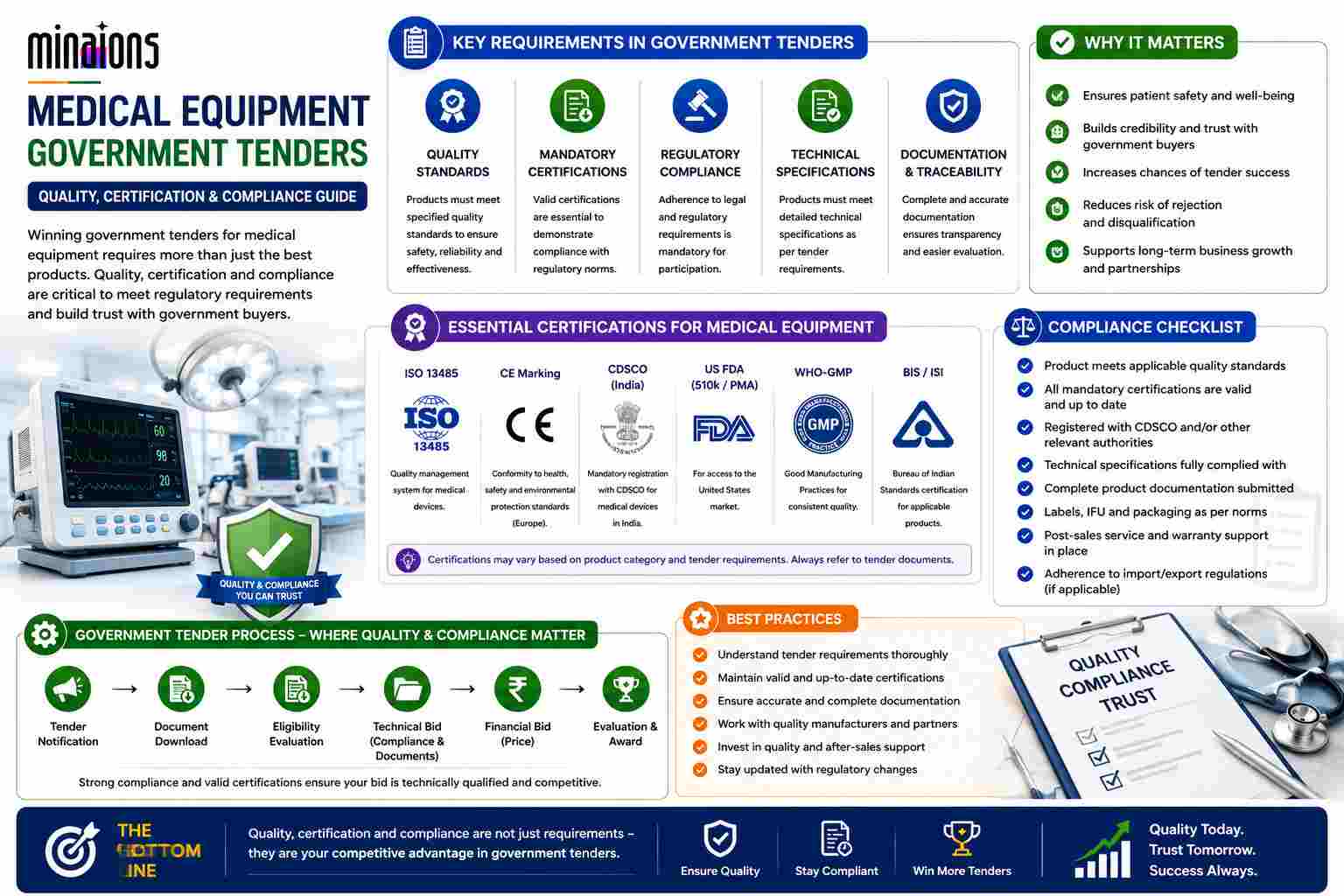
As healthcare systems worldwide confront supply chain fragility and rising patient safety expectations, public procurement teams now assess medical equipment beyond price and delivery timelines.
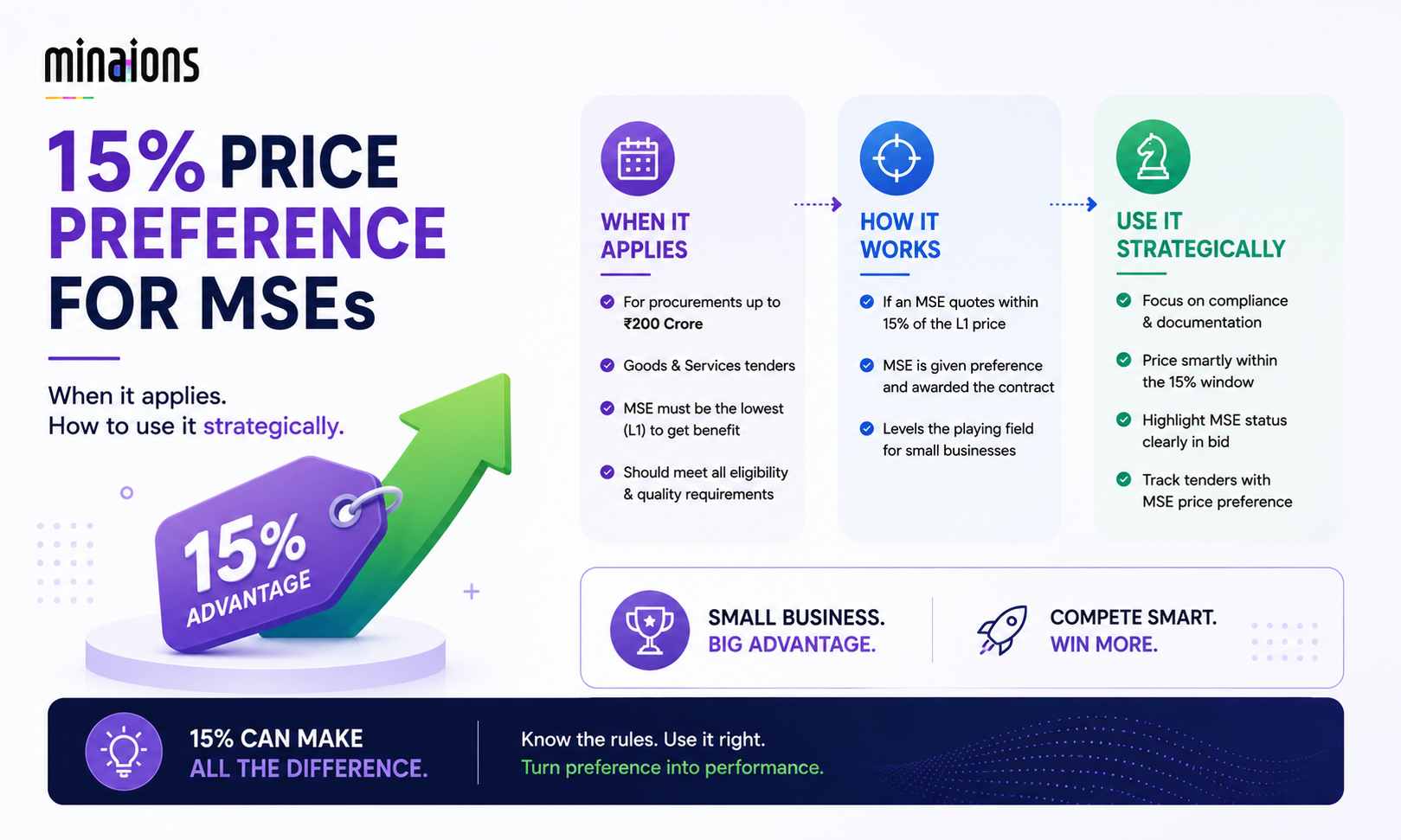
In an era where public procurement budgets are under intensified scrutiny, the 15% Price Preference for Micro and Small Enterprises (MSEs) has emerged as one of the most consequential levers for equitable market access.