Decoding Tender Annexures: Types, Purpose, and How to Fill Them Correctly
In India’s growing public procurement ecosystem, understanding annexures is one of the most important factors for winning government and enterprise bids. Many businesses lose opportunities not because of pricing or technical capability, but because they fail to correctly understand and complete annexures included in public procurement documents.
Whether businesses are participating as tender suppliers in infrastructure, IT, healthcare, defence, education, or manufacturing projects, annexures play a major role in the general procurement process and influence tender technical evaluation outcomes significantly.
Today, organizations participating in multiple types of competitive bidding must understand how annexures affect compliance, scoring, eligibility, and tender protection. Platforms like Minaions are helping businesses automate annexure management, organize public procurement documents, reduce compliance risks, and improve bid accuracy throughout the general procurement process.
What are Tender Annexures?
Tender annexures are supporting formats, declarations, compliance sheets, technical templates, certificates, and commercial forms attached with public procurement documents.
These annexures are mandatory parts of the general procurement process and help procurement authorities evaluate the capability, eligibility, and compliance status of tender suppliers.
In most types of competitive bidding, annexures are used for:
Technical declarations
Financial declarations
Compliance certifications
Eligibility confirmations
Product specifications
Experience details
Legal undertakings
Businesses participating in types of competitive bidding should carefully review every annexure included within the public procurement documents before submission.
Why Annexures Matter in Tender Technical Evaluation
One of the biggest reasons companies fail during tender technical evaluation is incorrect annexure submission.
Procurement authorities use annexures during tender technical evaluation to verify:
Vendor eligibility
Technical capability
Financial stability
Past project experience
Product compliance
Legal declarations
Even a small formatting mistake during tender technical evaluation can result in disqualification.
Businesses participating as tender suppliers should therefore establish structured workflows for managing annexures throughout the general procurement process.
Minaions helps businesses organize annexure workflows to improve accuracy during tender technical evaluation.
Types of Annexures in Public Procurement Documents
Different types of competitive bidding involve different annexure structures.
The most common annexures included in public procurement documents are:
Technical Compliance Annexure
This annexure is one of the most critical sections during tender technical evaluation.
It generally includes:
Product specifications
Technical parameters
Compliance declarations
Feature mapping
Incorrect information in technical annexures is one of the biggest risks for tender suppliers.
Financial Annexure
Financial annexures define commercial pricing structures within the general procurement process.
These annexures generally include:
Pricing tables
Tax declarations
Commercial breakup
Payment terms
Experience Annexure
Experience annexures help procurement authorities during tender technical evaluation to verify previous project capability.
These annexures often require:
Client references
Work orders
Completion certificates
Project values
Declaration Annexure
Declaration annexures are used for legal and compliance commitments within public procurement documents.
These declarations support procurement transparency and improve tender protection during procurement evaluation.
Tender Suppliers and Annexure Management
Modern tender suppliers must understand that annexures are not just attachments but critical evaluation components.
Businesses participating as tender suppliers should maintain centralized workflows for:
Annexure tracking
Compliance review
Documentation management
Approval workflows
Version control
Poor annexure management is one of the biggest reasons tender suppliers lose opportunities during tender technical evaluation.
Minaions helps tender suppliers automate annexure management and reduce operational risks during the general procurement process.
Role of General Procurement Process in Annexure Submission
The general procurement process defines how annexures are reviewed, validated, and evaluated.
The standard general procurement process involving annexures generally includes:
Release of public procurement documents
Annexure review
Eligibility analysis
Technical annexure preparation
Financial annexure preparation
Compliance validation
Submission
Tender technical evaluation
Businesses participating in multiple types of competitive bidding should optimize every stage of the general procurement process to avoid compliance errors.
Tender Approach for Annexure Preparation
A strong tender approach is critical for annexure accuracy.
The right tender approach helps businesses:
Improve documentation quality
Reduce submission errors
Improve compliance visibility
Strengthen procurement readiness
Businesses participating as tender suppliers should establish a structured tender approach for every procurement opportunity.
A poor tender approach often leads to missing annexures, incorrect declarations, and disqualification during tender technical evaluation.
Minaions helps businesses optimize their tender approach through AI-driven compliance workflows and automated document management.
Types of Competitive Bidding and Annexure Complexity
Different types of competitive bidding involve different annexure requirements.
Common types of competitive bidding include:
Open tendering
Limited tendering
Two-stage bidding
QCBS procurement
Reverse auction procurement
GeM procurement
Each of these types of competitive bidding requires different annexure structures and evaluation methodologies.
Businesses participating in multiple types of competitive bidding should maintain reusable annexure templates to improve efficiency.
The increasing complexity of types of competitive bidding has made procurement automation highly important.
Tender Protection Through Accurate Annexures
Accurate annexure management improves tender protection significantly.
The concept of tender protection involves reducing procurement risk by ensuring:
Compliance accuracy
Proper declarations
Legal transparency
Technical correctness
Financial consistency
Businesses participating in the general procurement process should focus heavily on tender protection to avoid procurement disputes and disqualification.
Incorrect annexures can negatively impact tender protection during procurement audits and contract execution.
Common Mistakes in Public Procurement Documents
Businesses often make repeated mistakes while preparing public procurement documents.
Common issues include:
Missing signatures
Incorrect annexure formats
Wrong declarations
Incomplete compliance sheets
Mismatched financial values
Missing certificates
These issues directly affect tender technical evaluation outcomes and create procurement risks for tender suppliers.
Organizations participating in multiple types of competitive bidding should establish detailed review systems for all public procurement documents.
Minaions and Annexure Management
Platforms like Minaions are helping businesses simplify annexure workflows within the general procurement process.
Minaions supports organizations through:
AI-driven annexure tracking
Automated compliance validation
Smart document organization
Procurement analytics
Workflow automation
Centralized public procurement documents management
Businesses participating as tender suppliers can use Minaions to improve tender protection, strengthen the tender approach, and reduce procurement risks.
Best Practices for Filling Annexures Correctly
Businesses participating in types of competitive bidding should follow several best practices:
Read Public Procurement Documents Carefully
Every annexure requirement within public procurement documents should be reviewed carefully before submission.
Follow a Structured Tender Approach
A disciplined tender approach improves compliance accuracy and reduces operational mistakes.
Double-Check Tender Technical Evaluation Requirements
Businesses should align annexure submissions carefully with tender technical evaluation requirements.
Maintain Tender Protection
Strong documentation workflows improve tender protection during procurement audits and evaluations.
Use Procurement Automation
AI-driven platforms like Minaions help tender suppliers improve operational efficiency and annexure accuracy throughout the general procurement process.
Final Thoughts
Annexures are one of the most critical components of modern procurement systems. Businesses participating as tender suppliers must clearly understand how annexures influence tender technical evaluation, procurement eligibility, and long-term tender protection.
From managing public procurement documents to optimizing the complete general procurement process, every stage of annexure preparation matters.
Organizations participating in multiple types of competitive bidding should establish a structured tender approach, improve documentation accuracy, and leverage AI-driven platforms like Minaions to simplify procurement workflows and reduce compliance risks.
As procurement systems continue evolving digitally, businesses investing in better annexure management and procurement automation will gain a major competitive advantage.
Related Blogs
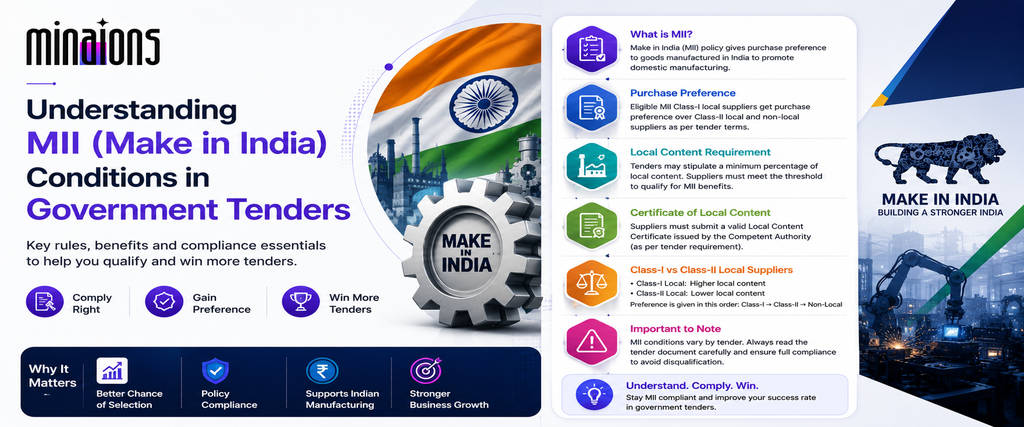
In the high-stakes arena of government tendering, a single misstep in declaring local content can mean the difference between winning a multi-million-pound contract and facing a two-year debarment.
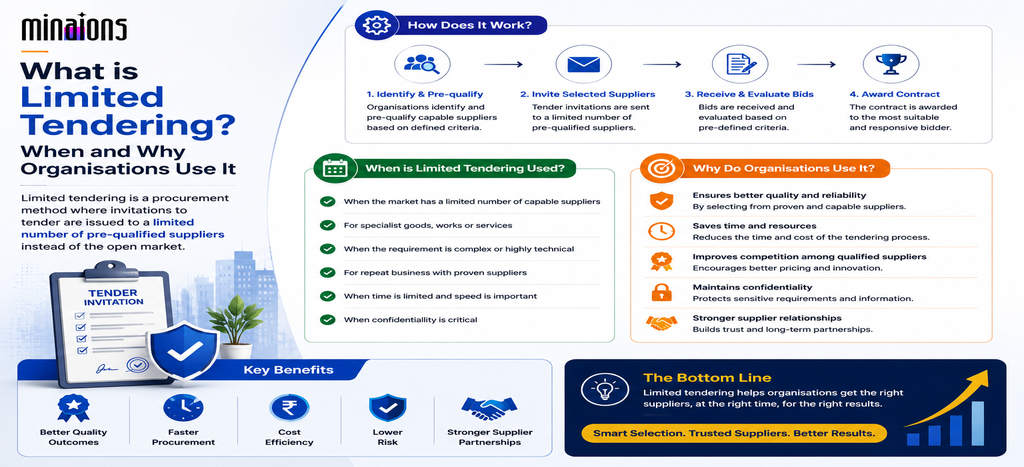
In an era where public sector budgets are stretched thin and procurement workloads are projected to rise by 10% in 2025, organisations must balance speed, compliance, and value.
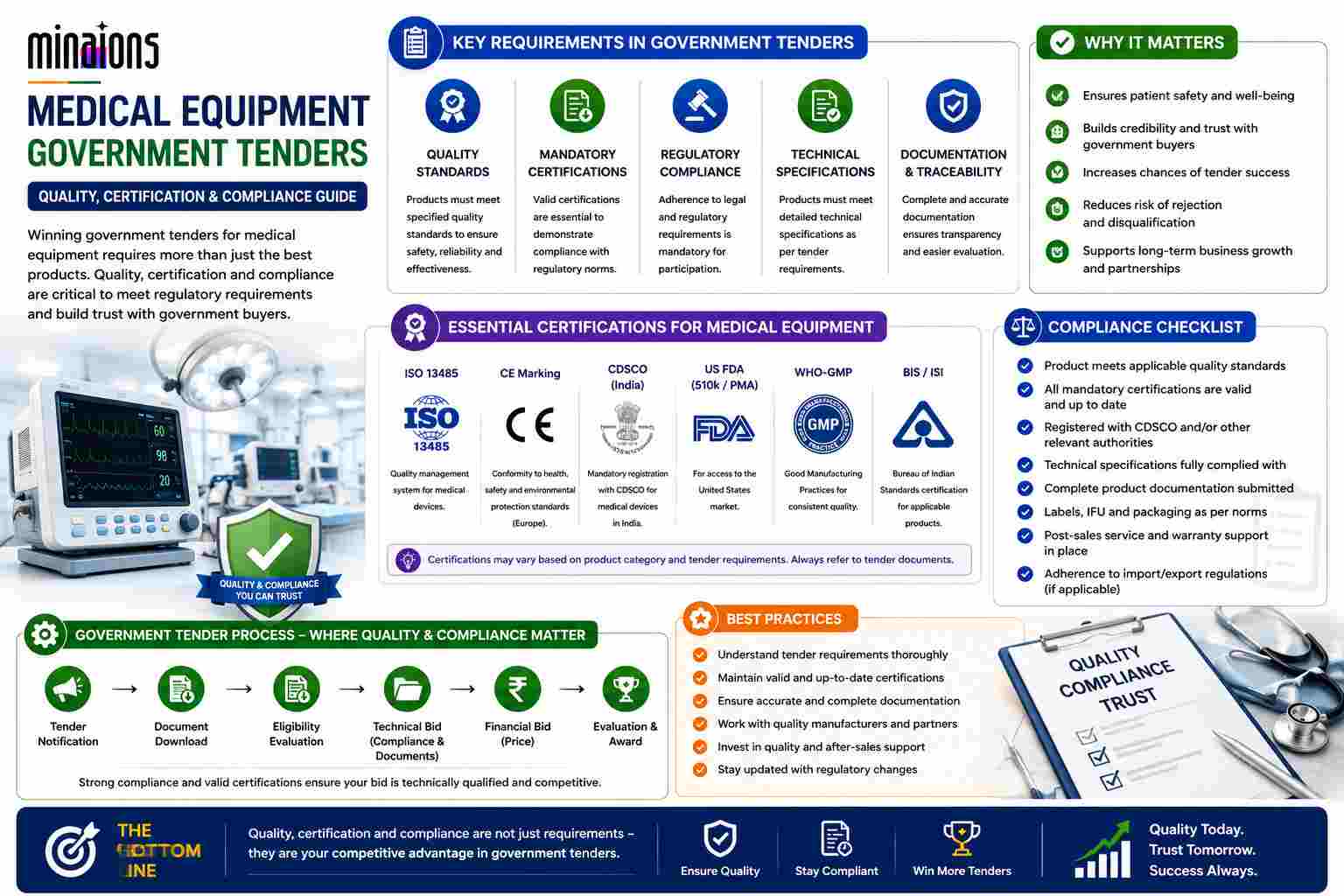
As healthcare systems worldwide confront supply chain fragility and rising patient safety expectations, public procurement teams now assess medical equipment beyond price and delivery timelines.
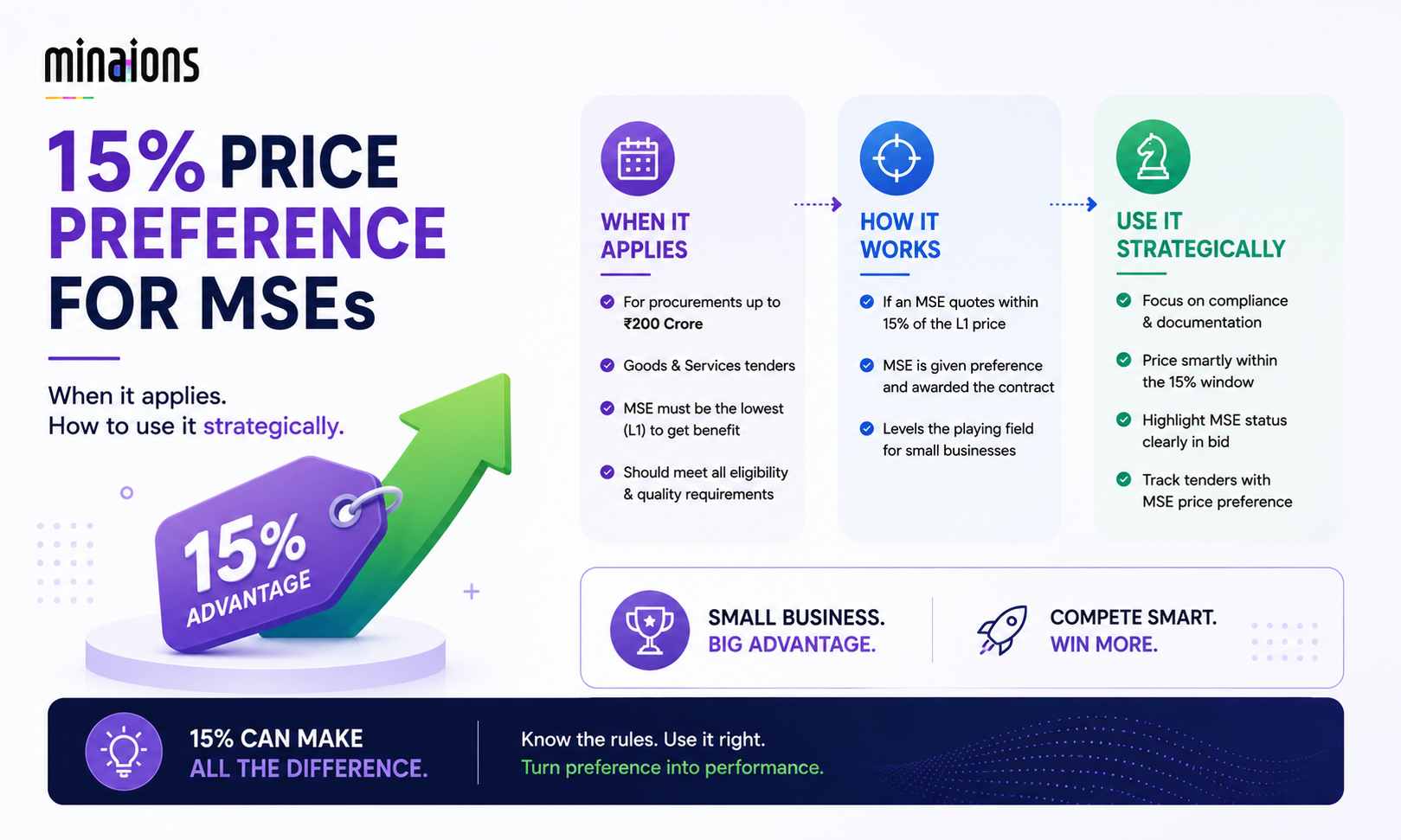
In an era where public procurement budgets are under intensified scrutiny, the 15% Price Preference for Micro and Small Enterprises (MSEs) has emerged as one of the most consequential levers for equitable market access.