The Future of Public Procurement: Will AI Replace Bid Consultants?
The public procurement industry is undergoing one of the biggest transformations in its history. Across India, businesses participating in government bidding, managing online tenders, and preparing procurement submissions are rapidly adopting AI-driven systems to improve speed, accuracy, and decision-making.
Traditionally, bid consultants played a major role in helping companies understand procurement guidelines, prepare a tender document, manage the electronic bidding workflow, and improve procurement success rates. However, with the rise of AI-powered government tender software and advanced bid management software India, many businesses are now asking an important question: Will AI replace bid consultants completely?
The answer is more complex than a simple yes or no. While AI is transforming the procurement industry, the future will likely involve collaboration between human expertise and intelligent automation platforms like Minaions.
The Evolution of Government Bidding in India
The ecosystem of government bidding in India has evolved rapidly over the last decade. Earlier, procurement participation involved manual paperwork, physical submissions, limited procurement visibility, and offline communication.
Today, the entire government bidding ecosystem is becoming digital through:
tender portal systems
Centralized bidding portal platforms
AI-driven government tender software
Digital electronic bidding workflows
Smart procurement analytics systems
The increasing adoption of online tenders and digital procurement systems has significantly improved transparency, competition, and supplier participation.
Businesses participating in government bidding now require faster decision-making, stronger compliance management, and smarter procurement analytics to remain competitive.
Procurement Guidelines Are Becoming More Complex
One major reason businesses continue to rely on experts is the growing complexity of procurement guidelines.
Modern procurement guidelines now involve:
MSME policies
Security compliance
Technical qualification standards
Digital bid requirements
Financial eligibility
Sector-specific procurement regulations
Businesses participating in online tenders must carefully understand all procurement guidelines before preparing submissions.
AI-powered government tender software can now analyze procurement guidelines automatically and identify compliance gaps much faster than manual review processes.
Platforms like Minaions help companies automate compliance validation related to procurement guidelines, reducing operational risk and improving bid accuracy.
Rise of Electronic Bidding Systems
The growth of electronic bidding has completely transformed public procurement workflows.
Today, most procurement opportunities are managed through centralized tender portal and bidding portal systems that support digital submissions and automated evaluations.
The adoption of electronic bidding has improved:
Procurement transparency
Supplier participation
Digital compliance workflows
Procurement visibility
Submission efficiency
Businesses participating in electronic bidding must maintain strong digital procurement readiness to remain competitive.
AI-driven bid management software India solutions are helping businesses manage electronic bidding workflows with greater speed and accuracy.
Steps to Becoming a Government Contractor
Many startups and MSMEs entering procurement often ask about the steps to becoming a government contractor.
The standard steps to becoming a government contractor generally include:
Company registration
Vendor onboarding
GST and compliance setup
Accessing a tender portal
Participating in online tenders
Preparing a compliant tender document
Completing electronic bidding
Building procurement credibility
Businesses trying to understand the steps to becoming a government contractor increasingly use AI-driven procurement platforms to simplify onboarding and procurement workflows.
Minaions helps businesses automate several stages involved in the steps to becoming a government contractor, improving procurement readiness for startups and MSMEs.
Procurement Data Is the New Competitive Advantage
One of the biggest reasons AI is transforming procurement is the growing importance of procurement data.
Modern procurement systems generate massive amounts of procurement data related to:
Bid participation
Pricing trends
Competitor analysis
Tender categories
Procurement frequency
Vendor performance
AI-driven government tender software can analyze procurement data much faster than traditional bid consultants.
The intelligent use of procurement data helps businesses:
Improve pricing strategies
Identify procurement opportunities
Predict competition
Optimize bid participation
Improve success rates
Minaions uses AI-driven procurement data analytics to help companies make smarter bid decisions and improve procurement planning.
How to Write a Bid Proposal India: AI vs Human Expertise
One of the most searched procurement questions today is how to write a bid proposal India effectively.
Traditionally, consultants specialized in how to write a bid proposal India by manually preparing technical and commercial submissions.
Today, AI systems can support businesses in how to write a bid proposal India by:
Generating proposal drafts
Reviewing compliance gaps
Suggesting technical improvements
Optimizing proposal structure
Improving documentation consistency
However, while AI can assist with how to write a bid proposal India, human expertise still plays an important role in:
Strategic positioning
Relationship understanding
Technical customization
Negotiation planning
Sector-specific procurement strategy
Platforms like Minaions combine AI automation with procurement intelligence to simplify how to write a bid proposal India more efficiently.
Tender Portal and Bidding Portal Transformation
The modern tender portal ecosystem is becoming increasingly intelligent and automated.
Today, businesses use a tender portal to:
Discover procurement opportunities
Download a tender document
Track procurement timelines
Submit digital bids
Monitor evaluation updates
Similarly, the modern bidding portal environment now includes:
Automated alerts
AI-driven opportunity matching
Procurement analytics
Bid tracking systems
The evolution of the bidding portal ecosystem is reducing manual procurement management significantly.
Businesses participating in online tenders increasingly rely on automation systems integrated with every major tender portal and bidding portal platform.
Online Tenders and AI Automation
The rise of online tenders has increased supplier competition dramatically.
Today, businesses participate in online tenders across sectors such as:
Infrastructure
IT services
Healthcare
Defence
Education
Manufacturing
The increasing complexity of online tenders has created demand for AI-driven procurement management systems.
Modern government tender software can now automate workflows related to:
Opportunity discovery
Bid qualification
Compliance validation
Pricing analysis
Proposal preparation
Minaions helps businesses manage online tenders more efficiently through AI-powered procurement intelligence and automation.
Government Tender Software and the Future of Procurement
The future of procurement is closely linked with AI-powered government tender software.
Advanced government tender software now supports:
AI-based opportunity matching
Automated compliance checks
Bid scoring systems
Procurement analytics
Competitor analysis
Smart proposal generation
Businesses participating in government bidding are increasingly adopting government tender software to improve procurement efficiency and reduce manual effort.
The expansion of AI-powered government tender software is transforming the traditional role of bid consultants.
Bid Management Software India and Smart Procurement
The demand for bid management software India is growing rapidly because procurement systems are becoming more complex.
Modern bid management software India solutions help businesses:
Organize procurement workflows
Manage deadlines
Track procurement opportunities
Centralize bid documents
Automate compliance reviews
AI-powered bid management software India platforms like Minaions are enabling businesses to scale procurement operations without relying entirely on manual consultants.
The future of bid management software India will likely involve deeper AI integration, predictive analytics, and automated procurement decision-making.
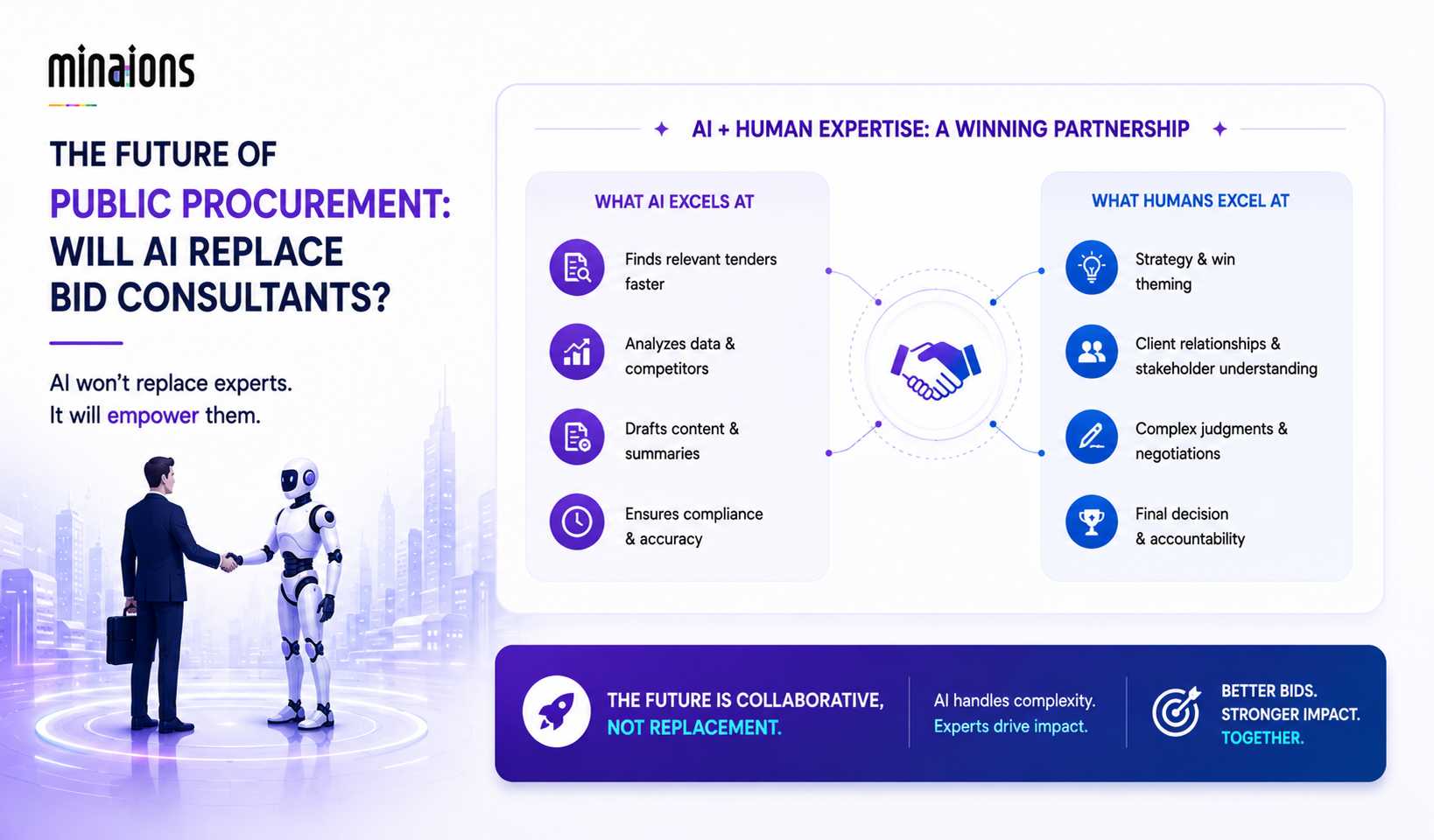
Will AI Completely Replace Bid Consultants?
AI is undoubtedly transforming public procurement. However, it is unlikely that AI will completely replace bid consultants in the near future.
Instead, the future will involve:
AI-driven automation
Human strategic expertise
Hybrid procurement workflows
Intelligent proposal generation
Data-driven bid planning
AI can automate repetitive tasks related to:
electronic bidding
Compliance validation
procurement data analysis
Opportunity tracking
Proposal formatting
But human experts will still be important for:
Strategic procurement decisions
Complex negotiations
Industry relationships
Custom proposal positioning
Procurement consulting
Platforms like Minaions represent the future of procurement — combining AI automation with procurement intelligence to help businesses participate more effectively in government bidding, online tenders, and digital procurement ecosystems.
Final Thoughts
The future of public procurement is becoming increasingly AI-driven, automated, and data-centric. Businesses participating in government bidding, managing online tenders, and preparing procurement submissions must adapt quickly to the evolving digital procurement landscape.
From understanding complex procurement guidelines to improving the complete electronic bidding workflow, AI-powered systems are transforming how procurement operates.
Businesses investing in advanced government tender software, AI-driven bid management software India, and procurement intelligence platforms like Minaions will gain a significant competitive advantage in the future procurement ecosystem.
Rather than replacing bid consultants entirely, AI will redefine procurement roles by automating repetitive processes while allowing human experts to focus on strategy, relationships, and high-value decision-making.
Related Blogs
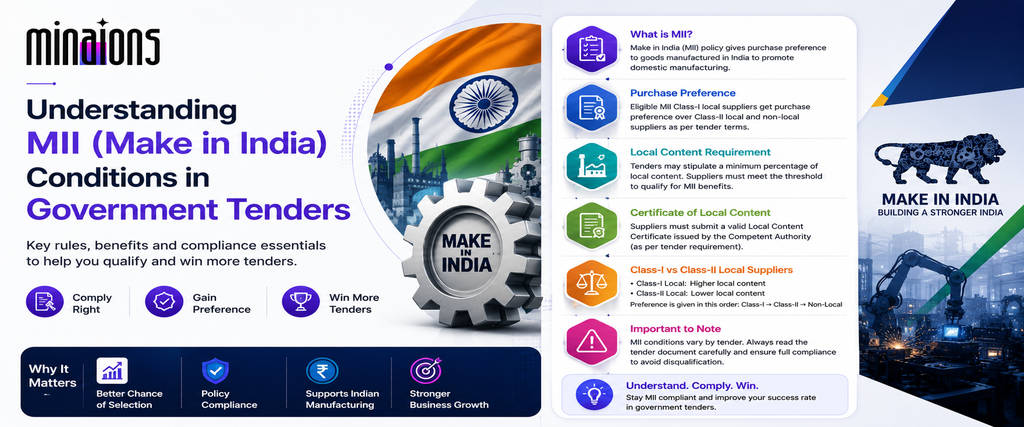
In the high-stakes arena of government tendering, a single misstep in declaring local content can mean the difference between winning a multi-million-pound contract and facing a two-year debarment.
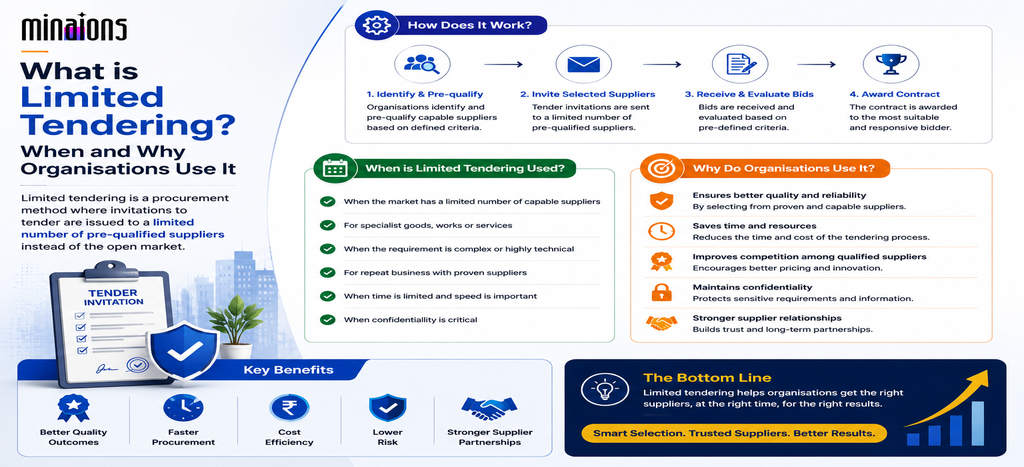
In an era where public sector budgets are stretched thin and procurement workloads are projected to rise by 10% in 2025, organisations must balance speed, compliance, and value.
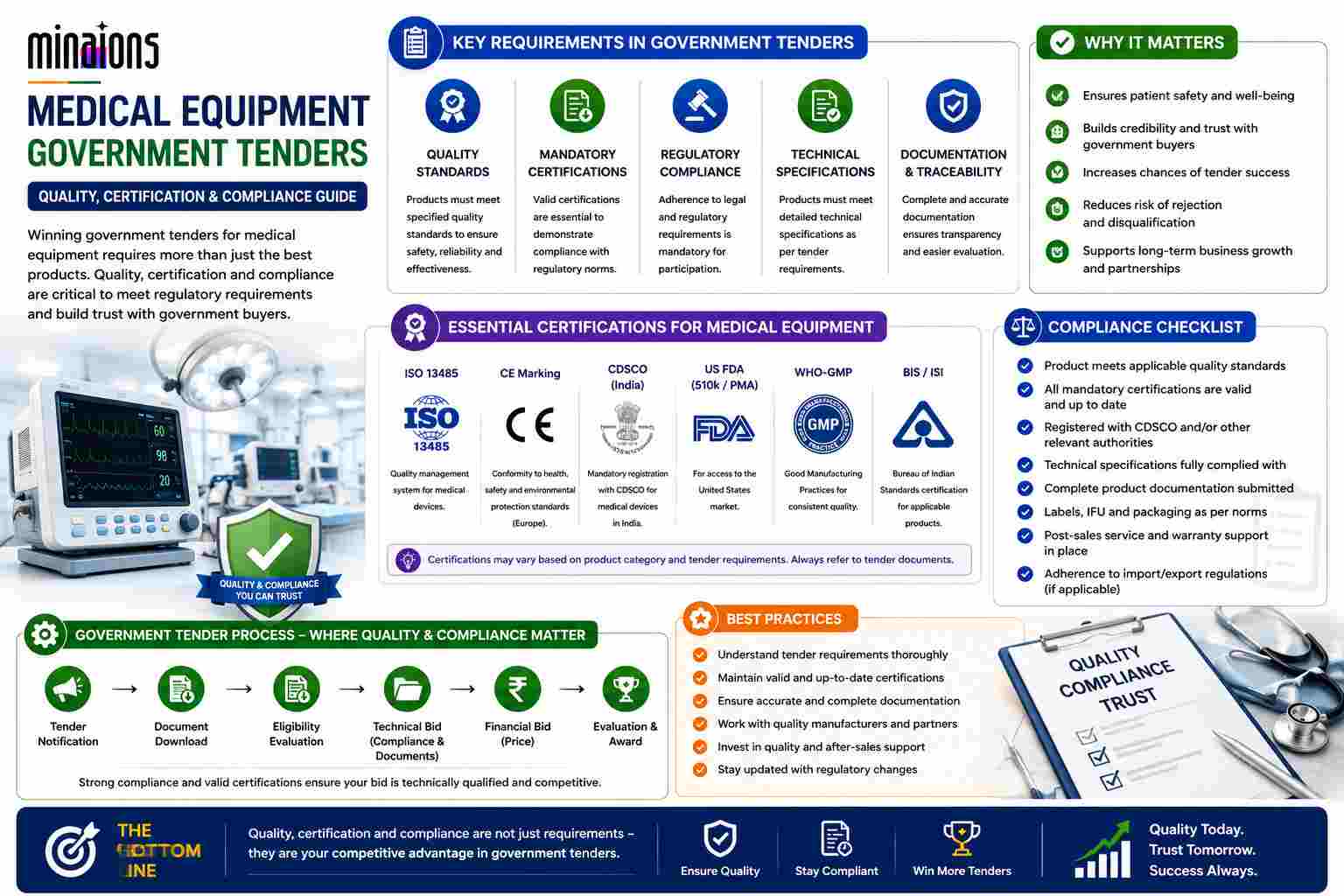
As healthcare systems worldwide confront supply chain fragility and rising patient safety expectations, public procurement teams now assess medical equipment beyond price and delivery timelines.
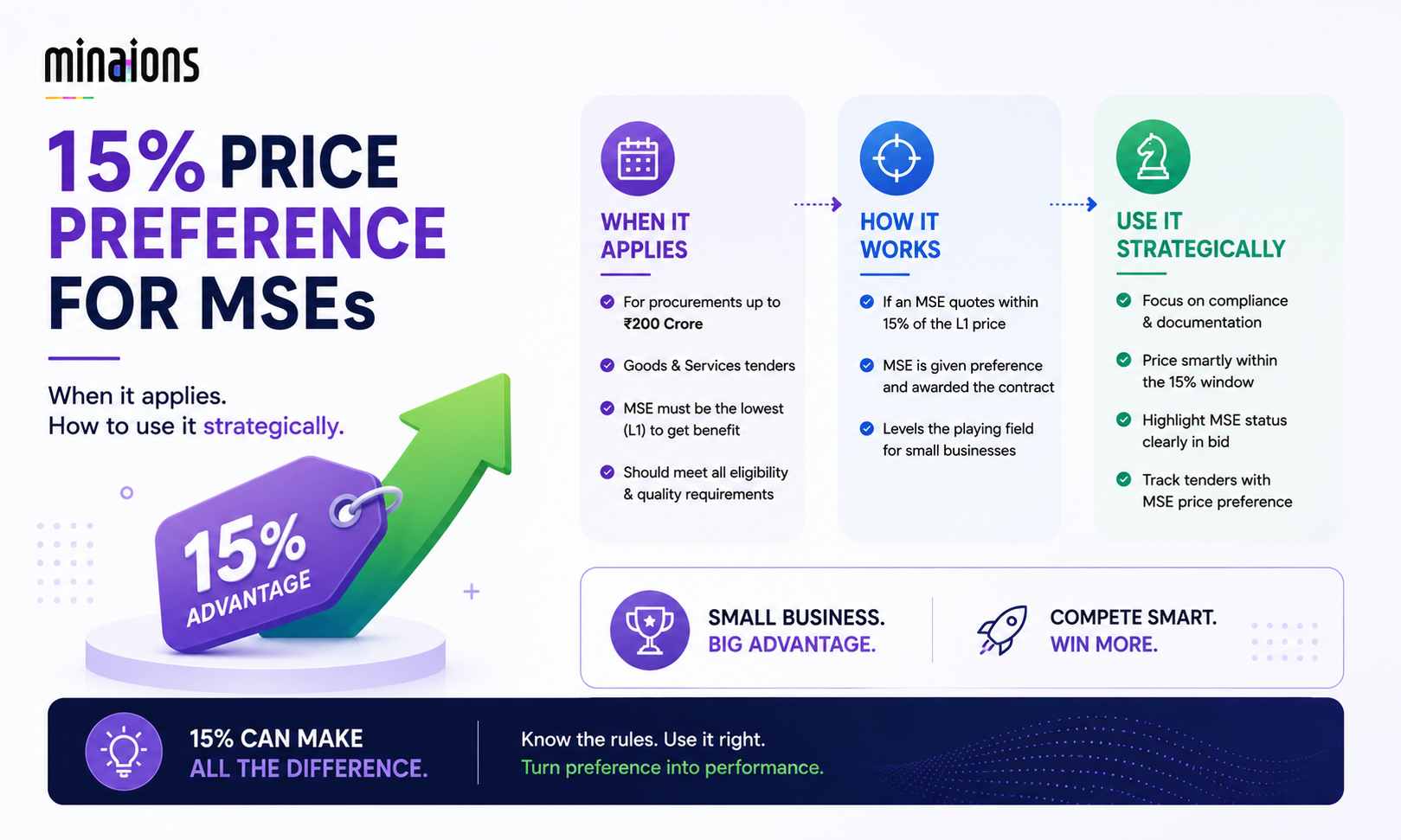
In an era where public procurement budgets are under intensified scrutiny, the 15% Price Preference for Micro and Small Enterprises (MSEs) has emerged as one of the most consequential levers for equitable market access.